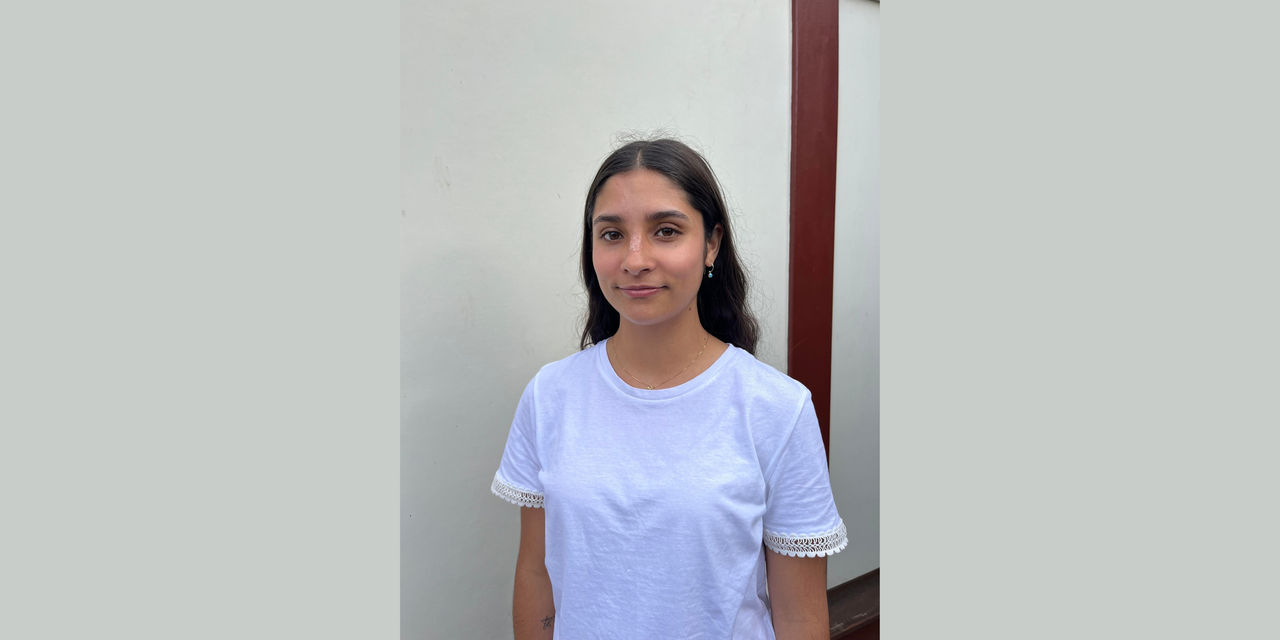


She was in her first semester of a Bachelor of Health Science at Te Whare Wānanga o Waitaha | University of Canterbury (UC) when she was seriously injured in a motor vehicle crash – a stroke of fate that made her more determined to chase a career in health.
The accident left Lillis with a brain injury and meant she had to take three months away from study. When she returned to university, it was part-time and alongside occupational therapy, speech therapy, and the process of adjusting to a different way of learning.
“After the crash, I was told that I might not be able to return to university for a year,” says Lillis.
“This motivated me to recover as best as possible so that I could get back to university in time for semester 2, and I was proud of myself for getting back to campus in three months.”
Looking back, Lillis says the one thing that made her persevere with recovery was the fact that she had goals she wanted to complete. “I wanted to prove to myself that I could get through this.”
The road to recovery was not linear, and Lillis experienced unexpected challenges after the accident. She says, “my face was completely different – I now have 2 big scars, so I had to learn how to love my new appearance. I also faced challenges with no longer being able to push myself as hard as I wanted to with study, because my brain couldn't handle long periods of focused thinking.”
Lillis says she is thankful for the support she and her family received from the university.
“At the time of the crash, my family was supported with accommodation while I was in hospital, and my hall even held my room at no charge while I recovered,” she says.
"UC made my recovery and my journey to finish so much easier by working alongside me to build a plan for returning to study. It shaped my whole experience for the better, and I'm really grateful for the community and the support around me."
Returning part-time, Lillis worked around a demanding schedule of appointments. Student advisors from Te Ratonga Whaikaha | Student Accessibility Service (SAS) walked alongside her, helping Lillis adapt to a new way of studying and pairing her with a reader/writer for exams and assignments, a significant shift for someone who had always been an independent learner.
"It was a big adjustment going back – I had always been comfortable in an academic environment and really enjoyed studying at high school,” she says.
“However, this experience made me more motivated than I'd ever been to finish my degree and work in health. I was willing to receive support so I could complete my degree despite the injury."
While juggling a schedule filled with appointments and part-time study, Lillis also completed two internships – a PACE internship focusing on workplace wellbeing, and another in Gisborne researching traumatic brain injury, which she had applied for herself.
She says, “these experiences gave me more insight into my own recovery, and a deeper understanding of this part of the health industry.”
Despite the adversity she faced, Lillis graduated in April 2026 and is now working as a teacher aide alongside autistic and non-verbal children.
“This role has been the perfect next step, offering time with my family as I prepare for postgraduate study in speech and language therapy,” she says. “I feel inspired to go down this path because of my own experiences as a client and the students I work with every day.”
"I feel confident to do more study because of the amazing support I had from UC over the years," Lillis says.
Lillis says her family and friends are all extremely proud of how far she has come and the person she has become since the accident. “They all feel inspired by my achievements and my willingness to keep going and never give up.”
“To this day I still have challenges with things such as my memory and retaining information. I also still struggle with fatigue, but I manage these challenges by working with my doctors to make sure I get enough sleep and have the right nutrients in my diet,” she says. “I also constantly write reminders on my phone or important information that I need to retain so I can re-read it over.”
Ultimately, it was Lillis’s determined mindset that led to her completing her degree only a year later than planned, despite the brain injury.
“I feel so proud overall about my perseverance in recovery because without believing in myself and being determined to keep going, I wouldn’t have completed my degree,” Lillis says.
"My advice for anyone facing unexpected adversity is to keep persevering and be patient with yourself.”
.png)