

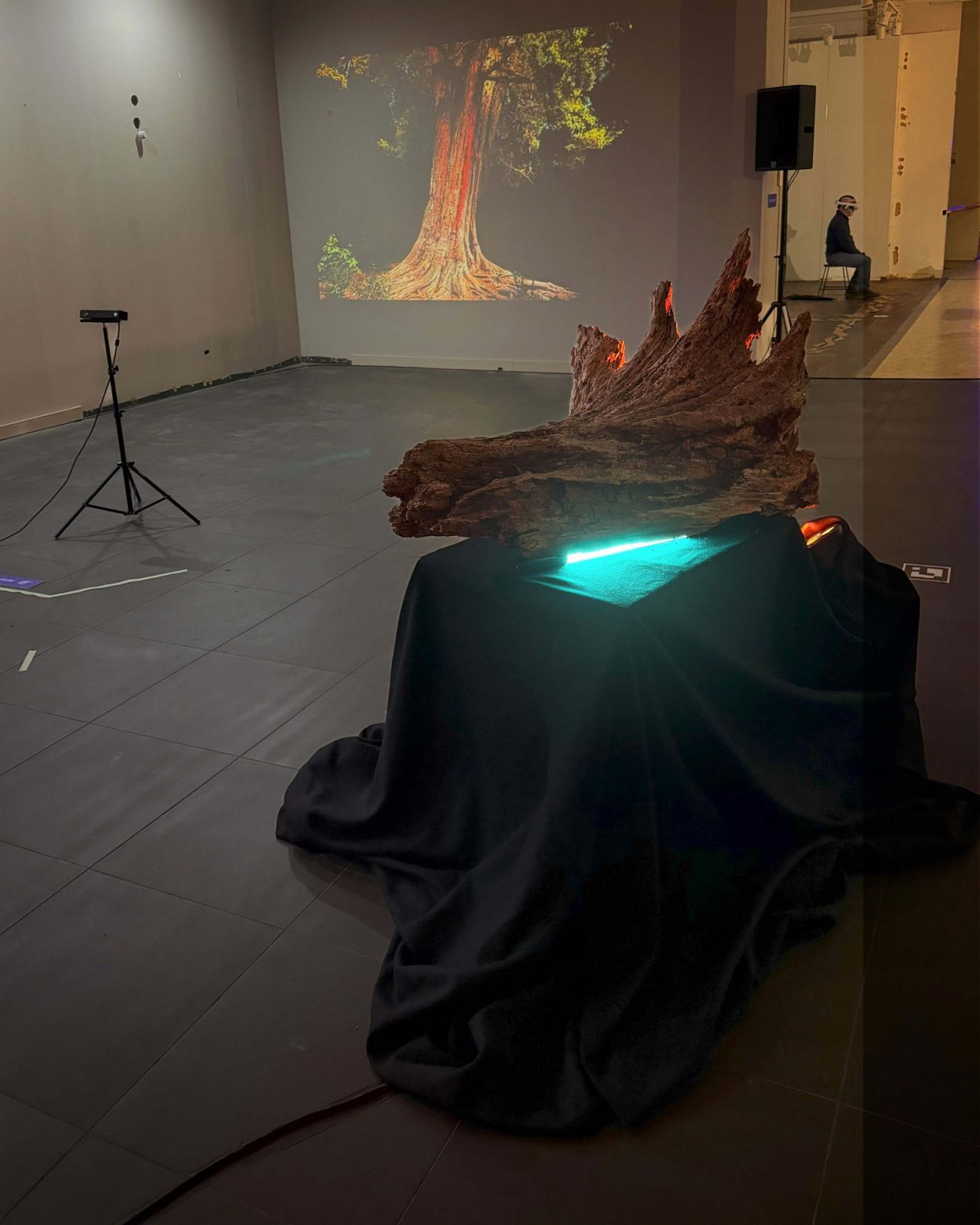
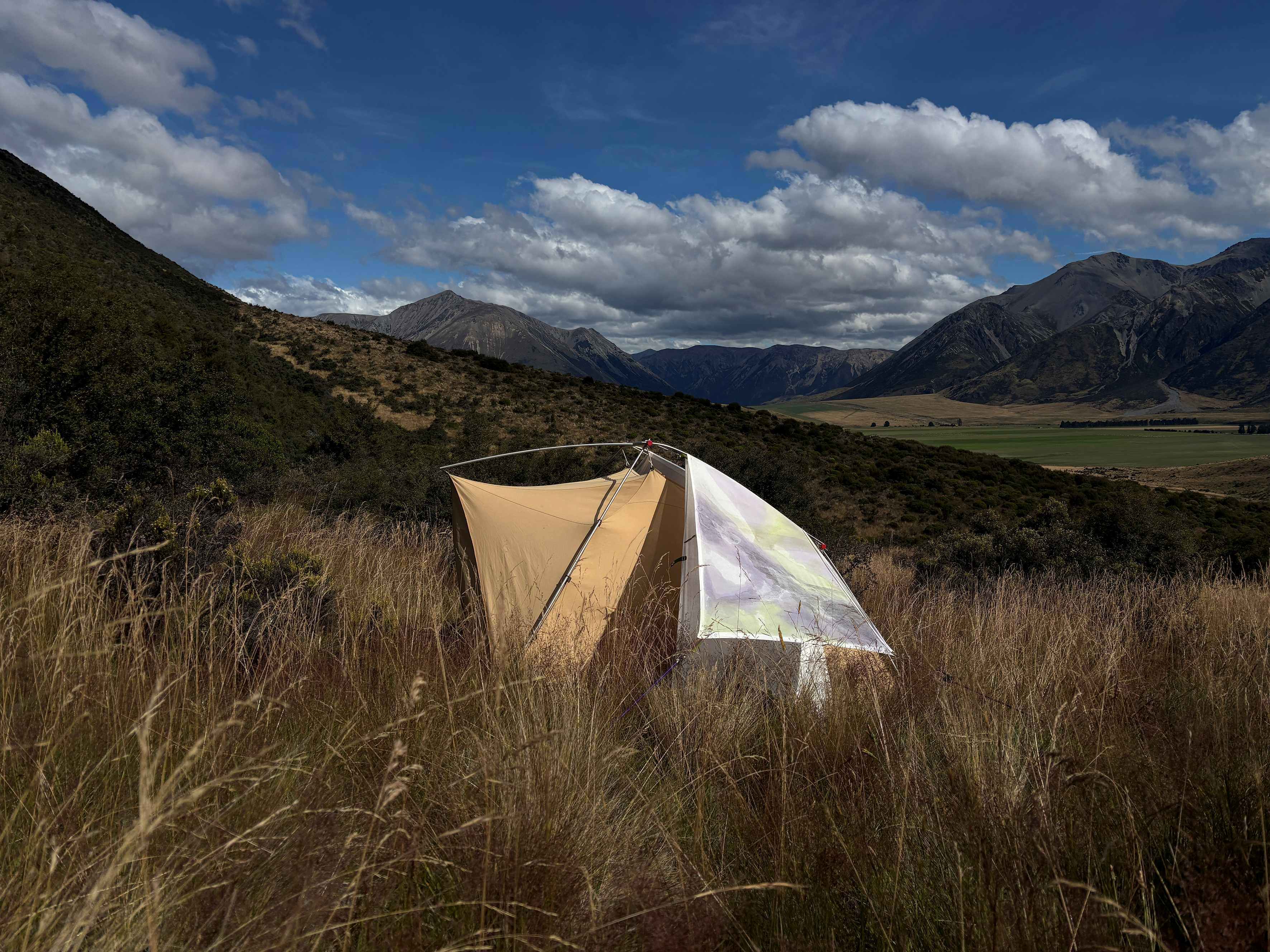
Photo caption: Immersive installation Desiderium: What Stood Here will be on display at UC’s Jack Mann Theatre from 31 July to 2 August 2026.
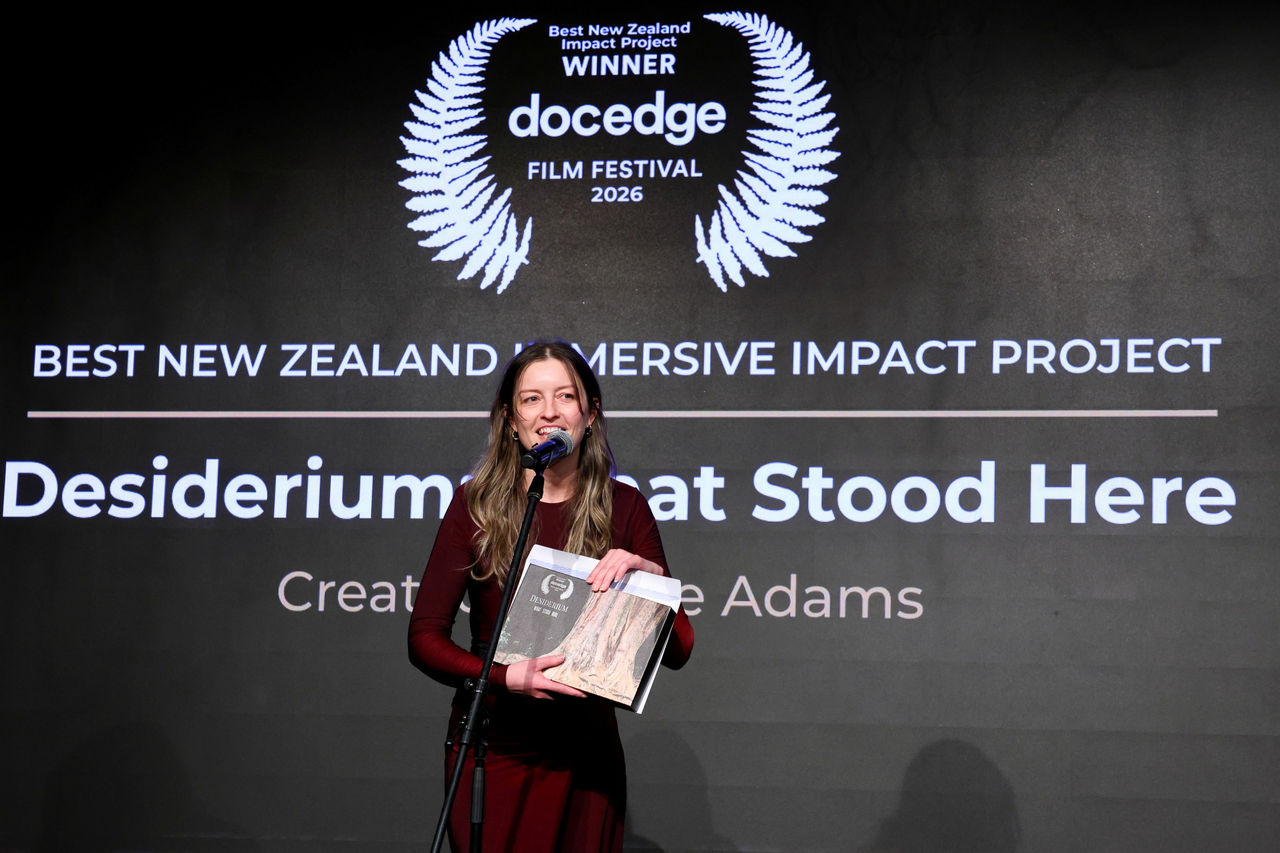
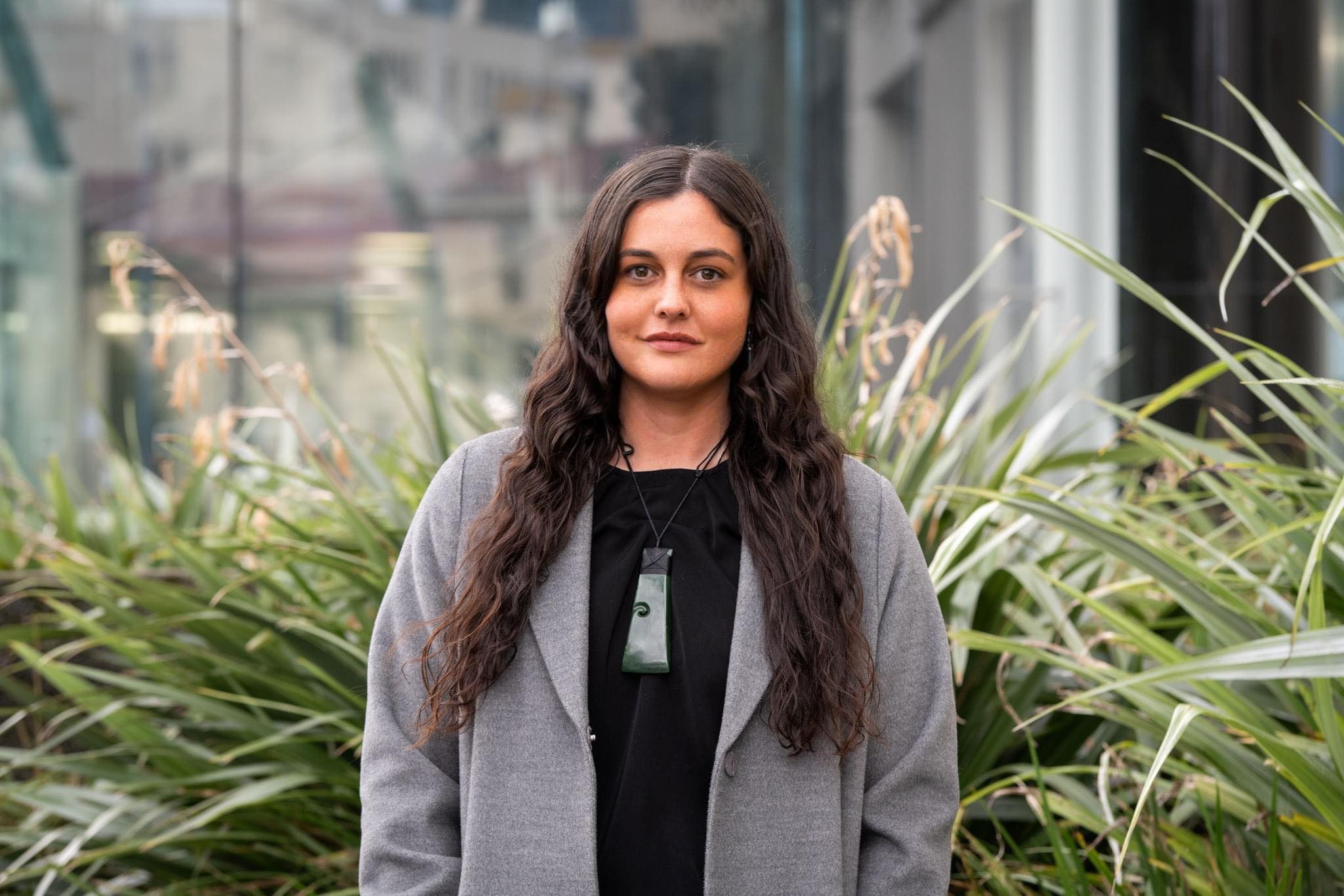
Photo caption: Ellie Adams receiving the award for Best NZ Immersive Impact Project at the DocEdge festival in Auckland
Led by School of Creative and Digital Arts Pūkenga Lecturer Ellie Adams from Te Whare Wānanga o Waitaha | University of Canterbury (UC), Desiderium: What Stood Here recreates the ancient forests that once covered Te Pātaka o Rākaihautū Banks Peninsula, inviting visitors into a long-lost landscape.
Centred on a physical tōtara stump, the installation uses lighting, projection and iPad-based augmented reality to reveal digital layers of the forest that once surrounded it.
The project combines creative practice, UC’s Human Interface Technology Lab NZ (HIT Lab NZ), gaming, ecological research and geological expertise, with contributions from researchers, students, technical specialists, mātauranga Māori consultation and community stakeholders.
Adams says the work grew from a desire to tell a story many local people do not fully understand.
“I realised a lot of people in Christchurch didn’t actually know the scale of the deforestation that happened on the Peninsula,” she says.
Before large-scale logging and burning, Banks Peninsula was covered in broadleaf-podocarp forest, including tōtara, kahikatea and mataī. Within a relatively short period of colonial clearance for pastoral farming, fencing timber and cocksfoot production, only around one percent of native forest remained.
That history is still visible in old stumps scattered across the hillsides, traces that became central to the project.
“The stumps are a very visual reminder of an event that happened a very long time ago,” Adams says. “It’s like we’re living with the impacts of colonisation every day, but that’s not always so visible to people.”
While the concept is anchored in Adams’ creative practice, its development has depended on collaboration across UC. The UC Digital Arts Seed Fund supported research assistant time and helped the team develop the prototype on UC’s Dovedale Campus.
Contributors included PhD students from Ecology and the HIT Lab, a Games graduate, mātauranga Māori consultant Hamuera Kahi, UC volcanologist Dr Sam Hampton, who contributed material on the peninsula’s geological history, and ecology researcher Anna Camara, whose work helped shape the exhibition narrative.
For Adams, the combination of creative, scientific and community knowledge has been central to the strength of the work.
“It’s been cool to do a bit of science communication,” she says. “At the University we can explore new ways of storytelling and test what immersive documentary practice can do.”
The project also points to regeneration already underway on Banks Peninsula, including restoration at Hinewai Reserve and work by private landholders and community groups.
“Banks Peninsula is actively being restored right now,” Adams says. “Part of what this work tries to do is paint the ‘before’ picture that makes that restoration legible.”
After premiering — and taking out the Best NZ Immersive Impact Project Award — in Auckland, Desiderium: What Stood Here will be shown in Christchurch as part of Doc Edge Festival’s special three-day event at UC’s Jack Mann Theatre from 31 July to 2 August. The free public programme is presented in partnership with UC’s Kōawa Studios and co-sponsored by Screen Canterbury.
Adams hopes the project will continue to develop beyond the festival as a teaching and public engagement resource connected to Banks Peninsula itself.

.png)