

The 12 new UC Connect Doctoral Scholarships are co-funded by Te Whare Wānanga o Waitaha | University of Canterbury (UC) and local partners to connect PhD research with real-world issues facing communities, industry and decision-makers.
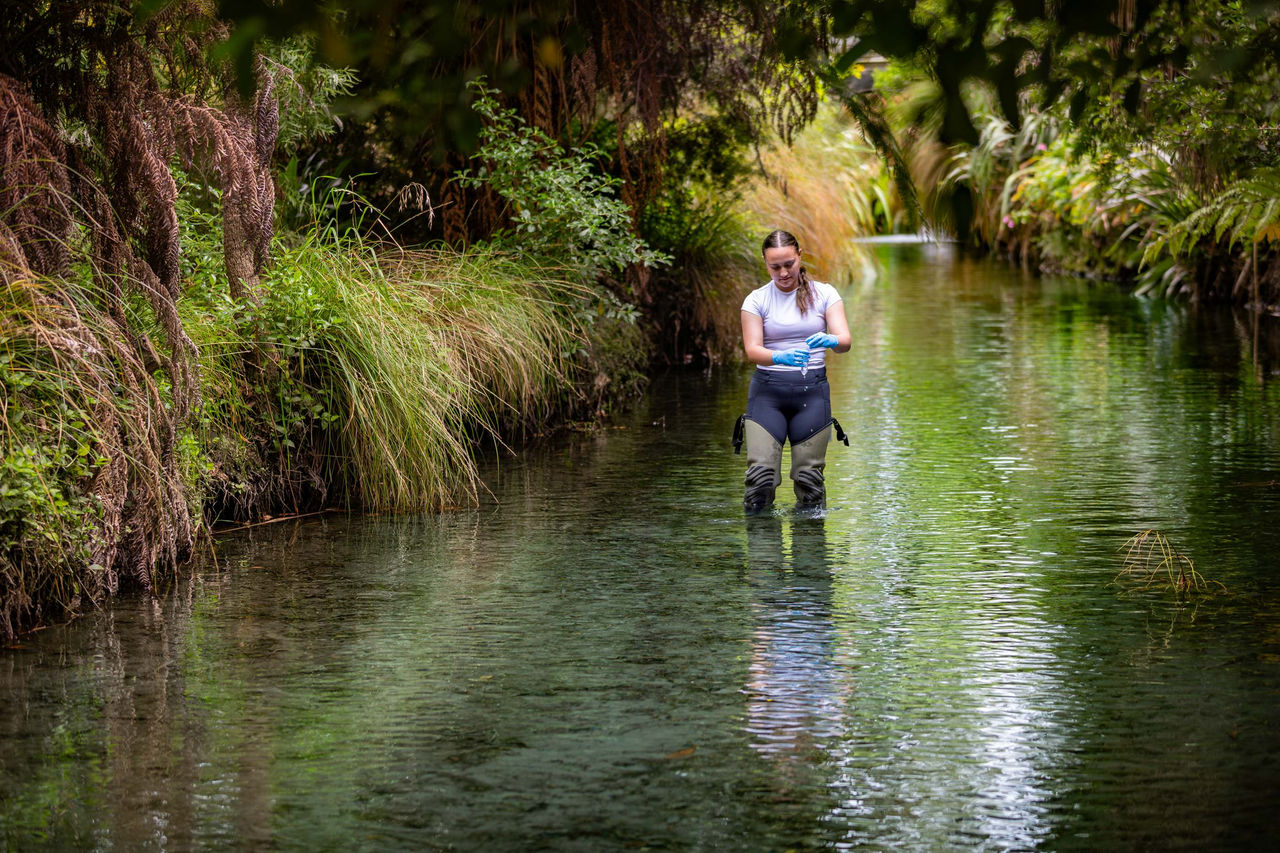
The theme for the 2026 is “water” and the projects span some of Aotearoa New Zealand’s most pressing questions around water and water systems, from urban stormwater and groundwater to alpine springs and braided rivers.
Projects include how to better predict flooding in Canterbury catchments, understand the movement of contaminants into groundwater, and protect fragile freshwater ecosystems under changing climate and land-use pressures.
Others will explore emerging risks, including antimicrobial resistance in receiving waters, trace metals in contaminated soils, microplastic loads in urban waterways, and the potential climate and ozone impacts of new stratospheric water vapour emissions linked to rocket launches.
Projects are also aimed at helping industries – including through reducing water-intensive frost protection in New Zealand vineyards, and the use of extremophilic microorganisms as biomarkers to support the discovery and monitoring of low-temperature geothermal systems.
UC Tumu Tuarua Rangahau | Deputy Vice-Chancellor Research and Innovation Professor Lucy Johnston emphasised the importance of water for all aspects of society. She says the scholarships reflect UC’s Research Commitment to advance sustainable futures through environmental and social stewardship, and promote environmental, animal and human wellbeing.
“Climate change, biodiversity loss and the unsustainable use of natural resources are creating complex challenges for water and water systems in Aotearoa New Zealand and around the world. These projects show how UC research can help address those challenges by improving how we manage water, protect ecosystems, and support communities to live well within environmental limits.”
Professor Johnston says the UC Connect model is designed to bring university research and partner expertise together around practical issues that need evidence-based solutions.
“Our PhD candidates will be working on research that is directly connected to real-world needs, while gaining valuable experience alongside partner organisations. It’s a powerful way to support the next generation of researchers while helping communities, industries and decision-makers respond to some of the most pressing challenges of our time.”
Each UC Connect Doctoral Scholarship provides students with a stipend for three years, jointly funded by UC and the partner organisation. Once selected, the successful PhD candidates will conduct research in real-world settings while developing transferable skills, professional networks and experience working alongside partners.
UC is committed to undertaking research that has a positive impact locally and globally, and to working with partners on research that responds to community, environmental and industry needs.
Organisations interested in discussing a UC Connect Doctoral Scholarship partnership or other research opportunities at UC are welcome to contact the team to discuss research ideas and needs: dvcresearchinnovation@canterbury.ac.nz.
2026 UC Connect Doctoral Scholarship topics
Physics-Informed Machine Learning for Flood Forecasting in Canterbury Catchments
Lead UC researcher: Alberto Ardid (Civil & Environmental Engineering)
External partner: Environment Canterbury
Reducing microplastic loads in urban waters through enhanced retention and accumulation in nature-based stormwater systems
Lead UC researcher: Frances Charters (Civil & Environmental Engineering)
External partner: Auckland Council
Smarter and defensible strategies for antimicrobial resistance surveillance in receiving waters
Lead UC researcher: Katharina Dost (Mathematics & Statistics)
External partner: PHF Science
Determining the risk of trace metals in contaminated soils leaching to groundwater
Lead UC researcher: Sally Gaw (Physical and Chemical Sciences)
External partner: Environment Canterbury
Understanding the significance of spring systems in alpine braided river ecosystems, and prioritising threat management
Lead UC researcher: Angus McIntosh (Biological Sciences)
External partner: Department of Conservation
Linking the conservation of predictably unpredictable fish to braided river variability
Lead UC researcher: Angus McIntosh (Biological Sciences)
External partner: Department of Conservation
Resilient Springs: understanding groundwater-surface water dynamics in urban Ōtautahi Christchurch under changing conditions
Lead UC researcher: Leanne Morgan (Earth & Environment)
External partner: Canterbury Regional Council
Using extremophilic microorganisms as biomarkers in groundwater for the discovery, monitoring and modelling of low-temperature geothermal systems
Lead UC researcher: Matthew Stott (Biological Sciences)
External partner: Earth Sciences New Zealand
Springing into Action: research to guide management of springs threatened by weed invasions
Lead UC researcher: Helen Warburton (Biological Sciences)
External partner: Department of Conservation
Integrated phenotyping of grapevine frost resilience to reduce water-intensive frost protection in New Zealand vineyards
Lead UC researcher: Mark Staiger (Mechanical Engineering)
External partner: New Zealand Winegrowers Research Centre Ltd
Impacts on climate change and ozone depletion of new anthropogenic emissions of stratospheric water vapour via rocket launches
Lead UC researcher: Laura Revell (Physical & Chemical Sciences)
External partner: World Radiation Centre
Integrated dynamic freshwater processes to improve management of braided river bird populations
Lead UC researcher: Helen Warburton (Biological Sciences)
External partner: Department of Conservation
.png)