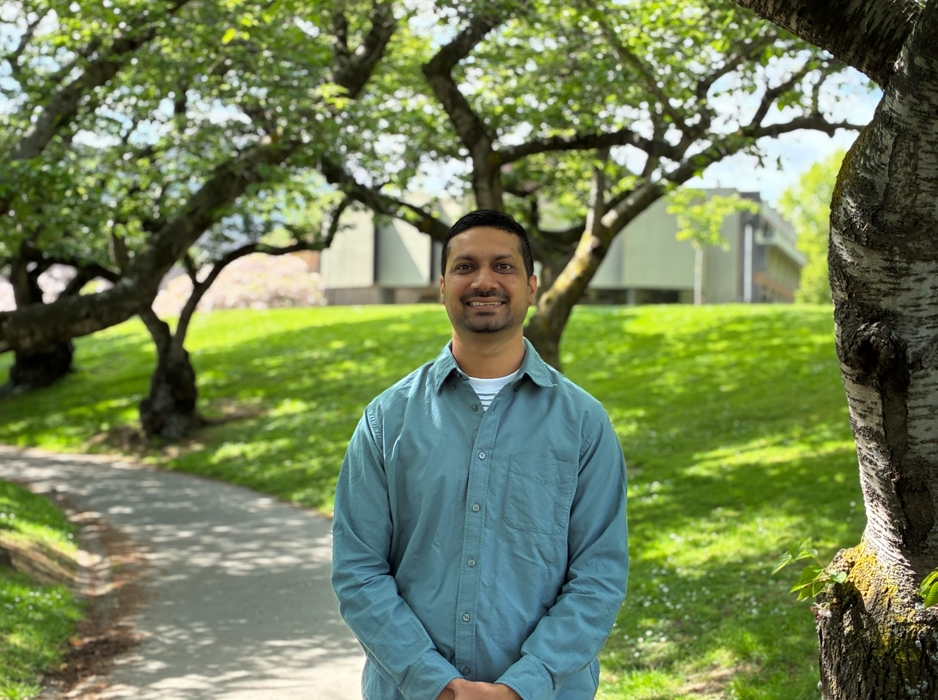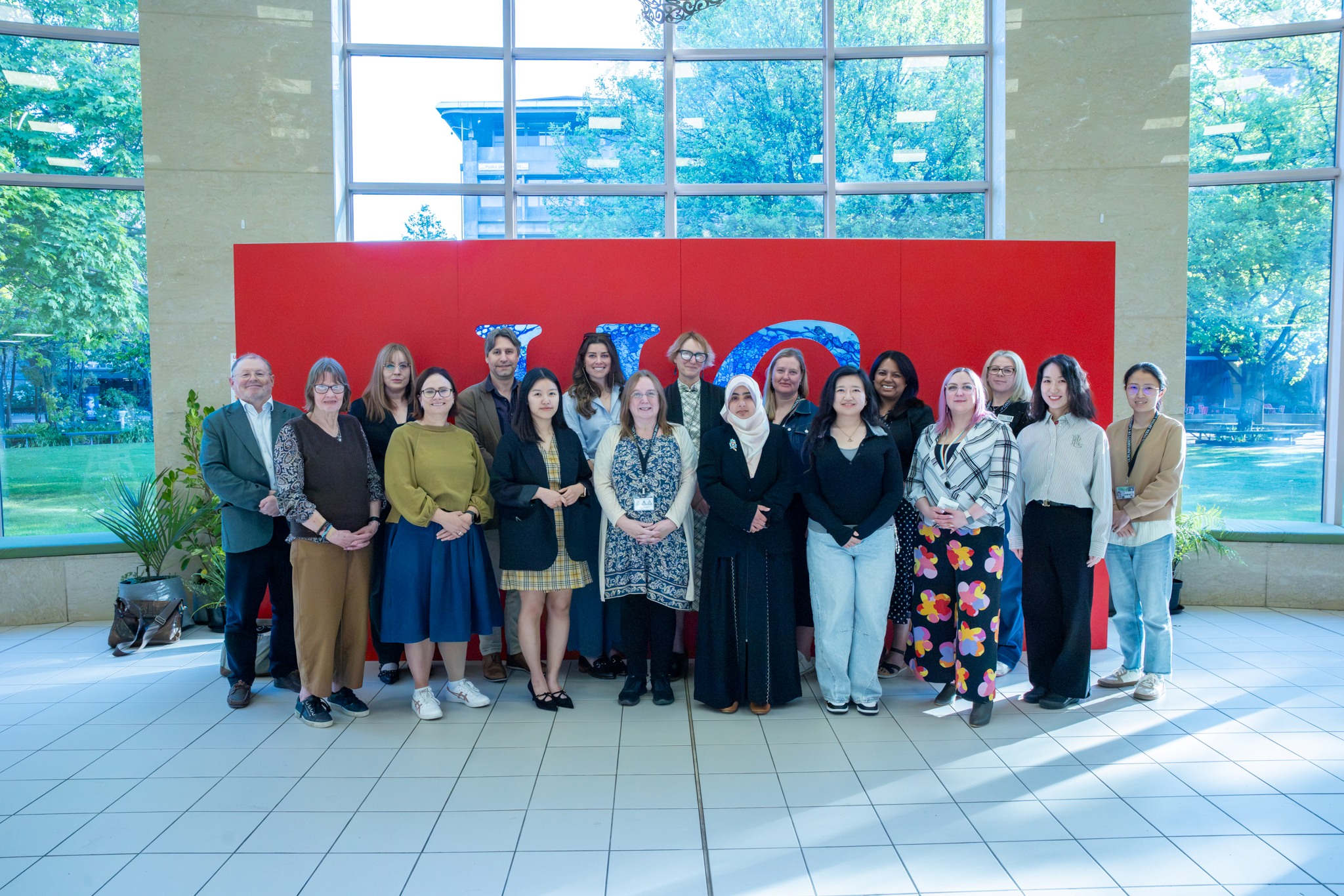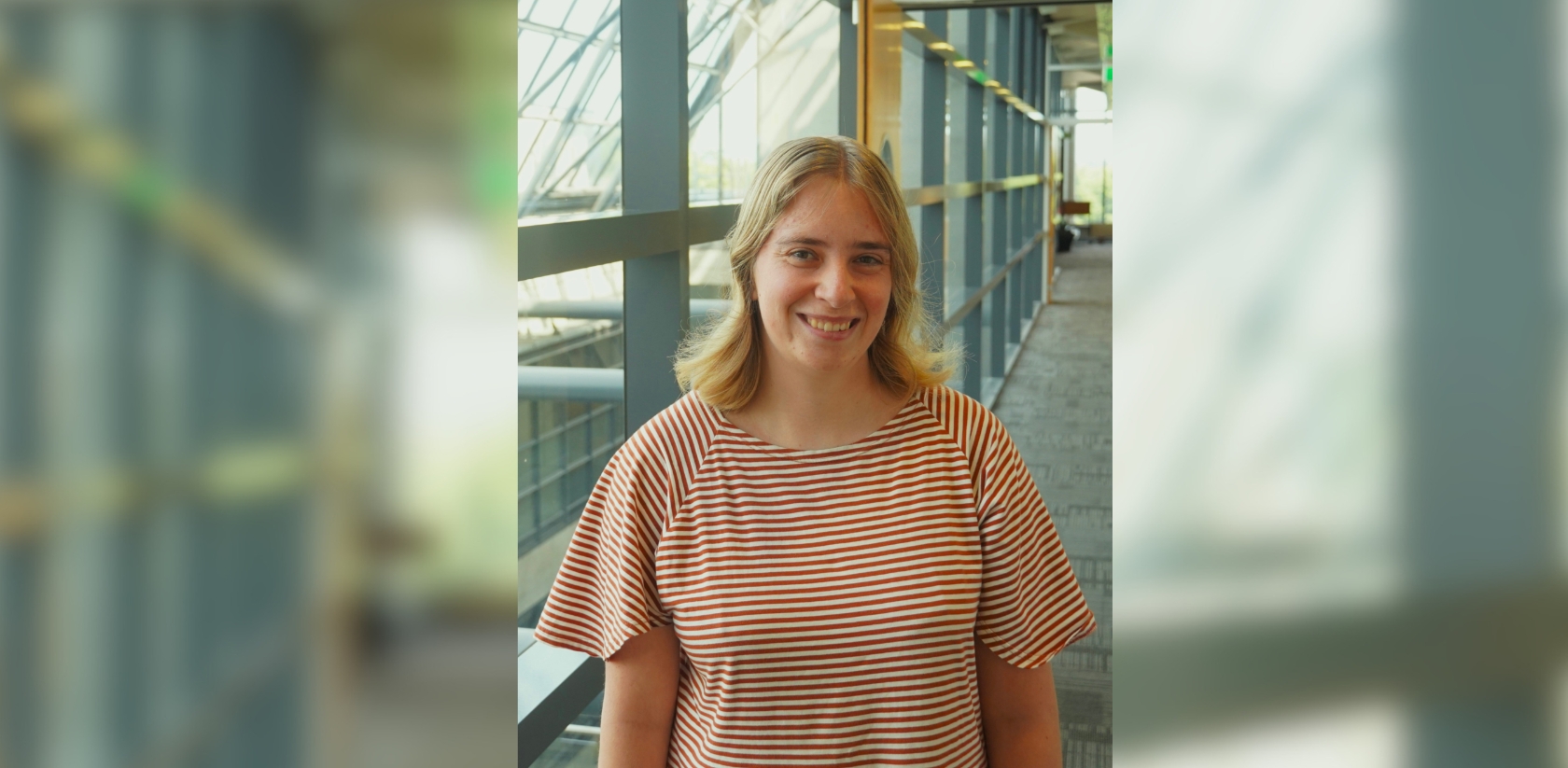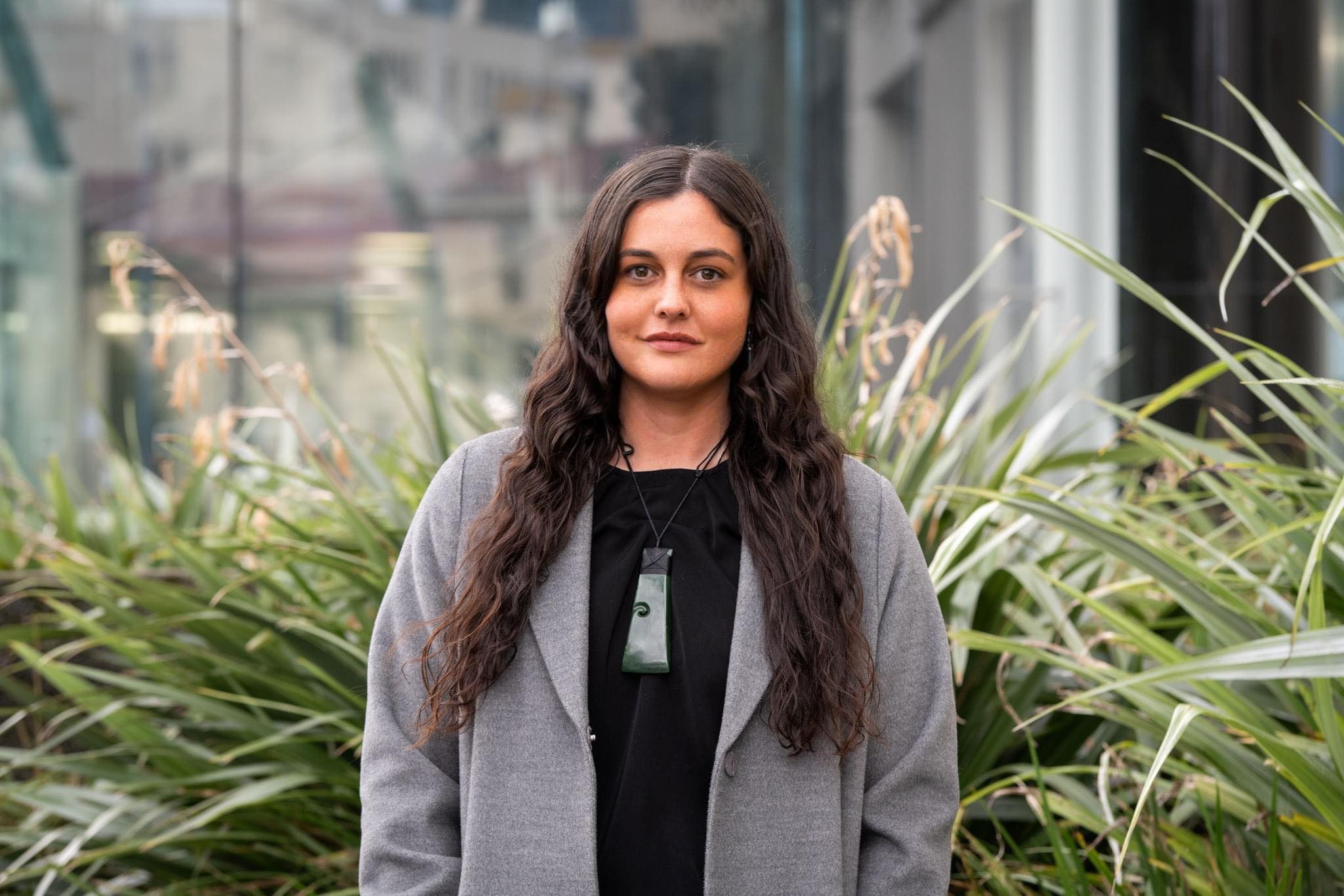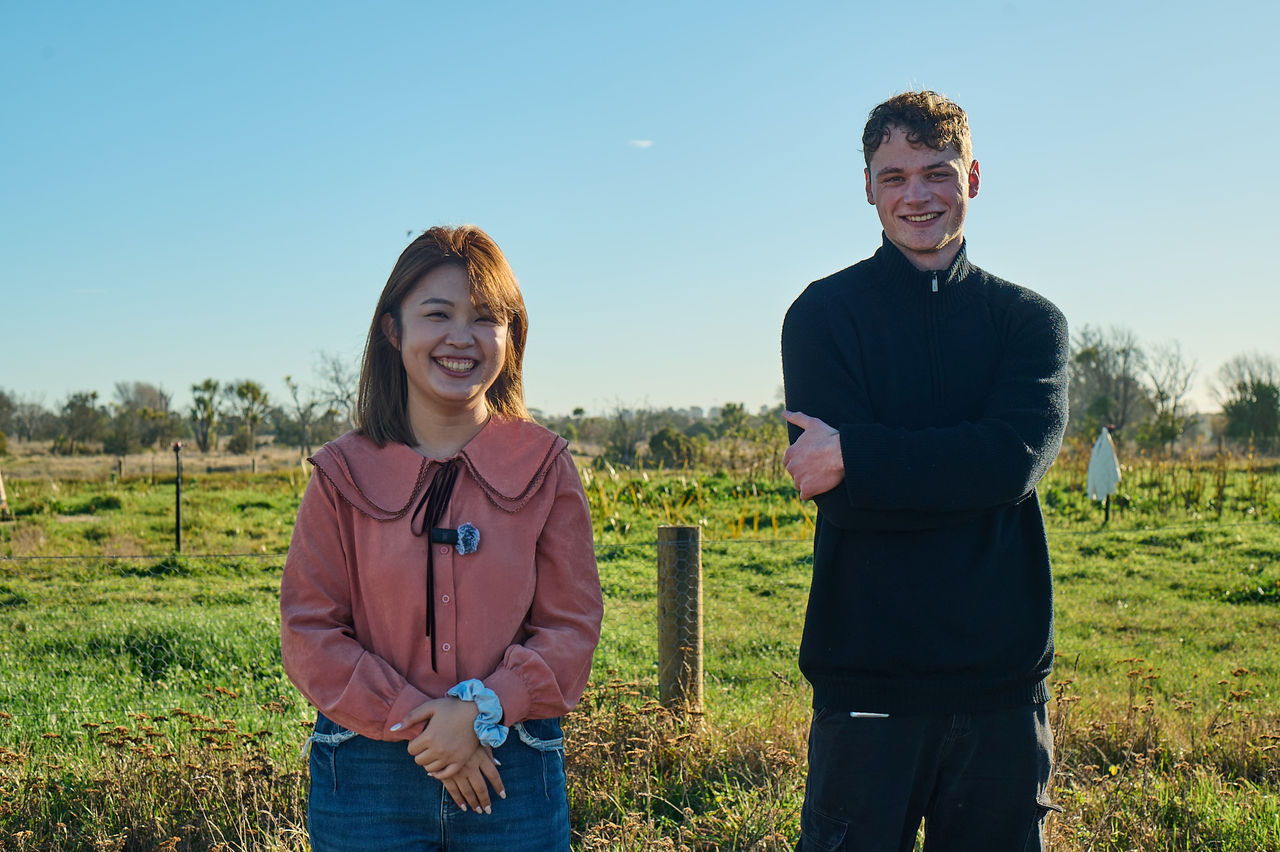


Photo caption: UC PhD candidates Mingyuan Liu and Jack Lloyd-Scott
The research, by Te Whare Wānanga o Waitaha | University of Canterbury (UC) School of Earth and Environment Professor Brett Robinson, Dr Maria Gutierrez Gines, and PhD candidates Mingyuan Liu and Jack Lloyd-Scott, are exploring how biowaste, such as green waste and sawdust, can reduce the risk posed by contaminated soil, improve plant growth, support ecological restoration and provide economic value.
Professor Robinson says Christchurch’s Red Zone is like a “living laboratory” following the earthquakes for studying how cities can respond to both contaminated land and the impacts of climate change. “The red zone dropped by about a metre in places, mimicking the kind of sea level rise we may see over the next 100 years or so.”
He says many urban soils are depleted in organic carbon, making them more vulnerable to extreme climatic events. Some localised areas are contaminated from historic land use, including lead paint, leaded petrol and treated timber. Potentially these contaminants can become mobile and enter food chains, posing a risk to ecosystems and humans
“We want to add carbon to this to improve stability and reduce the movement of contaminants, and the best, cheapest way is to use our waste to do that,” Professor Robinson says.
The research focuses on using waste-derived materials to bind contaminants in place, rather than digging up contaminated soil and sending it to landfill. “While the contaminants are not removed, the risk they pose is reduced. Excavating the soil removes the contaminants but it is prohibitively expensive. Phytomanagement (using biowastes and native plants) is cheaper and often the only practical solution. We’re putting in waste to bind up the contaminants and then developing ecosystems that have value for the city,” Professor Robinson says.
The work also creates opportunities for emerging researchers, with Professor Robinson’s PhD, master’s and honours students actively involved in Red Zone fieldwork.
PhD candidate Mingyuan Liu is investigating how different biowaste materials can reduce the risk of heavy metals such as copper, zinc and lead moving through soil, waterways and the food chain.
“The heavy metal issue in the Red Zone of Christchurch has persisted for 15 years and poses a potential risk,” Liu says. “It is also a relatively common soil problem worldwide that affects a large number of residents living near heavy metal contaminated areas.”
“Think about the cost — you'd spend way more money digging up contaminated soil across this 600-hectare area and sending it to landfill. That's thousands of truckloads, and each trip spreads heavy metal dust everywhere along the way,” Liu says.
“After spending ten or even hundreds of millions of dollars, the contamination still exists in landfill — unstable, easily transferred. In contrast, our approach consumes large volumes of biowaste — an existing waste problem — to immobilise heavy metals in situ, promote plant growth, and support ecological restoration, with minimal cost beyond machinery.”
Liu’s work includes greenhouse and field trials using compost from green waste, biochar (a charcoal-like product created by heating organic materials such as wood, crop residues, manure, or other biomass) and sawdust from pine slash. These materials are blended into contaminated soil to change soil properties, stabilise heavy metals and support plant growth.
“Our results show that you can treat contaminated land in place using local biowaste, stabilising heavy metals, reducing risk to people, and even restoring the land for things like parks or community use.”
Vegetation also plays an important role, with plant roots helping immobilise heavy metals while contributing ecological or economic benefits.
PhD candidate Jack Lloyd-Scott is building on Liu’s work by investigating how New Zealand native plant species can help increase soil organic carbon in the red zone.
He is looking at how different native plant traits interact with soil treatments such as compost, biochar, and a combination of the two, to identify which pairings could create the best conditions for storing carbon in soil.
“Soil is the largest pool of terrestrial carbon we have,” Lloyd-Scott says. “There’s more carbon in the soil than there is in the atmosphere and in the biomass around the world.”
He says plants help build soil carbon because, as they grow, their roots and fallen leaves break down and become part of the soil.
Lloyd-Scott says the red zone currently contains large areas of grass and underused land, but there is significant potential for reforestation and ecological restoration that could also have economic benefits.
“What I’m hoping is that I can find evidence to say this treatment, combined with plants that have these traits, would be successful in the red zone and yield the best results in terms of storing carbon in the soil.”
Professor Robinson says the wider aim is to create landscapes that can better withstand flooding, erosion and drought because carbon-rich soil can also hold moisture for longer but can also generate economic value. He says harakeke flax could be grown for harvest because the contaminants would not be taken up into the plant, allowing that fibre to be used commercially by companies such as KiwiFibre (a startup founded by UC students revitalising the New Zealand harakeke (flax) industry by transforming the natural plant fibre into a high-performance alternative to carbon fibre and fibreglass).
The researchers hope the work will help inform how councils, planners and communities manage contaminated land in ways that reduce risk, support biodiversity and make cities more resilient to climate change.
The research has attracted regional and international interest, with support from Christchurch City Council and Horizon Europe, reflecting the potential of the work to inform future urban planning and climate adaptation.
.png)