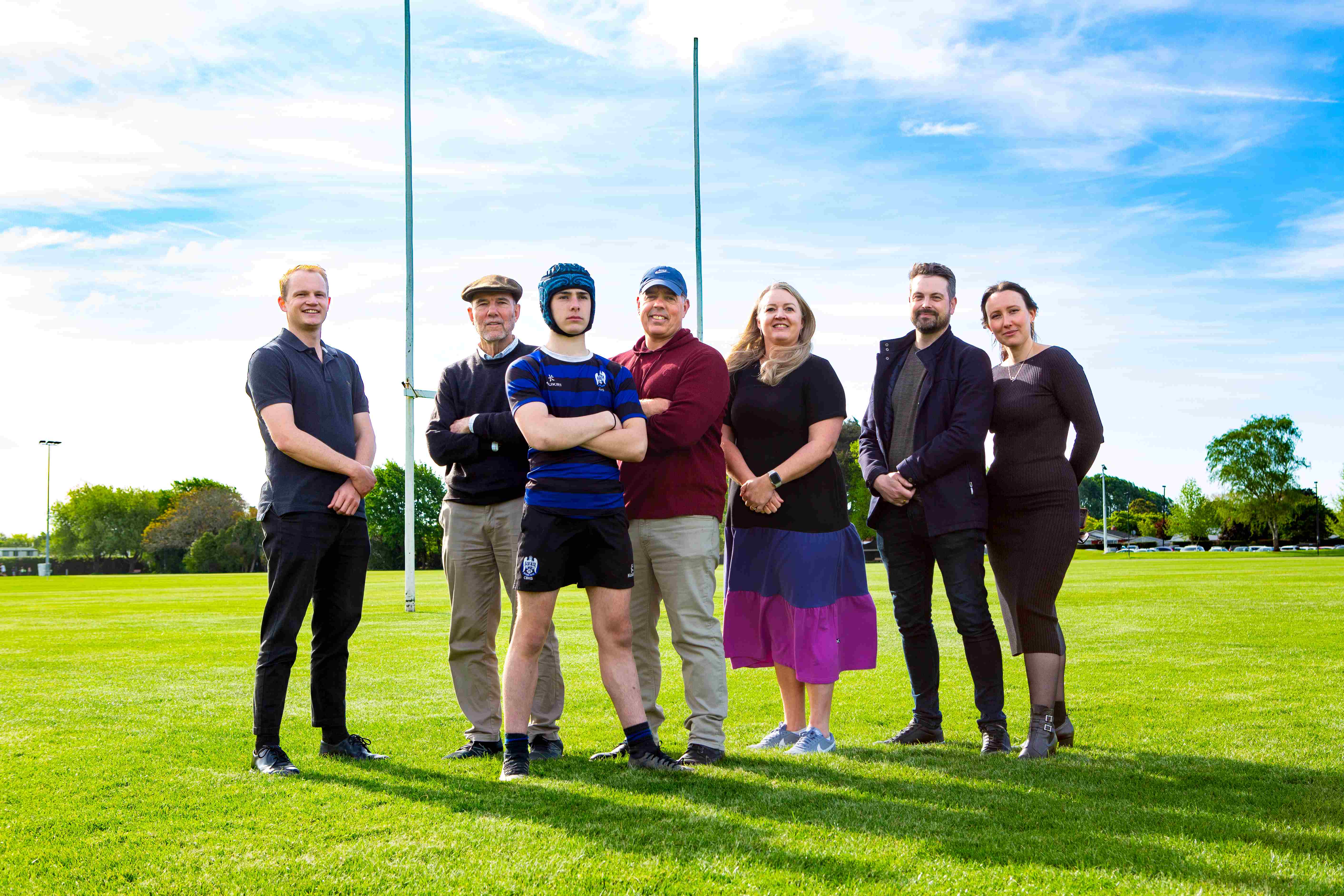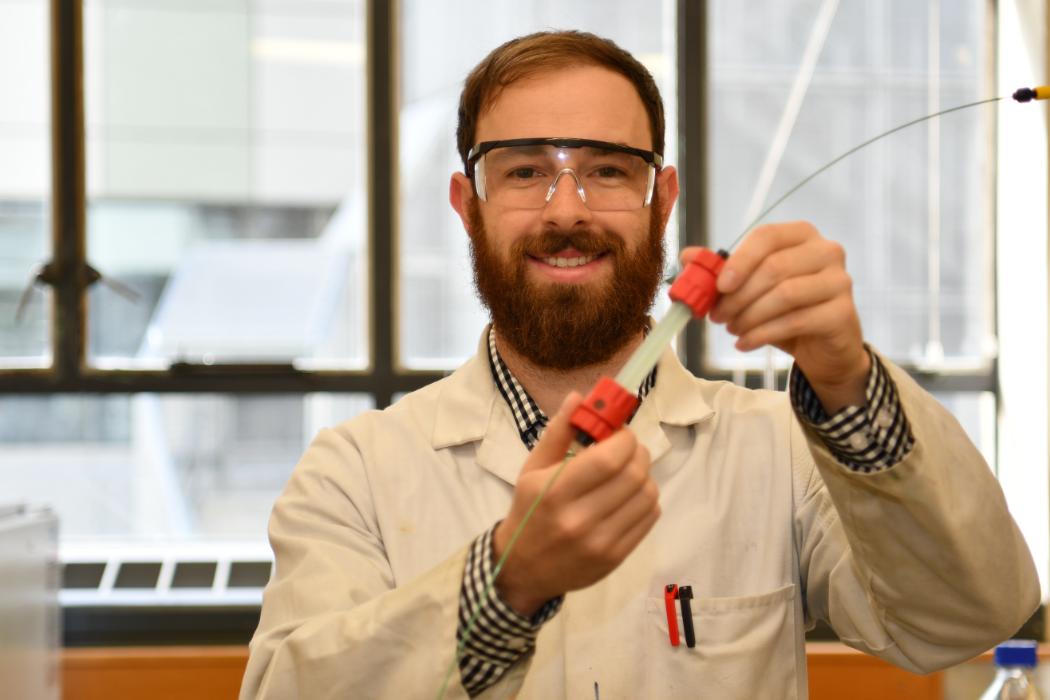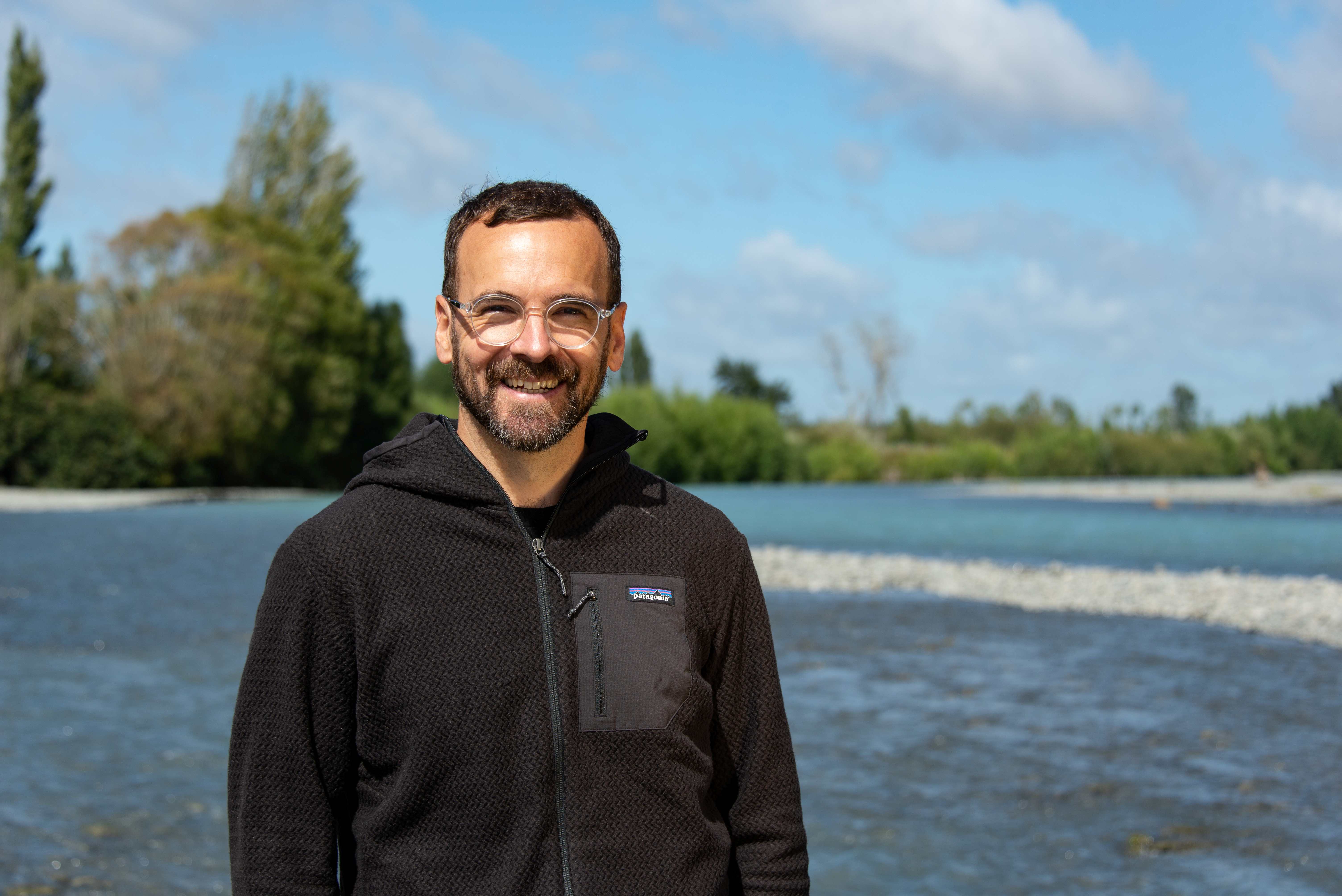


Photo caption: Professor Jonathan Tonkin.
Key points
River management needs to anticipate the impacts of more frequent and intense floods, droughts, and heatwaves, and build resilience across whole catchments.
Giving rivers room to move can improve flood resilience while supporting freshwater biodiversity.
UC researchers show that nature-based approaches to river management can deliver benefits for both communities and the environment.
Rethinking how we manage rivers
As climate change increases the frequency and severity of floods, droughts, and heatwaves, communities face growing challenges in managing river systems safely and sustainably.
Research led by Professor Jonathan Tonkin from the University of Canterbury’s (UC) School of Biological Sciences explores how rivers can be managed for resilience under increasingly extreme and uncertain conditions. Giving rivers more room to move across the landscape is one practical element of this wider research programme that represents an alternative to continually increasing flood-control infrastructure.
Rather than treating rivers as systems that must be tightly controlled or returned to a fixed historical state, the research highlights the need to anticipate change, manage adaptively, and work with natural river processes to improve both flood resilience and ecosystem health.
Working with dynamic rivers
Floodplain rivers are naturally dynamic. As they shift across the landscape, they create a diverse mosaic of channels, wetlands, gravel beds, and floodplain habitats that support a wide range of species.
Research led by Jonathan and colleagues has found that allowing rivers greater access to their floodplains can restore many of these natural processes. Dynamic rivers support richer biodiversity, improve habitat connectivity, and create conditions that help ecosystems withstand and recover from environmental change.
Even exposed gravel areas, which are often lost when rivers are heavily constrained, provide important nesting habitat for threatened bird species and support unique ecological communities.
Benefits for people and nature
Giving rivers more room to move illustrates how building resilience to climatic extremes can deliver benefits beyond flood mitigation alone.
By reconnecting rivers with their floodplains, floodwaters can spread across a larger area, reducing pressure on downstream communities and infrastructure. At the same time, healthy, free-flowing rivers provide important ecosystem services including freshwater provision, nutrient cycling, recreation opportunities, and improved environmental resilience.
The findings suggest that nature-based approaches can complement, and in some cases reduce reliance on, continually expanding stop-banks and other engineered flood defences.
It becomes more of a win-win solution for both biodiversity and society because we give rivers more capacity to flood into, but we also give them the capacity to act more like a natural ecosystem, creating diverse habitats, cycling nutrients, and sustaining life.– Professor Jonathan Tonkin
Supporting resilient river systems
A key message from Jonathan’s research programme is that river management should consider a broader range of values other than flood protection alone and prepare ecosystems for future conditions rather than aiming only to restore to historical or ‘natural’ states.
A global review led by Jonathan examined how increasingly frequent floods, droughts, and heatwaves are affecting rivers worldwide, including how events can combine or occur in rapid succession. The review concluded that building resilience through catchment-scale, nature-based, and adaptive approaches will be critical for helping rivers and communities adjust to a more extreme climate.
Building a new approach to river management
UC researchers are shaping a new paradigm for river management, one that recognises rivers not simply as hazards to be controlled, but as dynamic ecosystems that support biodiversity, water quality, and human wellbeing.
Jonathan’s research programme builds on his earlier call for forward-looking, adaptive river management. By understanding how rivers function and respond to disturbances, anticipating future conditions, and creating space for natural processes, researchers are identifying practical solutions that strengthen climate resilience while protecting freshwater biodiversity.
Talk to Professor Jonathan Tonkin about river ecology, freshwater biodiversity, climate resilience, ecological forecasting, nature-based solutions, and river management.
Last updated: October 2026
Related topics
Sustainable Development Goals (SDGs)


Contact

We gratefully acknowledge support from a Royal Society Te Apārangi Rutherford Discovery Fellowship, Te Pūnaha Matatini, and Ministry of Business, Innovation, and Employment.
Read other showcases
Take a look at our showcases to see UC’s research expertise in practice.