

2025: Water usage at University of Canterbury

Domestic cold water use fell to 269,634,480 litres in 2025, a 6.2% reduction from 2024 and 17.0% below the pre-COVID-19 2019 baseline, which is considered representative of normal campus operations. This was the University's lowest annual water consumption outside the COVID-affected years of 2020–2022 and reverses the increase observed in 2023 and 2024. Notably, this reduction has been achieved despite a substantial increase in total student enrolments over the 2019–2025 period, meaning water use per student has fallen even more sharply than the headline figures suggest.
This reduction reflects several long-term improvements across the campus. Building renewals and refurbishments undertaken between 2015 and 2018 introduced modern, lower-consumption water fixtures and fittings. The relocation of science activities from older facilities into newer, more efficient buildings has also contributed to lower water demand. In parallel, metering coverage and leak detection systems have been progressively expanded across the campus estate. Improved monitoring provides better visibility of water use and supports the early identification of abnormal consumption patterns, helping to reduce water losses. Collectively, these building and infrastructure improvements continue to support lower campus water consumption.
2025: Water quality standards and guidelines for discharges at the University of Canterbury
The University of Canterbury applies recognised water quality standards and guidelines to discharges within its built environment and to the waterways running through campus, in order to protect freshwater ecosystems, wildlife, and human health and welfare. Campus water and stormwater quality is measured directly against the Australian and New Zealand Guidelines for Fresh and Marine Water Quality (ANZG) toxicant default guideline values at the 90% species protection level, and stream health against the Macroinvertebrate Community Index thresholds of the National Policy Statement for Freshwater Management 2020. UC operates within the wider regulatory framework set by the Canterbury Land and Water Regional Plan and the Christchurch City Council Trade Waste Bylaw 2025, and all campus works affecting waterways — including dewatering during infrastructure renewal — are carried out under Christchurch City Council consent conditions. Trade waste and stormwater protection systems are monitored as required by their respective resource consents, and reticulated drinking water supplied to campus is treated and tested by Christchurch City Council against the national Maximum Acceptable Values, including for nitrate.
Compliance is verified through the Waterways Quality Monitoring Framework, established in 2018, which provides quarterly water chemistry and quantity sampling, annual ecological monitoring, and automated stormwater sampling across Waiutuutu/Okeover and Ōtākaro/Avon streams. Results are benchmarked against guideline values and against campus records dating back to 1979, and published each year in UC's Waterways Monitoring Report. In 2025, dissolved copper (0.612 µg/L), lead (0.034 µg/L) and zinc (4.826 µg/L) in routine samples were all well within ANZG 90% protection guideline values of 1.8, 5.6 and 15 µg/L respectively; dissolved oxygen, temperature and total suspended solids were consistent with a healthy urban stream; and MCI scores of 88.4 (Okeover) and 84.3 (Avon) continued a slow upward trend. Zinc in stormwater (43.997 µg/L) exceeded its guideline value — an exceedance UC has reported openly and prioritised for investigation.
Monitoring results drive management action. Deposited fine sediment has been identified as the key persistent stressor on campus waterways, and UC is pursuing a regular sediment removal regime and continued riparian planting to stabilise banks and reduce sedimentation, with monitoring to be extended to stormwater sampling in the Avon and to laboratory analysis of nutrients and E. coli. Nitrate samples are already being collected, with laboratory processing to follow; nutrient enrichment is a lower-order risk in an urban catchment with no agricultural land use upstream, but establishing a baseline will close a remaining gap in the programme. This work is carried out alongside Christchurch City Council, Environment Canterbury, mana whenua partners, local schools and community groups, and supports teaching in undergraduate biology and geography courses. UC is also developing a Water Quality Discharge Management Plan, currently in draft and not expected to be finalised before 2027, which will consolidate these requirements into a single set of minimum discharge standards for the built environment — including requirements that discharges avoid visible pollution such as oil sheen, foam, discolouration or deposits, and meet specified thresholds at the point of discharge. In the interim, the existing statutory and ANZG guideline values continue to apply and to be monitored against.
2025: Why braided rivers need big-picture conservation
Once widespread, Aotearoa’s braided rivers are now among its most endangered ecosystems. UC Faculty of Science researchers are working to reveal their hidden connections and show how they might endure. For her PhD in the School of Biological Sciences, Dr Holly Harris took a whole-ecosystem approach to how braided rivers function and how their resilience can be restored (SDG 15). Formed by floods and shifting gravel, these globally uncommon systems create unique habitats, but lowland rivers now face gravel and water extraction, land encroachment and invasive weeds, squeezing them into narrower channels with fewer braids. “The connections between different parts of the river are very important,” Harris says — protecting the freshwater flows and habitat diversity that native plants, fish and birds depend on (SDG 6) amid growing climate pressure.
2025: UC freshwater research — from alpine springs to marae wastewater solutions
UC's freshwater research spans the catchment — from conserving high-country spring biodiversity to co-designing wastewater solutions with councils and iwi (SDG 6). In the upper Waimakariri, master's student Saskia Brown is tracking the sudden spread of aquatic weeds into alpine spring systems — "biodiversity hotspots, a refuge for native species with cold, clear water and rich invertebrate life… that's rapidly changing," says Dr Helen Warburton. Supervised by Professor Angus McIntosh and Dr Warburton, both UC members of the Waterways Centre for Freshwater Management, the work draws on UC student data from 2004 to track ecological change and warns of a narrowing "window of opportunity to act" before these clean-water habitats are overwhelmed (SDG 15). Downstream, three UC Connect Doctoral Scholarships — co-funded with Christchurch City Council and Ngāi Tahu — are developing evidence-based solutions: waste-sourced media for stormwater treatment, modelling wastewater-pond sludge to cut greenhouse-gas emissions and improve midge control, and nature-based onsite wastewater treatment for marae, integrating the Wairewa system's cultural and process resilience. Together, this work embeds UC doctoral research in the real-world needs of councils, iwi and communities, protecting freshwater from source to sea.
2024: New engineering resource for High Schools
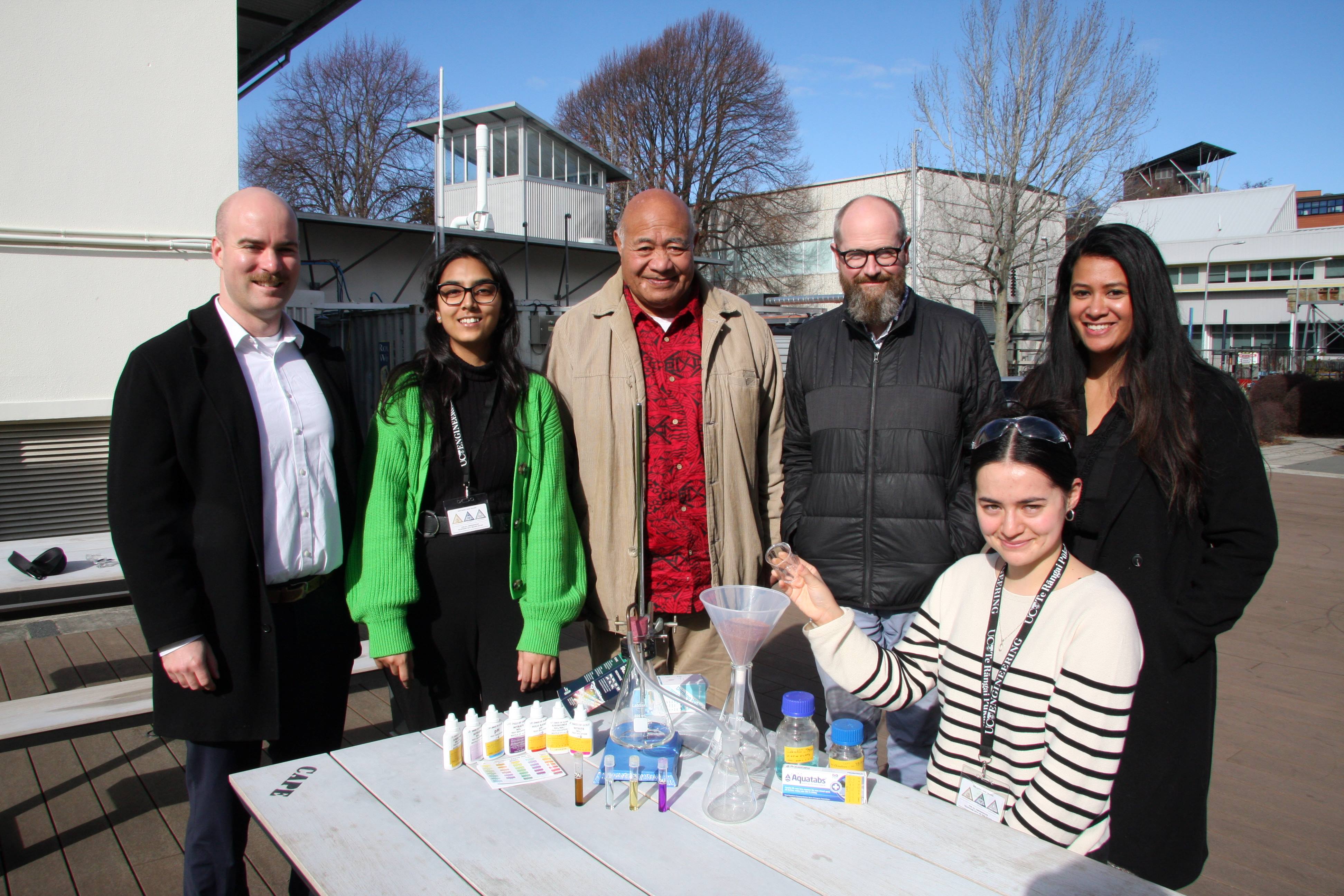
High School students around the world are now able to access a new learning module that combines practical engineering knowledge with Pacific perspectives. Dr Matthew Cowan and his team from the Faculty of Engineering have completed the first of two planned modules, which offers high school students around the world an engaging exploration of water treatment within Pacific Island contexts. The module is available for free to high schools, and has been designed with teachers for in-class delivery and provides a dynamic learning experience through activities such as mind-mapping, embodying various science, technology, engineering and maths roles, and conducting a choose-your-own-adventure chemistry lab. A follow-up release is currently underway to include a NZ Sign Language glossary to supplement this and future modules.
2024: Engineering Students Visit Tonga
Engineering students from Humanitarian Engineering Community Project (ENHE401) visited Tonga in November 2024 to engage with displaced communities after the 2022 Hunga Tonga–Hunga Haʻapai eruption and tsunami and learn how communities in Pacific Nations can be more resilient to climate change effects. During the visit, the students also serviced three water treatment systems installed by a previous student mission. The systems provide safe drinking water to school children and teachers. The students found applying their technical knowledge and skills to improve school children's health rewarding and motivating.
2024: Ultra-clean water device to help grow food for the future
A new device that purifies water cheaply and efficiently could revolutionise hydroponic growing and make farming more sustainable in a changing world. The photoelectrochemical water treatment device is being developed by a UC team led by Professor Alex Yip from the Faculty of Engineering. Professor Yip says the goal of the project is to enable a climate change resilient food supply. The device the team is working on is unique and low-cost because it uses solar energy, reducing reliance on electricity. “During the day, the smart device basically utilises solar light and converts it into chemical energy to remove pollutants from water, and during night-time or under weather conditions where we don't have so much sunlight, it will automatically switch to an electrical system which powers the chemical reaction, so this dual power source makes it more robust and adaptable to use,” Professor Yip says. He hopes when the product is realised it can be marketed internationally, particularly to countries where clean water is not guaranteed.
2023: Consumers perceptions on farming
Assurance systems such as freshwater monitoring are a cornerstone of New Zealand’s agribusiness. They enable compliance with regulations, product safety and international trade. But these systems face growing challenges. Urban communities demand higher transparency and engagement, consumers are increasingly sceptical of the effectiveness and compliance of farm operations. UC Professor Pavel Castka and Senior Research Fellow John Reid co-authored a white paper based on a recent survey, to address challenges and to improve farm assurance systems. The authors explored technological developments, public awareness and the potential to incorporate Māori perspectives. The survey was designed to gather public perceptions of farm assurance and identify ways to enhance public understanding of farming and its impacts. It suggests better farm monitoring systems could strengthen agriculture’s social license to operate. It also highlights the importance of transparency, accountability and engagement with interest groups and communities to foster trust and ensure compliance.
2023: Improving Waterways Catchment Management
In 2021 we reported on our ongoing efforts aimed at improving UC waterways. Waiutuutu Okeover Stream runs through our Ilam campus. We commenced the Waiutuutu Okeover Digital Twin Project, which involves a virtual model of the stream and surrounding infrastructure such as bridges and the local environment, with real-time information about the functional condition of water quality data and water data. Phase 1 of the project involved a trial basic sensor station, and Phase 2 expands on the concept with multiple sensor stations in-stream for continuous monitoring for real-time data and analysis. Development of Phase 2 is now underway. Phase 2 will assist us with day-to-day operational decisions of the Waiutuutu Okeover Stream, and also long-term strategic planning, environment reporting, trend analysis and management scenario modelling.
2023: Water Teaching and Monitoring
The streams flowing through our campus waterways provide us a range of teaching opportunities. For example, the macroinvertebrate and stream flow data collected by BIOL112 (Biology) and GEOG201 (Geography) provides a valuable addition to our usual monitoring. Our Waterways Plan aims to increase base flow, reduce contamination, and improve habitat for aquatic species. To assess these goals, water quality and quantity measurements are collected quarterly, and ecological monitoring is conducted annually. This is then compared to previous studies conducted on campus since 1979, to evaluate long-term change.
2022: Bringing clean water to Tongan schools
Using technical skills and community engagement, a group of UC humanitarian engineering students worked alongside staff and students at schools in the Kingdom of Tonga to install drinking water treatment systems, which consist of membrane filters and a UV chamber to disinfect water for 2,500 students in three schools.
2022: Banding together to boost study in waterways
UC and Lincoln University have signed an agreement to run postgraduate degree programmes in water science as jointly awarded courses – a first in Aotearoa New Zealand. The teaching and research partnership will be located in a new combined Waterways Centre on UC’s Ilam campus. Centre Director Professor James Brasington says the Centre is central to the freshwater sector, providing independent research, tertiary education and professional development in water science and management. “It is increasingly clear that we face a future characterised by periods with too little, then too much water, and water that is, far too often, too dirty to use safely or to support healthy ecosystems. Learning how to assess these risks, adapt and find new solutions that ensure sustainable and equitable access to water for both people and ecosystems couldn’t be a more urgent challenge. Our new programmes will provide graduates with the professional skills and theoretical understanding needed to drive transformative change,” says Professor Brasington.
2022: About hydrological and ecological engineering
Our Hydrological and Ecological Engineering Group conducts research worldwide on diverse yet interrelated topics such as hydrology, water resources, erosion control, integrated catchment management, stormwater, irrigation, flood prediction, water quality, mine drainage, engineered treatment wetlands and biofuels. The Group use the Environmental and Fluids labs for research. The fluids lab has one of the largest hydraulic flumes in New Zealand, used for sediment transport studies and another flume for landslide and erosion studies. The environmental lab is also well equipped, including a particle size analyser, gas chromatograph, climate-controlled sub-rooms, automated logging capabilities, ion analyser and total organic carbon analyser. Other analytical equipment for field research includes a rainfall simulator, topographical laser scanner, weather station, automatic samplers, river surveyor and flow tracker and multiple portable instruments for measuring water quality and flow, including an inductively coupled plasma-mass spectrometry (ICP-MS) instrument, used for advanced analytical techniques for determining trace element concentrations in a range of water, sediment and biomass samples.
2022: Water Resource Management Education
Managing the world’s precious water resources requires professionals to have multidisciplinary knowledge and an integrated approach. Water Resource Management students learn how to develop innovative and effective methods for the sustainable management of this critical resource in Aotearoa New Zealand and internationally. UC offers an extensive range of study options in water resource management, including:
- Advanced Water Resources
- Water Quality and Quantity Assessment
- Water Management, Policy and Planning
- Research and Communication Methods
- Master of Water Resource Management
- Water Resource Management PhD
- Applied Hydrogeology
2021: Water Resource Management
Sustainability and management of our valuable water resources, both supply and quality, is one of the biggest challenges facing Aotearoa New Zealand today. Water Resource Management studies investigates sustainable techniques to protect our freshwater resources and prevent further stresses and hazards upon this vulnerable commodity. Our School of Earth and Environment offers an extensive range of study options related to water resource management. Study options include freshwater resources, and freshwater science field skills, advanced water resources, water quality and quantity assessment, and water management, policy and planning. Students can also learn to evaluate the effects of domestic and commercial use on our aquatic ecosystems through practical survey fieldwork.
2021: Health Education for Goal 6
Global health challenges cross international borders and responses require international cooperation. Our Global Health course offers students the opportunity to explore key and emerging challenges and opportunities facing global health, major public health developments that have improved health outcomes for all, and how economic and political processes have shaped responses to global health problems. A major topic in classes explores key economic and environmental developments that have improved health outcomes including sanitation and the Sustainable Development Goals.
2021: Seafood waste product could help our streams
Associate Professor Aisling O’Sullivan and Professor Tom Cochrane are researching the use of waste seashells as a solution to reduce contaminants, such as nitrate and phosphorus, from our streams. Greenlipped mussels are a huge industry in New Zealand, producing over 90,000 tonnes of shells every year. Using mussel shells as a solution would help to combat nitrate leaching and meet climate change targets and would also help to reduce waste going to landfill by converting it into a high value, reusable product. The technology would help enable farmers to meet new regulations by reducing the number of nitrates leaching from their land, while providing a natural lime fertiliser and soil enhancer from the waste seashells. Plans involve filters being reused at the end of their lifespan, as a ‘regenerated’ filter or being crushed to make an organic fertiliser that can be applied back on the farm.
2021: Waterways Centre for Freshwater Management
The Waterways Centre, located at UC, is the first such centre to be established in any New Zealand university. Established in 2009, the Centre is a joint partnership between UC and Lincoln University. It is run by core staff and supported by a multi-disciplinary group of approximately 50 academic staff members with expertise in freshwater issues, drawn from both Universities. The Centre offers both undergraduate and postgraduate teaching programmes and qualifications, including research programmes. It also provides resources to learn more about freshwater systems and their response to change, and general information relevant to Canterbury’s water systems.
2021: Student recognition in Youth Awards
The passion and hard work of UC student, Alyce Lysaght, was recognised by the community through the Canterbury Youth Awards. Alyce is a final-year Natural Resources Engineering student, minoring in Water and Environmental Engineering Systems. As well as producing her podcast series, she has been the Engineering representative for Te Akatoki, and was on the Infrastructure Commission Te Ao Māori testing panel, as well as mentoring Māori EngMe students at UC.
2021: On-campus water restoration and conservation
Our Sustainability Office is an on-campus hub for students and staff and the wider community, interested in how they can create positive change and promote sustainable practices in their own lives and spaces. The water focused initiative run by the office informs our students and staff about water restoration and conservation. UC’s potable water is sourced from aquifers underneath the city which are fed by water from the Southern Alps. Staff and students can learn more about where our water comes from, how it is being used, how they can help conserve it, and learn about restoration work on the three waterways flowing through our own Ilam campus. There are also lots of helpful tips and free resources available, including a pocket map which shows the locations of the nearest drinking water fountains on campus to refill your bottle.
2021: Reusing water on campus
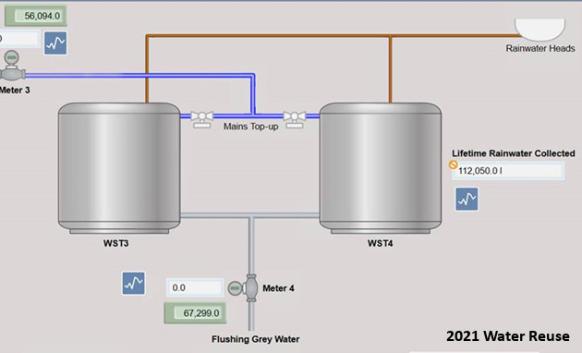
In order to reduce the impact of UC’s water requirements, UC's building design code specifies the use of rainwater harvesting, where a minimum of 2 months average annual rainfall must be captured, stored and reticulated to provide a minimum 50% toilet water used. The design guidelines are applied to all new buildings, and examples have already been commissioned and are in use. We measure how much water is collected and used, in order to track and validate our water reduction strategy.
2020: Centre for EcoLogical Technology Solutions
UC’s Centre for EcoLogical Technical Solutions research is mostly on Clean Water Technologies – both on pollution prevention and pollution mitigation. Research is conducted in partnership
with councils, Iwi and industry. Associate Professor Aisling O’Sullivan leads the diverse research group. Apart from clean water research, which included Associate Professor O’Sullivan patenting the storm water downpipe technology called Storminator™, other research projects include water quality monitoring and modelling, life cycle assessment involving quantifying whole-of-life environmental impacts of current and future wastewater treatment systems, and engineering education to enhance engineering students’ competency in sustainability.
2020: Recognising Emerging Career Researchers
The Early and Emerging Career Researcher Award recognises outstanding contributions to research made by a UC academic in the first decade of their career. Dr Jonathan Tonkin won the award in 2020. He is leading research seeking solutions on how to prepare freshwater ecosystems for an ever more uncertain future. Globally, he is recognised for his theoretical work in this area and also for his leadership on communicating the pressing need for new approaches to managing river flows and forecasting tools. In Aotearoa, his research findings paved the way to improving access to ecosystems for native migratory fish.
2020: Clean NZ Water
Water pollution is one of the biggest issues facing Aotearoa. UC’s Associate Professor Aisling O’Sullivan is leading a multi-disciplinary, multi-institutional team of nationwide researchers on a project aiming to help reverse water pollution with innovative sustainable treatment technologies, such as 3D-printed water filters made from biomaterials. “With Māori and iwi, we are developing a valuable project which has the potential to disrupt the water treatment sector – and most importantly return Te Mana o te Wai to our ecosystems and tangata whenua,” Associate Professor O’Sullivan says.
2020: Students Tackle Tongan Water Challenges
A real-life challenge was given to a group of UC final-year students. The challenge centred on Felemea, a real remote village in Tonga, which needed clean drinking water but had limited electricity to run a processing plant. The student team had to create an economically viable plan for a small-scale plant to desalinate and sterilise drinking water for Felemea. The project idea came from UC’s Geomechanics Laboratory Manager, Siale Faitotonu. A former high school teacher in Tonga, Siale visited Felemea on a UC research trip at the start of 2020. “This project is good for the students and for the community. Hopefully it will become a reality because that would be a blessing for Felemea, and there are also other islands in Tonga having similar problems with water, who might be able to use the same kind of processing plant,” he says. Siale was recently made a member of the New Zealand Order of Merit in the Queen’s Birthday Honours List 2021.
2020: Campus Waterways Restoration
The Waterways Action group is responsible for the Campus Waterways project aimed at restoring the ecological health and diversity of three campus waterways. The Group and Facilities Services work together to improve UC waterways, and their focus is on improving base flow (water quantity), reducing contamination (water quality) and improving habitat. In 2020 we switched from an automatic system to a manual system in using artesian water to heat our Erskine Building. This change enabled water to flow into campus waterways throughout the entire year, thereby reducing the impact on stream life. Progress was also made with filtering out contaminants, with significant work done installing storm-water filters to downpipes in ‘hotspot’ campus locations.
2020: Trials to Reduce Nitrates in Canterbury Waterways
Trials commenced in 2020 to reduce nitrates in Waitaha Canterbury waterways, backed by the Department of Conservation and Fonterra, with support from UC. A small springfed farm waterway near Springston was chosen as a suitable site for the installation of an innovative twostep solution involving a woodchip bioreactor and sediment trap. Professor Jon Harding, Canterbury Waterway Rehabilitation Experiment (CAREX) Science Lead from UC, says testing and proving solutions will ultimately help farmers, landowners, water management agencies and others be
able to take action and make a tangible difference. Monitoring will continue for the year, with results and updates to be published.
2020: Water Resources Education and Research
UC has a range of innovative education and research options for the sustainable management of this critical resource, including:
• Water Resource Management PhD
• Master’s Theses - topic of relevance to Water Resource Management
• Water Quality and Quantity Assessment course
• Research and Communication Methods course
• Applied Hydrogeology course
• Advanced Water Resources course – jointly run by UC and Lincoln University
• Water Management, Policy and Planning course – jointly run by UC and Lincoln University