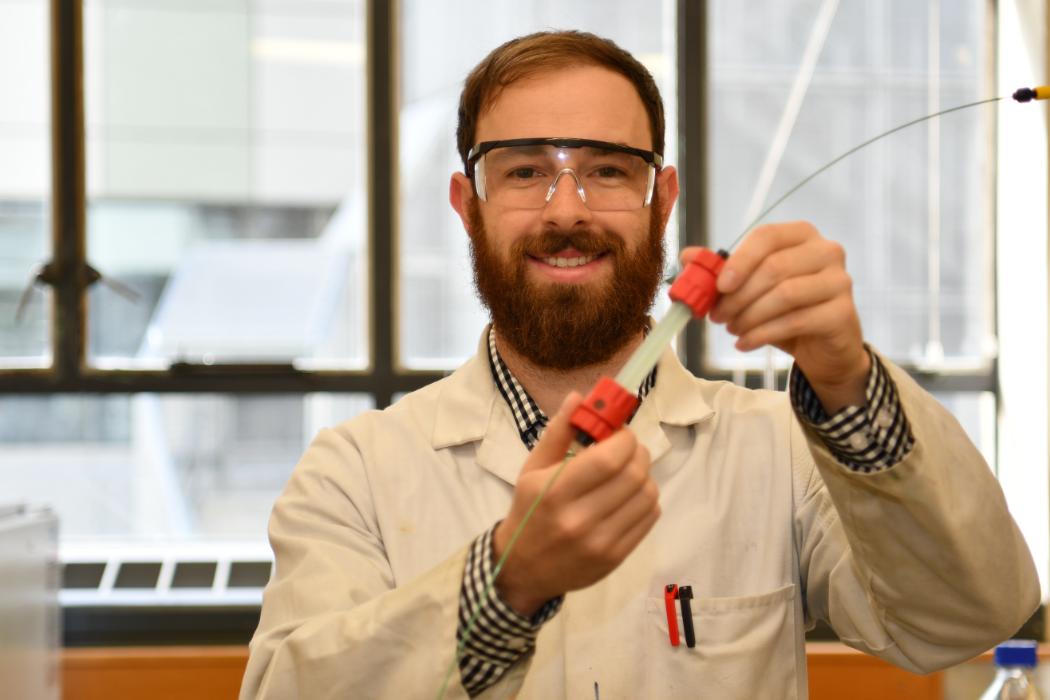

Photo caption: Dr Sean Feast holding a 3D-printed chromatography column.
Key points
UC research has led to a patented 3D-printed chromatography technology designed to improve the purification of biological medicines.
The technology can reduce processing steps, increase efficiency, and lower production costs for biopharmaceutical manufacturing.
Research developed at UC has been commercialised through spinout company Precision Chroma.
Transforming the manufacture of biological medicines
Many of today's most advanced medicines, including protein therapies, vaccines, and cell and gene therapies, rely on complex manufacturing processes. One of the most important steps is chromatography, which separates valuable biological molecules from unwanted materials during production.
Researchers at the University of Canterbury (UC) have spent more than a decade developing a new approach to chromatography using advanced 3D-printing technologies. The work originated from research led by Professor Conan Fee from the School of Product Design and was further developed by Dr Sean Feast through postgraduate and postdoctoral research at UC.
A new approach to separation technology
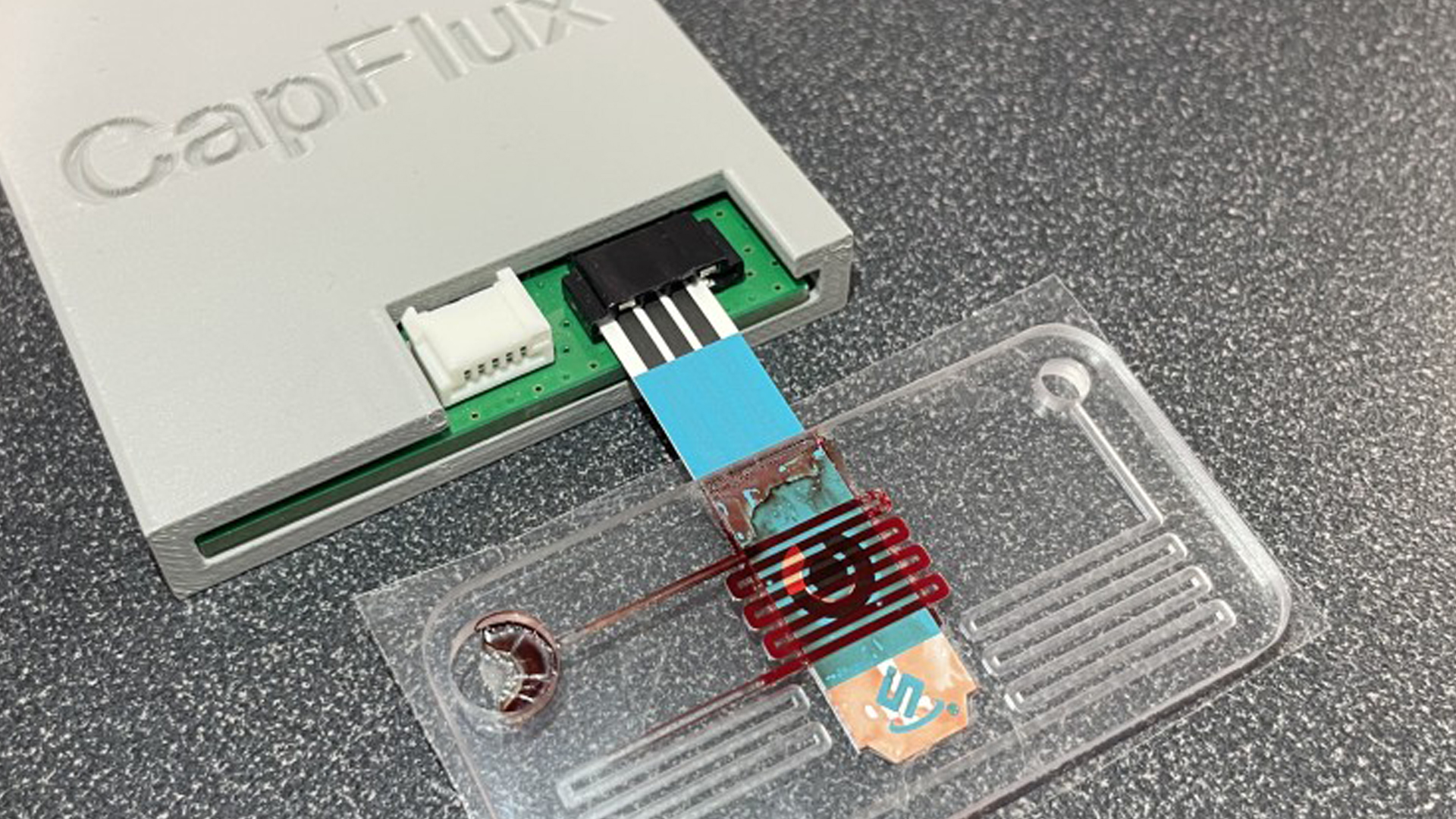
Traditional chromatography systems rely on packed particles and multiple processing steps that can be slow, costly, and result in product losses. UC researchers developed patented 3D-printed chromatography columns that apply engineering design principles to optimise fluid flow and improve separation performance.
The resulting technology, known as Printed Monolith Adsorption (PMA), enables faster processing, reduces pressure limitations, and can simplify the purification of biological products. The technology has the potential to improve the manufacture of proteins, antibodies, vaccines, and gene therapies while reducing production costs.
From research breakthrough to commercial impact
To accelerate commercialisation, UC partnered with Bridgewest Ventures, a Callaghan Technology Incubator and venture capital firm to launch Precision Chroma in January 2022 with Sean as founding CEO and Conan as Technical Advisor.
The company was established to commercialise the UC-developed technology and help address growing global demand for more efficient biomanufacturing solutions.
Talk to Professor Conan Fee about the underlying technology, chromatography, biomanufacturing and biotechnology innovation, or contact the Commercialisation Team to explore partnership, licensing, and investment opportunities.
Last updated: October 2026
Related topics
Research Commitments
Signature Capabilities
Sustainable Development Goals (SDGs)


Contact
-
Conan Fee
10 September 2026

-
Conan Fee
-

Conan Fee
Chemical Formulation Design
Head of School
-
Conan Fee
-
Commercialisation Team
02 October 2026
Research and Innovation’s Commercialisation Team assists UC Researchers and students across all disciplines and faculties to assess, protect and commercialise research and intellectual property for New Zealand and global impact.

-
Commercialisation Team
Research and Innovation’s Commercialisation Team assists UC Researchers and students across all disciplines and faculties to assess, protect and commercialise research and intellectual property for New Zealand and global impact.
-
Commercialisation Team
Research and Innovation
-
Commercialisation Team
Research and Innovation’s Commercialisation Team assists UC Researchers and students across all disciplines and faculties to assess, protect and commercialise research and intellectual property for New Zealand and global impact.
We gratefully acknowledge support from Bridgewest Ventures and Ministry of Business Innovation and Employment.
Read other showcases
Take a look at our showcases to see UC’s research expertise in practice.