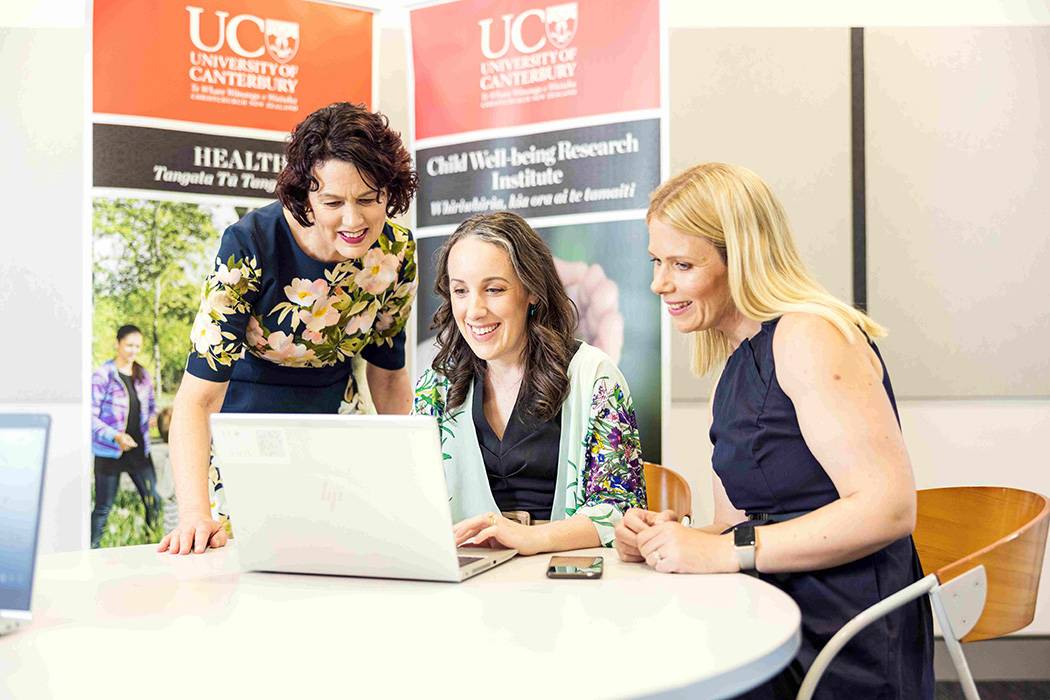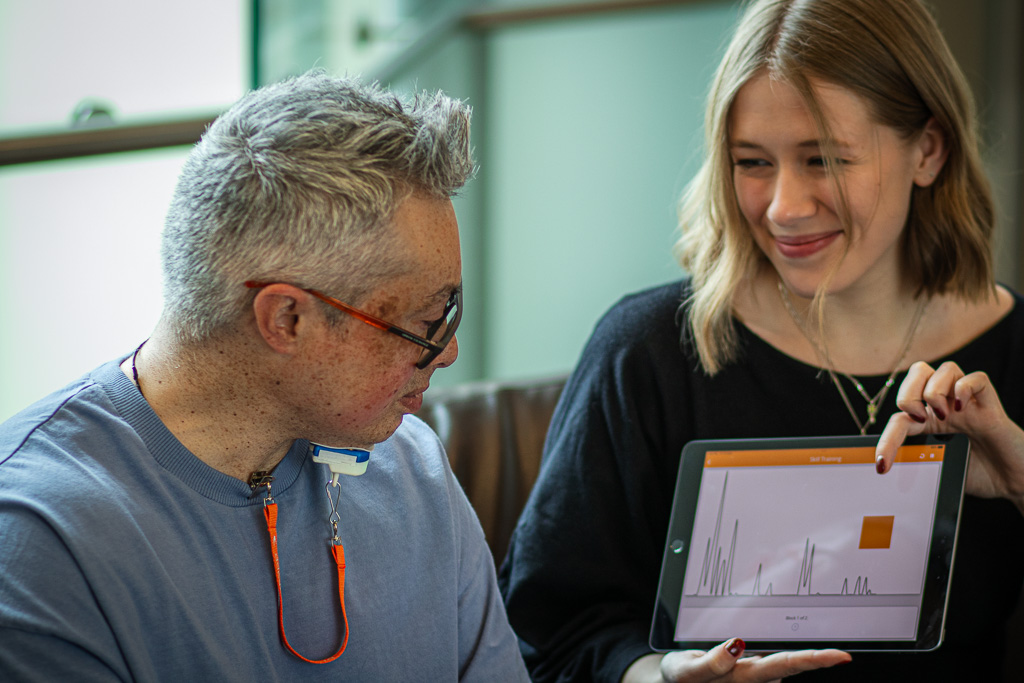

Photo caption: SwalTech patient engagement specialist Eric UfiPoa Taule'ale'ausumai and PhD candidate Maddie Mills using biofeedback technology.
Key points
UC spinout SwalTech has developed a biofeedback device that supports rehabilitation for people with swallowing difficulties.
The technology allows patients to undertake intensive therapy at home while clinicians monitor progress remotely.
Research developed at UC's Rose Centre for Stroke Recovery and Research has been translated into a commercial health technology now used across Australia and Aotearoa New Zealand.
Addressing a major health challenge
Difficulty swallowing, known as dysphagia, can result from stroke, Parkinson's disease, traumatic brain injury, head and neck cancer, and developmental conditions. Beyond its health impacts, dysphagia can affect confidence, independence, and participation in everyday life.
Research led by Professor Maggie-Lee Huckabee at the University of Canterbury’s (UC) Rose Centre for Stroke Recovery and Research has focused on developing more effective approaches to swallowing rehabilitation and improving outcomes for patients.
Turning research into rehabilitation technology
The research led to the development of BiSSkiT (Biofeedback in Strength and Skill Training), a research tool that uses biofeedback to help patients improve swallowing function.
Building on this work, Maggie-Lee co-founded, with UC alumni Steve Wakefield, SwalTech (Swallowing Technologies Ltd) to commercialise the technology. The result is BiSSkApp (Biofeedback in Strength and Skill Application), a digital rehabilitation platform that enables patients to practise swallowing exercises with real-time visual feedback.
Patients wear a sensor beneath the chin that measures muscle activity during swallowing. The information is displayed on a tablet screen, allowing users to see and adjust their swallowing movements through guided practice.
Enabling therapy beyond the clinic
Unlike approaches focused solely on muscle strengthening, BiSSkApp supports skill-based rehabilitation that helps patients relearn and refine swallowing behaviours.
The technology enables clinicians to establish treatment plans and then monitor progress remotely while patients continue therapy at home. This supports more intensive rehabilitation, improves access to care, and makes more efficient use of clinical resources.
Since its commercial launch in 2025, the technology has been adopted by public and private healthcare providers across Australia and Aotearoa New Zealand.
Improving quality of life
The goal of the research extends beyond clinical outcomes.
For many people, regaining the ability to eat and drink safely means reconnecting with family, friends, and everyday social activities. Early patient and clinician feedback indicates improvements in swallowing function, confidence, and independence.
Food is how we nurture and engage with people. When you take food away, people drop away too. The goal throughout my life's work is to help patients eat again and have a better quality of life.– Professor Maggie-Lee Huckabee
From UC research to global impact
SwalTech demonstrates how university research can be translated into technologies that deliver real-world health benefits.
The company continues to work closely with UC's Rose Centre, where ongoing research, clinical evaluation, and patient insights help drive future product development and innovation.
Talk to Professor Maggie-Lee Huckabee about swallowing rehabilitation, dysphagia, stroke recovery, and digital health technologies. Contact the Commercialisation Team to explore licensing, partnership, and investment opportunities in in health innovation, rehabilitation, and medical technology.
Last updated: October 2026
Related topics
Research Commitments
Signature Capabilities
Sustainable Development Goals (SDGs)

Contact
-
Maggie-Lee Huckabee
10 September 2026

-
Maggie-Lee Huckabee
-
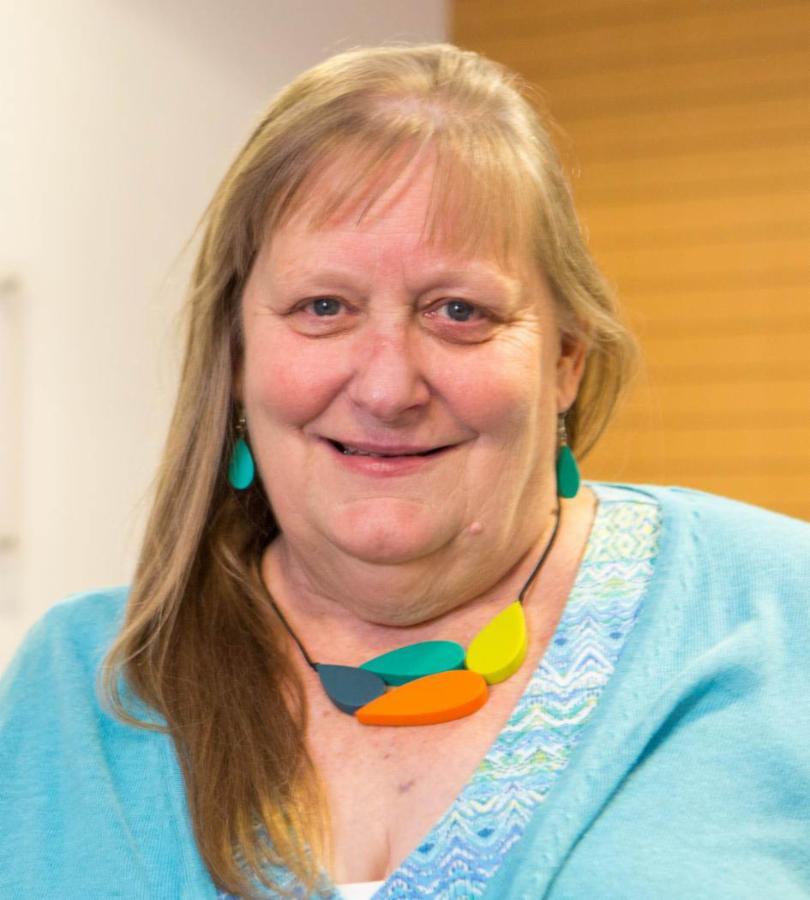
Maggie-Lee Huckabee
Distinguished Professor
Rose Centre Deputy-Director
-
Maggie-Lee Huckabee
-
Commercialisation Team
02 October 2026
Research and Innovation’s Commercialisation Team assists UC Researchers and students across all disciplines and faculties to assess, protect and commercialise research and intellectual property for New Zealand and global impact.

-
Commercialisation Team
Research and Innovation’s Commercialisation Team assists UC Researchers and students across all disciplines and faculties to assess, protect and commercialise research and intellectual property for New Zealand and global impact.
-
Commercialisation Team
Research and Innovation
-
Commercialisation Team
Research and Innovation’s Commercialisation Team assists UC Researchers and students across all disciplines and faculties to assess, protect and commercialise research and intellectual property for New Zealand and global impact.
Read other showcases
Take a look at our showcases to see UC’s research expertise in practice.