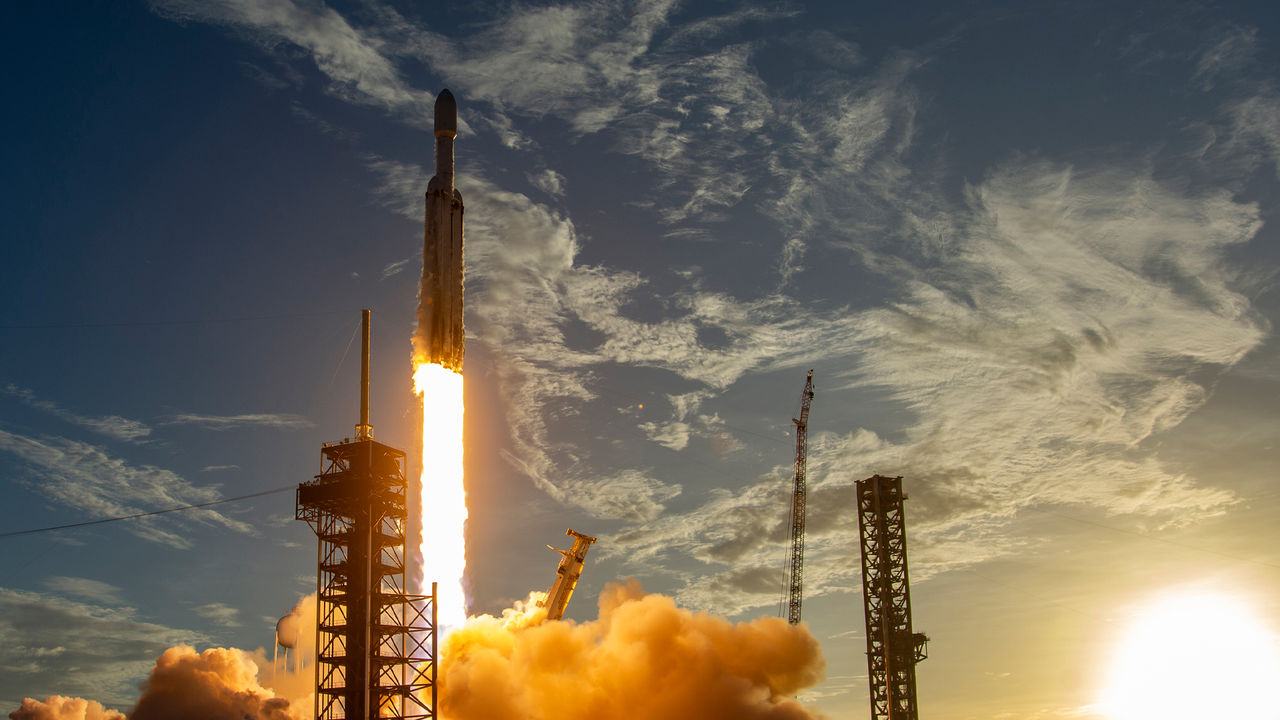


Photo caption: Space telescope liftoff. Image source: NASA
Key points
UC researchers are investigating how rocket launches affect Earth’s atmosphere, ozone layer, and climate.
The research combines atmospheric science, aerospace industry practises, and environmental modelling to evaluate the impacts of a rapidly growing space sector.
Thoughtful fuel choices and launch practices would significantly reduce harmful environmental impacts.
Understanding environmental impacts of space launches
The global space industry is expanding rapidly, driven by growing demand for space-based services including satellite communications and Earth observation. As launch activity increases, researchers are working to better understand how rocket emissions affect the atmosphere and climate.
Research led by Professor Laura Revell and Associate Professor Michele Bannister at the School of Physical and Chemical Sciences, University of Canterbury (UC) examines how rocket launches affect the upper atmosphere, particularly the Earth's protective ozone layer. Their work combines atmospheric chemistry, environmental modelling, and climate science to identify pathways for more sustainable growth of the space sector.
Climate modelling and high-performance computing
Understanding the long-term impacts of rocket launches requires sophisticated computational tools. UC researchers use advanced climate and atmospheric chemistry models, supported by high-performance computing, to simulate how different launch scenarios, fuels, and emission profiles may affect atmospheric composition and ozone recovery.
These are the same types of models used to project future climate change under different greenhouse gas emission scenarios. By integrating large atmospheric datasets and modelling future launch growth, researchers can evaluate potential environmental impacts before they occur.
The simulations provide valuable evidence for industry, regulators, and policymakers seeking to balance the benefits of space activities with environmental stewardship.
Protecting the ozone layer
The ozone layer protects life on Earth from harmful ultraviolet radiation and is gradually recovering following international action under the Montreal Protocol. However, some rocket emissions, particularly chlorine-containing compounds and black carbon particles, have the potential to affect that recovery, if launch activity continues to increase.
Using advanced atmospheric models, UC researchers have evaluated future launch scenarios and identified approaches that could minimise environmental impacts. Their findings suggest that sustainable growth of the space industry is achievable when environmental considerations are incorporated into launch technology development, fuel selection, and operational decision-making from the outset.
Supporting responsible growth in space
As countries and companies around the world continue to invest in space technologies, ensuring that growth occurs sustainably is becoming increasingly important.
The research provides a scientific foundation for managing the environmental impacts of future launch activity while supporting innovation and economic development. By combining atmospheric science, climate modelling, and high-performance computing, UC researchers are helping shape a future where the benefits of space can be realised without compromising the health of the atmosphere.
It's entirely possible to create a launch industry future where we avoid harmful effects. It will take keen effort and enthusiasm from industry and regulators, working together with scientists, but this needs to start now, not after the damage is done.– Associate Professor Michele Bannister
Last updated: October 2026
Related topics
Enabling Infrastructure
Sustainable Development Goals (SDGs)


Contact


We gratefully acknowledge support from Rutherford Discovery Fellowships.
Read other showcases
Take a look at our showcases to see UC’s research expertise in practice.