

Key points
UC researchers are trialling the use of Nuclear Magnetic Resonance technology for drug checking applications.
The research combines advanced analytical chemistry and mathematical modelling to identify and analyse illicit substances.
Findings could help improve drug checking services by detecting complex mixtures and providing more detailed information about samples.
Applying advanced chemistry to public health
Drug checking services play an important role in reducing harm by helping people better understand the contents of substances circulating in the community.
Research led by Professor Daniel Holland from the University of Canterbury’s (UC) Department of Chemical and Process Engineering is exploring whether advanced analytical technologies can enhance existing drug checking methods and provide more comprehensive information about drug samples.
The work is being undertaken in partnership with PHF Science, KnowYourStuffNZ and other drug checking organisation in New Zealand, bringing together expertise in analytical chemistry, mathematical modelling, and public health.
Testing a new generation of drug checking technology
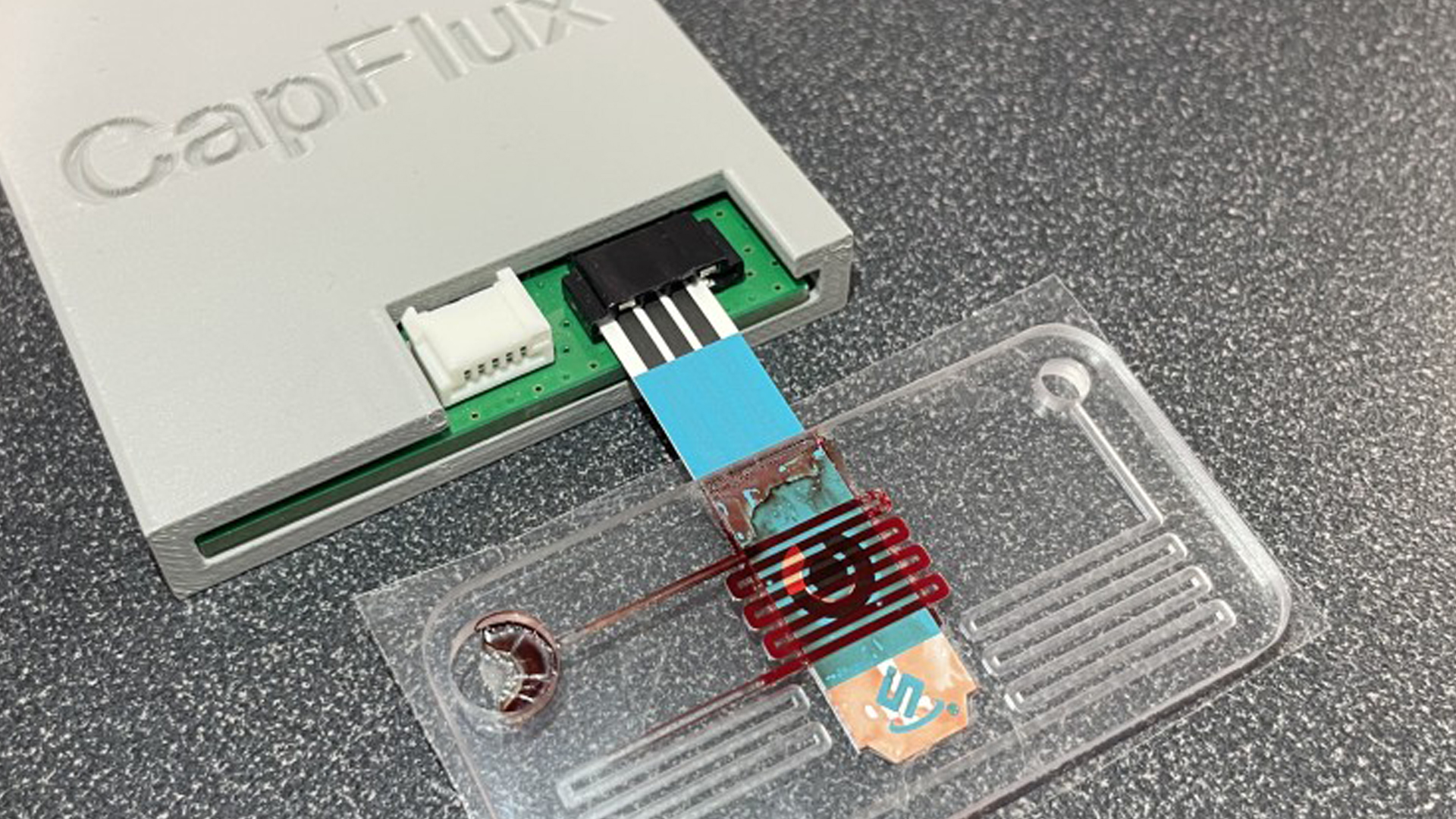
The research uses benchtop Nuclear Magnetic Resonance (NMR) technology, combined with advanced mathematical modelling, to analyse samples submitted to drug checking services.
While infrared spectroscopy remains the primary technology used in field-based drug checking, NMR has the potential to provide additional information about the composition of substances. This includes the ability to identify complex mixtures, detect trace compounds, and quantify the amount of specific substances present in a sample.
A key objective is trialling whether the technology can operate effectively using small sample sizes and under conditions that resemble real-world drug checking environments.
From fundamental research to real-world application
The project builds on several years of foundational research by UC researchers developing analytical methods and reference databases for drug identification.
Working with real-world samples allows researchers to evaluate how the technology performs outside traditional laboratory environments and determine whether it could eventually complement existing drug checking approaches.
This trial is significant because we will have to process real samples, with limited quantities of material, and limited laboratory facilities. It is a critical step towards determining whether the technology can be implemented in the field.– Professor Daniel Holland
The research combines expertise in chemical engineering, spectroscopy, chemometrics, and data analysis, demonstrating how advanced science can contribute to practical public health challenges.
Supporting evidence-based harm reduction
Aotearoa New Zealand's regulatory environment provides unique opportunities to evaluate innovative drug checking technologies in partnership with frontline services.
By examining how analytical tools perform in real-world settings, researchers can help ensure that future technologies are accurate, reliable, and capable of providing meaningful information to support decision-making.
The work may also have applications beyond drug checking, contributing to the broader development of rapid chemical analysis technologies.
Building capability through collaboration
The project highlights the value of collaboration between researchers, public health organisations, and industry partners in translating scientific innovation into practical tools.
By combining advances in analytical chemistry, spectroscopy, and mathematical modelling, UC researchers are helping explore new ways to improve chemical identification, support harm reduction, and advance public health outcomes.
Talk to Professor Daniel Holland about analytical chemistry, spectroscopy, chemical analysis, and emerging technologies for rapid substance identification.
Last updated: October 2026
Related topics
Research Commitments
Signature Capabilities
Enabling Infrastructure
Sustainable Development Goals (SDGs)

Contact

We gratefully acknowledge support from the Ministry of Business, Innovation and Employment, PHF Science, and KnowYourStuff NZ.
Read other showcases
Take a look at our showcases to see UC’s research expertise in practice.