

Photo caption: School of Forestry students planting a tree at Cass.
Key points
- UC’s activities at Cass demonstrate that long-term ecological research combined with active conservation can restore high-country biodiversity.
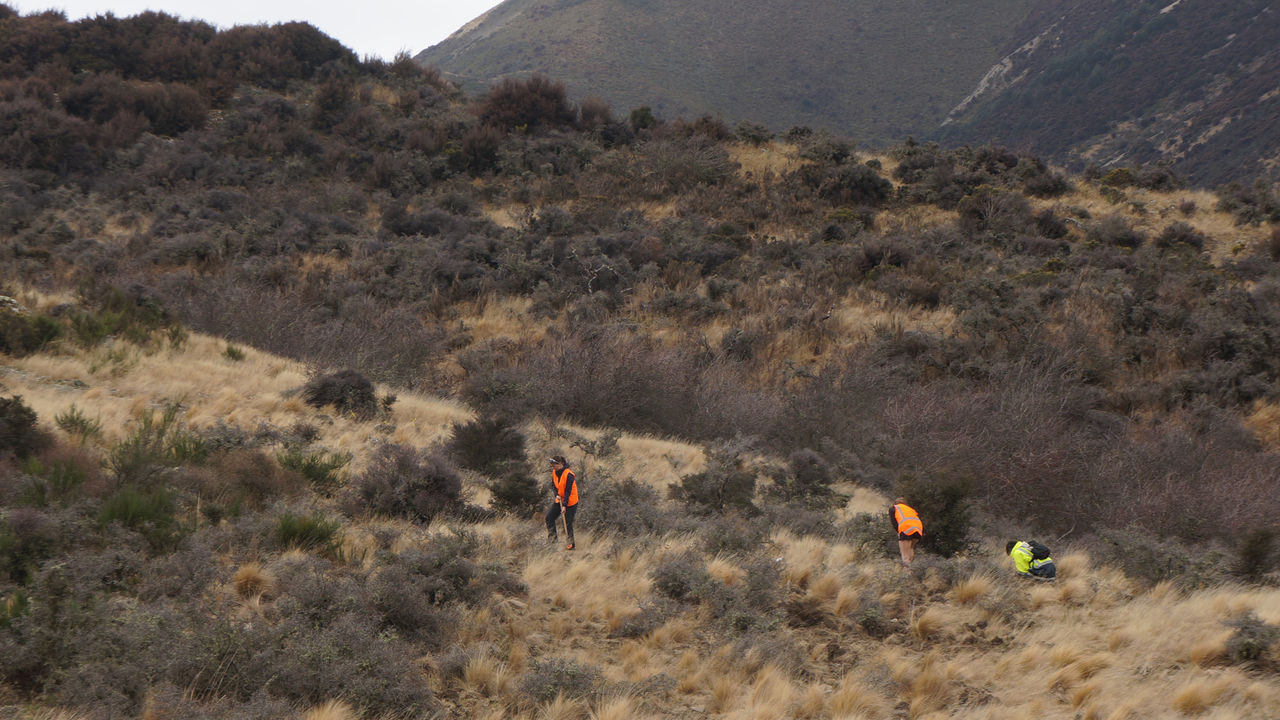
- In the Cass Mountain Research Area more than 1,700 hectares are actively managed through integrated pest and weed control, habitat restoration, and native planting programmes.
- The Cass Field Station facilitates access to alpine ecosystems for researchers and students, enabling better understanding and conservation of these distinctive environments.
A living laboratory
The Cass Field Station and Mountain Research Area support a wide range of ecological and environmental research while actively demonstrating how long-term conservation can restore biodiversity at landscape scale. The research area provides a unique opportunity to observe ecological change over time and evaluate how ecosystems respond to environmental pressures and management interventions. Such monitoring work provides valuable insights into the resilience of Aotearoa New Zealand’s mountain environments.
The field station supports research, undergraduate teaching, and environmental stewardship in one of Aotearoa New Zealand's most distinctive high-country environments. Researchers investigate topics including ecosystem recovery, the impact of fire, invasive species management, alpine ecology, freshwater ecosystems, and biodiversity conservation.
Students gain hands-on experience contributing to field research and undertaking ecological monitoring, while also helping restore native habitats and strengthen ecosystem resilience. By combining research, teaching, and on-the-ground restoration, Cass generates practical knowledge that supports conservation efforts both within the research area and across Aotearoa New Zealand.
Ecological restoration at Cass
A key component of biodiversity restoration at Cass is UC's native tree planting programme. Since 2022, researchers and students from the University of Canterbury's School of Forestry have led the planting of 500 eco-sourced mountain beech trees (Fuscospora cliffortioides) each year to support the recovery of indigenous forest ecosystems.
The tree-planting programme brings together researchers, students, and community organisations, including the UC Students’ Association’s Forestry Society and the Waimakariri Ecological and Landscape Restoration Alliance, connecting ecological research with practical conservation action.
Cass restoration and conservation at a glance
- More than 1,770 hectares actively managed for pests and weeds since 2005
- 5 km of Grasmere Stream under active restoration since 2014
- 60 wasp bait stations deployed annually
- Thousands of wilding conifers removed through ongoing control programmes
- 32 long-term photo monitoring sites tracking vegetation change since 1996
- 500 mountain beech trees planted annually since 2022
Managing invasive species
Protecting biodiversity at Cass also means addressing the threats posed by invasive species. UC actively manages weeds and animal pests across the mountain research area, combining long-term restoration with ecological monitoring to understand how ecosystems respond to management interventions.
Wilding conifers, including Douglas fir, threaten to transform native grasslands and shrublands if left unchecked. Thousands of wilding conifers have been removed over the past two decades through hand-cutting and helicopter-based control programmes. Gorse, broom, Russell lupins, and invasive willows are also controlled to protect native habitats, waterways, and wetlands.
Along Grasmere Stream, a 5 km restoration area has been actively managed since 2014, with willow removal helping restore natural stream processes and improve habitat for native freshwater species.
Ongoing programmes targeting possums, deer, and pigs have been operating for more than 20 years, reducing pressure on native vegetation and supporting ecosystem recovery. UC also deploys around 60 bait stations annually to control invasive German and European wasps.
Witnessing recovery
These long-term management efforts are producing measurable outcomes. Vegetation monitoring and photo-point records have documented increasing native vegetation cover across parts of the research area, demonstrating how sustained restoration and pest management efforts can support biodiversity recovery in Aotearoa New Zealand's high-country environments.
Restoring the Cass Mountain Research Area ecosystems takes patience and long-term commitment. It's incredibly rewarding to see native vegetation returning, waterways recovering, and students contributing directly to the stewardship of this special landscape.– Jenny Ladley, Field Services Manager
As a base camp for ecological research, student learning and involvement, and ongoing restoration actions, Cass continues to play a vital role in understanding and safeguarding biodiversity in Aotearoa New Zealand’s high country.
Talk to Dr Sarah Wyse or Associate Professor David Evison about forest ecology and ecosystem resilience at Cass.
Last updated: October 2026
Related topics
Research Commitments
Enabling Infrastructure
Sustainable Development Goals (SDGs)