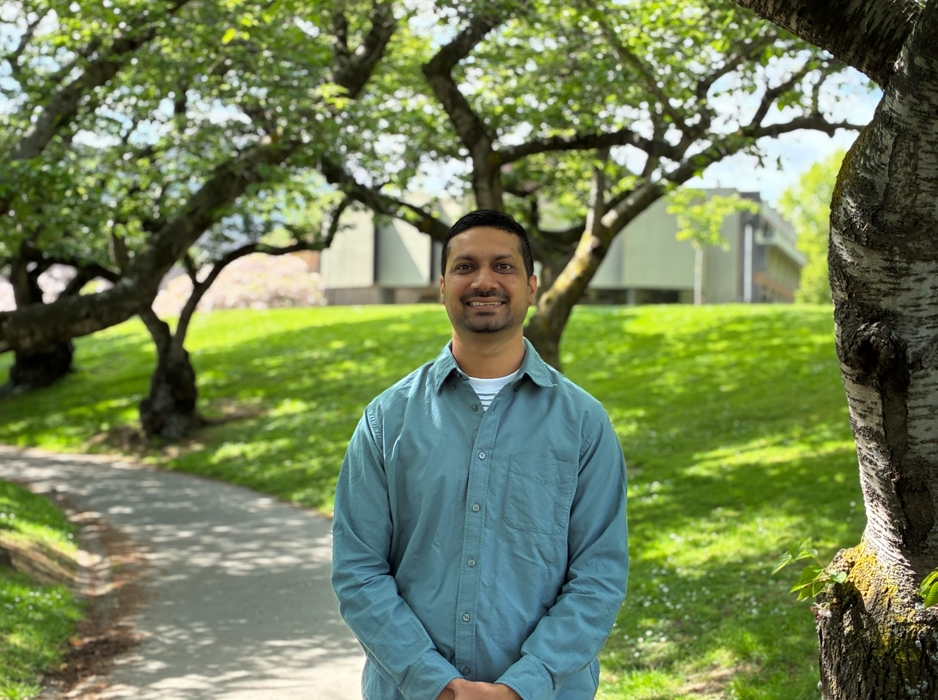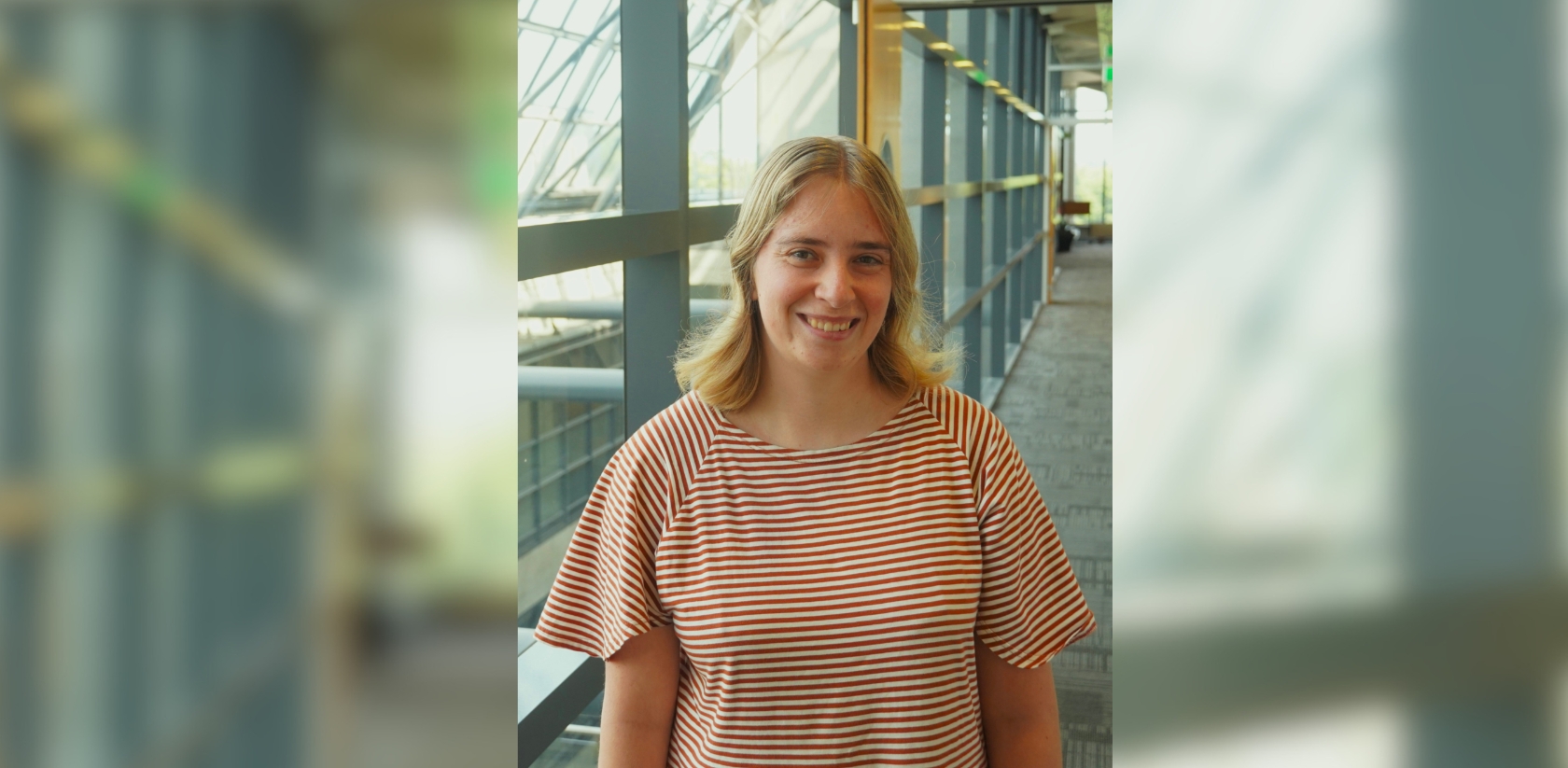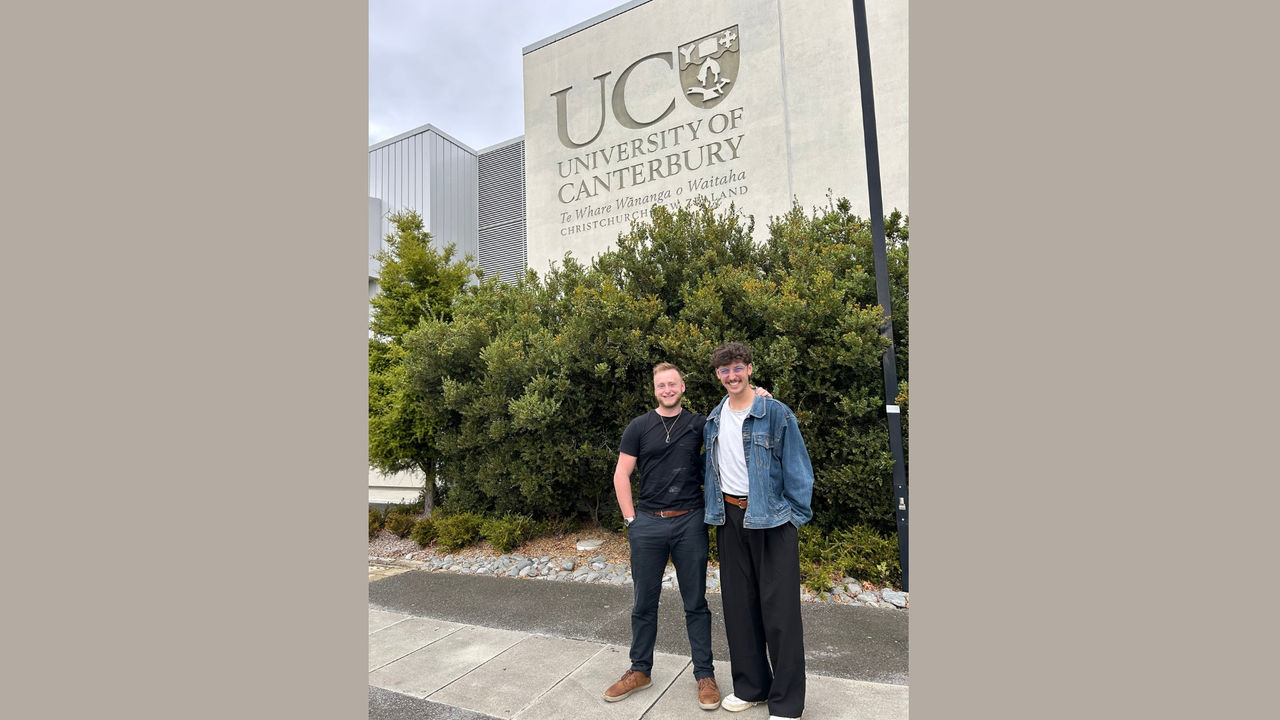


Bachelor of Engineering with Honours students Derek Dossmann and Emmanuel Bourgeois investigated the use of coral sand in biosand filters as part of a final-year Te Whare Wānanga o Waitaha | University of Canterbury (UC) research project.
The project tested coral sand, abundant in Tonga, as a potential replacement for conventional silica sand in biosand filters, with the aim of making household filters more affordable, easier to produce locally and better suited to the local communities.
“Education is the only true solution, because real solutions only work when they belong to the people who use them,” Dossmann says.
Through UC’s existing relationships in Tonga, Dossmann met local, university and government representatives to better understand the realities of introducing household biosand filters in Pacific Island communities.
“I was looking at the practical side of introducing the filters in Tonga, including whether they could be made affordably, use local materials and fit community needs,” Dossmann says.
He says those conversations reinforced the importance of education and community ownership.
“People want to become self-sufficient. They don’t want to have to be dependent on anyone else,” he says.
Bourgeois led the technical testing in New Zealand, building and assessing coral sand biosand filters. The tests showed the filter reduced E. coli bacteria in the water by more than 98%, indicating coral sand could be an effective filtration material.
“Testing in Tonga indicated pathogen levels in the untreated water were above safe limits, underlining the need for reliable household water treatment.
“The water may look clean, but you don’t know what’s in it or whether it’s harmful. That’s why filtration matters,” he says.
The research, supervised by UC Associate Professor Ricardo Bello-Mendoza and with technical assistance from Siale Faitotonu, has prompted interest in Tonga with the Ministry of Education and the Tonga Health Promotion Foundation selecting nine schools to run a pilot called Clean Water for Primary Schools in Tonga.
Bourgeois also applied a similar approach while volunteering in Nepal, where conventional sand could be used in an established biosand filter design. While the setting and materials were different, he says the focus was still on sharing knowledge, rather than simply building filters for people.
“It doesn’t mean anything if whatever you set up falls down the day after you leave. This isn’t a project that will just sit on a shelf. It’s something that can be taken and used wherever it’s needed, and for me, that’s the coolest part,” Bourgeois says.
For Dossmann, the project also reinforced the value of student research that responds to a specific, real-world need.
“We can’t fix every problem everywhere, but we can find a specific example of a problem we can help solve, and that’s something I’m proud to have started,” he says.
.png)