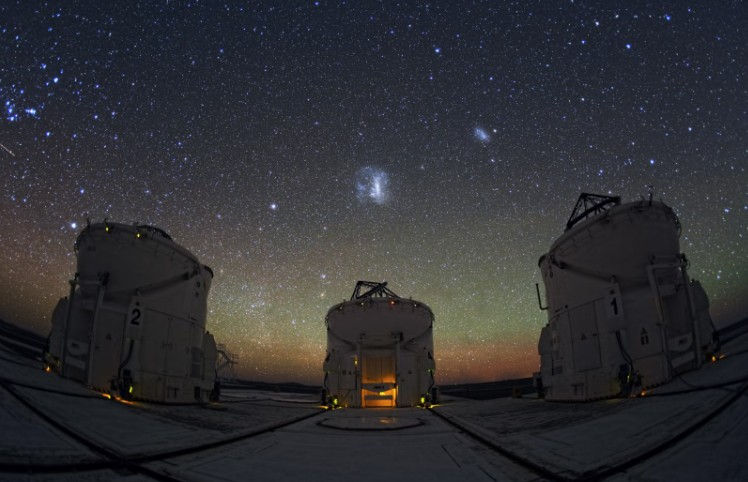


Photo caption: The European Southern Observatory (ESO)'s Paranal Observatory in Chile showing 3 of the 4 VLT Auxiliary Telescopes that feed light into the Very Large Telescope Interferometer, the world's most advanced optical instrument. Photo credit: Y. Beletsky (LCO)/ESO
Associate Professor Michele Bannister, from Te Whare Wānanga o Waitaha | University of Canterbury’s School of Physical and Chemical Sciences, is part of the international team that used the European Southern Observatory's Very Large Telescope (VLT) to study the composition of the comet in detail.
By measuring specific chemical fingerprints — the first observations of this kind for a comet that formed outside the Solar System — the team found that 3I/ATLAS likely originated in the outskirts of an old star system. The findings shine new light on the formation history of this comet, indicating that it may be much older than the Sun.
Interstellar comets are icy objects formed around a star other than the Sun that occasionally wander into our Solar System.
Associate Professor Bannister says interstellar comets offer a rare opportunity to study material from beyond our own Solar System.
“Objects like 3I/ATLAS are remarkable because they give us a direct glimpse of material formed around another star,” Professor Bannister says.
“By studying its chemical fingerprint, we can begin to understand the conditions in a planetary system very different from our own — and potentially much older than the Sun.”
"They are sort of fossils from a planetary formation process that happened very far away, but that we get the chance to study from much closer," says astronomer Dr Cyrielle Opitom, a researcher at the University of Edinburgh, United Kingdom.
Together with Dr Jean Manfroid and Dr Damien Hutsemékers of the University of Liège, Belgium, Dr Opitom led the study of 3I/ATLAS, published today in Nature Astronomy.
3I/ATLAS is the third interstellar object ever discovered, after 1I/ʻOumuamua and 2I/Borisov. It was found as it was approaching the Sun, spending enough time in our Solar System for astronomers to study it in detail.
While it was difficult to measure the composition of the first two interstellar objects — in the first, astronomers didn’t detect gas and the second was too faint — this was not the case for 3I/ATLAS.
Thanks to the object's unprecedented brightness, Dr Opitom, Manfroid, Dr Hutsemékers and their team were able to measure the comet's isotopic ratios: the relative amounts of different forms of the same element.
Using the UVES instrument on ESO's VLT, the team measured ratios of carbon and nitrogen isotopes in cyanide molecules present in the gas around the comet. These ratios are known to be a good indicator of a comet’s origin, as they are very sensitive to the physical conditions in the formation environment and are not expected to change much as the comet travels on through space.
“Unlike comets from our Solar System, this interstellar visitor carries unusually high carbon and nitrogen isotopic ratios,” explains Dr Aravind Krishnakumar, a researcher at the University of Liège and co-author on the new study.
A similar study led by Dr Martin Cordiner at the NASA Goddard Space Flight Center, United States, and published late last month in Nature, found a similar isotopic ratio of carbon, as well as elevated levels of deuterium, also called heavy hydrogen. The study used data from the James Webb Space Telescope, a joint project of the United States, European and Canadian space agencies.
Overall, the findings by Dr Opitom’s team indicate that the comet likely formed in the outer regions around an old, low-metallicity star. A low-metallicity star is one with few elements heavier than helium in its composition, and is thought to have formed when the Universe was much younger — and less chemically rich — than it is now.
The team suspects that 3I/ATLAS therefore originated around a star much older than the Sun.
“3I/ATLAS is a really exciting opportunity to probe the composition of another planetary system, one that formed long before our Sun and Solar System even existed," says co-author Dr Rosemary Dorsey, a researcher at the University of Helsinki, Finland and UC alumni.
Evidence from the studies by the different teams points to 3I/ATLAS being more than twice as old as the Sun.
As 3I/ATLAS moves away from the Sun and gets progressively fainter, its observations at the VLT are also nearing their end. ESO's upcoming Extremely Large Telescope will allow similar measurements for future interstellar objects, including those less bright than 3I/ATLAS.
"The field of interstellar objects is still very new, and we do not really know what to expect. Every time a new one is discovered, we have new surprises," Dr Opitom says.
More information
This research was presented in a paper published in Nature Astronomy: High nitrogen and carbon isotopic ratios in the interstellar comet 3I/ATLAS.


What to read next
UC celebrates its Manaaki New Zealand scholar
After completing their studies at the University of Canterbury, 15 Manaaki New Zealand scholars are preparing for the next chapter of their journeys.

NZ study reveals gaps in women's heart healthcare
A review of 25 years of New Zealand research has revealed significant gaps in women's heart healthcare, highlighting opportunities to improve diagnosis, treatment and outcomes.

History goes hi-tech at Awaroa Godley Head
The University of Canterbury's HIT Lab is helping Awaroa Godley Head visitors enjoy a more immersive experience of the World War II heritage site.

UC geography graduate honoured for global science leadership
UC alumnus Distinguished Professor Emeritus Iain Hay has received a prestigious international Fellowship recognising his contributions to geography and scientific collaboration.

Are Kiwi businesses jumping blindly on the AI bandwagon?
AI doesn’t have to play an inevitably dominant role in our lives, businesses and future, argues a guest speaker for an upcoming UC public lecture.

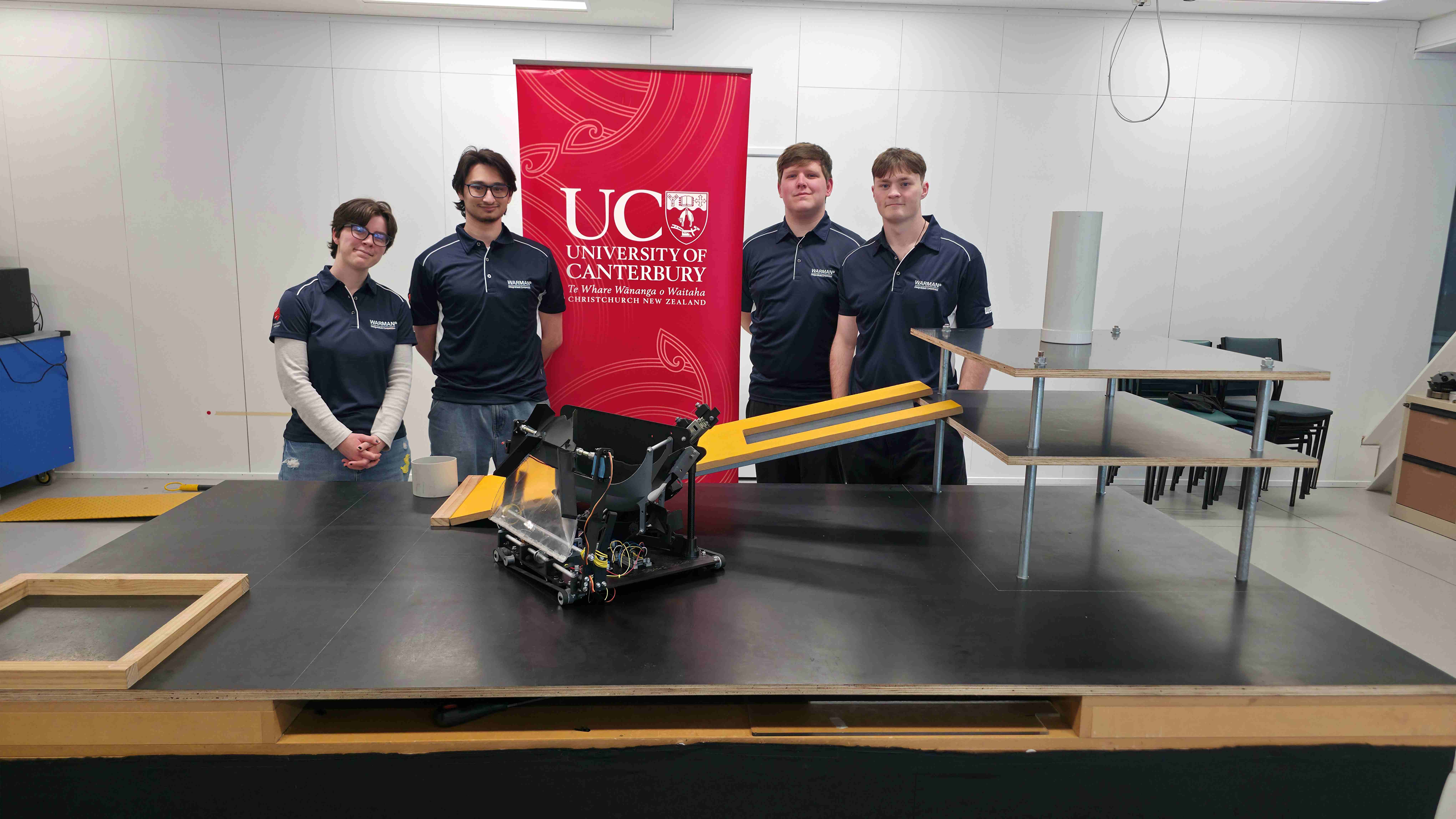
UC engineering students win international competition
A robot designed to transport rocks automatically has helped four UC engineering students claim an international title.
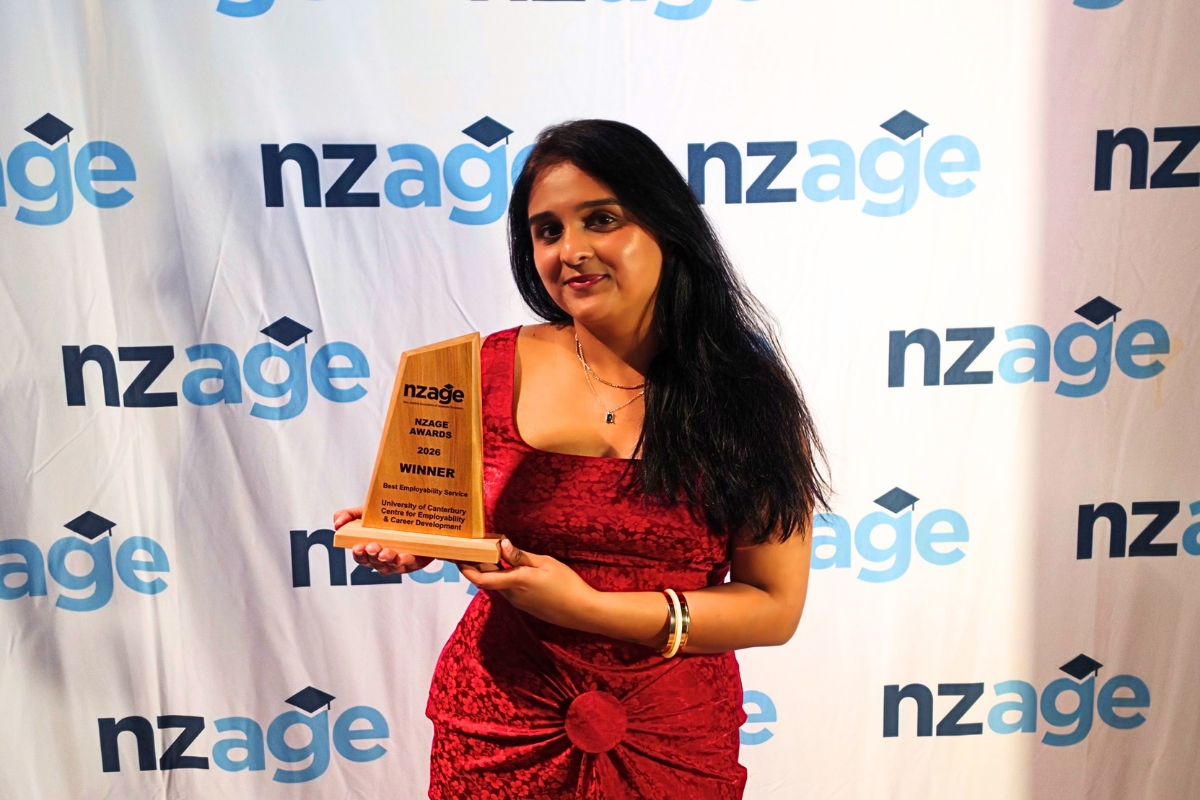
UC wins national award for employability service
UC has been recognised for excellence in helping students develop career-ready skills and connect with employers.
Fair suppliers strengthen business resilience
Businesses are better able to withstand disruption when suppliers make fair decisions and turn strong relationships into flexible action, UC research finds.
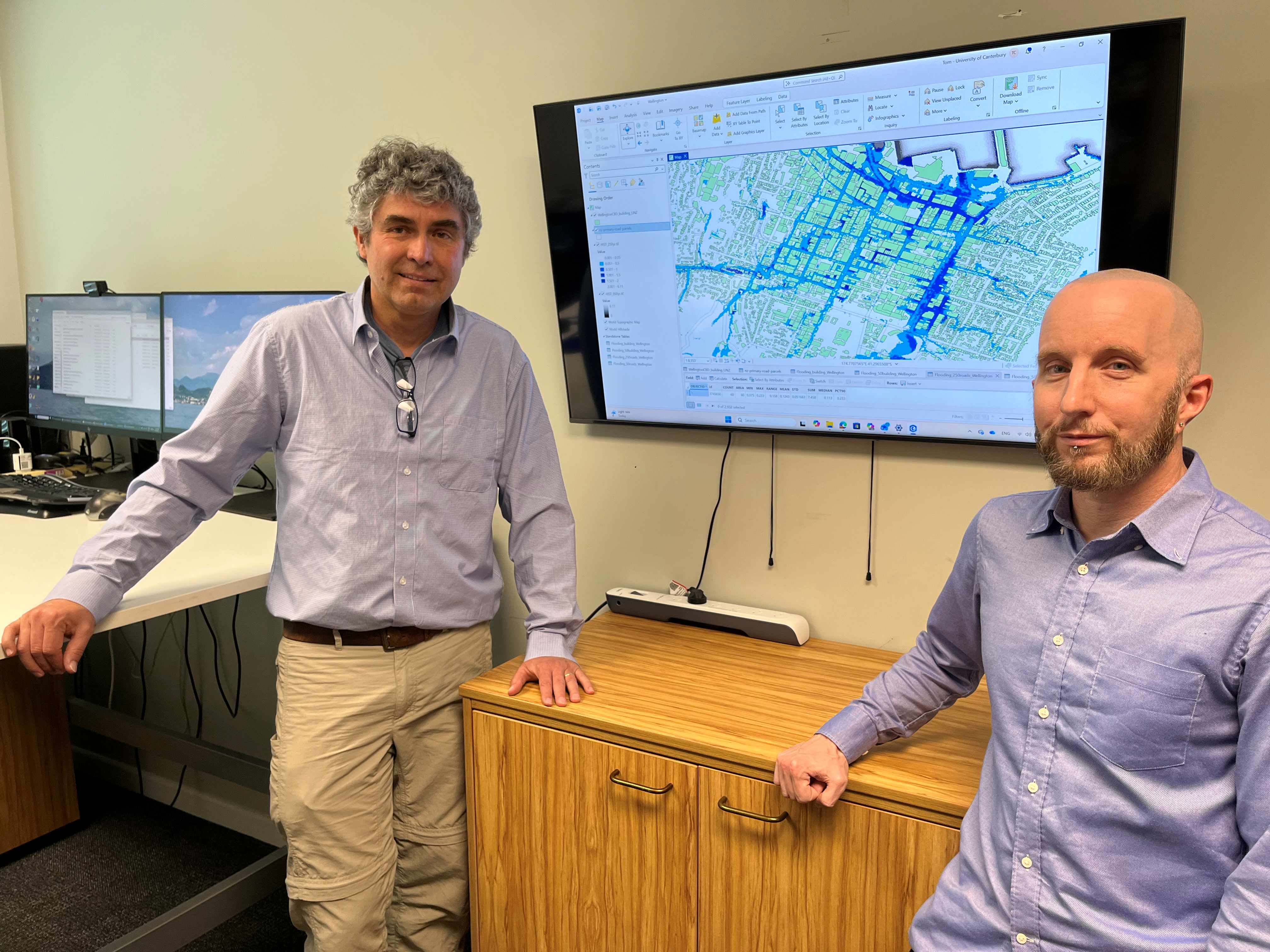
Digital models to help predict natural hazards in Kiwi capital
An innovative project using digital simulations to predict future hazards in New Zealand’s capital city takes its name from science fiction.