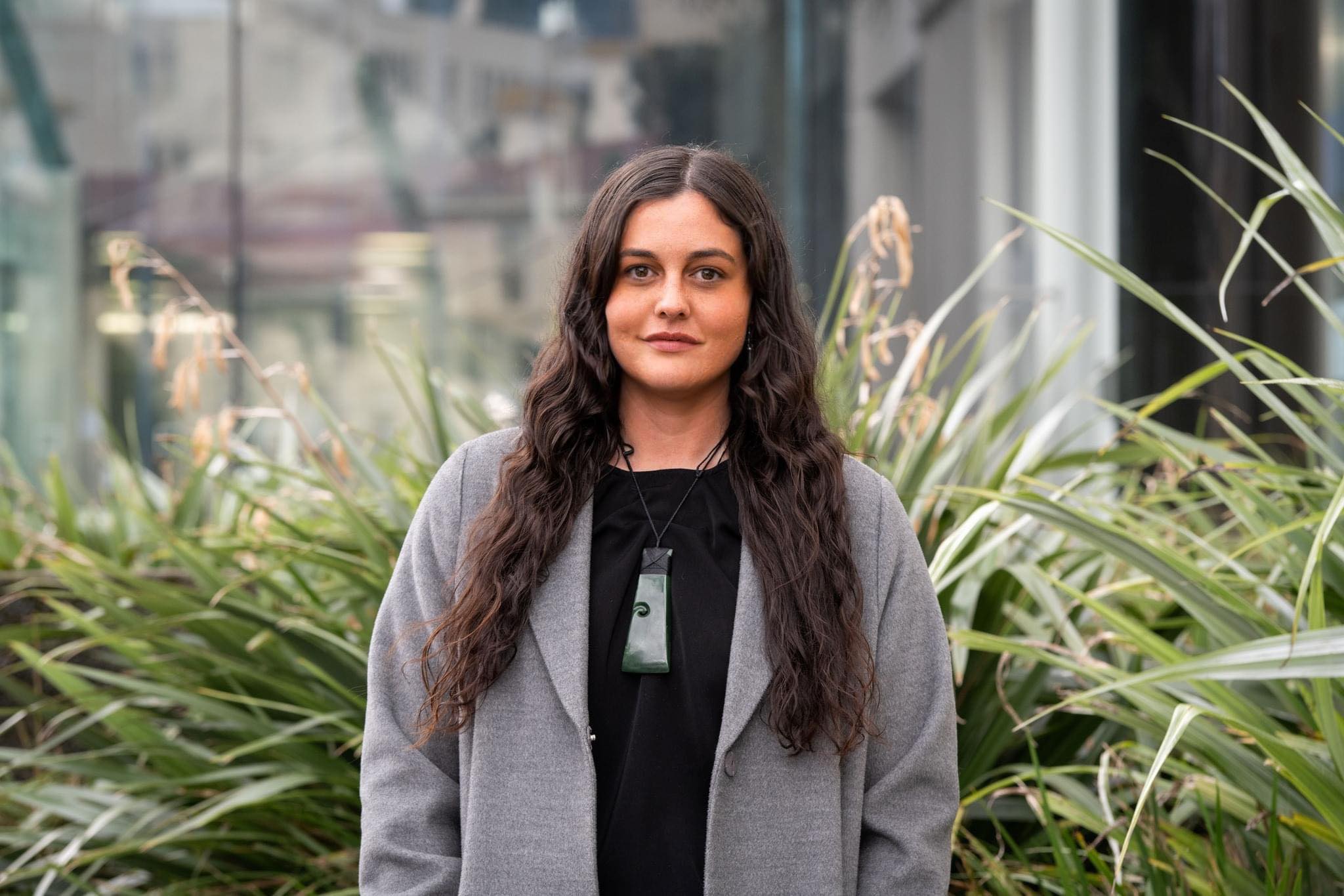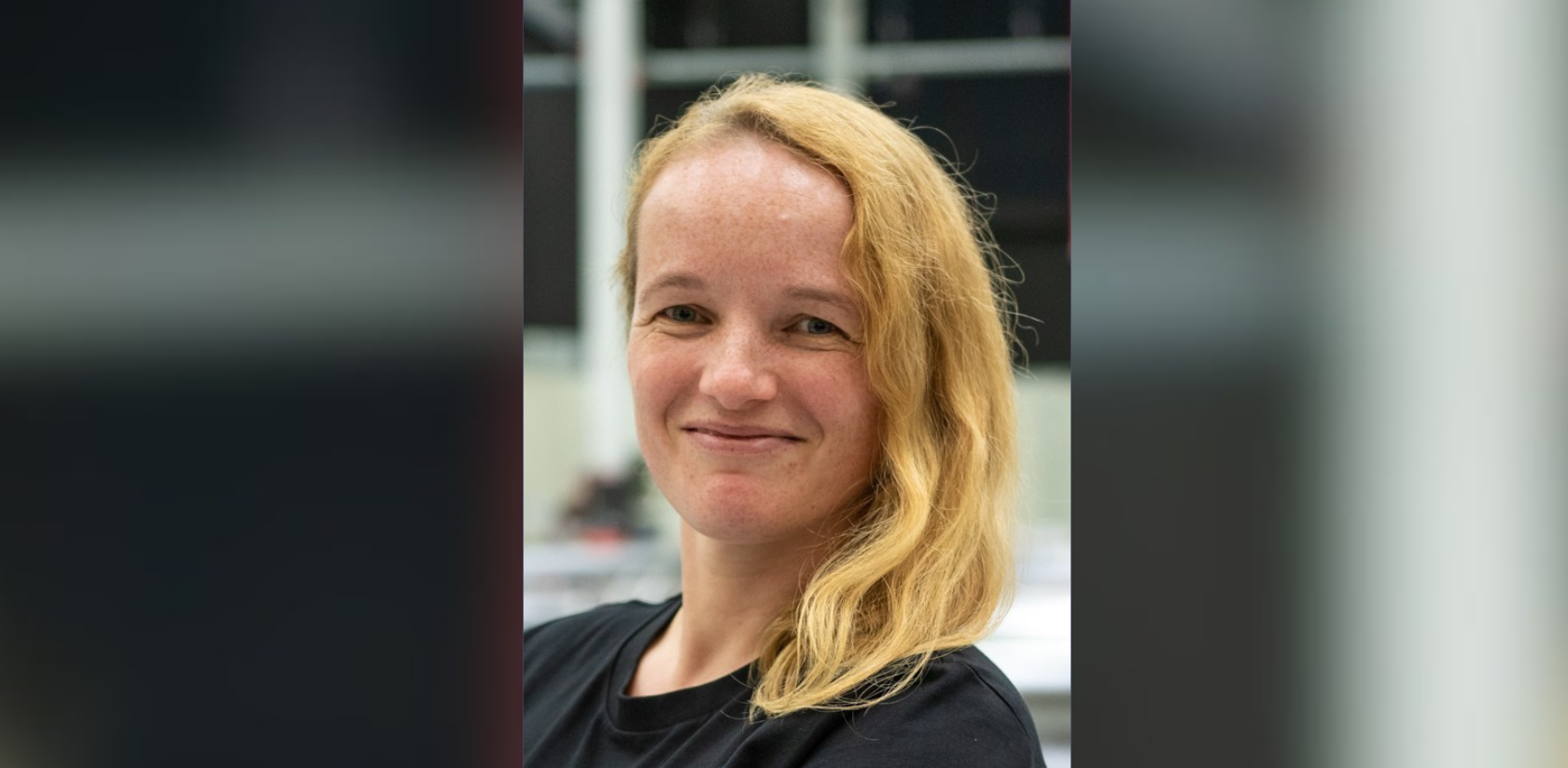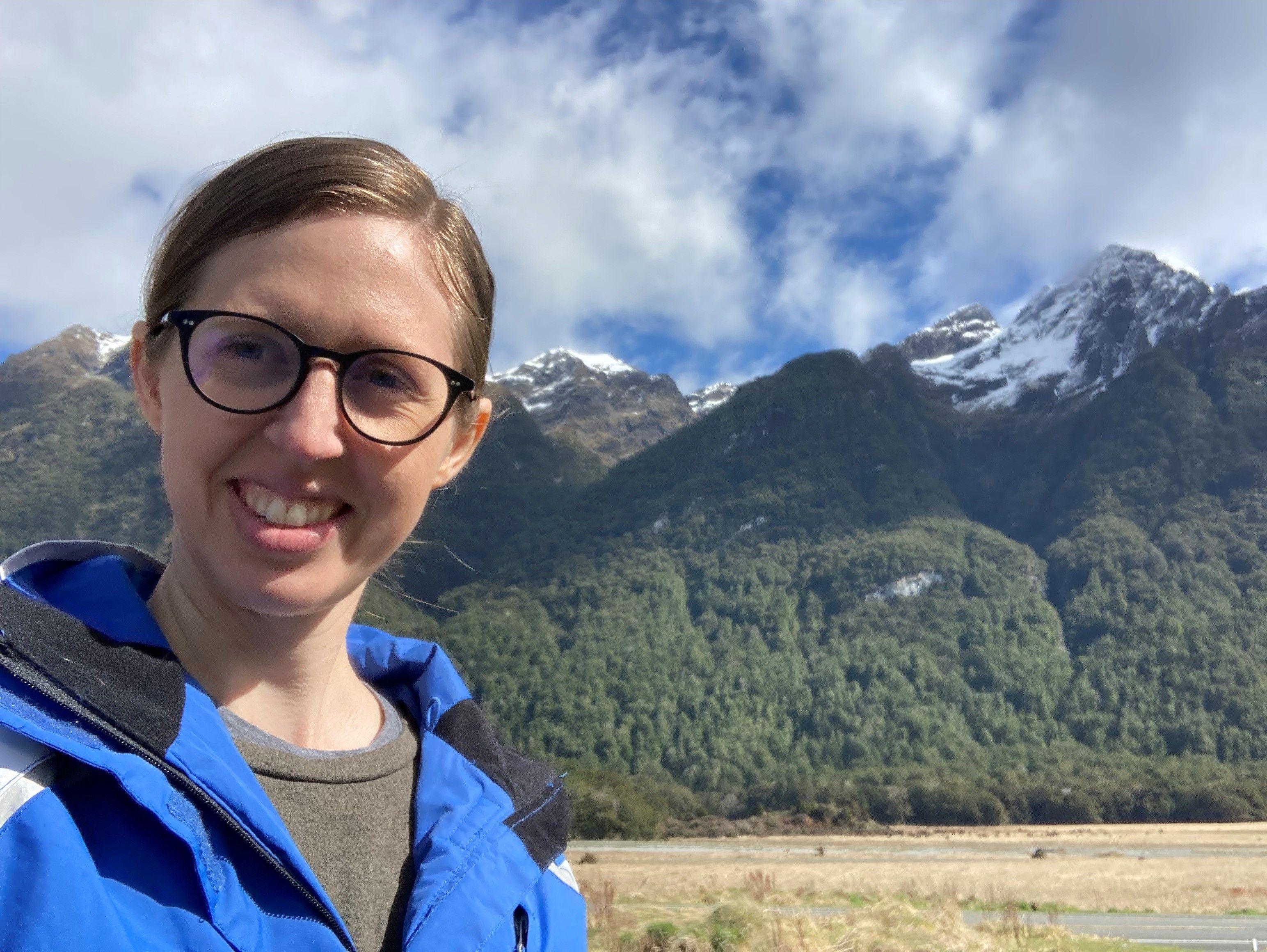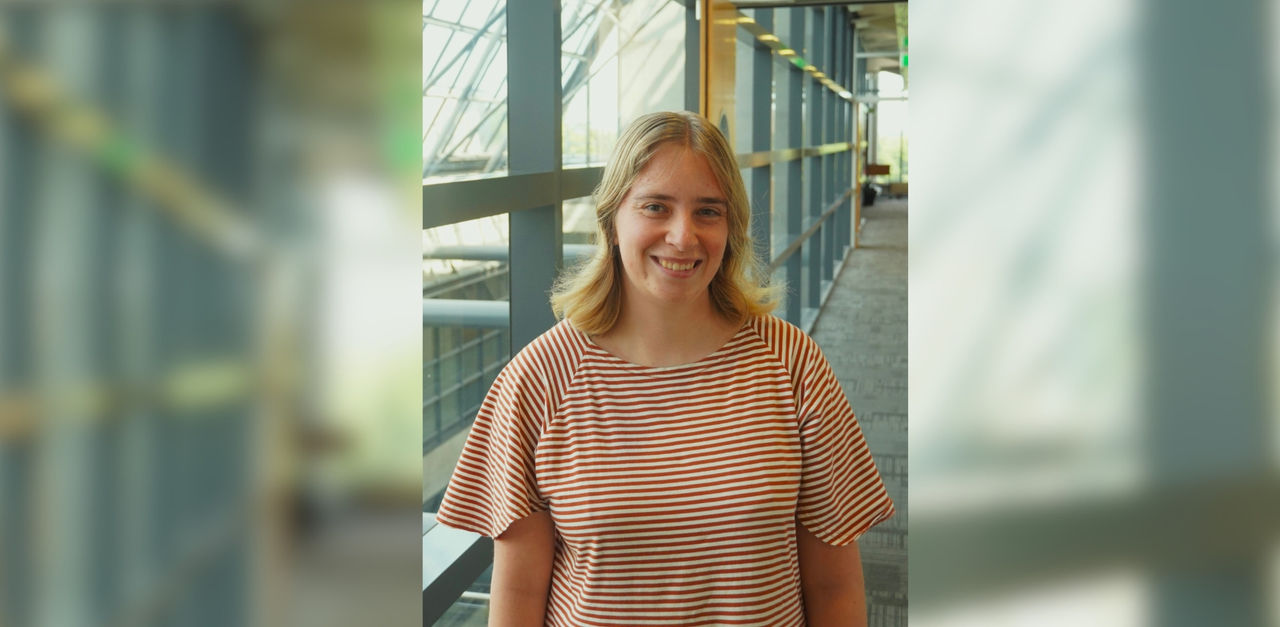


Photo caption: Kate Truman has won a Royal Society award for her publication combining mathematical models with evolutionary research.
Kate Truman, PhD candidate in Data Science at Te Whare Wānanga o Waitaha | University of Canterbury (UC), has won the 2026 Royal Society Te Apārangi Hatherton Award.
The award, which comes with a cash prize of $2,500, is given to one PhD student each year for an outstanding scientific research paper.
Truman, who received a UC Aho Hinatore | Accelerator PhD Scholarship in 2022, came to evolutionary research from a computer science background. She says having last learnt about evolution in high school, the move to phylogenetics (the study of evolutionary history) for her PhD was daunting at times.
At its heart, her research tested what a mathematical model can accurately reveal about the past. “I’ve had a long-standing interest in applying mathematical models to real-world scenarios, and it has been really satisfying to obtain new research findings which impact how datasets of extinct and present-day species are analysed.”
For many years, scientists have used mathematical models of evolutionary family trees to estimate how quickly species arise and go extinct, and the rate at which infectious diseases spread. In 2020, researchers showed that some of these models cannot distinguish between many equally plausible histories, casting doubt on thousands of published results and ongoing research projects.
Truman collaborated on new research, published in Systematic Biology, proving that one widely used model, called the fossilised birth–death model, which takes into account fossils or other samples collected over time, can be used with confidence to study evolution and epidemiology (the study of how often diseases occur in different groups of people).
“The model that I looked at for this project is a fairly general model that includes fossil information and it doesn't assume that just because you've got a fossil from millions of years ago that something's then gone extinct. So, we could have DNA information from humans alive today and then we could have a distant ancestor of humans included as a fossil in our analysis. It just gives you more information,” Truman says.
“We looked at a time-dependent model. So that means that we can let those rates of extinction change throughout time, rather than assuming that they're always the same. What we've shown is that theoretically this approach is fine, so it should be helpful for people who want to start a new analysis and need to know this is a reliable choice of model to use.”
Truman has shared her findings with an international audience. “One of the highlights of the project was presenting the results at the 2024 Mathematical and Computational Evolutionary Biology conference in France. It was fantastic to receive support from the Canterbury branch of the Royal Society to attend the conference and meet other researchers in phylogenetics.”
She credits her PhD supervisors for helping her make the move into a new discipline. “Receiving the Hatherton Award for my first publication and first phylogenetics project is a testament to the awesome supervision of Dr Alex Gavryushkin and Dr Alexandra ‘Sasha’ Gavryushkina, both formerly of UC's School of Mathematics and Statistics, who helped me transition smoothly into a new research area. I am very grateful for all their support.”