

As generative AI becomes more prevalent, a team of researchers from Te Whare Wānanga o Waitaha | University of Canterbury (UC) are asking questions that go beyond the often-polarised debate around its use.
Professor Kathryn MacCallum, Head of UC’s School of Leadership and Professional Practice, and Professor Cheryl Brown, Head of UC’s School of Social and Cultural Studies, are leading the research team, which includes Dr Helena Cook, Dr Kay-Lee Jones, Associate Professor Christoph Teschers, Professor Natalia Chaban, and doctoral students Komathi Ramaya and Ksenia Zavyalova.
Professor Brown says the study developed as generative AI became a focus of education research around the world.
Much of the early discussion centred on how educators and students might use AI, how institutions should respond, and concerns about academic integrity. Wanting to broaden that conversation, the UC team took a step back to consider what the technology meant for students in Aotearoa New Zealand, and what could be overlooked if digital technologies were treated as though they affected everyone in the same way.
One of the questions at the heart of the study is whose knowledge and worldviews are represented in the AI systems students and educators use, where that knowledge originates and whose perspectives may be less visible.
Professor Brown says many of the dominant AI tools available have been developed in a relatively small number of countries, bringing with them an approach that may not always reflect Aotearoa New Zealand values and needs.
“We’re using products that aren’t necessarily suitable for our context, and they have a whole lot of assumptions already embedded in them,” she says.
The same issue extends to the information AI draws on. New Zealand knowledge may appear in an AI response, but Professor Brown says an important question is whether it comes from our people and communities or reflects how Aotearoa is understood and represented elsewhere.
The research team has also considered the opportunities and limitations of AI for te reo Māori and mātauranga Māori. The research team has reflected on how generative AI can both support engagement with language and knowledge, but can also have a homogenising effect, overlooking differences between iwi or local contexts.
Professor Brown points to Māori-led and locally developed approaches to generative AI as an encouraging response, alongside stronger critical AI literacy so students and educators understand not only how to use the technology, but what sits behind the information it produces.
The study builds on the Scaffolded AI Literacy (SAIL) framework, co-developed by Professor MacCallum.
She says the team chose to build on SAIL because it was developed by New Zealand and international experts while foregrounding Aotearoa’s bicultural context.
“In developing the framework, we worked with Māori and Pacific experts to ensure these perspectives were central to its design.
“The framework offers a useful lens for understanding how literacy shapes AI adoption and influences assessments. The study therefore explores the link between students’ and teachers’ AI literacy and its impact on learning design and assessment.”
Professor Brown says this brings the focus back to some fundamental questions about assessment.
“What do we need to assess? How do we need to assess? Why do we need to assess it? It’s a really complicated problem that requires us to rethink some of our assumptions around learning and teaching.”
As the research progresses, the team is interviewing UC academics across different disciplines to understand how generative AI is being approached in teaching and assessment, and what is working in practice. The researchers hope to identify approaches that can be shared more widely and inform practical guidance for educators. The research collaboration has also extended to Fiji National University with related projects led by Ralph Buadromo and Dr Sofia Ali.
The research was presented as part of the 2026 Hui Rangahau Graham Nuthall Research Symposium, led by UC's Faculty of Education and held on the afternoon of 20 October on the University's Ilam campus.
The symposium celebrates Professor Nuthall's life and legacy by showcasing research in education, encouraging new ideas and supporting evidence-informed practice.
Professor Brown says the symposium creates space for discussion on issues shaping education in New Zealand.
“It's an opportunity to bring together researchers, educators and the wider education community to share ideas, ask questions and consider how evidence can inform teaching and learning.
“Graham Nuthall’s work had an enduring influence because it challenged us to look closely at what was happening for learners. Research like this continues that conversation by asking important questions about what new technologies mean for teaching, learning and education practice.”
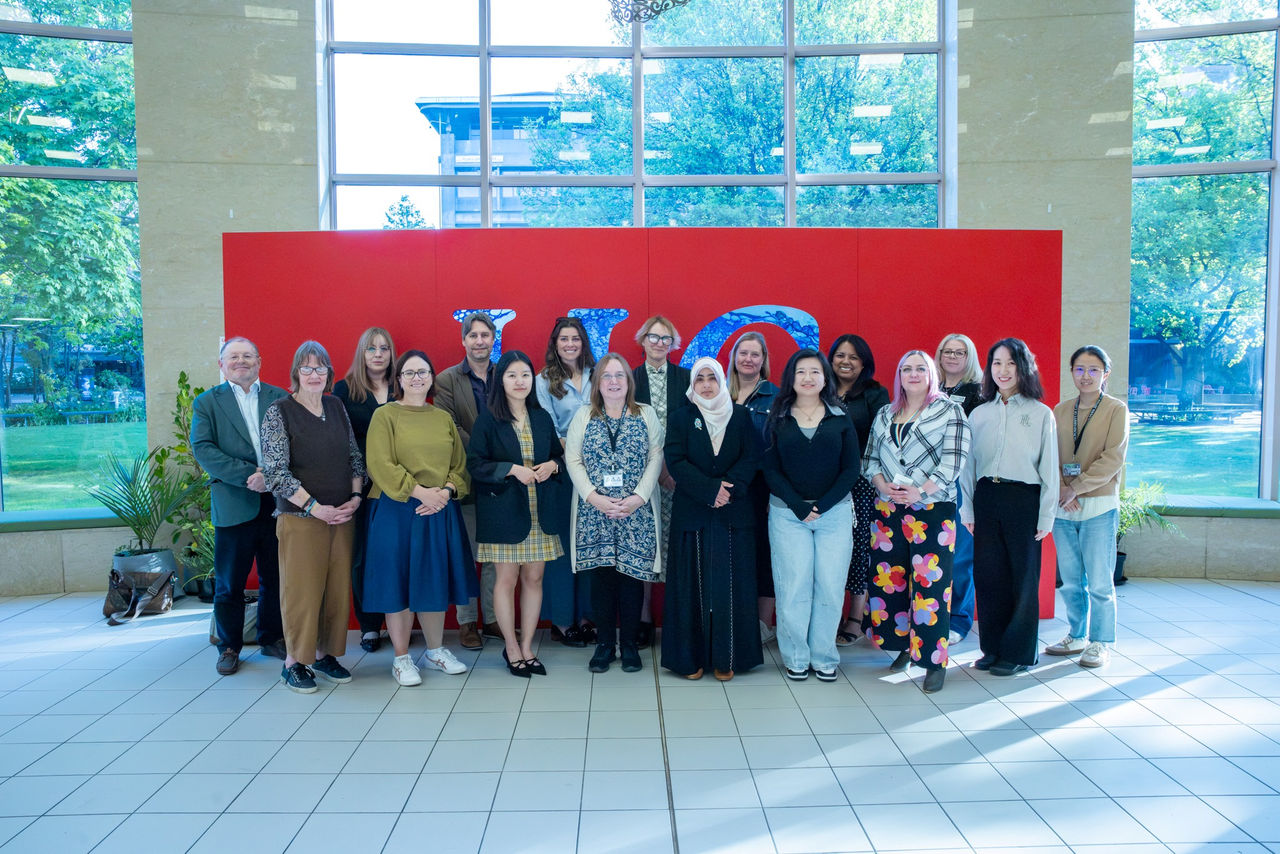
Photo caption: Staff from UC’s Faculty of Education, including research team members Associate Professor Christoph Teschers (back row, third from left), Professor Cheryl Brown (back row, fifth from left) and Professor Kathryn MacCallum (back row, sixth from left). Not pictured are Dr Kay-Lee Jones, Dr Helena Cook, doctoral student Komathi Ramiah and Ksenia Zavyalova.