

The Master of Applied Artificial Intelligence, offered through Tuihono UC | UC Online at Te Whare Wānanga o Waitaha | University of Canterbury (UC), reflects UC’s focus on accessible, flexible and future-focused education, providing pathways for learners to build new capability at different stages of their careers.
The programme, also offered as a 1-year certificate or 2-year diploma, is designed for people from a range of professional backgrounds, including business, health, education, government, law and technology. Grounded in core concepts of AI and building on the applied understanding of the topic, it focuses on the practical use of AI in real-world settings, including how to evaluate AI tools, manage risks, understand ethical responsibilities and support effective decision-making.
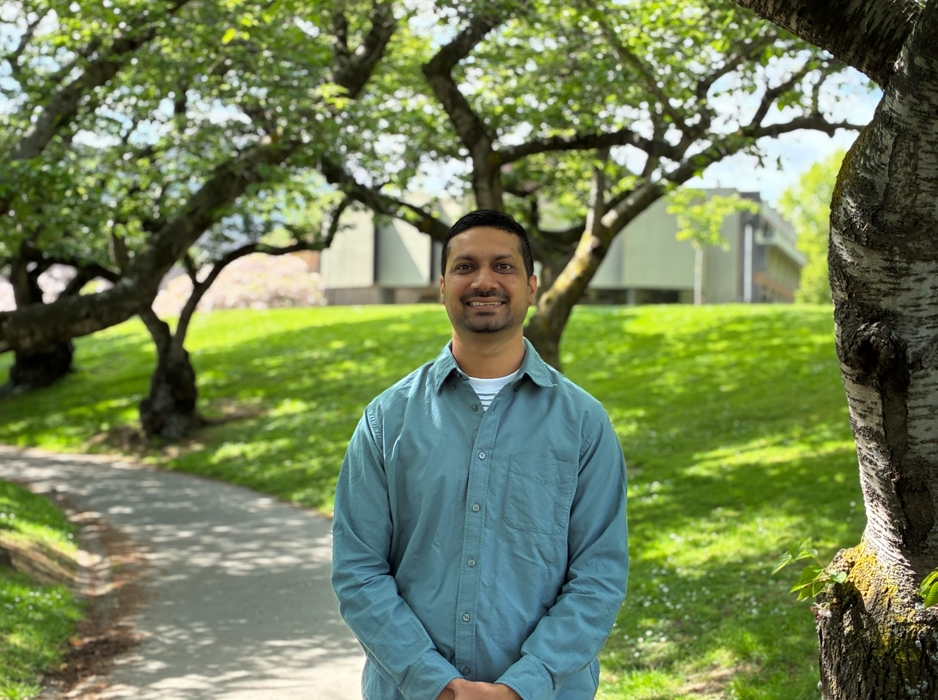
UC Senior Lecturer Above the Bar Dr James Williams, an expert contributor to the programme, says, “AI is no longer a future technology – organisations across New Zealand are already exploring how to use it effectively, responsibly, and strategically.
“But the tools are arriving faster than the capability to use them well. What’s missing isn’t access; it’s people who can apply AI thoughtfully within their own field, and who understand the ethical, legal, and cultural responsibilities that come with it in Aotearoa New Zealand. This programme is designed to build that capability.”
Delivered fully online through flexible nine-week courses, the programme has been designed to support people studying alongside work, whānau and community commitments.
The qualification will cover areas including machine learning, data science, applied AI development, real-world problem-solving and ethical reasoning. Learners will also be able to specialise in an area aligned with their work or career goals, with endorsement options in Business and Technology, Health, Education, or Law, Policy and Ethics.
Dr Williams says the programme responds to a growing need for people who can connect AI capability with organisational decision-making.
“The missing capability usually isn’t technical – it’s judgement. Organisations don’t struggle to access AI; they struggle to use it well,” he says.
“They need people who can identify real opportunities, evaluate risks, manage implementation, and connect what’s technically possible to what the organisation actually needs. There is a growing need for professionals who can bridge the gap between AI technology and practical decision-making.
“We also know from global experience that the most significant AI failures have not been technical failures. They have been failures of judgement, governance, and ethics — made by people who did not have the frameworks to ask the right questions. Training people to apply AI responsibly is therefore not a nice-to-have. It is the critical layer between AI potential and AI harm.
Dr Williams says applied AI education needs to be accessible to people with different kinds of professional expertise, because AI adoption is not limited to the technology sector. The programme is intended for professionals from a wide range of sectors who want to understand how AI is affecting their work and how it can be applied responsibly within their organisations, rather than for those seeking to become data scientists.
“The impact of AI extends well beyond the technology sector, and some of the most important decisions about AI adoption will be made by people with expertise in health, education, policy, and business,” he says.
“The people leading AI adoption need to have both the subject matter expertise and the AI literacy to determine how AI should be governed and applied in their field.”
Graduates may use the qualification to support work in areas such as AI governance, product management, digital transformation, policy development, consulting and innovation leadership.
Dr Williams says many organisations will increasingly need people who can provide informed guidance on AI use.
“For most, the goal isn’t to become an AI researcher; it’s to become the person their organisation turns to for informed, responsible, and culturally aware AI leadership.”

.png)