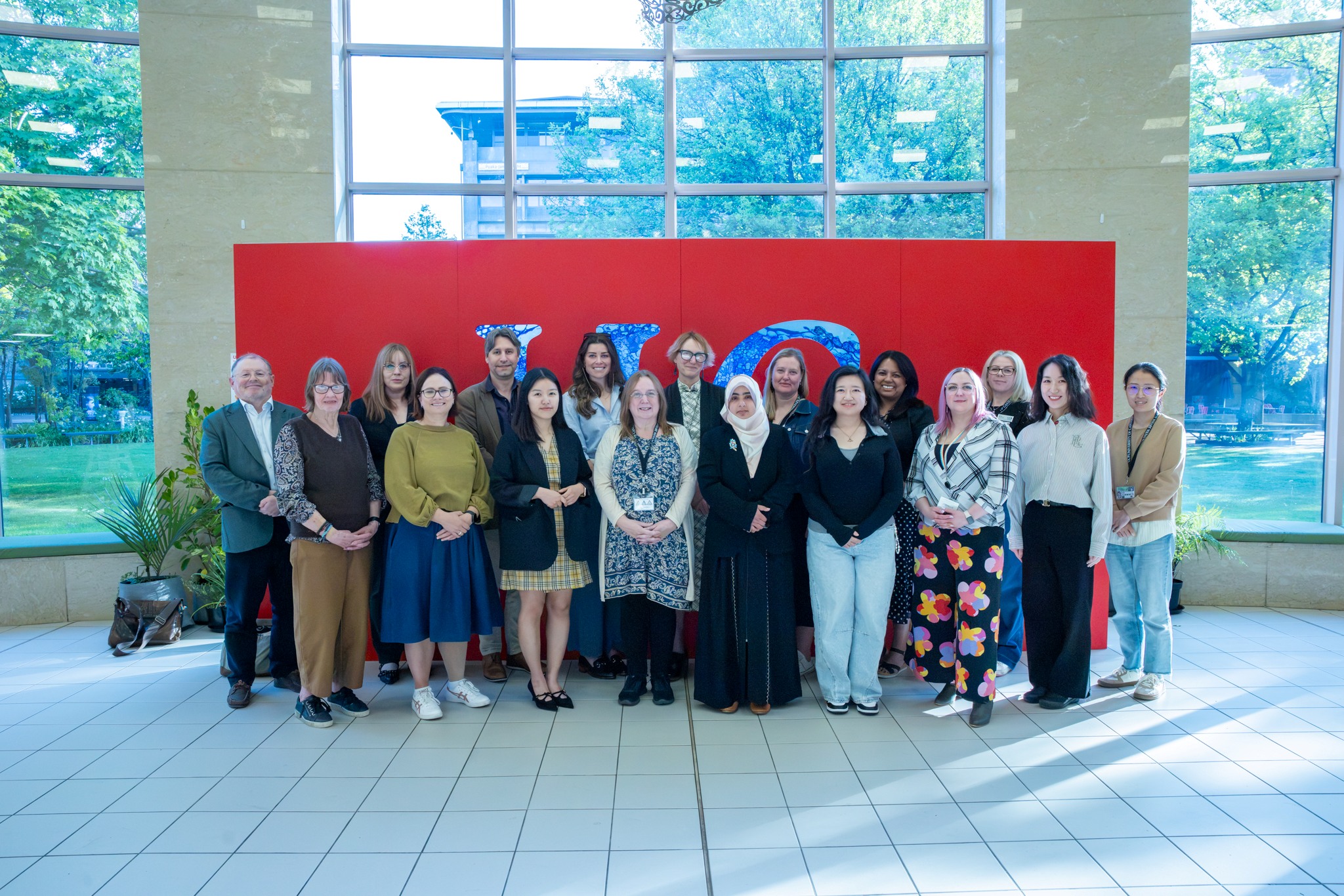


Photo caption: Distinguished Professor Iain Hay has been recognised for his contributions to geography and international scientific collaboration. Photo: Royal Geographical Society of South Australia (RGSSA).
More than four decades after graduating from Te Whare Wānanga o Waitaha | University of Canterbury (UC), Professor Iain Hay has been elected a Fellow of the International Science Council (ISC).
The ISC brings together 250 scientific organisations worldwide to advance scientific cooperation. Fellowship is the highest honour the organisation can confer on an individual, recognising outstanding contributions to scientific excellence, international cooperation and science in the service of humanity.
“I am still somewhat overwhelmed and, of course, deeply honoured,” Professor Hay says. “I am particularly pleased to represent geography in such an international and interdisciplinary community.”
Professor Hay completed a Bachelor of Science with First Class Honours in Geography at UC in 1982 and was subsequently awarded a Doctor of Letters from UC in 2009.
Throughout his career, Professor Hay has worked to strengthen geography as both an academic discipline and an international community. His research has explored geographies of domination and oppression, geographical thought and research ethics, alongside contributions to geographical education, publishing and international collaboration.
He has held prominent leadership positions, including First Vice-President of the International Geographical Union and President of the Institute of Australian Geographers, helping build connections between geographical communities worldwide.
“International collaboration matters enormously, in geography and more broadly, because the great challenges facing humanity involve actions in place and the relationships between places, and they rarely stop at national borders,” Professor Hay says.
Professor Hay believes international scientific collaboration is essential to addressing some of the world's most pressing challenges, from environmental change to wealth inequality.
“Science is at its best when it is rigorous, collaborative, and directed towards improving human and planetary wellbeing.”
Reflecting on his academic journey, Professor Hay says his time at UC was instrumental in shaping his career and commitment to interdisciplinary research.
“Canterbury was foundational for me. The intellectual rigour, curiosity, and collegiality I enjoyed at UC helped set the direction for much that followed.”
He recalls a pivotal moment in early 1983, when he was considering his next steps after completing his undergraduate studies. Feeling uncertain about his doctoral direction, he was approached by the then Head of Geography, Professor W.B. Johnston, who encouraged him to consider an academic position.
Some weeks later, Professor Hay began working as a Junior Lecturer at Massey University, marking the beginning of his academic career.
“I remain very grateful to him [Professor W.B. Johnston], and to other Canterbury academics of that time who have continued to support me.”
Now recognised among an international network of distinguished scientists and research leaders, Professor Hay encourages current UC students and early-career researchers to embrace opportunities and pursue their interests.
“Be ambitious and follow your passions, because sustained effort comes much more readily when you really care about what you are doing.”
He also encourages students to seek out mentors and collaborators, and to remain open to unexpected opportunities.
“Careers, academic or otherwise, rarely unfold in straight lines. Some of the most rewarding opportunities come out of the blue.”
What to read next
Are Kiwi businesses jumping blindly on the AI bandwagon?
AI doesn’t have to play an inevitably dominant role in our lives, businesses and future, argues a guest speaker for an upcoming UC public lecture.

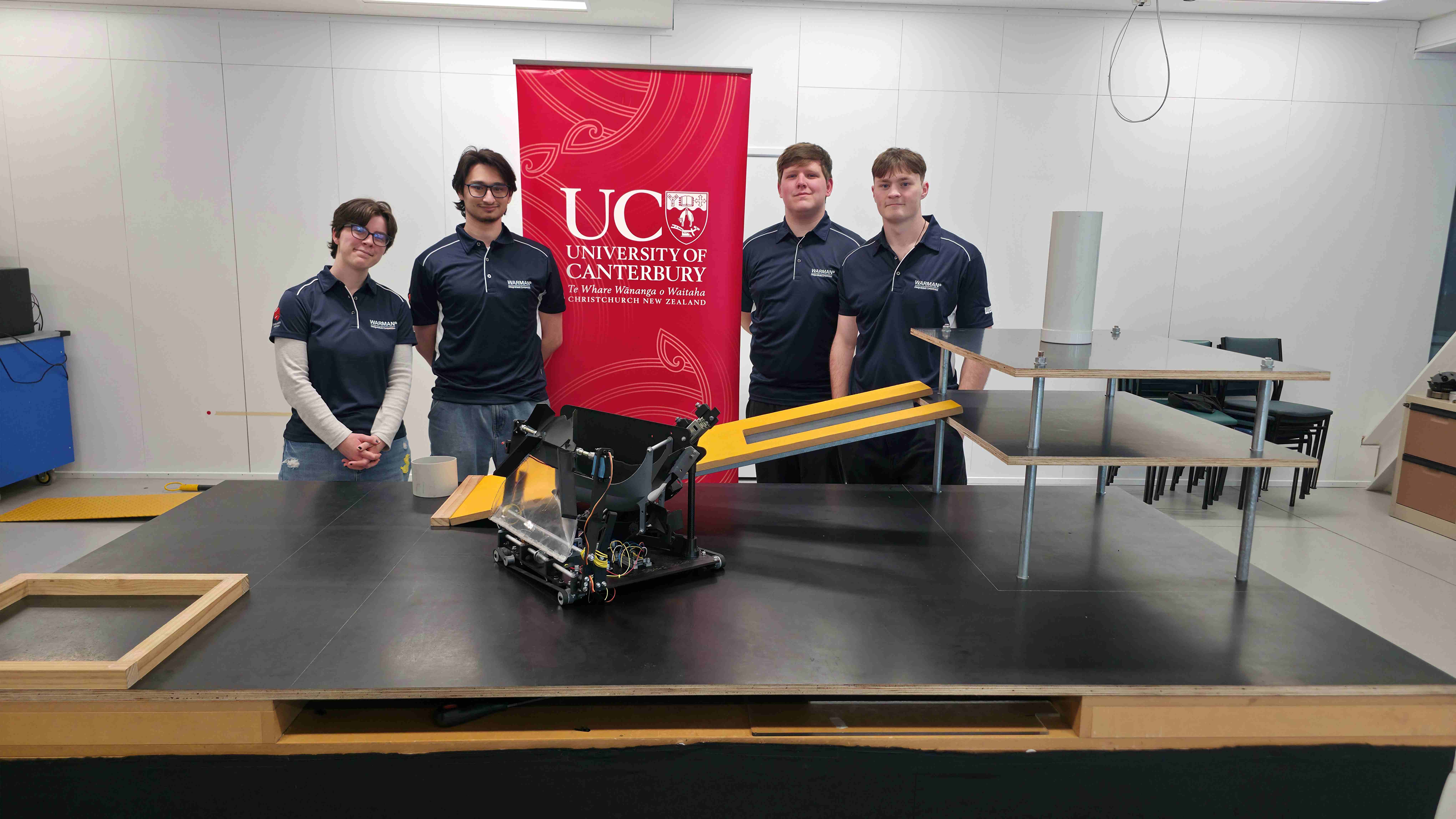
UC engineering students win international competition
A robot designed to transport rocks automatically has helped four UC engineering students claim an international title.
UC wins national award for employability service
UC has been recognised for excellence in helping students develop career-ready skills and connect with employers.
Fair suppliers strengthen business resilience
Businesses are better able to withstand disruption when suppliers make fair decisions and turn strong relationships into flexible action, UC research finds.
Digital models to help predict natural hazards in Kiwi capital
An innovative project using digital simulations to predict future hazards in New Zealand’s capital city takes its name from science fiction.
UC research challenges how we think autistic children learn
New UC research is challenging assumptions about how autistic children learn language.
Tiny robots, big potential: UC PhD explores new frontier
A UC researcher is pioneering laser-controlled robot swarms thinner than a human hair — work he believes could one day transform medicine and manufacturing.
UC research puts local knowledge at heart of resilience
UC research explores how Pacific Island nations can better use place-based knowledge to strengthen disaster planning and resilience.
Innovative UC research takes a closer look at AI in education
Researchers from UC's Faculty of Education are exploring the influence and reach of generative AI in New Zealand higher education.