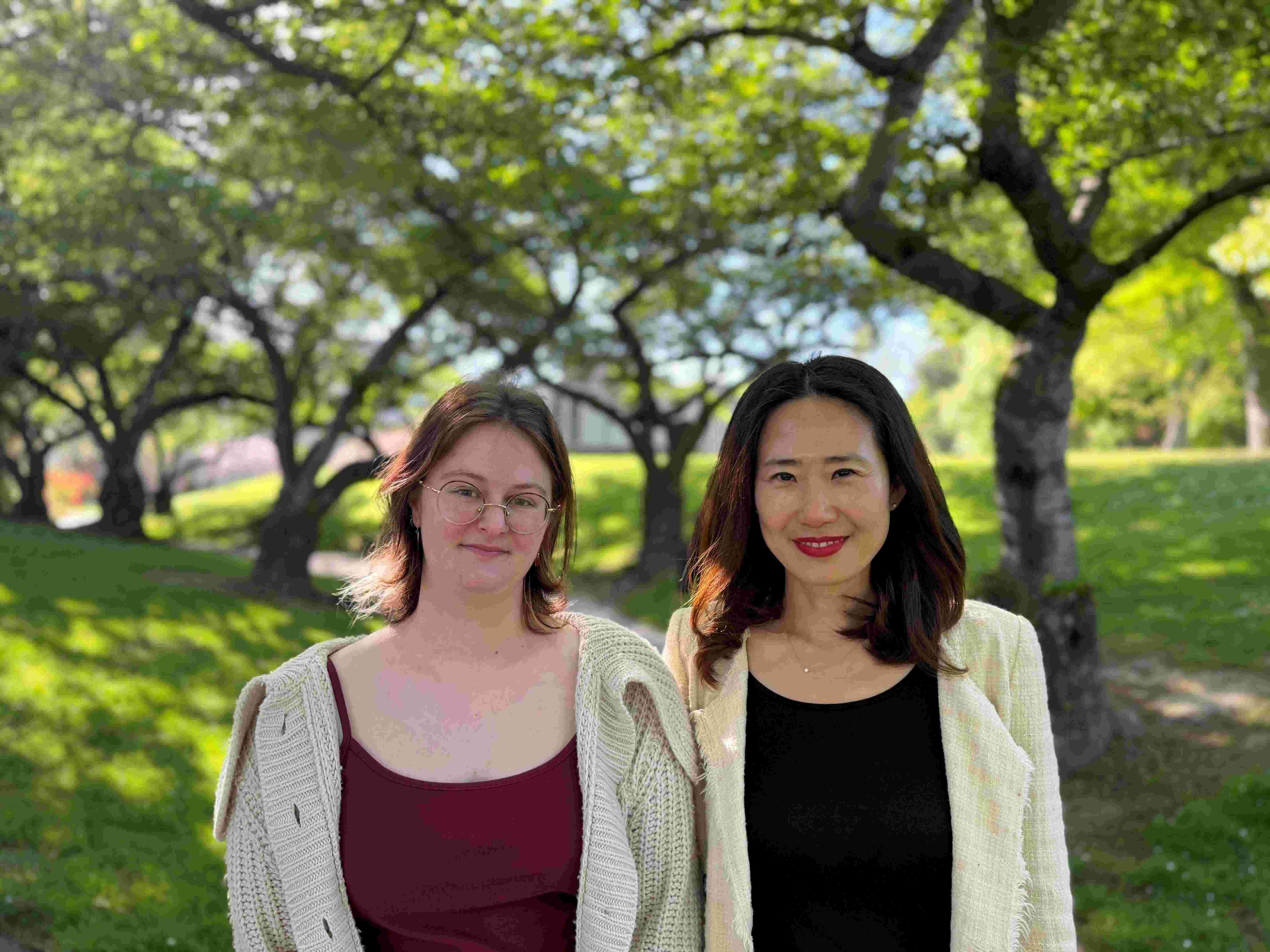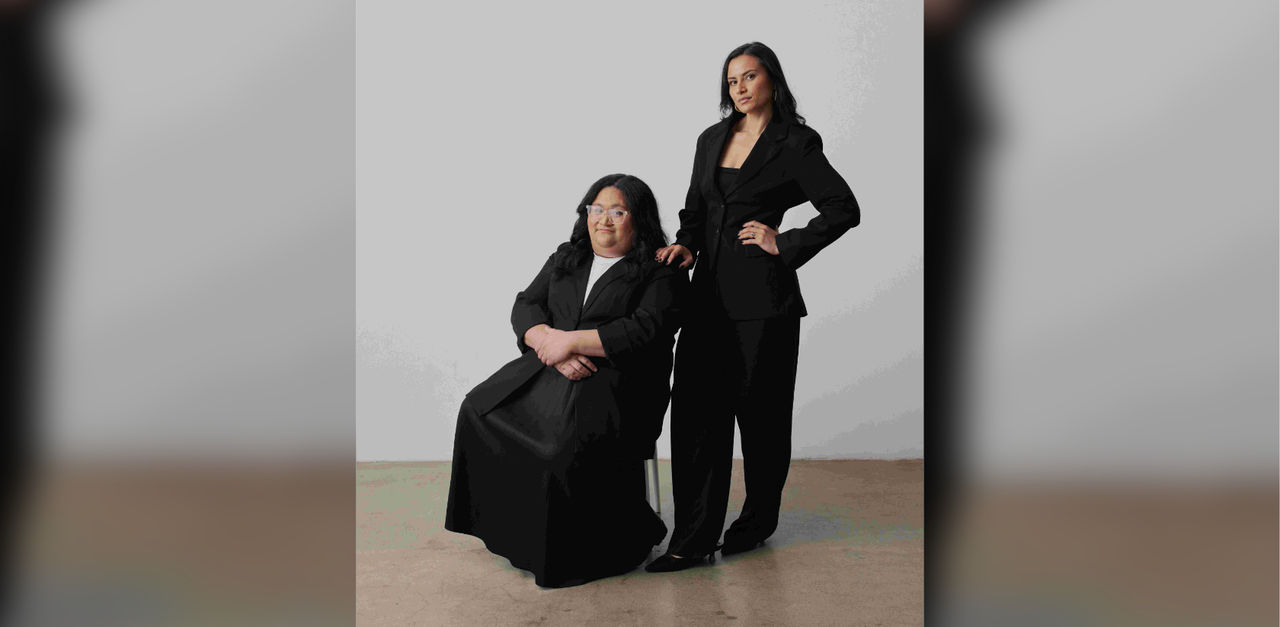


Photo caption: Fibre Fale Co-Founder and Head of AI and Culture Eteroa Lafaele (left) and Chief Executive Julia Pahina are guest speakers at a UC Business School public lecture.
Fibre Fale Chief Executive Julia Pahina says the mantra that artificial intelligence (AI) must be accepted in order to keep up has been put forward by the big tech companies that stand to benefit from it.
She is calling for New Zealanders to be more discerning and intentional in how and where they choose to adopt these new technology tools rather than feeling pressured to adopt or be left behind.
“The goal is not to reject innovation, but to enable or to encourage organisations to decide consciously, confidently, and on their own terms," she says.
“If the only reason you're adopting AI is because you're afraid of being left behind, you are not leading, you are being led. Every AI system arrives through a chain of human choices, and those choices can be questioned, reshaped, or refused.”
Pahina is a guest speaker at an upcoming Te Whare Wānanga o Waitaha | University of Canterbury (UC) public lecture, Left behind is a sales technique: How fear-based AI urgency is selling you a future you didn’t choose. The other speaker is Eteroa Lafaele, 2025 Young New Zealander of the Year winner and Fibre Fale's Co-Founder and Head of AI and Culture. The lecture, on Wednesday 11 November, is part of Te Kura Umanga | UC Business School’s Thought Leadership Series.
Pahina says the idea that delaying adoption of new technology will lead to businesses being left behind is a commercial pressure tactic that can turn legitimate questions about risk, purpose and impact into signs of resistance.
Accepting AI unthinkingly can have unintended consequences and business leaders need to prioritise people and purpose before deciding how the technology can benefit their organisation, she says.
“Are you actually going to end up losing out on what makes your business competitive, your own competitive advantage?"
She says AI challenges worker rights but people are reluctant to criticise it publicly or question its impact.
“Are they being asked to do more with less? Are they being asked to do more faster? When you talk about productivity gains, who gets them? Does the worker or does the organisation?
“I think my intention in this talk is to name things people have been feeling, but are too afraid to say because it makes them look like they're on the out, and it makes them look like they're anti-tech. When actually, is this anti-tech or is it pro-human? My intention is to bring some of those key questions to life.”
Pahina worked in technology roles in Australia, the United Kingdom and the United States before returning home to Aotearoa in 2020 and founding Fibre Fale in 2022 with a mission to serve Pacific communities and promote digital equity.
She says everyone has the right to express their opinions about AI, even if they don’t have a tech background.
“If facial recognition technology is operating on you, then why can't you have a voice? You don't need to be technical and you don't need to be working in AI to know that you matter in this conversation. And again, this is not about being anti-innovation. It's about encouraging collective decision making.”
The language used around technology adoption should also be questioned, she says.
“We have this intentional negative stereotype towards luddites and laggards and that language is being used by design, because it allows an early adopter to be seen as a visionary, not reckless, and it makes the discerning person look like they're slow and they're not up with it.
"I’d like to give some airtime to considering what is the language we're choosing, and how does that language then shape behaviour?”
The issues presented by AI are compounded by its rise at a time of global conflict and insecurity, Pahina says.
“We’re in a geopolitical crisis, we're in a cost-of-living crisis. So, it's also not like AI is entering a neutral state where people are well off already. It's entering a state where there's already major economic insecurity, inequality, and there is potential for AI to perpetuate that, given the fact that we're adopting a belief system and an approach that is very clearly pro-tech.”
She says AI undoubtedly has a role, but businesses need to remember they have agency and authority to make their own intentional decisions about how to use it.
“We do not need blind belief in AI. We need informed communities, accountable organisations, and the confidence to decide what belongs in our futures. Workers and community most affected should not just absorb the consequences of decisions made without them.
“The question is not whether AI is coming, because it's already here. The question is who gets to decide what it does, who it serves, and at what cost.”
University of Canterbury’s UC Business School Thought Leadership Series public lecture: Left behind is a sales technique: How fear-based AI urgency is selling you a future you didn’t choose is a free public event on Wednesday 11 November, 5.30pm–7.30pm in the Venues Ōtautahi Lounge, One New Zealand Stadium. Register here.