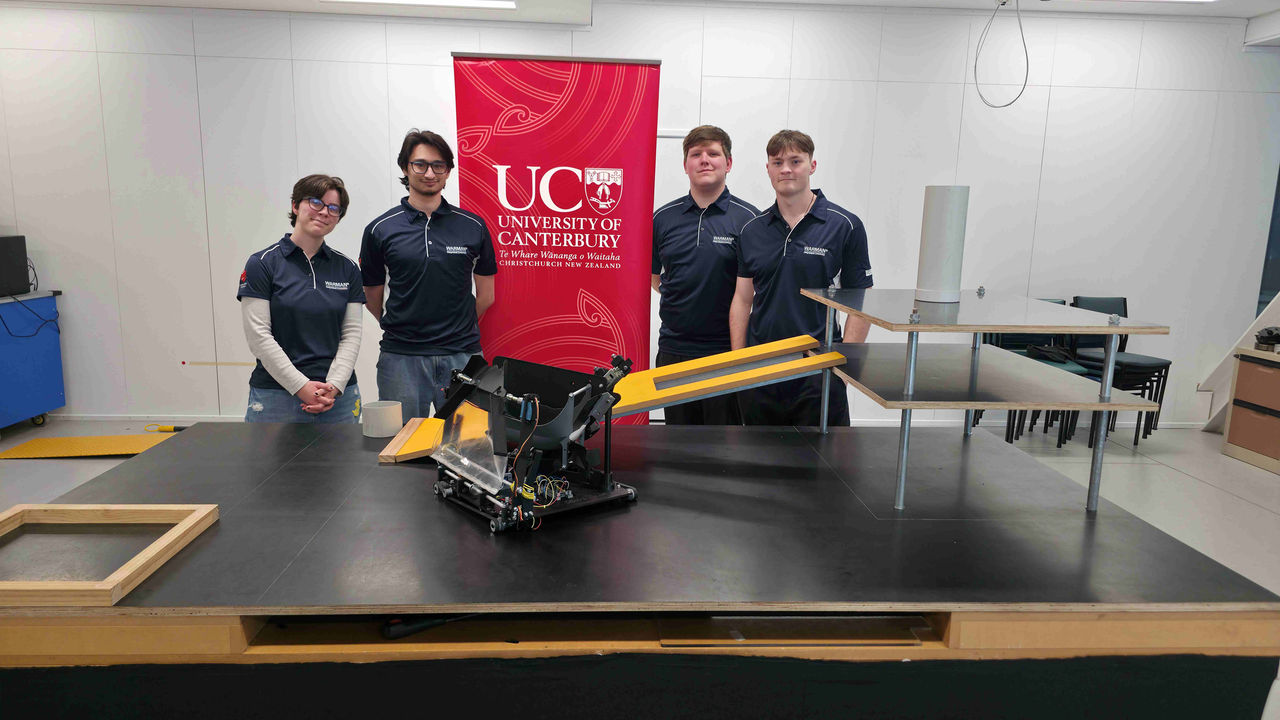


Photo caption: UC Mechanical Engineering students (left to right) Sophie Peters, Oliver Turin, Conrad Clark and Jarrod Ormiston with their award-winning machine, which helped them claim first place at the 2026 International Warman Design and Build Competition.
Four Mechanical Engineering students from Te Whare Wānanga o Waitaha | University of Canterbury (UC) have won first place at the 2026 International Warman Design and Build Competition.
Conrad Clark, Sophie Peters, Jarrod Ormiston and Oliver Turin represented New Zealand as the country's only team in the international final, held online in October. The students demonstrated their machine via Zoom, competing remotely against teams from universities across Australia and Malaysia.
Turin says the team was surprised by the result, particularly after seeing the innovative designs developed by other universities.
"There were some really impressive robots, so winning was not something we expected to happen, but we knew we had a dependable and consistent system, which turned out to be the most key quality."
The annual competition challenges engineering students to put their skills to the test by designing and building machines capable of solving complex problems.
This year's challenge involved creating an automated system to transport valuable minerals on the fictional planet of Gondwana. Teams had to design a machine capable of collecting six small, 3D-printed rocks and transporting them to a raised container representing a mineral processing facility, all within two minutes and without human intervention.
The UC team developed a compact robotic system that used mechanical arms to collect the rocks before transporting them on motorised tracks and depositing them into the raised container.
Rather than relying on complex electronics, the students prioritised a straightforward mechanical design to minimise potential problems and improve reliability. Their approach paid off, with the machine delivering two flawless runs during the competition and earning positive feedback from judges for its design and construction.
Behind the success were countless hours of designing, building, testing and refining their machine, including essentially rebuilding it three times.
"We put a lot of work into the consistency of our robot, to the point of essentially rebuilding it three times and we're very proud of how polished our final system was, particularly the LED underglow. Comparing it next to our first system is like night and day."
UC Associate Professor Don Clucas says the team's performance demonstrated the strength of their engineering skills.
"Two flawless runs at the final demonstrated the students’ ability to design, manufacture, and develop a complex machine that reliably did the job. I’m so proud of them.
"Their win reflected a combined excellence in concept ideation, communication, teamwork, manufacturing, and extensive product development. These are exactly the kinds of engineering capabilities New Zealand needs."
For the four students, none of whom had undertaken a similar robotics challenge before, the experience provided an opportunity to put their engineering skills into practice.
"We learnt how to work in a team and go through the entire design process, from idea generation to testing, and how to design and build parts for flexibility, since nothing works the first time around," Turin says.
Established in 1988, the Warman Design and Build Competition gives engineering students an opportunity to apply classroom learning to practical challenges, developing skills in design, manufacturing, problem-solving and teamwork.
The victory is UC's sixth in the competition's history, making it the most successful university since the competition began.
The team was supported by Associate Professor Don Clucas, Dr Pav Devananthan, UC technical staff and fellow Mechanical Engineering students.

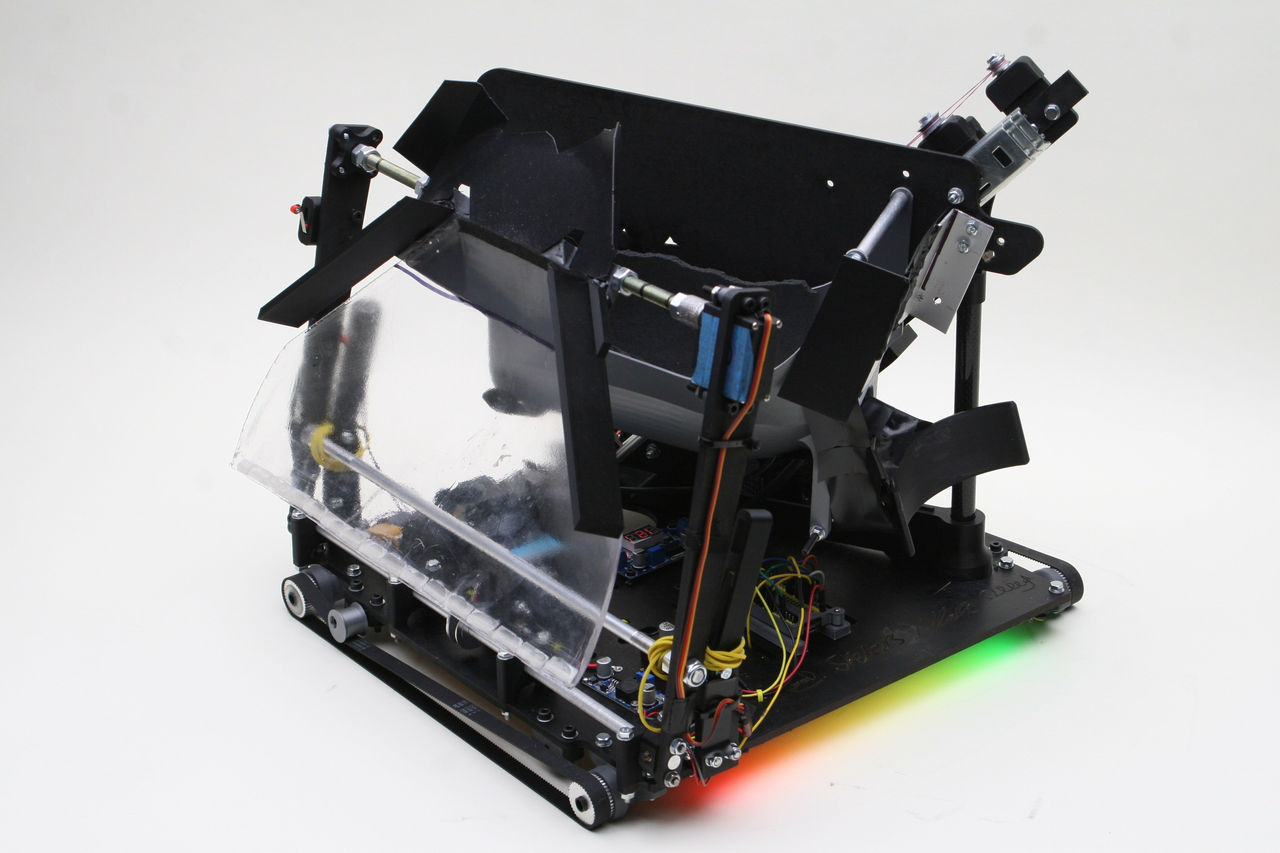 Warman system