

Key points
UC research involving 205 Australian firms links fair supplier practices with stronger business resilience.
Transparent and consistent supplier decision making directly supported firms’ ability to prepare, respond, recover and learn.
Respectful communication and fair commercial outcomes contributed to resilience when suppliers also acted flexibly.
The findings offer lessons for businesses facing shipping delays, geopolitical instability, extreme weather and other disruptions.
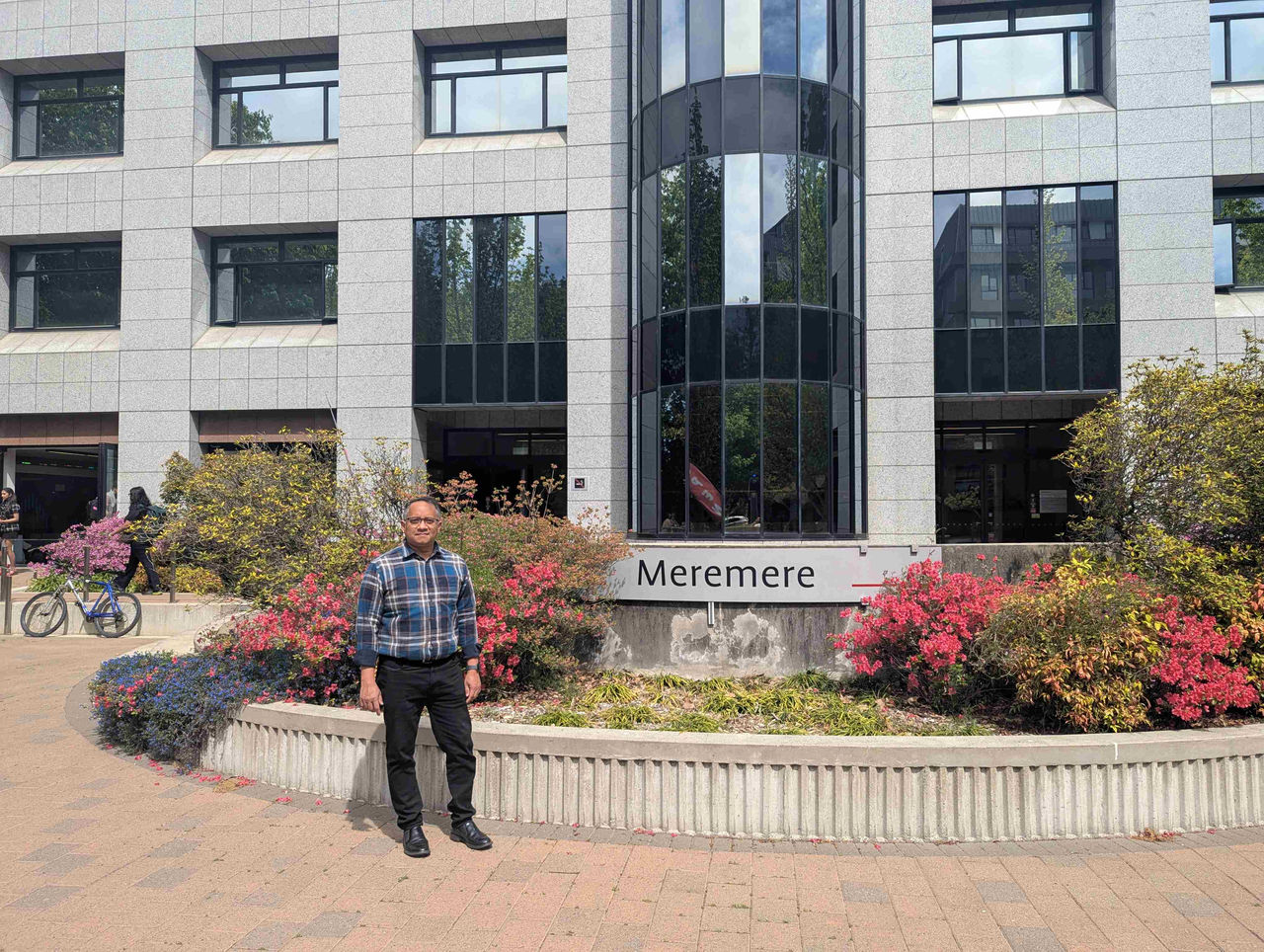
Photo caption: Dr Mesbahuddin Chowdhury at Te Whare Wānanga o Waitaha | University of Canterbury
Fair treatment from suppliers could be an overlooked tool to help businesses survive unexpected disruption, according to new research led by Te Whare Wānanga o Waitaha | University of Canterbury (UC) supply chain researcher Dr Mesbahuddin Chowdhury.
The study involving 205 Australian firms shows that fairness is more than an ethical principle or relationship-building exercise. It can have practical value when businesses face a crisis.
“How suppliers treat their customers is important to how well those businesses cope with disruptions,” Dr Chowdhury says.
“When suppliers make decisions fairly, listen to buyers’ concerns and apply consistent rules, those businesses are better able to prepare for disruption, respond, recover and learn from the experience.”
The researchers examined three forms of fairness in supplier relationships: procedural justice, covering how decisions are made; distributive justice, relating to the fairness of commercial outcomes; and interactional justice, including respectful treatment and honest communication.
Fair and transparent procedures were the only form found to have a direct positive relationship with buyer resilience.
Dr Chowdhury says this could involve a supplier explaining a shortage, seeking information about each buyer’s needs, using clear criteria to allocate limited stock and providing a way for buyers to question decisions.
“Fairness does not necessarily mean giving every buyer the same quantity,” he says. “It means making decisions through a transparent, consistent and defensible process.”
Respectful communication and fair commercial outcomes were also important, but their contribution to resilience depended on suppliers turning those relationships into flexible action.
That flexibility could include changing delivery schedules, adjusting orders or revising agreements as circumstances change.
“A supplier can communicate respectfully and offer a fair commercial agreement, yet the buyer may still struggle if the supplier cannot adapt,” Dr Chowdhury says.
“For a business leader, the question is whether a positive supplier relationship produces practical options when disruption occurs. Being treated well is important, but so is having a supplier who can work with you to find a workable response.”
The study measured resilience through four capabilities: readiness, response, recovery and learning. It focused on business experiences during the COVID-19 pandemic, but Dr Chowdhury says the broad principles remain relevant as firms confront shipping delays, geopolitical conflict, extreme weather and sudden changes in costs or trade conditions.
However, he cautions that no single resilience strategy will work for every crisis. A pandemic affects supply chains differently from a regional natural disaster or a tariff increase, and firms need to adapt their response to the disruption, their products and their markets.
This is particularly relevant for New Zealand businesses because of the country’s reliance on international shipping for both imports and exports.
“Businesses cannot prepare for every possible event because many disruptions appear without warning. That is why flexibility remains critical, not only in sourcing supplies but also in finding alternative customers and markets,” says Dr Chowdhury.
The research also found firm size strengthened the relationship between supplier flexibility and resilience, suggesting larger buyers may be better placed to benefit from adaptable suppliers. The age of a business had no equivalent effect.
Dr Chowdhury says the key message for business leaders is to build supplier relationships that combine dependable, transparent decision making with the ability to solve problems as conditions change.
The open-access paper, ‘Supplier Justice Practice in Building Buyers’ Resilience: A Mediated-Moderation Model’, was co-authored by Dr Mesbahuddin Chowdhury and Dr Mona Koushan from the University of Canterbury, and Dr Ananya Bhattacharya from Monash University, and published in the Global Journal of Flexible Systems Management.

What to read next
UC geography graduate honoured for global science leadership
UC alumnus Distinguished Professor Emeritus Iain Hay has received a prestigious international Fellowship recognising his contributions to geography and scientific collaboration.

Are Kiwi businesses jumping blindly on the AI bandwagon?
AI doesn’t have to play an inevitably dominant role in our lives, businesses and future, argues a guest speaker for an upcoming UC public lecture.

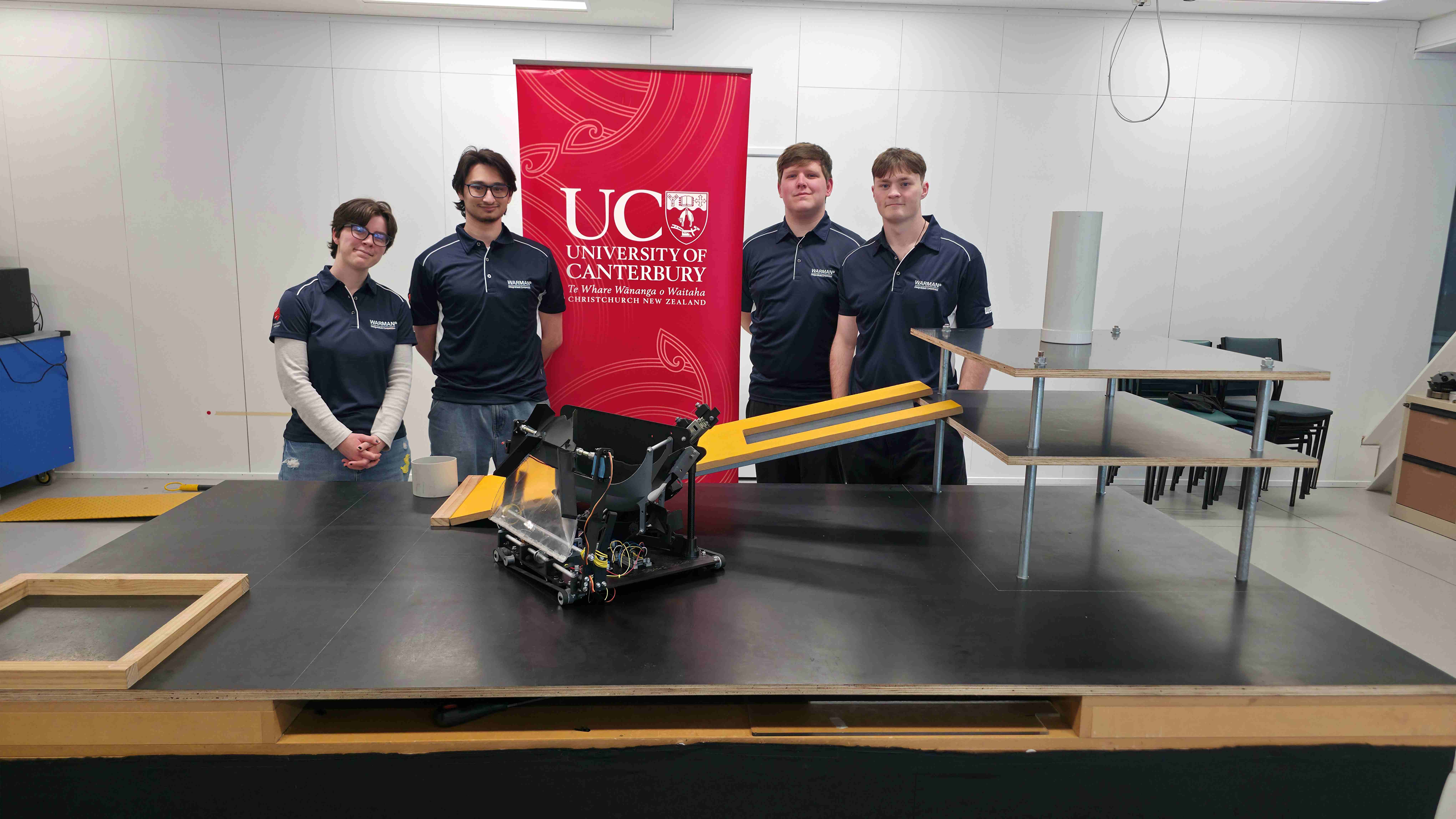
UC engineering students win international competition
A robot designed to transport rocks automatically has helped four UC engineering students claim an international title.
UC wins national award for employability service
UC has been recognised for excellence in helping students develop career-ready skills and connect with employers.

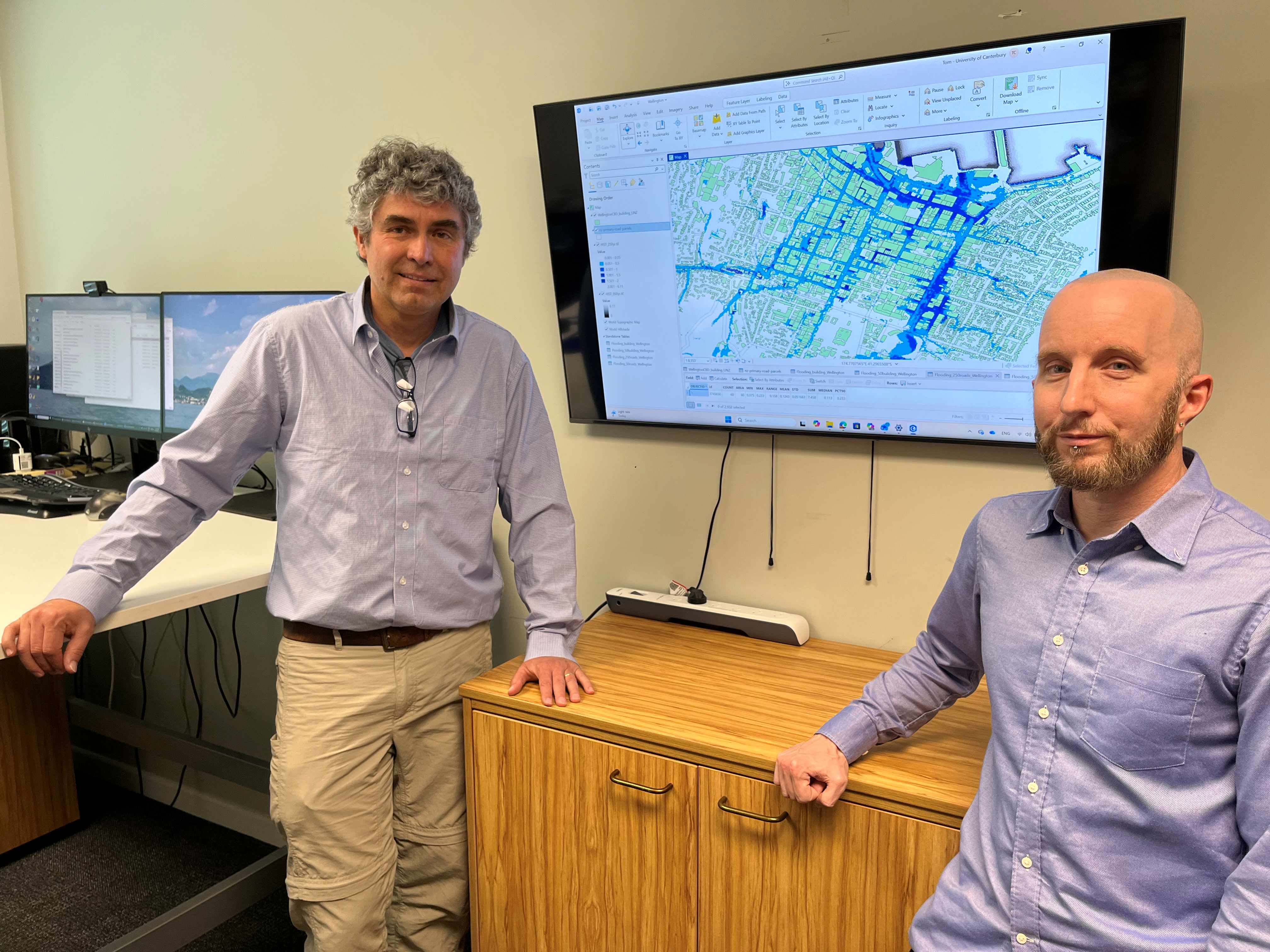
Digital models to help predict natural hazards in Kiwi capital
An innovative project using digital simulations to predict future hazards in New Zealand’s capital city takes its name from science fiction.
UC research challenges how we think autistic children learn
New UC research is challenging assumptions about how autistic children learn language.
Tiny robots, big potential: UC PhD explores new frontier
A UC researcher is pioneering laser-controlled robot swarms thinner than a human hair — work he believes could one day transform medicine and manufacturing.
UC research puts local knowledge at heart of resilience
UC research explores how Pacific Island nations can better use place-based knowledge to strengthen disaster planning and resilience.

Innovative UC research takes a closer look at AI in education
Researchers from UC's Faculty of Education are exploring the influence and reach of generative AI in New Zealand higher education.