

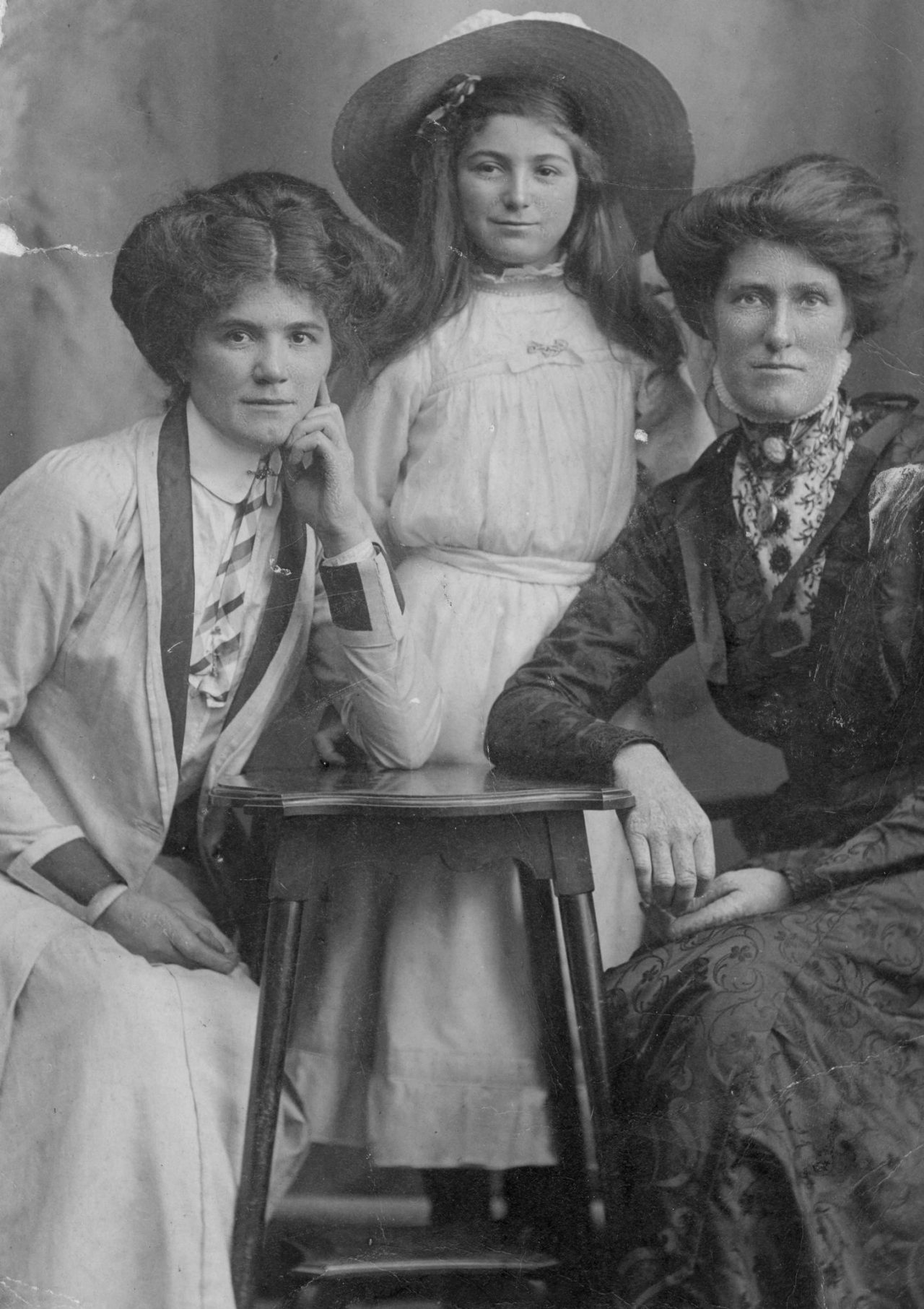
Main photo: Anastasia Foley (on the right) with her cousins Mary and Bridget Cullen.
New Zealand’s goldfields have been remembered as rough, male-dominated places but a new book highlights the lives of the women who worked, mined, built businesses and survived in those harsh environments.
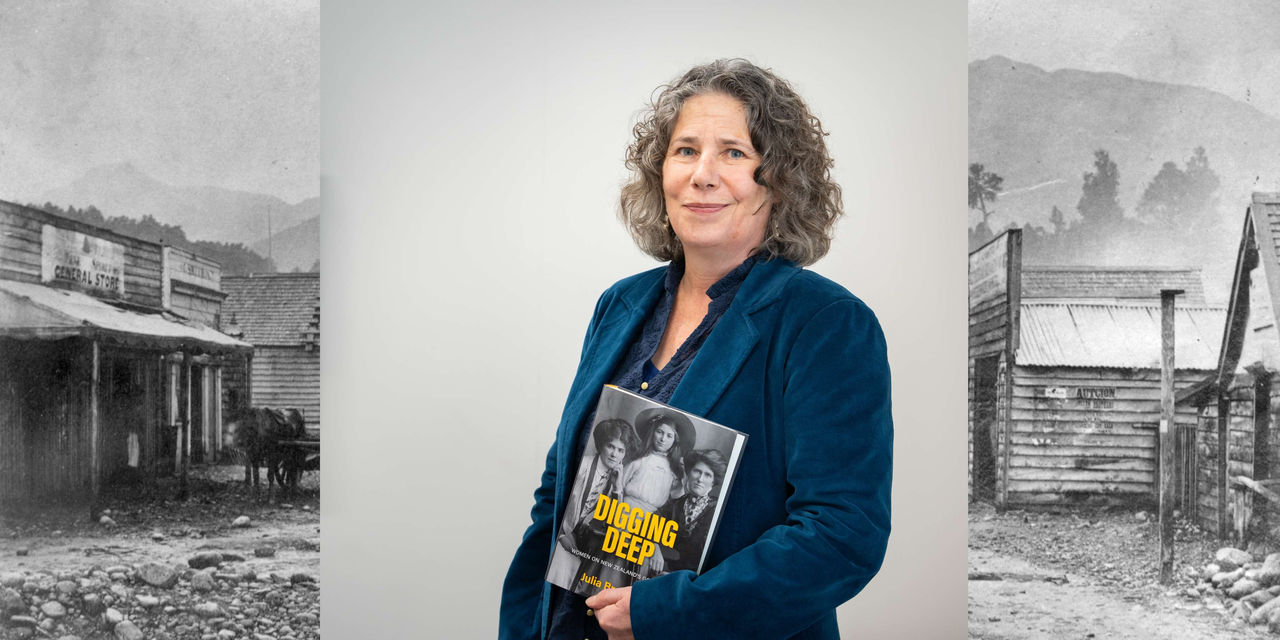
Written by Canterbury Museum Senior Curator Human History Julia Bradshaw and published by Canterbury University Press, Digging Deep: Women on New Zealand’s goldfields challenges the misconception that women were present on the goldfields only as wives or prostitutes, showing they were also adventurers, entrepreneurs, workers and miners.
Bradshaw says women have been overlooked and, in some cases, written out of goldfields history. In reality, they went to the goldfields for many of the same reasons men did — to earn a living, seek opportunity and, in some cases, try to make their fortune.
Based on 30 years of research, Digging Deep brings to light the stories of women who helped shape life on the goldfields of Golden Bay, Otago, Marlborough, the West Coast and Thames, as well as Māori women who were often already living in these areas.
Bradshaw first became interested in the subject while working at the Lakes District Museum in Arrowtown, where she found traces of women’s lives, but became increasingly aware women were largely missing from the stories being told.
Women ran hotels, restaurants, laundries and stores, worked as servants, barmaids, dance girls, nurses and teachers, raised children in harsh conditions, supported struggling miners and, in some cases, mined for gold themselves.
“The whole goldfields communities depended on the work of women,” Bradshaw says.
“That was particularly so in terms of social cohesiveness and care of the community, both in terms of caring for their own families but much broader than that.”
Among the women Bradshaw brings back into view is Julia Shanahan, who ran the Queenstown hotel, later known as Eichardt’s Hotel.
“She was obviously a very good businesswoman and really knew how to run a good hotel,” Bradshaw says. “What struck me was how quickly her contribution was forgotten.
“Only six years after her death, people talked about Eichardt’s Hotel as only being run by Albert Eichardt and had forgotten all about Julia.”
Likewise, Biddy of the Buller is often described as New Zealand’s only female goldminer, but Digging Deep shows she was one of many, including Anastasia Foley, who worked as a goldminer on the West Coast and employed men to work alongside her.
“Anastasia was fabulous,” Bradshaw says. “She was making enough to pay for two of her cousins to come over from Ireland. And when one of the cousins married in 1922, she put her occupation on the marriage registration as goldminer.”
Yet Foley’s achievements were largely absent from the record.
“None of this was mentioned in her obituary,” Bradshaw says. “Women’s obituaries generally only talked about their husbands or focused on what a great wife and mother a woman had been.”
For Bradshaw, these stories challenge the assumption women were peripheral to goldfields life. They were essential to the social and economic fabric of these communities, but their lives were often harder to trace because historical records were shaped by the biases of the time.
“It is really hard to find out what women were doing, but that’s not a reason not to do it,” she says.
The book also explores the hardship women faced, including alcoholism, illness, rape, unwanted pregnancy, widowhood and desertion. Some became wealthy business owners; others struggled to survive.
Bradshaw hopes Digging Deep encourages readers to look again at women in their own family histories and question who has been left out of stories passed down through generations.
“If people don’t search for these women, you won’t find them. They need championing and I think it is the role of historians to find these women and share their stories.”
Digging Deep gives voice to the fascinating and forgotten women of New Zealand’s goldfields — from Porpoise Maria, Sugar Annie, Dirty Mary and the notorious Mrs Swords, to women whose names have almost disappeared from history.
The book will be launched at Kate Sheppard House on 9 July, with University of Canterbury History Professor Katie Pickles speaking at the event.
Digging Deep: Women on New Zealand's goldfields by Julia Bradshaw is published by Canterbury University Press, RRP $59.99, 352pp, ISBN 978-1-98-850354-7. It is available in bookstores and through Canterbury University Press.
About the author: Julia Bradshaw has worked in museums for more than 30 years and is currently Senior Curator Human History at Canterbury Museum. She has a background in South Island history and a special interest in New Zealand’s gold rushes, Chinese history, women and remote places.
Canterbury Museum supported Bradshaw’s work on the book, giving her time and space to complete the project.
.png)