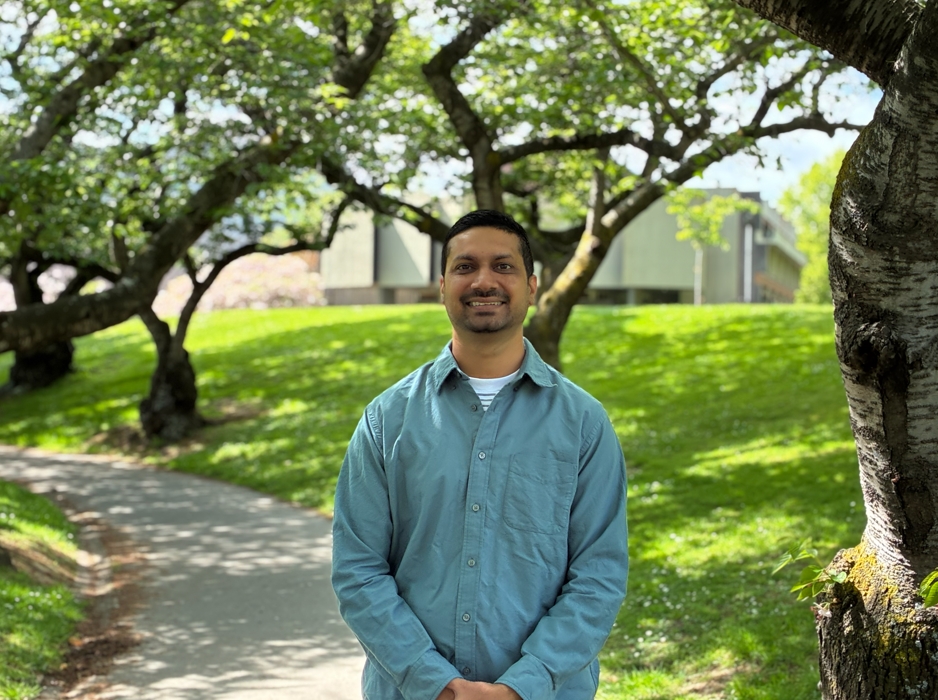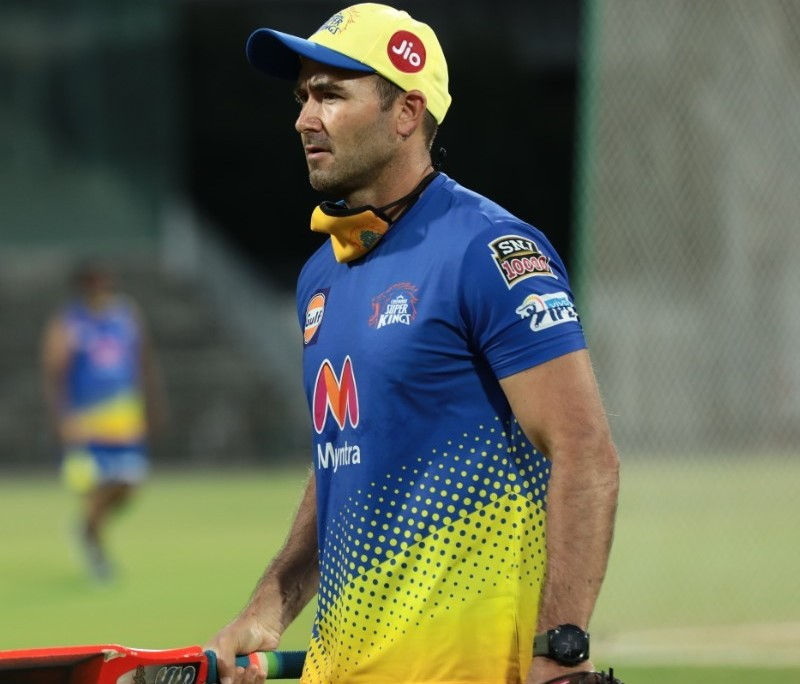


Photo caption: Gregory King, Faculty of Health PhD candidate, Strength and Conditioning Coach for the Chennai Super Kings Indian Premier League and Canterbury Cricket is finding ways to increase bowling speeds and strength abilites.
Young pace bowlers in three Christchurch high schools are participating in an innovative research intervention aimed at improving their bowling speeds and strength abilities.
This study from Te Whare Wānanga o Waitaha | University of Canterbury (UC) is led by Faculty of Health PhD candidate Gregory King who is also the Strength and Conditioning Coach for the Chennai Super Kings Indian Premier League and Canterbury Cricket.
His research is part of a series of studies into the strength qualities that enable fast bowlers to perform at their best.
“Over the years, I’ve observed a relationship between specific strength characteristics and the ability of bowlers to generate high speeds. This research seeks to identify those qualities and determine if developing them can make bowlers faster,” King says.
“Our first study surveyed global experts to pinpoint essential strength qualities for pace bowlers, alongside the best tests and exercises to develop them. This informed our second study, where we measured these qualities across elite, amateur, and school-level bowlers to determine their impact on bowling speeds. In this third phase, we're putting our findings into action with school-aged bowlers.”
The intervention involves Year 10 to 12 students from three Christchurch schools. Participants undergo rigorous assessments of their bowling speeds and strength abilities before and after an intensive six-to-eight-week training programme. Two distinct training approaches are being evaluated: one focusing on general strength and the other emphasising high-velocity, explosive movements.
“Both programmes have been meticulously designed based on insights from our earlier research and expert consensus,” King says.
He notes the significance of this study in the broader cricketing research landscape. “Much of the existing work on fast bowlers focuses on injury prevention. While that’s critical, there’s been relatively little research on performance enhancement. This study aims to fill that gap by providing strength and conditioning coaches with evidence-based strategies to improve bowling speed.”
The intervention’s focus on performance rather than injury prevention sets it apart, he says. “Improving bowlers’ speed – whether they’re already quick or looking to build their pace – provides a significant competitive edge.”
Preliminary results have shown promising improvements in strength abilities, despite the challenges of conducting such studies over a short period, King says.
“With a six-to-eight-week timeframe, dramatic results aren’t always expected, but the initial findings have exceeded my expectations from a strength perspective. We’re seeing notable improvements in the participants’ strength abilities. While we’re still analysing the bowling-speed data, these initial findings are encouraging and suggest the programmes are making a measurable impact.”
He says the findings are expected to have implications for school-level bowlers as well as amateur and professional cricketers. The emphasis on tailored training programmes ensures that the research outcomes are practical and applicable in real-world settings.
UC plays a pivotal role in facilitating this research, he says. UC provides access to its state-of-the-art facilities, including the UC Sports Science Gym, where some training sessions are conducted.
“Without UC’s support, especially my advisors, the, facilities and the involvement of master’s students as interns, managing a project of this scale would have been impossible,” King says. “Their assistance has been invaluable, not just for the school-level interventions and data collection but also for expanding the study to amateur club cricketers.”
 Sustainable Development Goal (SDG) 3 - Good health and wellbeing.
What to read next
UC geography graduate honoured for global science leadership
UC alumnus Distinguished Professor Emeritus Iain Hay has received a prestigious international Fellowship recognising his contributions to geography and scientific collaboration.

Are Kiwi businesses jumping blindly on the AI bandwagon?
AI doesn’t have to play an inevitably dominant role in our lives, businesses and future, argues a guest speaker for an upcoming UC public lecture.

UC engineering students win international competition
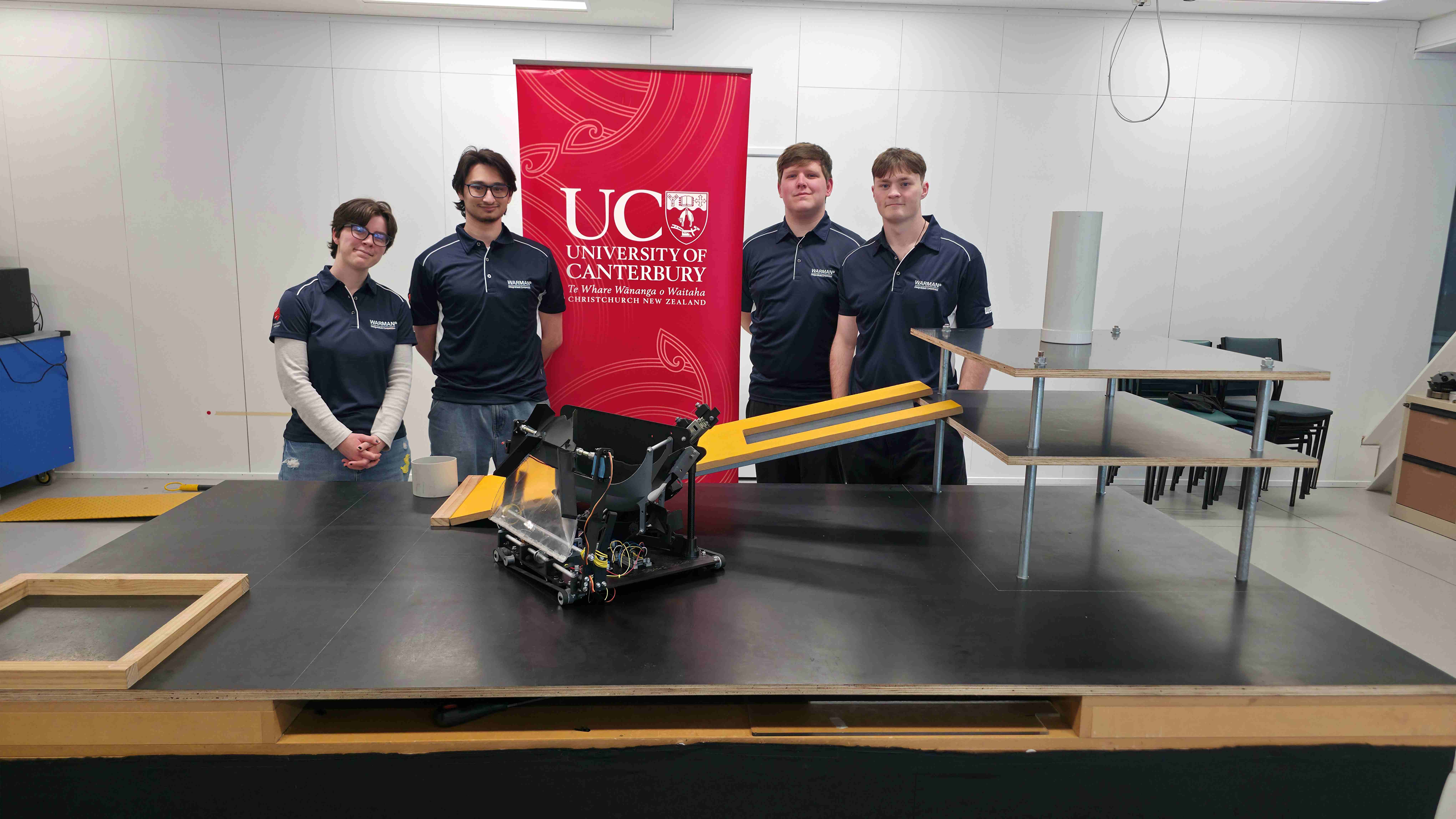
A robot designed to transport rocks automatically has helped four UC engineering students claim an international title.
UC wins national award for employability service
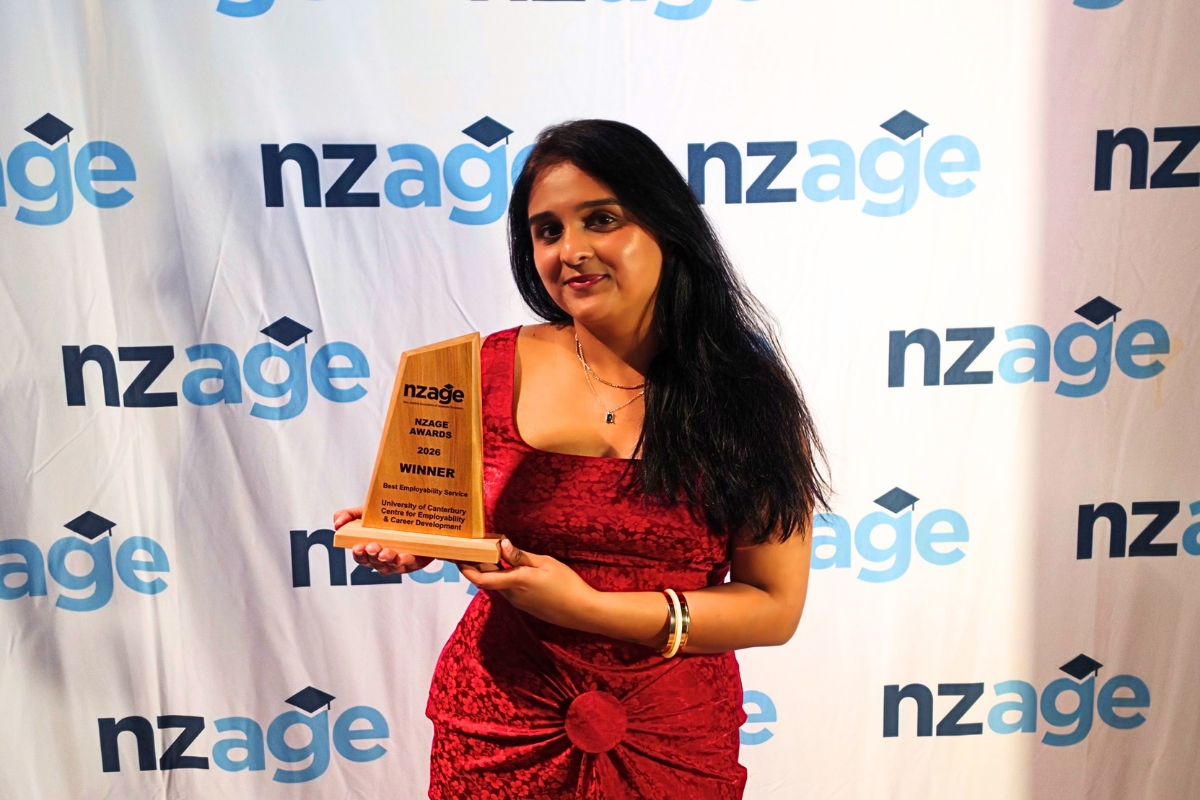
UC has been recognised for excellence in helping students develop career-ready skills and connect with employers.
Fair suppliers strengthen business resilience
Businesses are better able to withstand disruption when suppliers make fair decisions and turn strong relationships into flexible action, UC research finds.
Digital models to help predict natural hazards in Kiwi capital
An innovative project using digital simulations to predict future hazards in New Zealand’s capital city takes its name from science fiction.
UC research challenges how we think autistic children learn
New UC research is challenging assumptions about how autistic children learn language.
Tiny robots, big potential: UC PhD explores new frontier
A UC researcher is pioneering laser-controlled robot swarms thinner than a human hair — work he believes could one day transform medicine and manufacturing.
UC research puts local knowledge at heart of resilience
UC research explores how Pacific Island nations can better use place-based knowledge to strengthen disaster planning and resilience.