

With the space industry rapidly gaining momentum, new research from Te Whare Wānanga o Waitaha | University of Canterbury (UC) highlights the importance of managing this growth sustainably to protect our planet’s wellbeing.
UC supports the advancement of aerospace through research, partnerships, and talent development — and recognises the importance of doing so in ways that protect future generations. This research adds to a growing body of knowledge guiding the sector’s sustainable development.
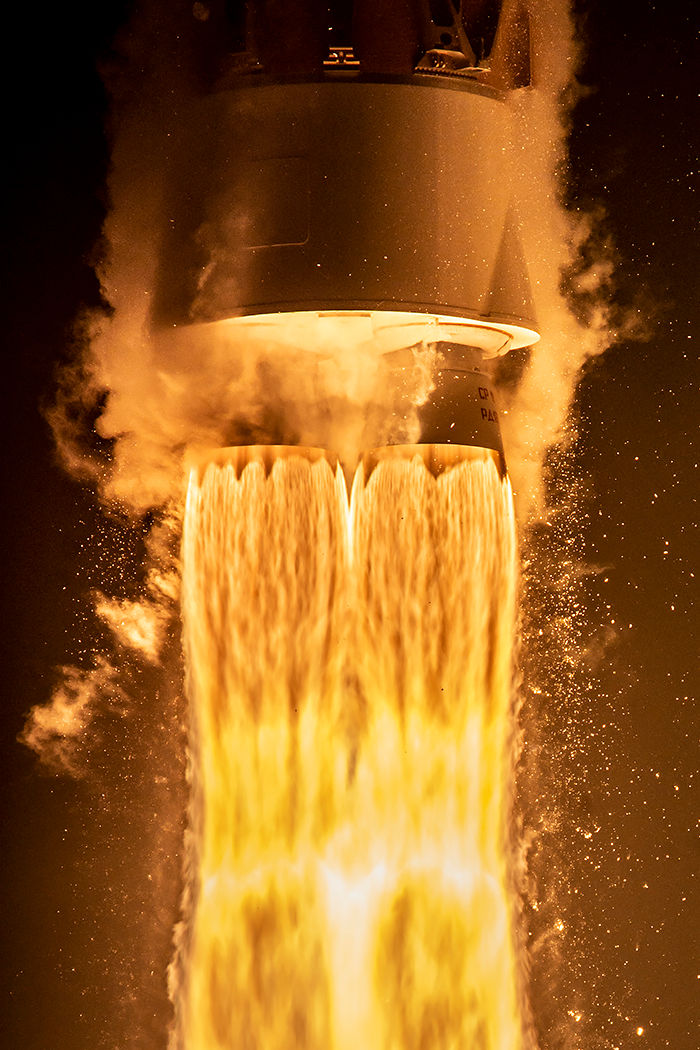
The ozone layer protects life on Earth from harmful solar ultraviolet (UV) rays and a hole discovered in the 1980s, caused by human-originated pollutants, is slowly healing thanks to global action generated by the Montreal Protocol. But emissions from rocket launches, particularly certain chemicals and particulates, could pose a new challenge.
The UC-led study, published in npj Climate and Atmospheric Science, modelled atmospheric impacts from projected rocket launch rates. While 2019 saw 102 launches, by 2024 that increased to 258 worldwide, with that number expected to be exceeded in 2025. At multiple sites worldwide, the launch industry expects expansive future growth.
The findings show that with around 2,000 launches per year — nearly ten times current levels — the ozone layer could thin by up to 3%, with the most significant losses over Antarctica.
“Fortunately, the ozone losses are small,” said Associate Professor Laura Revell, one of the study’s lead authors. “But they are significant in the context of global ozone recovery.”
Importantly, the researchers also found no significant ozone loss under a more modest scenario of 900 launches per year — showing that informed decision-making can make a difference.
The study highlights that rocket fuel choices matter: chlorine-based fuels and black carbon particulates have the greatest impact on the atmosphere.
“It’s entirely possible to create a launch industry future where we avoid harmful effects,” said co-lead author Dr Michele Bannister. “It’ll take keen effort and enthusiasm from industry and regulators, working together with scientists - but this needs to start now, not after the damage is done.”
The study involved five UC researchers from the Faculties of Science and Engineering (Laura Revell, Michele Bannister, Dave Frame, John Cater, former MSc student Tyler Brown), alongside collaborators in Switzerland, Spain, and the US. It was supported by Rutherford Discovery Fellowships from Te Apārangi | Royal Society of New Zealand.
What to read next
UC celebrates its Manaaki New Zealand scholar
After completing their studies at the University of Canterbury, 15 Manaaki New Zealand scholars are preparing for the next chapter of their journeys.

NZ study reveals gaps in women's heart healthcare
A review of 25 years of New Zealand research has revealed significant gaps in women's heart healthcare, highlighting opportunities to improve diagnosis, treatment and outcomes.

History goes hi-tech at Awaroa Godley Head
The University of Canterbury's HIT Lab is helping Awaroa Godley Head visitors enjoy a more immersive experience of the World War II heritage site.

UC geography graduate honoured for global science leadership
UC alumnus Distinguished Professor Emeritus Iain Hay has received a prestigious international Fellowship recognising his contributions to geography and scientific collaboration.

Are Kiwi businesses jumping blindly on the AI bandwagon?
AI doesn’t have to play an inevitably dominant role in our lives, businesses and future, argues a guest speaker for an upcoming UC public lecture.

UC engineering students win international competition
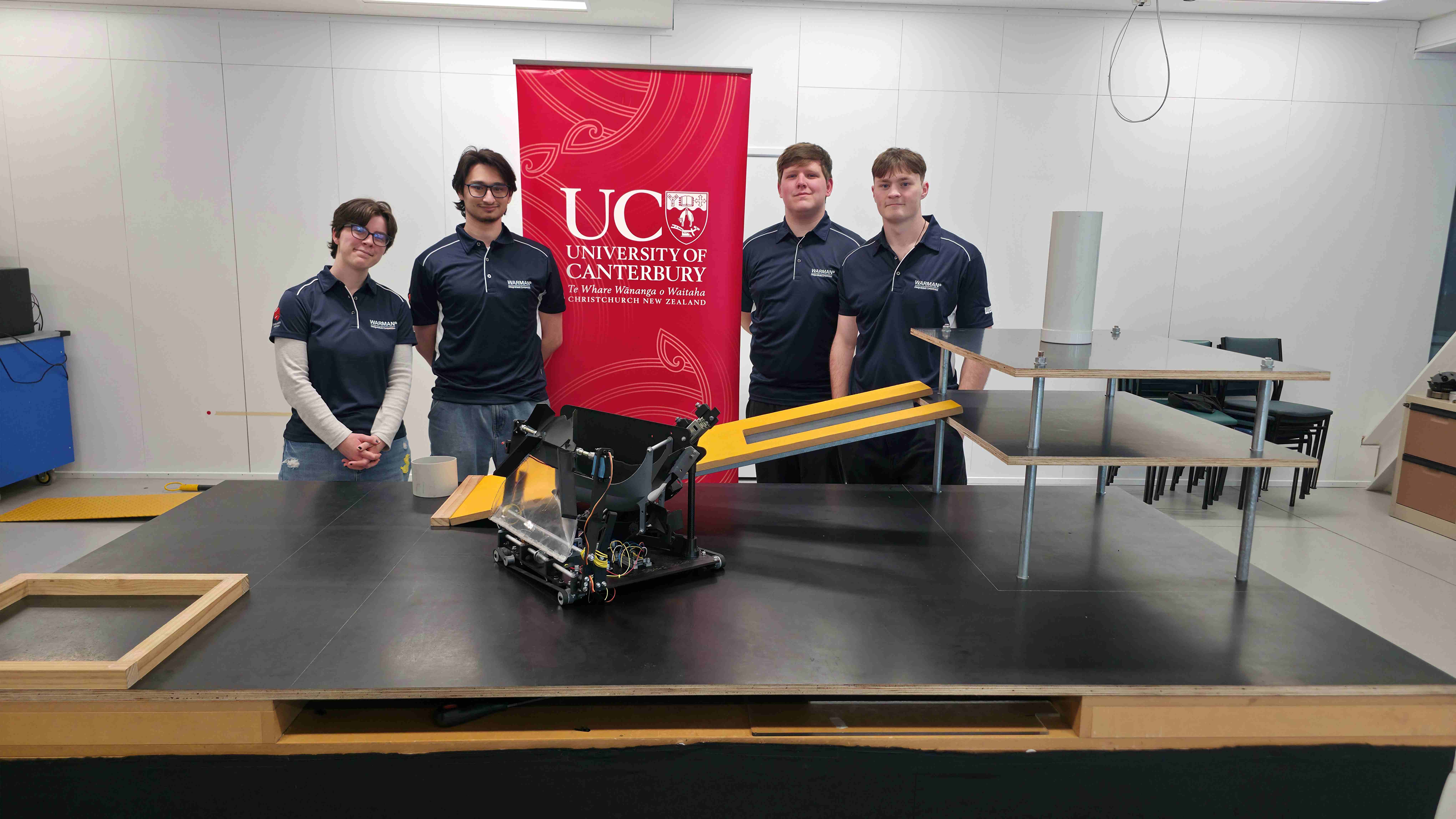
A robot designed to transport rocks automatically has helped four UC engineering students claim an international title.
UC wins national award for employability service
UC has been recognised for excellence in helping students develop career-ready skills and connect with employers.

Fair suppliers strengthen business resilience
Businesses are better able to withstand disruption when suppliers make fair decisions and turn strong relationships into flexible action, UC research finds.
Digital models to help predict natural hazards in Kiwi capital
An innovative project using digital simulations to predict future hazards in New Zealand’s capital city takes its name from science fiction.