

Menu

Wananga Landing
Profile image
Wananga Landing
Topic

X-ray Absorption Fine Structure (XAFS)

26 February 2026

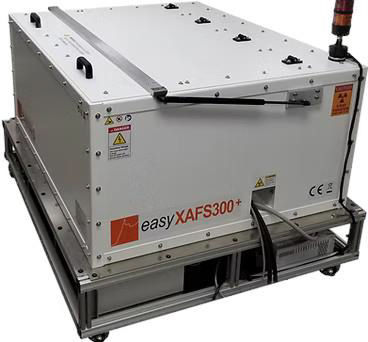
X-ray Absorption Fine Structure (XAFS) is a powerful, element-specific technique used to probe the local atomic and electronic structure of materials.

HOW TO APPLY

X-ray Absorption Fine Structure (XAFS) is a powerful, element-specific technique used to probe the local atomic and electronic structure of materials.

By analyzing how X-rays are absorbed near an element’s core-level binding energy, XAFS reveals critical insights into oxidation states, coordination environments, and inter-atomic distances.

The main advantage of X-ray Absorption Spectroscopy (XAS) is that the energies associated to the electronic transitions of different elements are distinctly separated from each other. This means that an element-specific measurement of the sample can be made by tuning to the energy of a particular transition.

An additional advantage is that XAS can provide information about the local structure of the element being probed, regardless of long range order. This makes the technique compatible with crystalline, amorphous and nano-sized materials.

Suitable for solids, liquids, and gases, XAFS is ideal for research in catalysis, materials science, environmental studies, and nanotechnology.


Applications

XAFS is especially powerful because it’s element-specific, it works on disordered or amorphous systems, and it can be used on solids, liquids, and gases, even at low concentrations.

The specificity of the technique allows tuning to the energy of an atomic absorption edge and probe only the desired element, regardless of what else is in the sample.

Given that the technique does not require vacuum conditions, in-situ, real time measurements are possible: from measuring oxidation states and local order in batteries and solar cells during operation, to in-situ catalysis reaction cells, and more.

battery technology

Explore local atomic structure in electrodes and electrolytes, even during operation.

GLASS & CERAMICS

Study local order, phase transitions, dopants and structural modifiers in amorphous materials.

SOLID STATE PHYSICS

Study electronic states and bonding environment in doped semiconductors, explore electronic and structural changes.

ENVIRONMENTAL

Determine the chemical form of heavy metals in soils, sediments, and water.  Track how pollutants interact with treatment agents.

Privacy Preferences

By clicking "Accept All Cookies", you agree to the storing of cookies on your device to enhance site navigation, analyse site usage, and assist in our marketing efforts.