

Menu

Students using equipment in the field while wearing health and safety gear
Wananga Landing
Topic

Health and Safety at the School of Earth and Environment

27 March 2026

This page includes information for staff, visitors and students in the School of Earth and Environment. On this page you will find the H&S induction and quiz, information on fieldwork planning, booking travel, and class field trips, along with contact information for Departmental Safety Officers and Health and Safety Representatives in the School. 

HOW TO APPLY


Emergency Contacts

  • UC SECURITY 92111 or 0800 823 637
  • NZ Emergency Services (Fire/Police/Ambulance) 111
  • Non-Emergency Security 92888
  • Defibrillator Locations – UC campus Map

UC Emergency Procedures – Know what to do before and during an emergency


SEESHAW – Is the School of Earth & Environment Safety Health & Wellbeing committee.  SEESHAW meets monthly to support the School’s health, safety and wellbeing.

SEESHAW Members - Rob Spiers (Chair and DSO), Head of School, Sacha Baldwin, Chris Grimshaw (DSO), Matt Cockcroft (DSO), Suellen Knopick (DSO), John Revell, Health and Safety reps and PG student representatives. SEESHAW can be reached at earthandenvironmentsafety@canterbury.ac.nz


Inductions

All new and current staff, researchers and postgraduate students are required to undertake the School of Earth and Environment’s Health & Safety induction. This general induction is available below. Review the PowerPoint and then answer the quiz to complete your induction.

Any students, staff, visitors and contractors that plan to use or gain access to any of the School of Earth & Environment’s Laboratories/Facilities will have to be officially inducted by the Laboratory Manager in charge of that area.

Induction process


Review the Induction PowerPoint and complete this quiz to complete your induction.
Induction Powerpoint SEE

Download (application/pdf, 964 KB)
Download

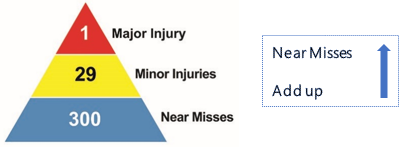
Reporting an Incident or Near Miss:

  • Why?
    • Incident reporting provides a process in which the situation can be corrected in order to prevent similar incidents from occurring in the future.
    • Documenting all incidents allows UC to track patterns, realise trends, and discover anomalies.
    • Incident reporting is a key habit that creates a stronger safety culture.
    • Recording work related incidents is a legal requirement.
SEESHAW3
  • When?
    • All incidents, near-misses and injuries should be reported immediately.
    • The Student/Staff member should not have to make a guess as to whether “their issue or incident” is worthy of an incident report. When in doubt, file an incident report.
  • How?
    • Please report all Incidents and Near misses directly to your School Safety Officer, Manager or Supervisor.
    • UC - Reporting an Incident – Helpful guides covering the process

SEEs - Field Activities

The School of Earth and Environment offers opportunities to engage in learning and research in a wide variety of  environments including visits to field stations, aquatic, alpine, and forest environments, farms, quarries, mines, factories, health facilities and many other cultural and business environments. Anyone heading into the field is requested to complete the field activity training, linked below. 

Field activity training

How to create a field activity plan

The person who is organising and running the field trip is the ‘Field Activity Leader’ and is responsible for ensuring the correct H&S Hazard Management process is followed. The Field Activity Leader is responsible for completing the appropriate H&S documentation:

Tips for using Assura and an example of how to complete a medium risk plan are available here:

Tips 

Medium Risk plan example

Things to keep in mind when creating a field plan in Assura:

  • Go to Assura, select Fieldwork on left, select Create at top
  • Describe the activities, locations and risks associated with your fieldwork. Be complete. If different people are arriving in different vehicles, this should be outlined. Include a map or coordinates of where you will be.
  • You will be asked to select a Safe Return Contact. This can be UC security or someone you nominate.
  • Drivers of UC vehicles will need to be driver assessed.
  • There are four risk levels
    •  A low-risk plan is self-approved and only applies for visits to low risk environments, without students accompanying you.
    • There are two medium risk levels - the most commonly used will be medium risk with medical declarations. Check the tips sheet for more examples.
    • A high-risk plan will need to go through senior leadership; allow time for this.
  • Consider ALL the risks you may face.
  • The approval process in Assura can take a few days, DO NOT LEAVE THIS TO THE LAST MINUTE
  • Select the SEE Field approvers group to review the plan
  • Most field activities will be medium risk and require medical declarations. A fieldwork coordinator will review the declarations and notify the leader of any risks that should be mitigated (this keeps private information secure). Allow time for your participants to enter the declarations.
  • You likely have some overlapping duties if you are working at another organisation, with other organisation’s staff, using other organisation’s equipment, etc. You are required to consult/cooperate and coordinate with other entities to determine who will mitigate a risk associated with your activity. This can be as simple as a phone call or an email but you must show you’ve done it.

While SEE is transitioning to the Assura fieldwork system, the document below can still be completed and mailed to earthandenvironmentfieldsafety@canterbury.ac.nz. The plan must include a level of detail around dates/locations/participants and whether any overlapping duties are included. A safe return contact is also needed. Allow time for approval.

SEE Field Activity Plan (word, March 2025)

Staff and students please use this form to request any domestic or international travel in the School of Earth and Environment. If you cannot access the form email seetravel@canterbury.ac.nz.

You will need to provide the following:

  • Purpose of Travel
  • Where, when and what (flight? Accom? Car?)
  • Funding - Codes. If it not your fund, the fund owner will need to provide email approval.
  • Estimated Travel Cost (if international)
  • Travel Dates
  • Number of Leisure Days
  • Whether its seat only, flexible etc.
  • All University international travel will be economy class

Travel Profile - if you have not used Orbit at UC before you will need to supply your travel profile details:

Title (Mr, Miss, Dr, etc.)
First Name
Middle Name
Last Name
Preferred Name (If different from your first name)
Email
Mobile Number
Air New Zealand Airpoints Number (if you have one)
Staff Number (if you have one)


If you have questions and/or need to make a change to existing travel email seetravel@canterbury.ac.nz.

Wellbeing is a challenging concept to define, but it is often said to be connected with feeling satisfied and happy, having one's needs met, being free to pursue goals, and experiencing good living conditions. Putting it really simply, wellbeing can be thought of as 'feeling good and functioning well.'


Take charge of your wellbeing while studying and working, there are heaps of services and facilities you can access on campus –go here for more information.

SEEs Vehicle use

The School of Earth & Environment has some vehicles (vans and 4-wheel drive utes) that may be available for field work. Postgraduates undertaking thesis-related field work can expect to pay mileage charges. It is important that you discuss your needs with your supervisor and relevant technical staff.

  • To drive a UC vehicle you will need to sign off the  UC vehicle policy, and be driver assessed. Talk to your supervisor or email earthandenvironmentsafety@canterbury.ac.nz to book an assessment.
  • Bookings must made in advance. You will also need to present a full NZ Drivers Licence or, an International Driver’s Licence.
  • Vehicles are also available from the University of Canterbury Vehicle Pool.
  • Anyone planning on using a UC vehicle “off-road” will be required to be competent in the use of and have to have completed a recognised off-road driving course before you will be given approval.
    [Off-Road examples = farm tracks, beaches, through water or anywhere that is not a public road]
    SEEs organises such training courses please communicate with earthandenvironmentsafety@canterbury.ac.nz


University Fleet vehicle user's guide

All users of University fleet vehicles must agree to comply with the Terms and Conditions for Use of University Vehicles before being allowed to book a vehicle

  • All vehicle users must be employed by, or enrolled as a student of, the University of Canterbury.
  • All vehicle users must have a full current driver licence of the appropriate class for the vehicle being hired and this licence must be available for inspection. Only driver licences that are valid in New Zealand will be approved.
  • Fleet pool vehicles are provided for the purpose of travel on University business only. Mileage charges for use of these vehicles will be incurred. Private use is not permitted unless approved in advance by the Executive Director, People, Culture and Campus
  • Fleet pool vehicles are available 24/7, once a booking is made the keys can be collected from the UC Security Office at 114 Ilam road, the driver must present their current valid driver’s licence and valid Canterbury Card when collecting the pool vehicle

Field Trip Participation Information

Welcome SEE field trip participants! Much has changed over the last few years regarding field trip organisation, forms, payments, equipment etc. Please read this carefully, hopefully it will answer your questions regarding the things you need to complete before embarking on a class field trip.

Your prompt completion of the Health and Safety Field Trip Participant Form is necessary and appreciated. Thank you.

Information submitted on this form is held in a secure setting and deleted at the conclusion of each UC calendar year.


Health & Safety Field Trip Participant Form

Link to Form SEE Field Trip Health & Safety Form (qualtrics.com)

This data is securely held by the University of Canterbury and accessed by your trip leader before departure.


WHEN TO FILL THIS IN:

  • Fill in the form at the earliest possible date. Your prompt response is required.
  • You are only required to fill this in ONCE for the year for ALL your SEE trips unless health or emergency details change.
  • Make sure you tick all the courses which have FIELD TRIPS that you intend to enrol in. It doesn’t matter if you decide to withdraw.

Familiarise yourself with the following before completing the form and submitting:

  • SEE field trip behaviour policy


Catering Payments

Some SEE multi-day field trips charge a minimal fee to cover the costs of catering for three meals a day.

  • Please remember to bring your own LUNCH on the first day of the field trip.


HOW TO PAY:


WHEN TO PAY:

  • Payment must be completed as soon as possible, prior to your field trip.
  • Non-payment after participating in SEE-catered meals on a field trip may result in marks being withheld and graduation being delayed.

UC policy states that: “Credit may be withheld from any student who fails to pay any fee, fine or cost owed to the University or to a Department/School, or who fails to return University property.”


DIETARY REQUIREMENTS:

  • Special diet requirements are catered for.
  • Please enter your dietary requirements in the Health & Safety Field Trip Participant Form.
  • If you wish to discuss further please email sacha.baldwin@canterbury.ac.nz to make a time to meet. We try to accommodate as best we can so the more information we have the better.


Equipment Purchase

HOW TO PAY:

Any equipment required or recommended for your field trip or labs can purchased online at the UC Science Shop.


HOW TO PICK UP:

Pickup location: Ernest Rutherford, Room 109 and email cathy.higgins@canterbury.ac.nz and sarah.pope@canterbury.ac.nz to arrange a time to pick-up.


WHAT EQUIPMENT DO YOU NEED?

  • This information is available on the Science Shop site. Optional, Recommended and Required equipment is listed under each course.
  • You may also wish to talk to your trip leader or course co-ordinator if you have any questions.

Te Kura Aronukurangi

SCHOOL OF EARTH AND ENVIRONMENT                University of Canterbury


ADDITIONAL POLICY - BEHAVIOUR DURING FIELD TRIPS


A very high standard of individual and group behaviour is required on all SEE field trips. All students must comply with University Discipline Regulations (UC Calendar) and comply with all instructions given by University staff or policies specific to field activities. Some of these instructions and regulations relate to the health and safety of individuals and the group as a whole. Other instructions relate to the care of University and private property, as well as the reputation of the University. It is important to recognise that all students on field trips are seen as representing the University in public.


It is the personal responsibility of each student to manage their own behaviour.  Any student disobeying instructions, breaching regulations or requirements with respect to academic programme related activities, or behaving in a manner which staff members regard as unacceptable may be penalised. In extreme circumstances, e.g. involving safety, a student may be dismissed from the field trip and removed from the course by the field trip leader or course co-ordinator who has delegated authority from the Head of School.  All serious breaches of University Regulations and Policies will be reported to the University Proctor.


It is the professional responsibility of staff to ensure the safety of all participants on field trips. Alcohol or other non-prescription drugs are strictly prohibited at the field-station and field accommodation for undergraduate trips. This is a health and safety issue. A drunk/intoxicated or drugged student is potentially unsafe both to themselves and to others. A number of incidents have occurred on previous residential field trips, involving excessive consumption of alcohol resulting variously in serious misbehaviour, a breach of the University Discipline Policies, detrimental effect on the University’s reputation and/or damage to property. Any student found with alcohol at the field station or to be affected by alcohol or other non-prescription drugs will be dealt with severely by the trip leader and/or course co-ordinator; the penalty for this offence will be up to and including dismissal from the trip.


At postgraduate level, the decision on whether alcohol is allowed at the field accommodation is at the discretion of the field trip leader. If alcohol is permitted, both staff and students are responsible for meeting the general university policy on alcohol.  This involves only responsible and moderate use of alcohol.  The same penalties that apply for undergraduate/dry postgraduate trips apply to individuals on trips where alcohol is permitted, if they break the policy.


                                                                                                            April 2021

Head of School

Te Kura Aronukurangi|School of Earth and Environment

Organising a student field trip

School of Earth & Environment/Te Kura Aronukurangi

For a summary of this process please see the Flow Chart

Field trip logistics email: sacha.baldwin@canterbury.ac.nz


Year before trip

Date:

  • Choose a date – for advance booking of field stations etc
  • Communicate to Field Trip logistics, also any changes.


Accommodation:

  • Email regarding which field station/ accommodation you wish to book for the next year. If you book it yourself please still email to let us know.


Year of field trip

 Field Trip Requirements form:

  • Field Trip Requirements form 
  • Fill in as close to the beginning of each semester as possible for ALL field trips or teaching workshops, day and residential.


Date of trip:

  • Put information on the course LEARN site with dates and any options before, or as, the semester begins.
  • Set up a site for students to allocate to different streams if needed.
  • Communicate any changes to Field trip logistics as soon as they are decided.


Online H&S forms:

  • Put up information regarding the field trip participant form on the front page of LEARN for each relevant course. There will be a DUE DATE for the form to be submitted set at the end of the first fortnight of semester.
  • First lecture or lab – lecturer/tutor to introduce the students to the online Field Trip Participant Form.
  • Give 5 minutes during the lecture to fill in and submit. Alternatively on LEARN there will be a due date.
  • TRIP LEADERS and demonstrators must also fill this in by the due date.
  • Click here for form.


Staffing:

  • Let Field trip logistics know ASAP which staff are attending and who you have hired to demonstrate on the trip.
  • If your staff/demonstrators are driving minivans, be sure they have a full driver’s licence and have completed the SEE- arranged driver assessment (contact Sacha to arrange).
  • Forward their names to Sacha Baldwin for First Aid training and epipen management sacha.baldwin@canterbury.ac.nz


Visitors:

  • If you are hosting a visitor or extra people on the trip let Field Trip Logistics know and pass on email details. Bums on seats can be a crucial number for vehicle booking.


Student numbers:

  •  Field trip logistics will download class lists. If there are any changes or if individuals cannot make it, let the Field trip logistics team know AS SOON AS YOU hear.


Vehicles:

  • These will be booked by the Field Trip logistics team.


Equipment:

  •  If you require a lot of equipment attach a separate list to your field trip requirements form.


 Field Activity Plan (FAP):

  • Fill in at least 3 weeks before trip for approval.
  • Go to the H&S Planning for Field Work tab near the top of this page. Follow the process for creating a field plan in Assura.

Need more information?

Privacy Preferences

By clicking "Accept All Cookies", you agree to the storing of cookies on your device to enhance site navigation, analyse site usage, and assist in our marketing efforts.