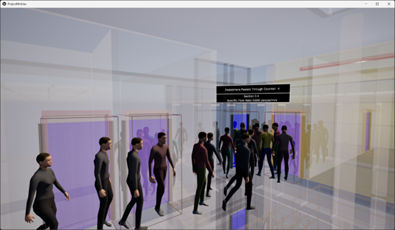


Traditional approaches to evacuation design, modelling and guidance are rooted in data collected and analysed in the 1960’s and 1970s. While there have been some advancements in recent years, our aim is to develop new design tools which natively incorporate a wide range of demographics, and help develop guidance for better communication systems to help mobility impaired occupants use fire protected lifts much more effectively. The key elements in this project are:
1. New digital design and visualisation tools:
· Building Information Modelling: connecting BIM tools to crowd models and simulations for a much more integrated approach to evacuation modelling, integrated with modern design tools.
· New crowd modelling approaches: to incorporate a spectrum of biomechanical and occupant walking abilities (see “Crowd Modelling from First Principles”)
· Visualisation tools: to help build much better insights into pedestrian dynamics and evacuation processes by animating crowd flow in 3D, supporting VR and desktop visualisation, using the “Möbius Crowd Viewer”.
2. VR Experiments to inform better communication systems:
· We are carrying out experiments in Virtual Reality to develop better communication systems for the use of Occupant Elevator Evacuations. The experimental results will feed into the development of design insights and guidance. See “VR Testing Testing: Safe Escape”
All software and outputs from the project will be free to use for all.
We gratefully acknowledge the funding for this project from several key organisations:


