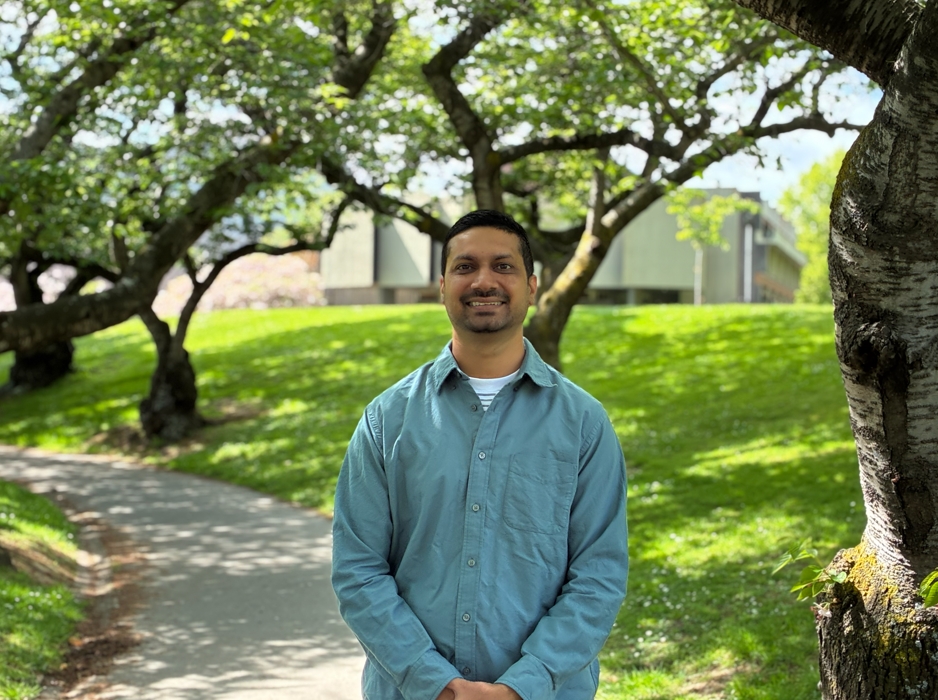


Bella will graduate with a Bachelor of Software Engineering with First Class Honours from Te Whare Wānanga o Waitaha | University of Canterbury (UC), celebrating her achievement at UC’s Engineering graduation on Thursday 16 April.
She chose UC and the move to Christchurch after encouragement from friends; a decision she says shaped her university experience.
Bella says UC offered a balance between study and student life, with opportunities to connect through clubs and campus activities, helping build her confidence alongside her studies.
“I’m really glad I came to Christchurch, it’s really well balanced. The clubs are great, there are so many and you get to meet lots of people which I guess helped both in making me more confident and with my degree,” she says.
Her degree also provided opportunities to apply learning in practical and creative ways through project-based work.
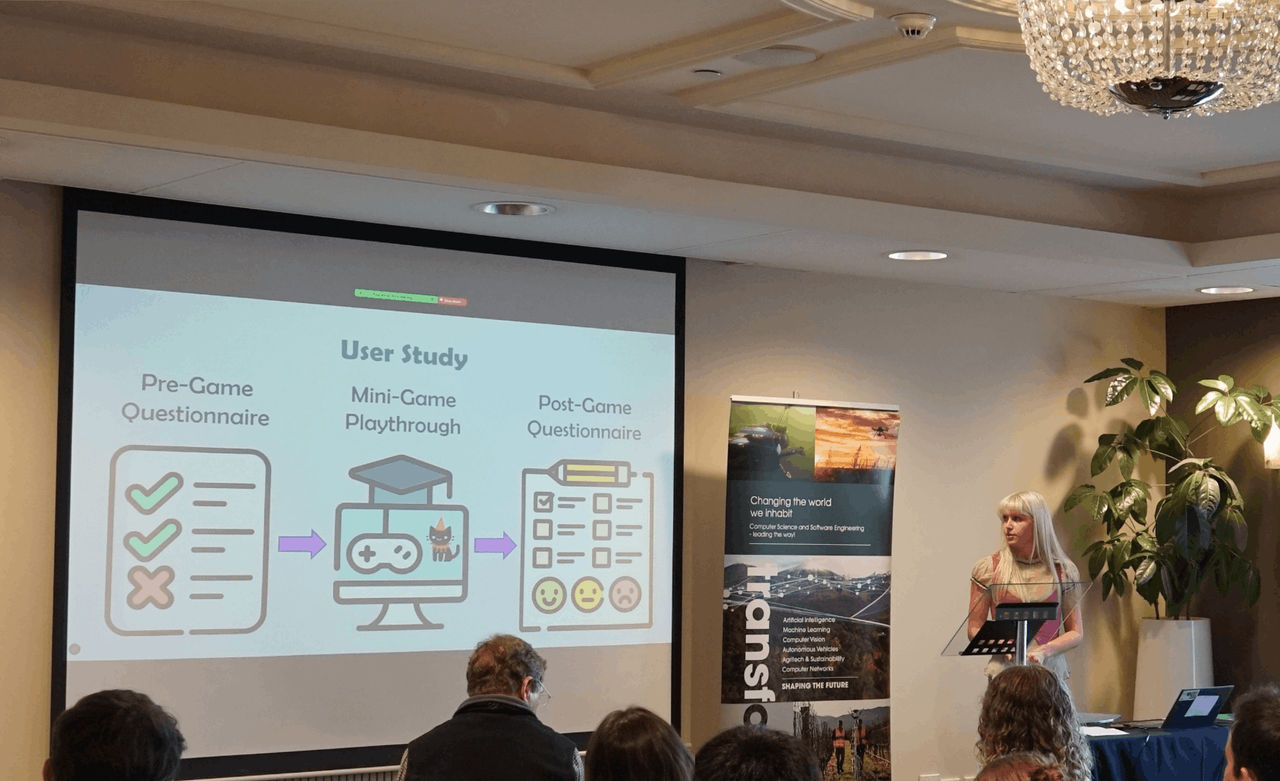
As part of her honours project, Bella designed a series of interactive web‑based mini‑games to teach introductory quantum computing concepts to undergraduate students.
“I created three minigames, each designed to explain a different quantum computing concept,”Bella says.
The games, themed around Schrödinger’s cat — a thought experiment in quantum theory that describes a cat as simultaneously alive and dead until the box is opened — explore complex ideas such as superposition, entanglement and quantum matrices through interactive play.
Bella says the project pushed her to learn new concepts from scratch while applying them in an engaging format.
“I didn’t know anything about quantum computing, but during the course of making the game I had to learn a lot,” she says.
The impact of the project has extended beyond the classroom, with early testing showing strong learning outcomes.
“Before participants played the games, pregame quiz scores about quantum computing were about 2 out of 10, and then after playing the games their answers improved significantly to about 8 of out 10 correct.”
Bella has since worked with her supervisor to prepare the project for submission to an academic conference, highlighting the potential for further development.
Reflecting on her time at UC, Bella says the quality of teaching and engagement with learning made a significant difference.
“It was definitely a really good choice to come to UC for engineering. The teachers and lecturers are all amazing,” she says.
Bella’s advice to current students is to make the most of the opportunities available.
“Go to the lectures in person. My grades got better when I did, it’s easier to stay engaged when you’re there.”
Building on her honours project, Bella’s paper, “QubitQuest: Learning Quantum Computing through Mini Games,” has been accepted for presentation at the 4th International Workshop on evaLuation and assEssment in softwARe eNgineers’ Education and tRaining (LEARNER 2026). The international workshop brings together researchers, educators and industry practitioners to advance best practice in software engineering education and training.

What to read next
UC geography graduate honoured for global science leadership
UC alumnus Distinguished Professor Emeritus Iain Hay has received a prestigious international Fellowship recognising his contributions to geography and scientific collaboration.

Are Kiwi businesses jumping blindly on the AI bandwagon?
AI doesn’t have to play an inevitably dominant role in our lives, businesses and future, argues a guest speaker for an upcoming UC public lecture.

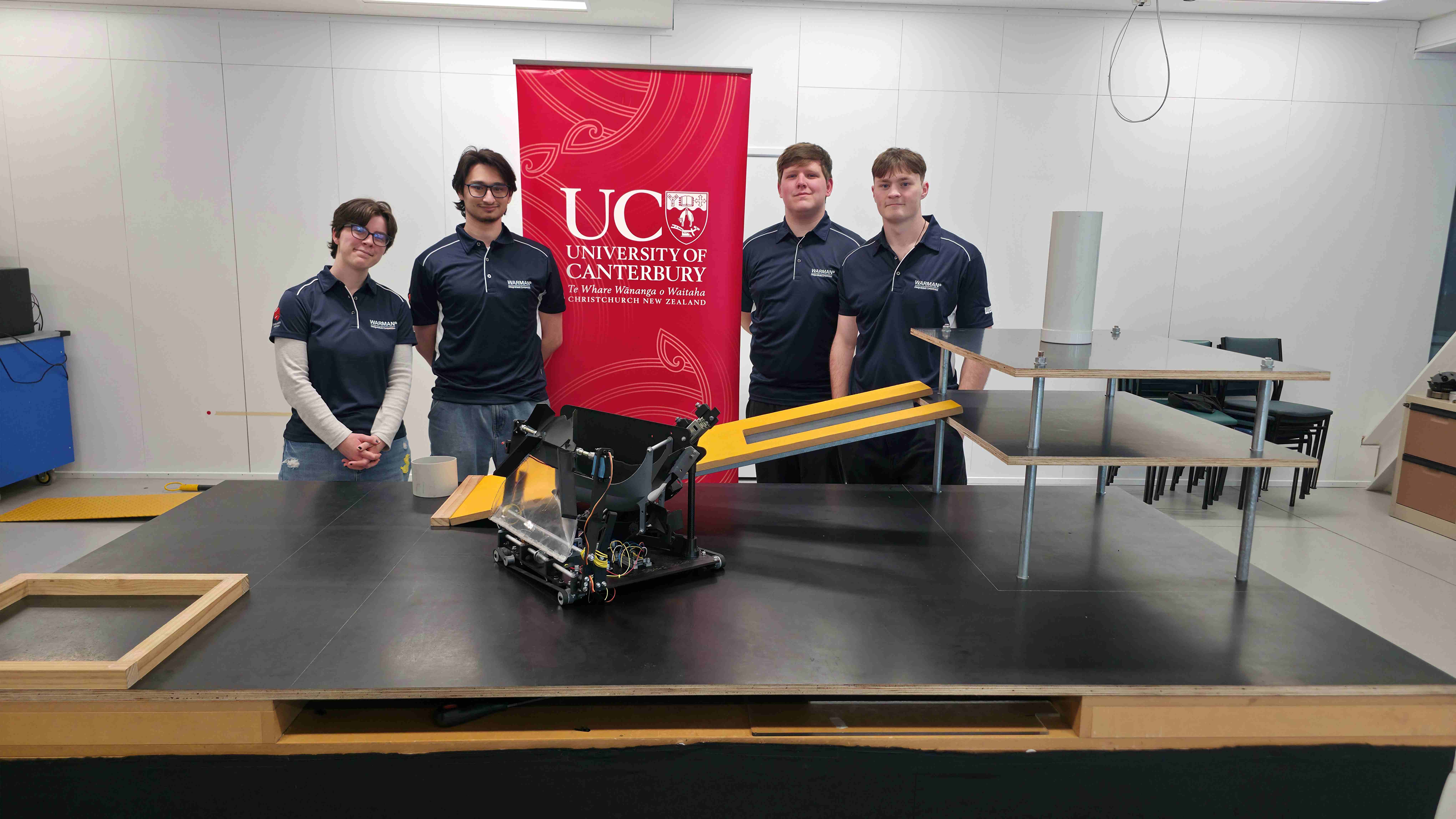
UC engineering students win international competition
A robot designed to transport rocks automatically has helped four UC engineering students claim an international title.
UC wins national award for employability service
UC has been recognised for excellence in helping students develop career-ready skills and connect with employers.
Fair suppliers strengthen business resilience
Businesses are better able to withstand disruption when suppliers make fair decisions and turn strong relationships into flexible action, UC research finds.
Digital models to help predict natural hazards in Kiwi capital
An innovative project using digital simulations to predict future hazards in New Zealand’s capital city takes its name from science fiction.
UC research challenges how we think autistic children learn
New UC research is challenging assumptions about how autistic children learn language.
Tiny robots, big potential: UC PhD explores new frontier
A UC researcher is pioneering laser-controlled robot swarms thinner than a human hair — work he believes could one day transform medicine and manufacturing.
UC research puts local knowledge at heart of resilience
UC research explores how Pacific Island nations can better use place-based knowledge to strengthen disaster planning and resilience.