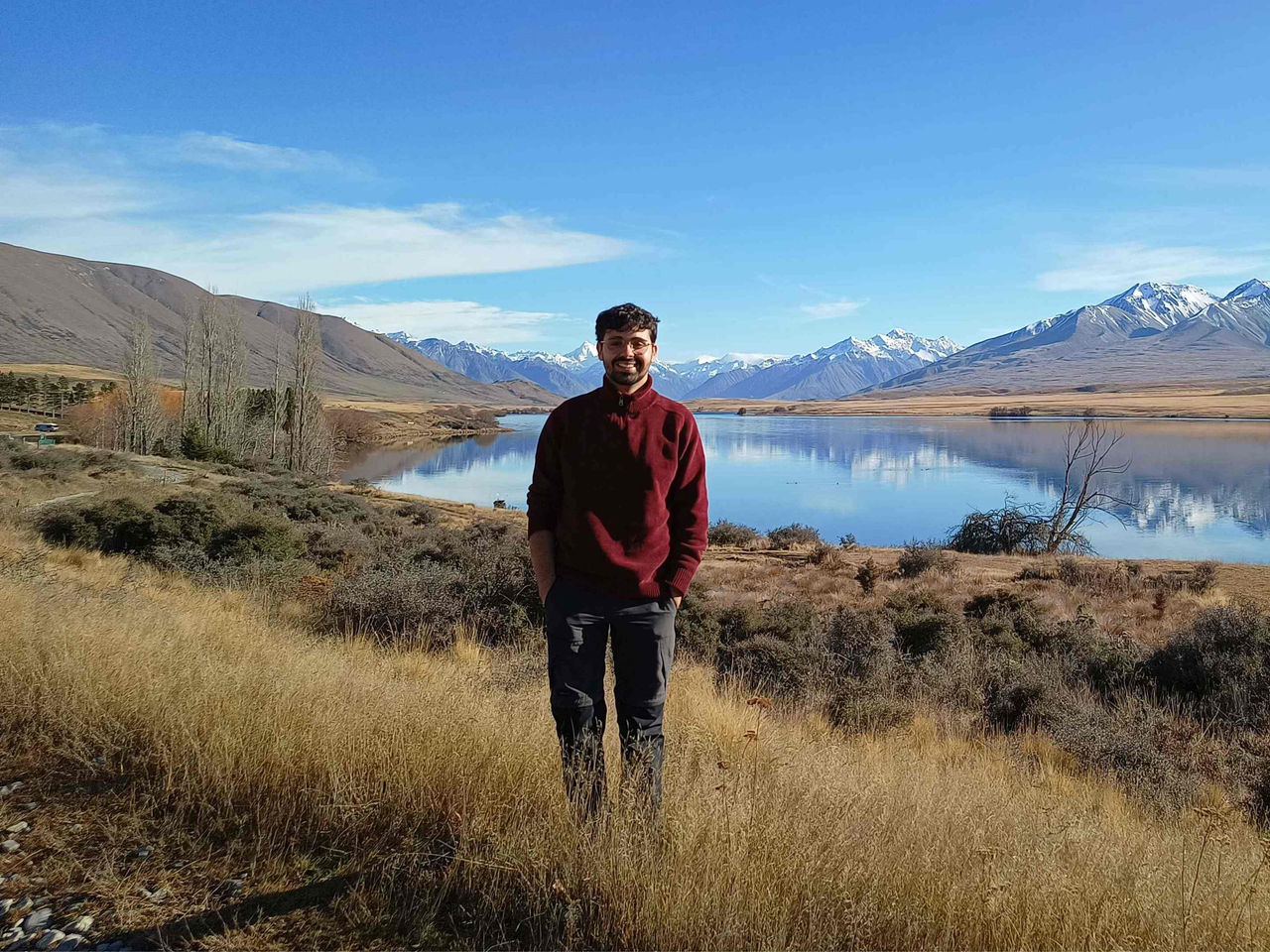


Main photo: UC PhD candidate Daniel Hernández-Carrasco is one of 25 scientists worldwide recognised in the 2026 Frontiers Planet Prize.
Te Whare Wānanga o Waitaha | University of Canterbury (UC) PhD candidate and research associate Daniel Hernández-Carrasco is one of 25 scientists worldwide recognised in the 2026 Frontiers Planet Prize for research helping humanity stay within Earth’s environmental limits.
His work focuses on a growing but often overlooked consequence of climate change — the disruption of Earth’s natural seasons — and what that means for biodiversity, food systems and the ecosystems people rely on.
“Changes in the seasons are reshaping the natural world, affecting when species grow, migrate, reproduce, and interact,” Hernández-Carrasco says.
“These changes matter because the stability and performance of ecosystems – and the benefits they provide to people – depend on predictable seasonal rhythms.”
His research, published in the journal Science and co-authored with his supervisor Professor Jonathan Tonkin (UC), associate supervisor Professor Jason Tylianakis (UC) and Professor David Lytle (Oregon State University), examines the ecological consequences of increasingly unpredictable seasons due to climate change, such as shifts in the timing of snowmelt, monsoons, and animal migrations, and other human activity, such as building dams.
While these changes may seem subtle, the impacts can ripple through entire ecosystems.
“We’ve found that disruptions to seasonal timing can cascade from individual organisms to whole ecosystems,” he says.
“For example, changes in migration patterns can restructure food webs, while shifts in seasonal cues can affect breeding cycles and genetic diversity.”
The research highlights risks for global biodiversity but also points to practical ways forward — including better integrating seasonal data into environmental monitoring and management.
The Frontiers Planet Prize is one of the world’s largest awards for sustainability science, backed by an independent jury of 100 global experts and chaired by Professor Johan Rockström, who developed the influential Planetary Boundaries framework.
Hernández-Carrasco is now shortlisted for the final stage of the prize, where three International Champions will each receive US$1 million to scale their research globally.
Hernández-Carrasco says it’s really rewarding to be shortlisted as New Zealand’s National Champion for the 2026 Frontiers Planet Prize, with the winners being announced early next year. “Seasonality is such a fundamental pattern in nature, yet it’s still underexplored. From the start of my PhD, we knew this was important, so to see the research recognised like this is hugely encouraging.”
“Being named as New Zealand’s National champion is a remarkable achievement given the stage of Daniel’s career,” Professor Tonkin says. “It reflects the quality, novelty, and importance of the work.
“The research brings together cutting-edge theory and application in a way that is both scientifically rigorous and highly relevant to environmental management in a world that is rapidly changing. This is exactly the kind of research we need if we’re serious about developing science-based solutions to the global biodiversity crisis.”.
“It’s incredibly encouraging for an early-career researcher to be recognised by such a prestigious prize on the global stage like this,” he says.
As a National Champion, Hernández-Carrasco will have the opportunity to share his award-winning research through national and international conferences to facilitate the systemic change needed to safeguard our planet's health.
His research is now being applied in Aotearoa New Zealand, with Hernández-Carrasco currently focusing on how river ecosystems respond to changing seasonal patterns, particularly shifts in river flow and their impact on native species.




.png)