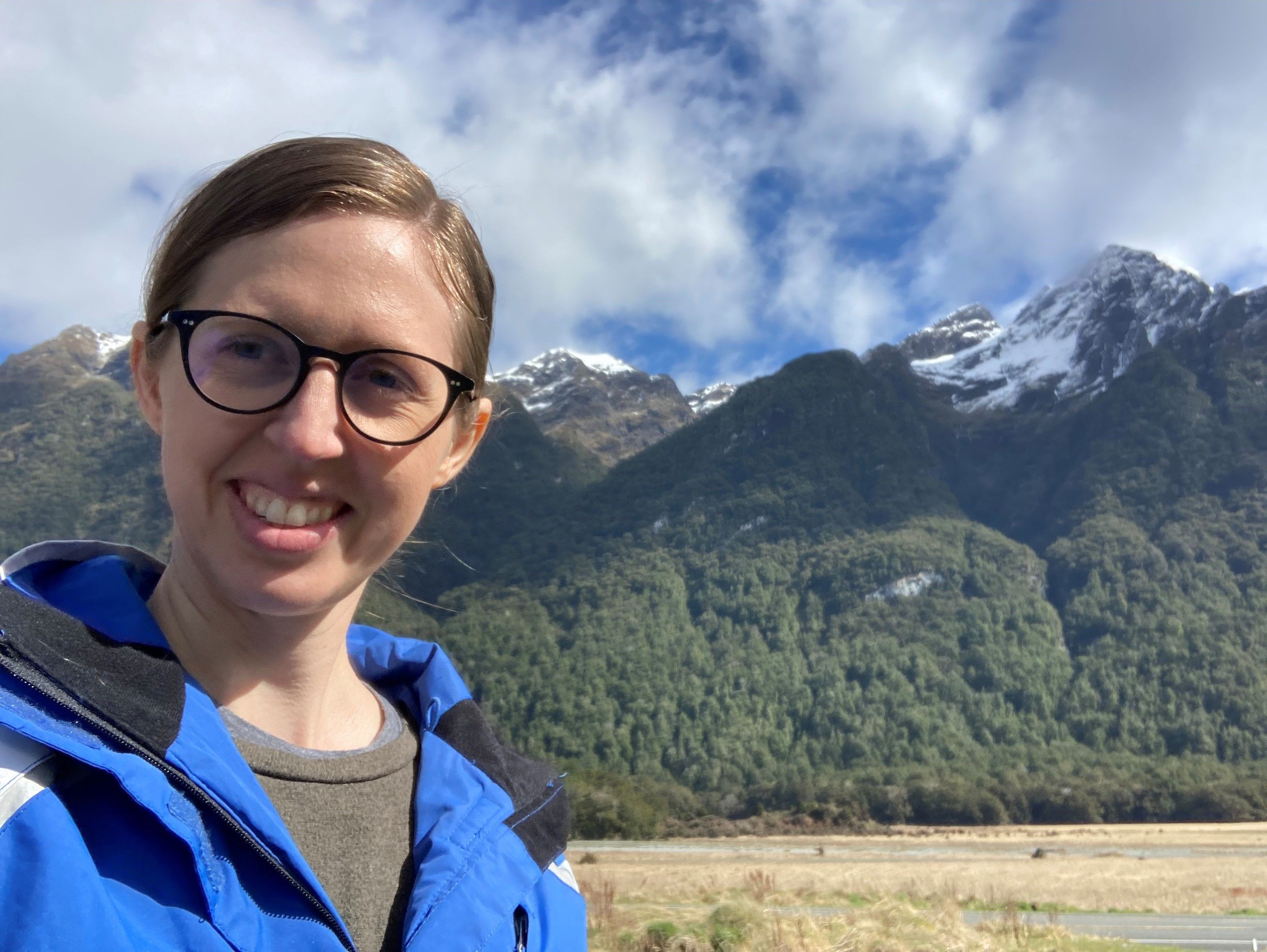

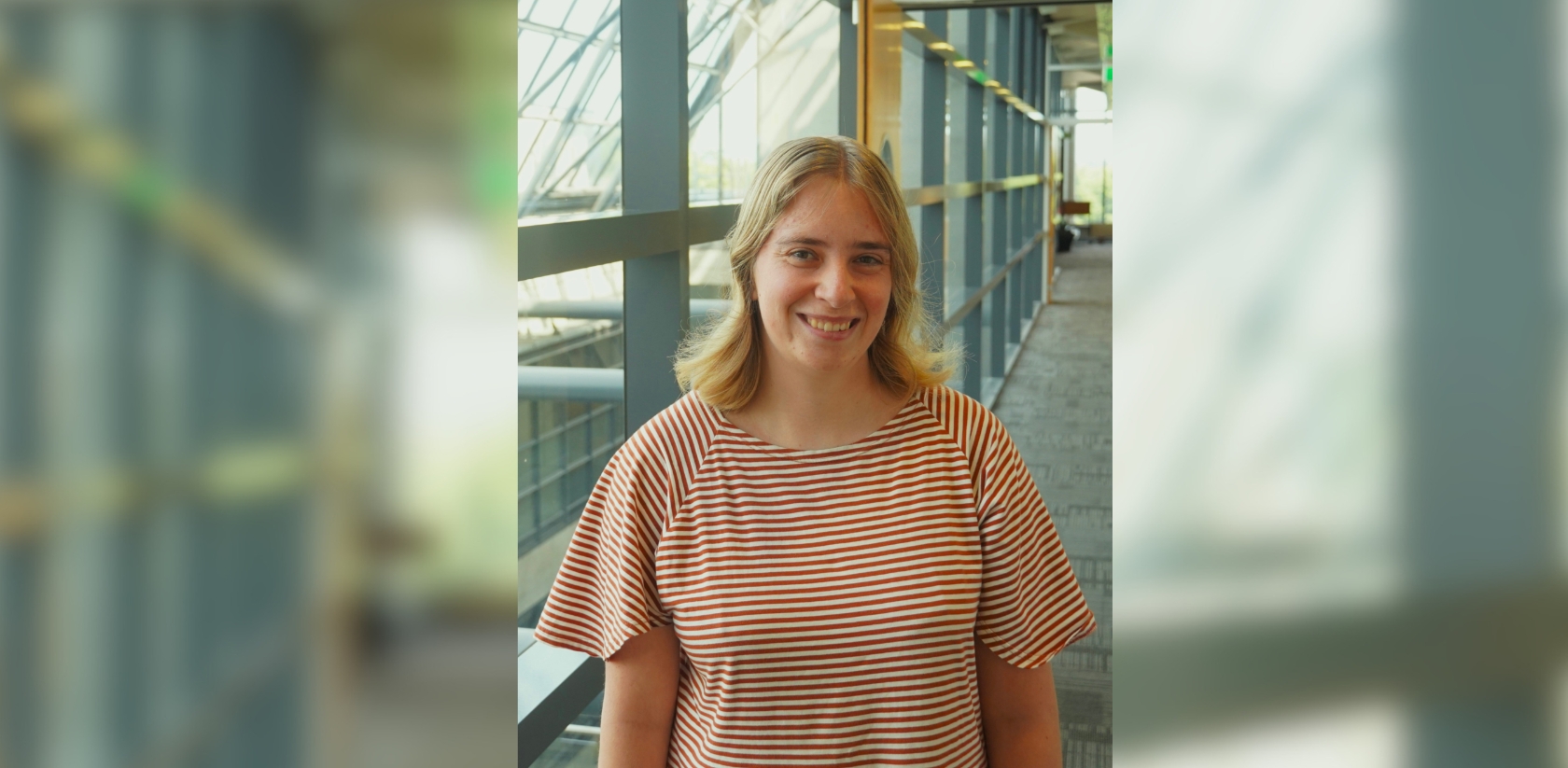
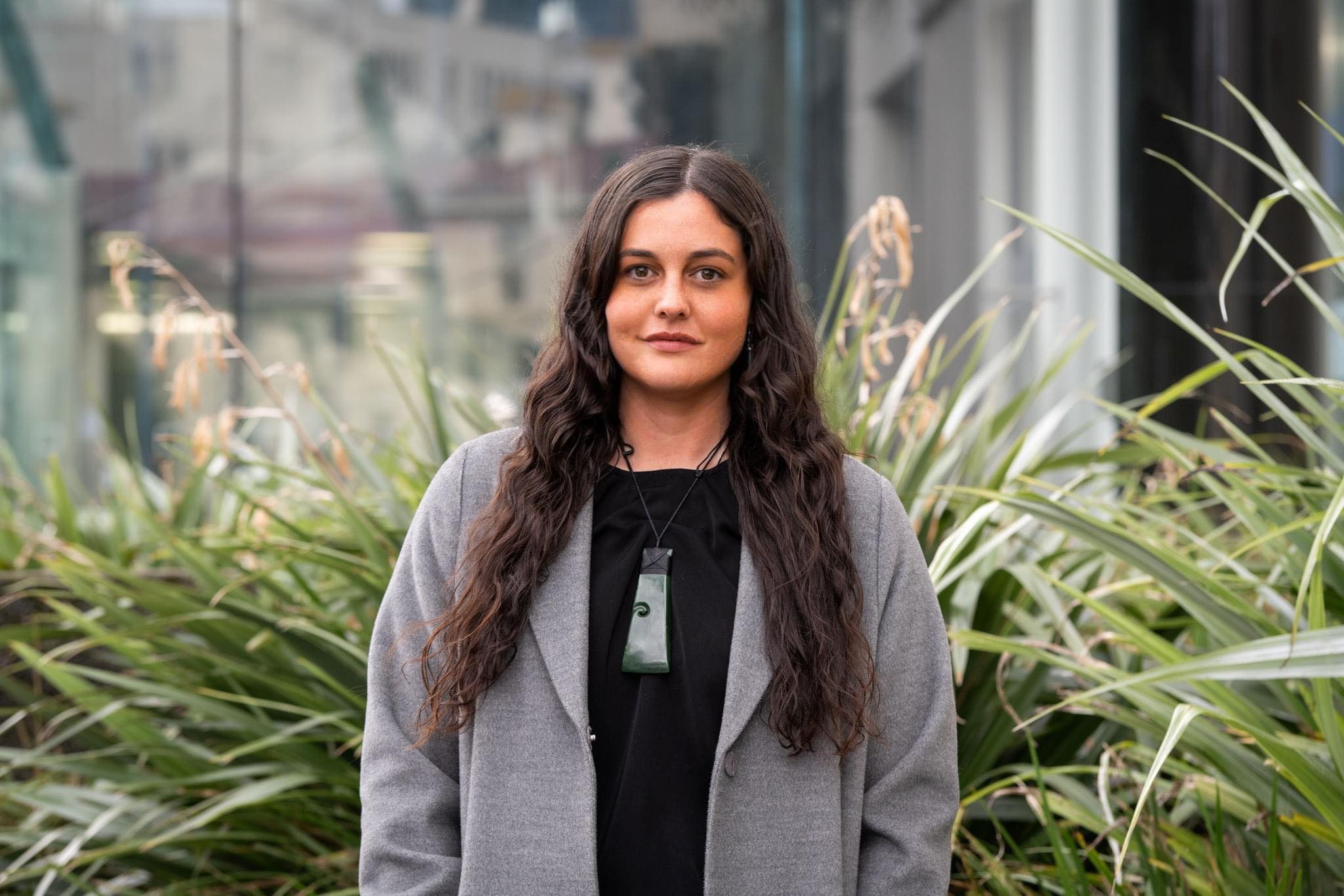
Photo caption: Dr Megan Eustace (center) with two of her supervisors, Dr Catherine Theys (left) and Katrina McGarr (right).
When Dr Megan Eustace (Taranaki) enrolled in a Bachelor of Speech and Language Pathology at Te Whare Wānanga o Waitaha | University of Canterbury (UC), a career in aged care policy wasn't anywhere on her radar. However, seven years and one award-winning PhD later, that's exactly where she's landed, and she wouldn't have it any other way.
Dr Eustace's PhD research took her into largely uncharted territory: exploring Māori perspectives on communication support for whānau living with mate wareware (dementia). It's a space where the literature was sparse and the need was significant, she says.
"There hadn't been a lot of research that had shared Māori voices around dementia and perspectives on how to support whānau living with it, and in speech and language pathology, there was really no Māori research specific to dementia."
Her thesis wove together Indigenous knowledge, including analysis of Māori pepeha (ancestral sayings) and the wisdom held within those, with the lived experience of whānau navigating mate wareware today, alongside Indigenous evidence gathered from international contexts. From that synthesis, she developed a framework for culturally appropriate support spanning speech and language pathology, dementia care pathways, and policy.
The work earned her the prestigious Jean Seabrook Prize, awarded by UC to an outstanding PhD thesis in speech and language pathology with particular relevance to the Aotearoa New Zealand population.
Central to Dr Eustace's findings was a rethinking of what communication actually means for people living with mate wareware, particularly at the later stages of life.
"It's easy to think about communication as getting your message across, finding the right words, preventing breakdowns, which are all very important to focus on, but whānau also talked about the many ways that connection happens, including through sharing whakapapa, storytelling, shared activities and interests, attending support groups, or having photos of loved ones around their walls."
That reframing carries real implications for how services like speech and language therapy are delivered, and how they align with what whānau Māori actually need and value.
The research also revealed story after story of people living with mate wareware whose lives had been significantly affected by communication difficulties, including increased social isolation and withdrawal from conversations and community. Set against a backdrop of severely limited funding for speech and language therapy support for people with dementia in Aotearoa New Zealand, Dr Eustace says it was “quite confronting and something that really needs to be looked at.”
It was precisely that gap between research and real-world outcomes that drew Dr Eustace toward policy. As her PhD progressed, she found herself increasingly drawn to the question of how findings like hers could move beyond academic publication and actually shape the systems and funding structures that affect people's lives.
Now based in Sydney, she works for Catholic Health Australia, the peak body for Australia’s largest not-for-profit network of health and aged care providers.
"It's been a nice progression, from my research in mate wareware dementia to looking at how to improve the aged care system on a large scale to support older people," she says. “It’s always a sharp learning curve with a new job, but I’ve hit the ground running as a policy officer, and I’m already working closely with my colleagues to bring about positive policy changes that impact the lives of older people.”
Looking ahead, Eustace hopes to lead a team in aged care policy and to keep pushing for a stronger connection between research and policy.
"The best policy is evidence-based policy. There are a lot of tensions between the research and policy worlds, but that's a challenge worth working to overcome."
Reflecting on her time at UC, she credits the support of her supervisors, Dr Catherine Theys, Dr Jeanette King, Dr Campbell Le Heron, and Katrina McGarr, as well as the wider School of Psychology, Speech and Hearing, for helping her find her path.
“I don’t think I would have ended up in research or policy without the people around me pointing me in the right direction,” she says. “There’s such a strong, supportive environment at UC and that made all the difference."



.png)