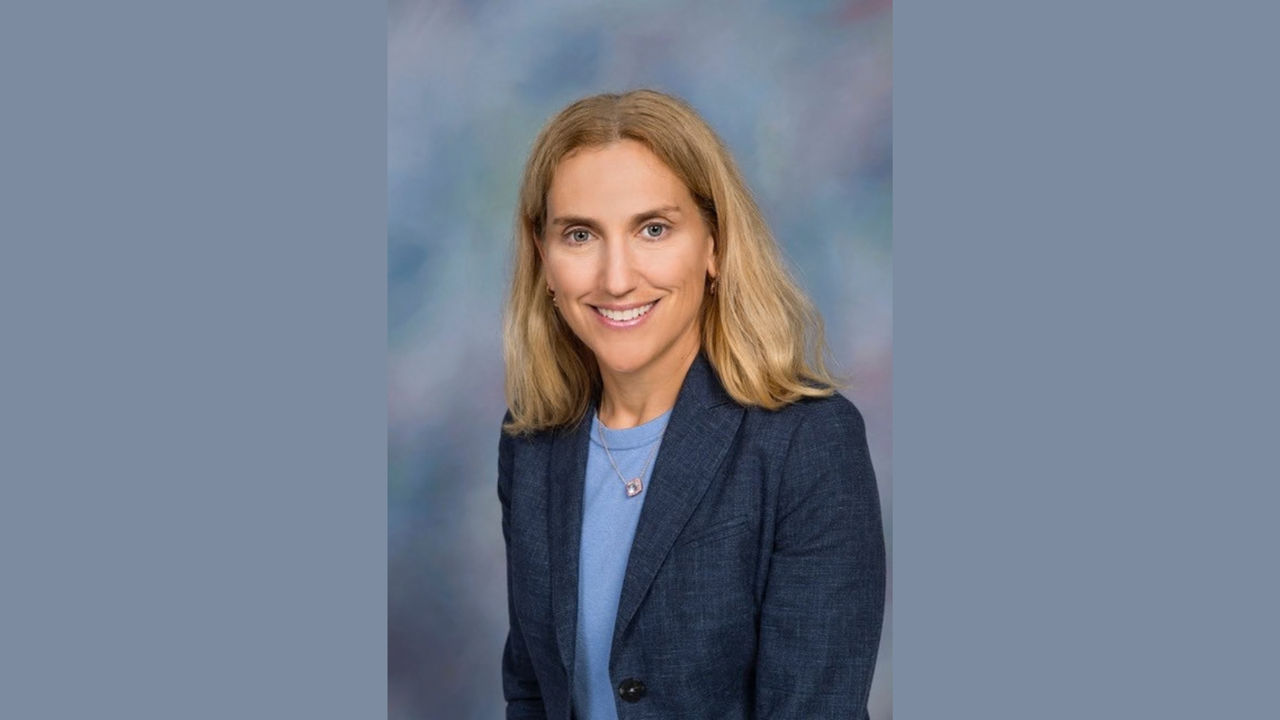


Professor Michelle (Mikki) Rae Hebl, from Rice University in the United States, is currently based at Te Whare Wānanga o Waitaha | University of Canterbury (UC) Business School as an Erskine Fellow.
An applied psychologist, Professor Hebl has studied discrimination in the workplace for the last 30 years with a focus on subtle, often non-verbal, forms of discrimination.
Professor Hebl says subtle discrimination can be harder to deal with than its overt form. “If someone says, ‘I’m not going to hire you because you’re a woman’, then it’s clear that the person is a sexist and the problem lies within that person and not with the recipient.”
Her research explores what happens when people at work do things like; end a conversation prematurely, interrupt, make reduced eye contact, or show little interest. “Unfortunately, the recipient of these behaviours must spend cognitive resources and effort trying to work out whether these behaviours were also discriminatory,” Professor Hebl says.
“These types of behaviours lead people to question, ‘were you just being unfriendly?’, ‘is this something about me?’, or ‘were you just having a bad day?’. These questions and concerns put the problem squarely on the shoulders of the recipient, not the perpetrator.”
Professor Hebl says studies have shown these sorts of subtle behaviours can have the same, if not worse, consequences than that of overt discrimination, in terms of psychological and physiological outcomes.
However, she suggests people who find themselves in these situations can take steps to reduce the impact.
They can respond by simply telling themselves it probably was discrimination and save their cognitive energy for more important things. Alternatively, they might politely but directly challenge the perpetrator by saying something like; ‘I’ve noticed there is some tension. Can you explain this to me?’ or ‘I’ve never known you to be a person who felt like that, can you explain this further?’
“These sorts of questions allow people to identify where there is bias and make it clearer and more certain.”
Importantly, work colleagues can also act as allies to combat interpersonal discrimination, Professor Hebl says. “It’s about making people aware of these subtle biases so they can step in. They can say something like, ‘Shelley I was really interested in what you said before Mark interrupted you’. Or ‘Shelley, I was wondering if you could finish what you were saying, it was really valuable’.”
Professor Hebl says businesses and organisations should also take action to reduce subtle biases, such as providing staff with diversity training. She acknowledges that such training has been the focus of negative attention but says it can have successful outcomes, if handled correctly.
Well-administered diversity training is just as important as traditional health and safety training, she says. “Diversity is safety training for people who are different or experience discrimination. It not only prevents lawsuits, but it also provides information to individuals about whatthe legal and organisational norms are for this institution.”
Professor Hebl, who is the Martha and Henry Malcolm Lovett Professor of Psychological Sciences at Rice University, is teaching UC students until early next month as part of a fellowship through UC’s Erskine Programme, which supports up to 90 international academics to come and lecture at the University each year.
However, diversity, equity and inclusion are becoming contentious issues in the United States and scientific evidence is increasingly being replaced with “politically-charged, non-empirically derived opinions”, she says.
“People are ignoring the science and manipulating information in a way that suits their own purposes. There are best practices that are rooted in science, and once we lose those practices, we endanger ourselves, our organisations, and our wider community.”
She believes hiring employees from diverse backgrounds is not only good for innovation in business, and the morally right thing to do, but it is also realistic. “Our world is changing and we are becoming more diverse. We simply need to maximise who can positively contribute to the workforce and society.”


.png)