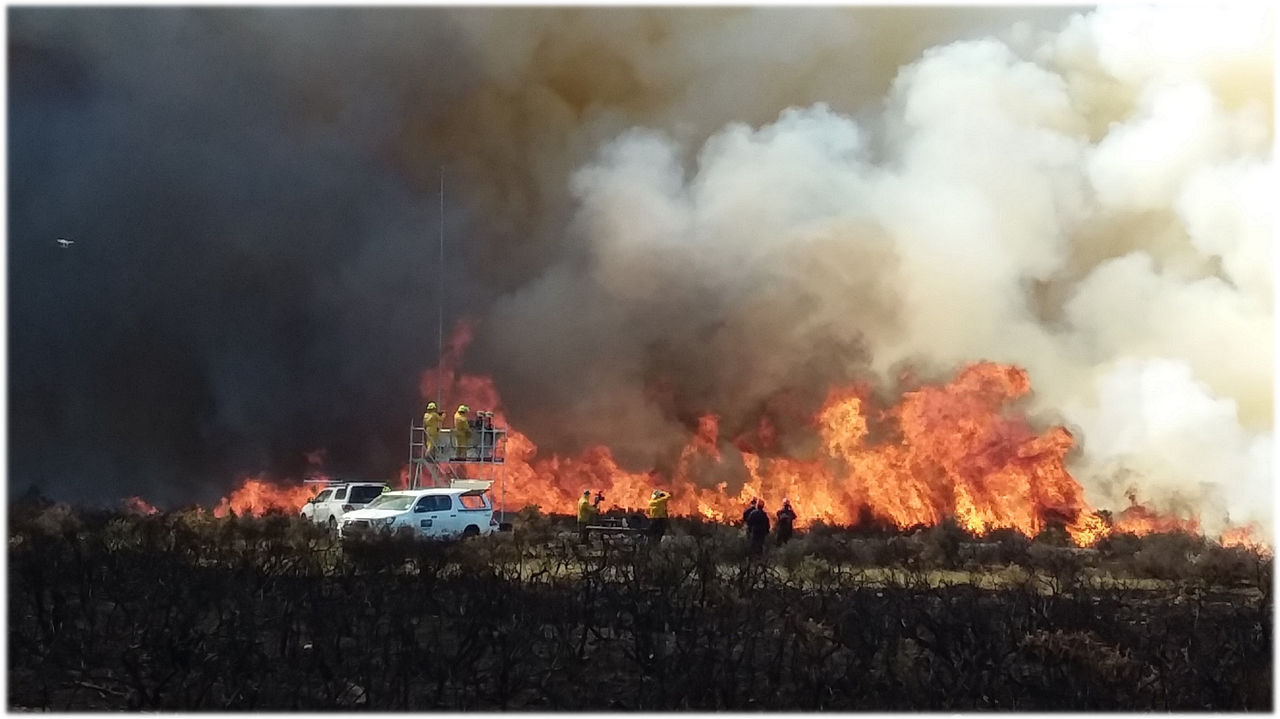


Photo caption: Wildfire research programme experimental burn.
Developed by an international team led by Dr Alberto Ardid, a research engineer in Civil and Natural Resources Engineering at Te Whare Wānanga o Waitaha | University of Canterbury (UC), the new tool uses machine learning (a type of artificial intelligence) to analyse ever-changing weather data.
Dr Ardid says the frequency and intensity of wildfires, such as the destructive blazes seen in California recently, is increasing due to climate change and there’s an urgent need for more effective fire management strategies to protect lives, property, and ecosystems.
“Accurate and timely wildfire danger forecasting is necessary for preparedness and response, enabling efficient resource allocation and mitigation efforts. Weather conditions can change dramatically within hours, potentially leading to sudden wildfire outbreaks,” he says. “We are developing new tools that are sensitive to these hourly weather conditions which can help identify high fire hazard conditions.”
His team has developed a unique AI-based system that uses readily available weather data to predict wildfire danger in real-time, providing a powerful tool to inform timely decision-making.
“Our AI model analyses weather data every 30 minutes, capturing dynamic weather patterns that can contribute to sudden wildfire outbreaks,” Dr Ardid says. “This approach offers a cost-effective solution for communities and agencies to enhance their wildfire prediction and response capabilities, contributing to community safety and resilience in the face of increasing wildfire danger.”
The model outputs a prediction of the likelihood of fire in the next few days, continuously updated with new meteorological data. The real-time monitoring system uses existing data and infrastructure making it cost-effective in regions with limited resources.
“We hope this research will complement current monitoring techniques and advance wildfire management, offering a valuable tool for mitigating the increasing threat of wildfires and protecting communities,” Dr Ardid says.
The AI model was developed and tested using historical weather and fire data from Queensland, Australia, and achieved a 47% improvement in predicting critical pre-fire conditions compared to the existing Forest Fire Danger Index.
Dr Andres Valencia-Correa, a senior lecturer in UC’s Civil and Natural Resources Engineering department, collaborated on the research which was published in the International Journal of Wildland Fire today. He says the system’s early and accurate warnings would facilitate faster evacuations.
“It would also improve fire-fighting strategies and allow fire management agencies to allocate their resources more effectively,” Dr Valencia-Correa says. “This enhanced predictive capability could potentially save lives and lessen the adverse impacts of wildfires on communities and ecosystems.”
This project was recognised recently for its potential impact and innovation, being selected among the top 10 finalists for the Allianz Climate Risk Award for early-career scientists.
The research team also includes UC School of Earth and Environment Associate Professor Marwan Katurji, UC Civil and Natural Resources Engineering Associate Professor David Dempsey, and fire ecologist Shana Gross, from Scion.
The other collaborators are Anthony Power, an Australian bush fire consultant, and Professor Matthias Boer from Western Sydney University.

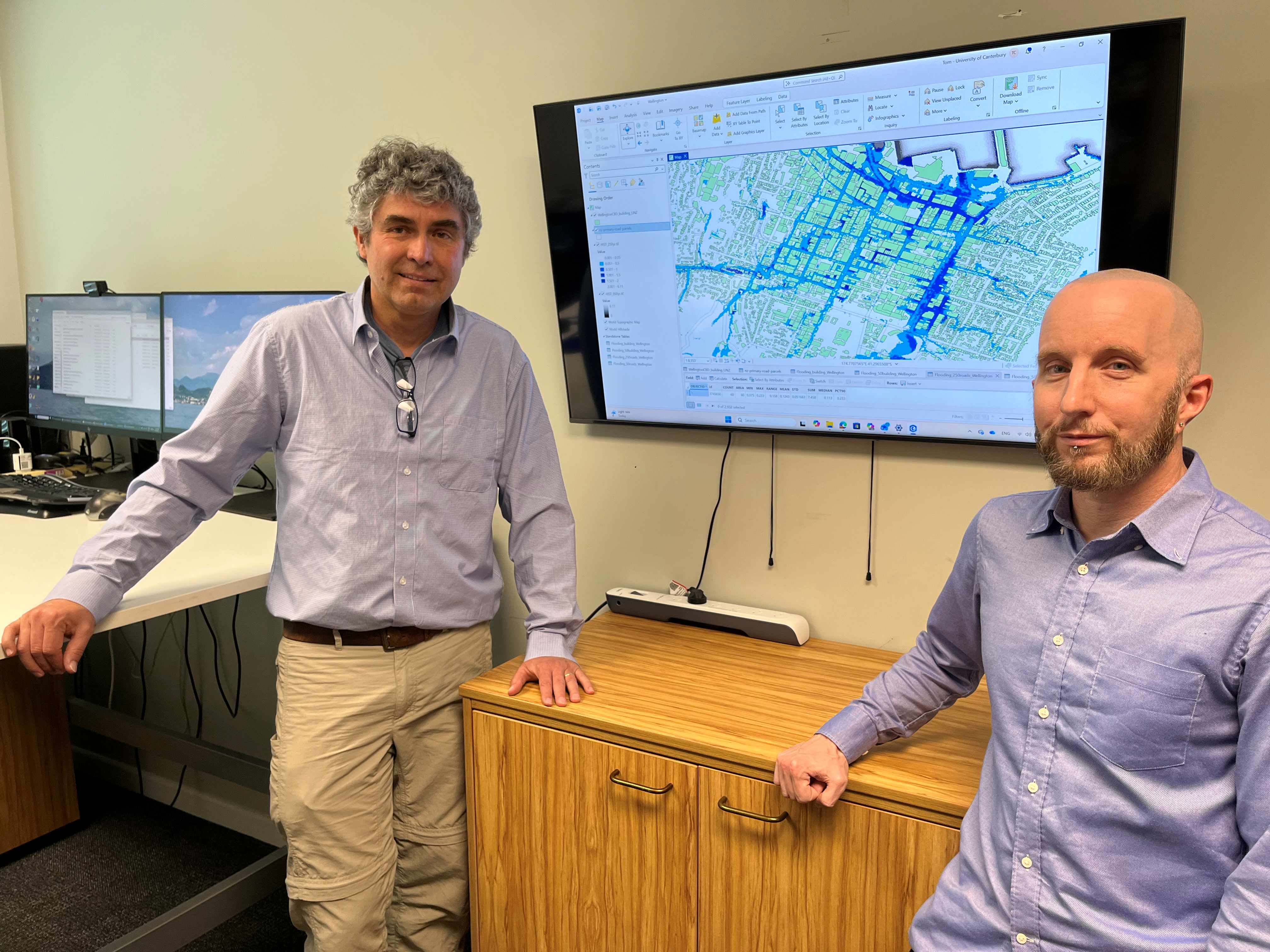
 UC Research Engineer Dr Alberto Ardid (right) and Dr Andres Valencia-Correa, a senior lecturer in UC’s Civil and Natural Resources Engineering department, are part of a team developing a new AI-powered tool to forecast wildfire danger.
What to read next
UC celebrates its Manaaki New Zealand scholar
After completing their studies at the University of Canterbury, 15 Manaaki New Zealand scholars are preparing for the next chapter of their journeys.

NZ study reveals gaps in women's heart healthcare
A review of 25 years of New Zealand research has revealed significant gaps in women's heart healthcare, highlighting opportunities to improve diagnosis, treatment and outcomes.

History goes hi-tech at Awaroa Godley Head
The University of Canterbury's HIT Lab is helping Awaroa Godley Head visitors enjoy a more immersive experience of the World War II heritage site.

UC geography graduate honoured for global science leadership
UC alumnus Distinguished Professor Emeritus Iain Hay has received a prestigious international Fellowship recognising his contributions to geography and scientific collaboration.

Are Kiwi businesses jumping blindly on the AI bandwagon?
AI doesn’t have to play an inevitably dominant role in our lives, businesses and future, argues a guest speaker for an upcoming UC public lecture.

UC engineering students win international competition
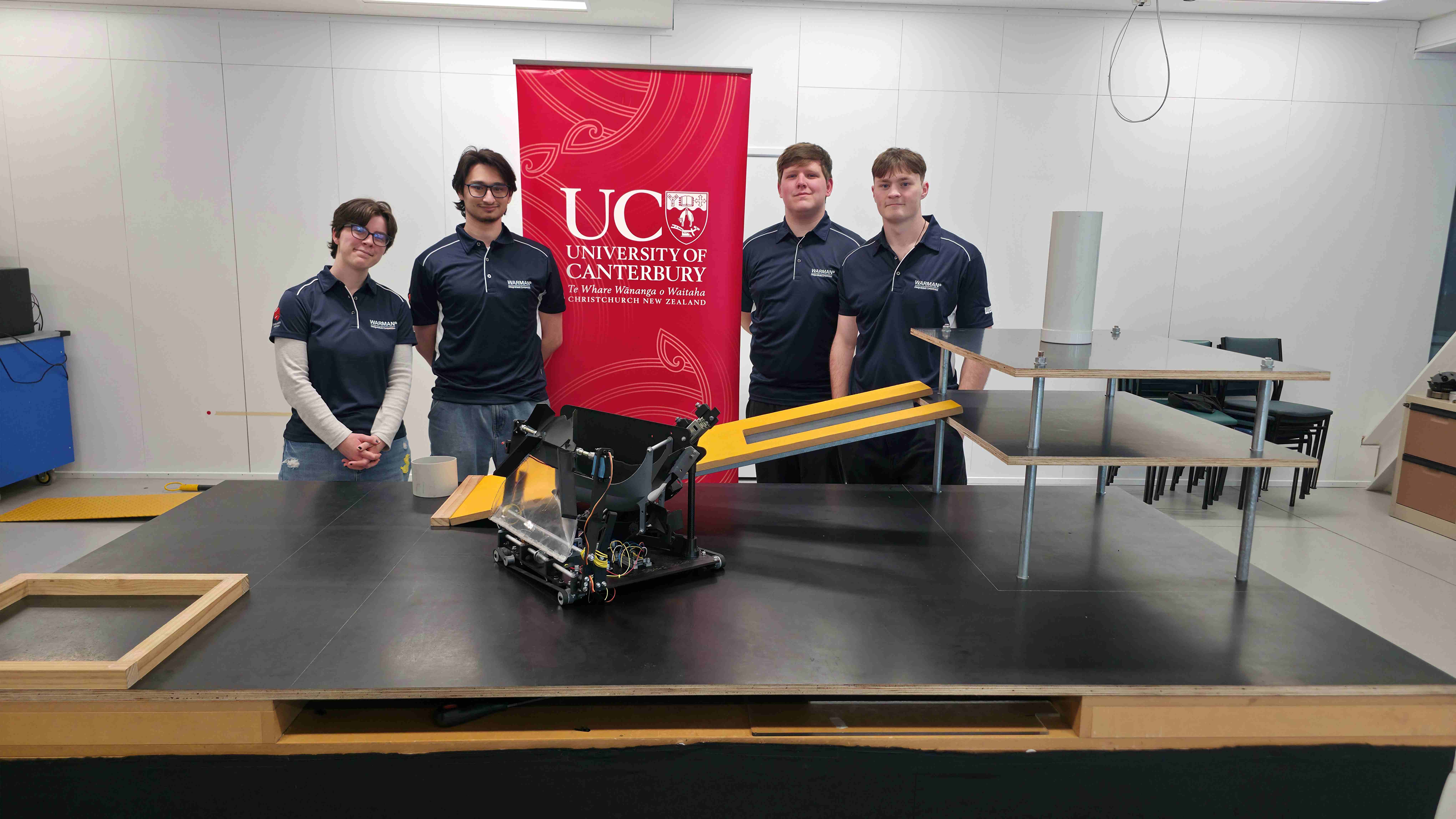
A robot designed to transport rocks automatically has helped four UC engineering students claim an international title.
UC wins national award for employability service
UC has been recognised for excellence in helping students develop career-ready skills and connect with employers.

Fair suppliers strengthen business resilience
Businesses are better able to withstand disruption when suppliers make fair decisions and turn strong relationships into flexible action, UC research finds.
Digital models to help predict natural hazards in Kiwi capital
An innovative project using digital simulations to predict future hazards in New Zealand’s capital city takes its name from science fiction.