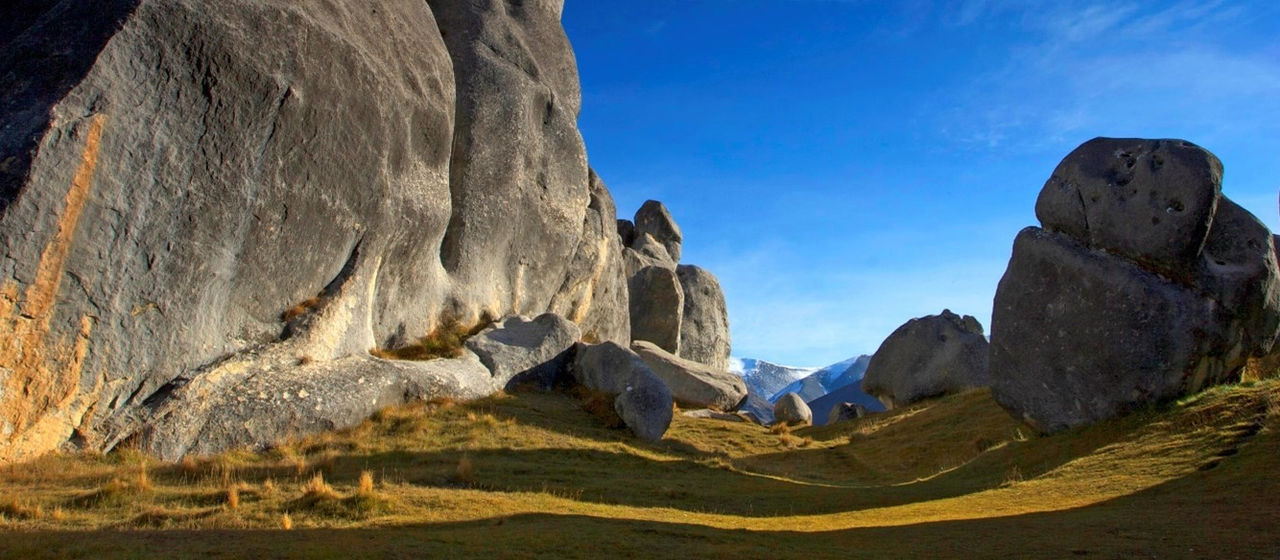


Limestone is the most recognisable and distinctive rock type of the Waitaha North Canterbury region. Limestone is formed from layers of biochemical sediment made from the calcite (calcium carbonate) remains of marine animals and plants, deposited in the ocean.
The area was once under a large, shallow sea that extended over most of the Canterbury region from the Late Cretaceous. This has been uplifted from the ocean floor to where it is today from around 22 Million years ago.

Oligocene limestone of the famous Kura Tāwhiti | Castle Hill Conservation Area in Castle Hill Basin SH73. Kate Pedley (2008).
Limestone is found in many parts of North Canterbury, most notably at Kura Tāwhiti and Castle Hill Basin, Weka Pass, Waipara, Napenape, Kaikōura Peninsula, inland Timaru and Oamaru.
Can you identify any visible fossils in the limestone? Look for shell fragments of molluscs, brachiopods, bryozoans and echinoderms.
Did you know that limestone fizzes when an acid is applied to the surface? This is due to a chemical reaction between the Calcium Carbonate (CaCO3) and the acid, creating Carbon Dioxide (CO2) gas. If you think you’ve found some limestone, try crushing some up to increase its surface area and adding a drop of vinegar!

Limestone at Kaikōura Peninsula. Kate Pedley (2016).
The rocks supplied by:
Managing Director - Anthony Black