Menu

Wananga Landing
Profile image
Wananga Landing
Topic

Industry Projects

25 January 2024

UC Mechanical Engineering partners with industry to solve real-world problems by leveraging our engineering expertise and national financial subsidies to take ideas and technological innovations to the next level. Find out about our Industry Collaborations.

HOW TO APPLY
What is a final year project?

Final year Mechanical Engineering and Mechatronics students undertake a research/development project as part of the accredited BE(Hons) degree. Students work in teams of four on real-world engineering projects, supported by industry sponsors, academic and technical staff, with all the laboratory facilities of the department available. Projects may be industry or research related.

Advantages for sponsors and businesses

Our Final Year Projects allow businesses to explore ideas with fresh minds, access knowledge and equipment to develop prototypes, or develop concepts that you may not have time to explore otherwise. There is also the opportunity for staff recruitment, and networking between your business and UC. Any IP created during the project is owned by the sponsor.

Advantages for students

These projects help develop students' technical skills and commercial experience. By sponsoring a project, you contribute to the development of the next generation of engineering professionals.

Structure of the projects

Four students work on each project for a full study year (Feb – Oct). So a project has about 1000hrs of student time, plus around 30hrs of academic staff supervision, and up to 80 hours of technician time. There is also use of software, fabrication, measurement, testing facilities, and specialist equipment as needed. Sponsors commit to provide a point of contact (“project owner”) to support the students through the project.

Projects may involve elements of mechanical engineering, mechatronics, electrical/electronic engineering, and an element of software programming. Where necessary we draw students from the other engineering disciplines.

Costs

There are two cost elements:

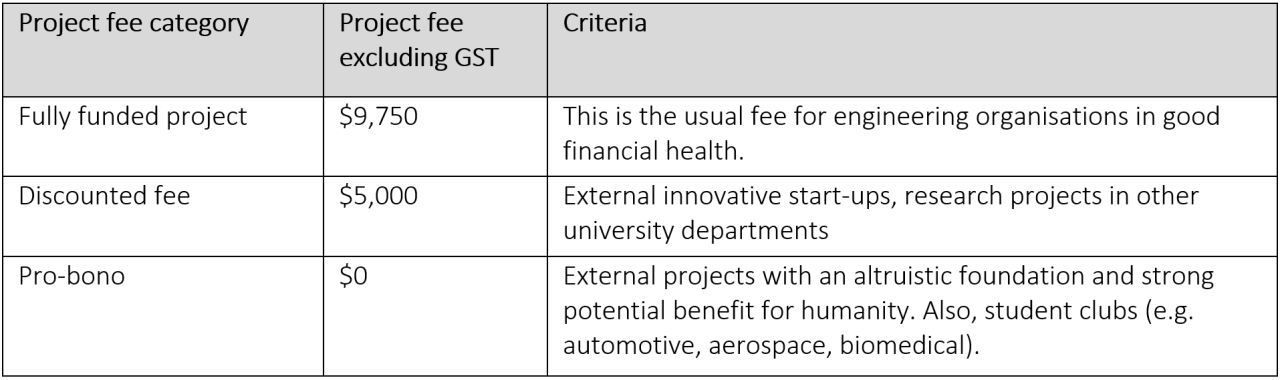
(a) PROJECT FEE. For a fully funded project this is $9,750 excl GST. This covers departmental overheads and supports other industry-university partnerships (such as summer scholarships). Discounts are available as our support for innovation start-ups and for humanity projects.

(b) CONSUMABLES. Sponsors are responsible for direct costs of consumables and bought in items that are dedicated to the project. This includes steel, electronic chips, sensors etc. 

Notes: Any IP created during the project is owned by the sponsor, irrespective of the project fee category. The exception to this is where the department is also asked to cover the consumable costs. Project fee is payable in March, and Consumable costs are invoiced in November.

What makes a good project?

A good project has these attributes:

  1. Has both theoretical elements (design, modelling, analysis), and validation thereof (fabrication, laboratory testing, simulation).
  2. Has sufficient sub work streams so that each of 4 students can take ownership for something.
  3. Has real-world unknowns and complexities, rather than being routine engineering work. An element of complex problem-solving or applied research is expected.
  4. Has a sponsor who is committed to interacting with the students regularly (e.g. weekly or fortnightly), giving them guidance and the external perspective.  There are several components to this:
    • Guide the team on what a good solution must do: characteristics it must have for success in your business. 
    • Maintain clear direction for the project. The scope and goals may change as new information comes to light during the development. Students are often disoriented by changes to scope, so decisions must be explained carefully to help them move forward.
    • Please be responsive to students on decisions on direction and purchase authorisation.
    • Challenge the team to stretch a little further (within reason) all the time.

Student projects typically aim to get to the level of a proof-of-principle or working prototype. They generally do not achieve a fully industrialised product.

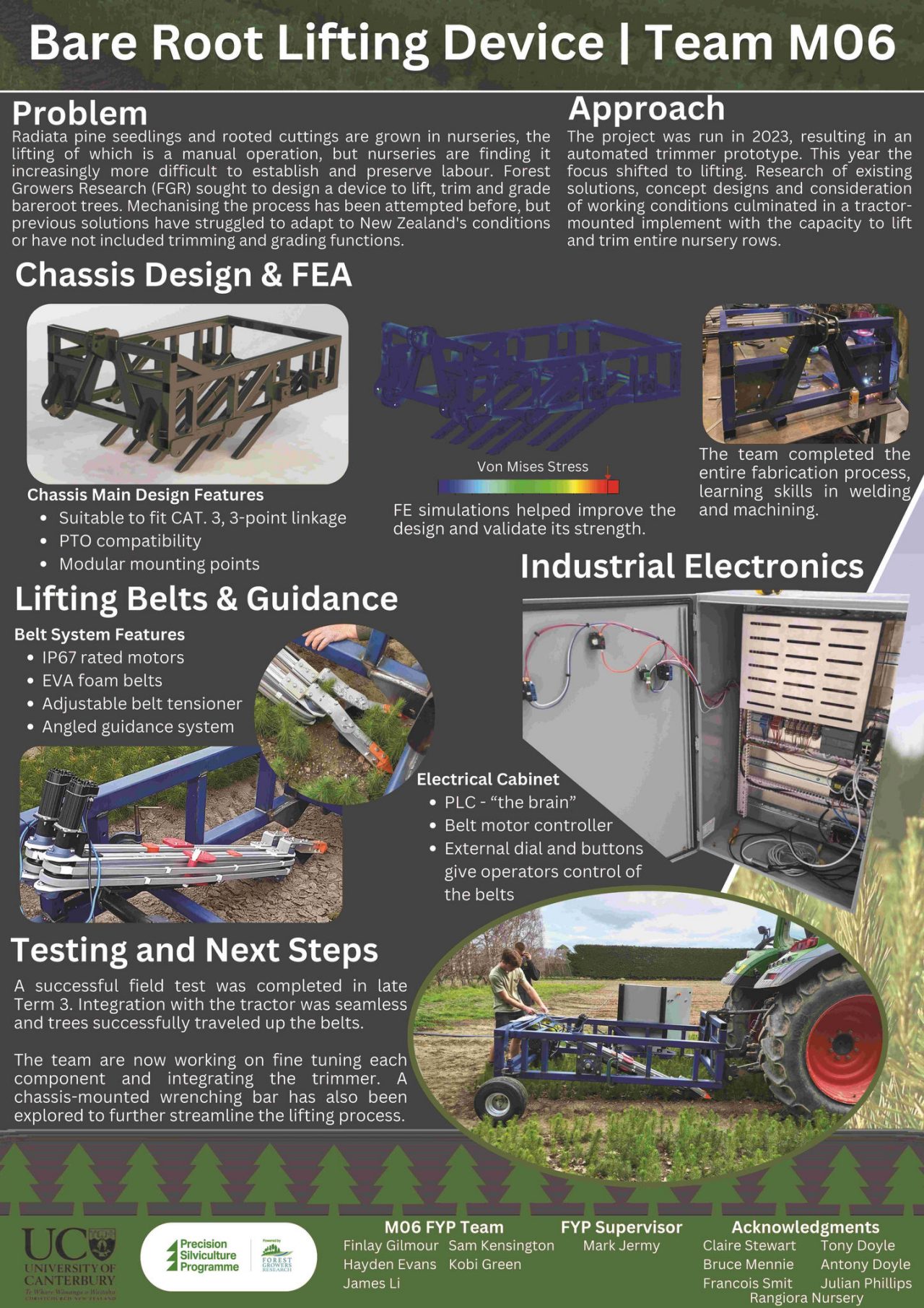
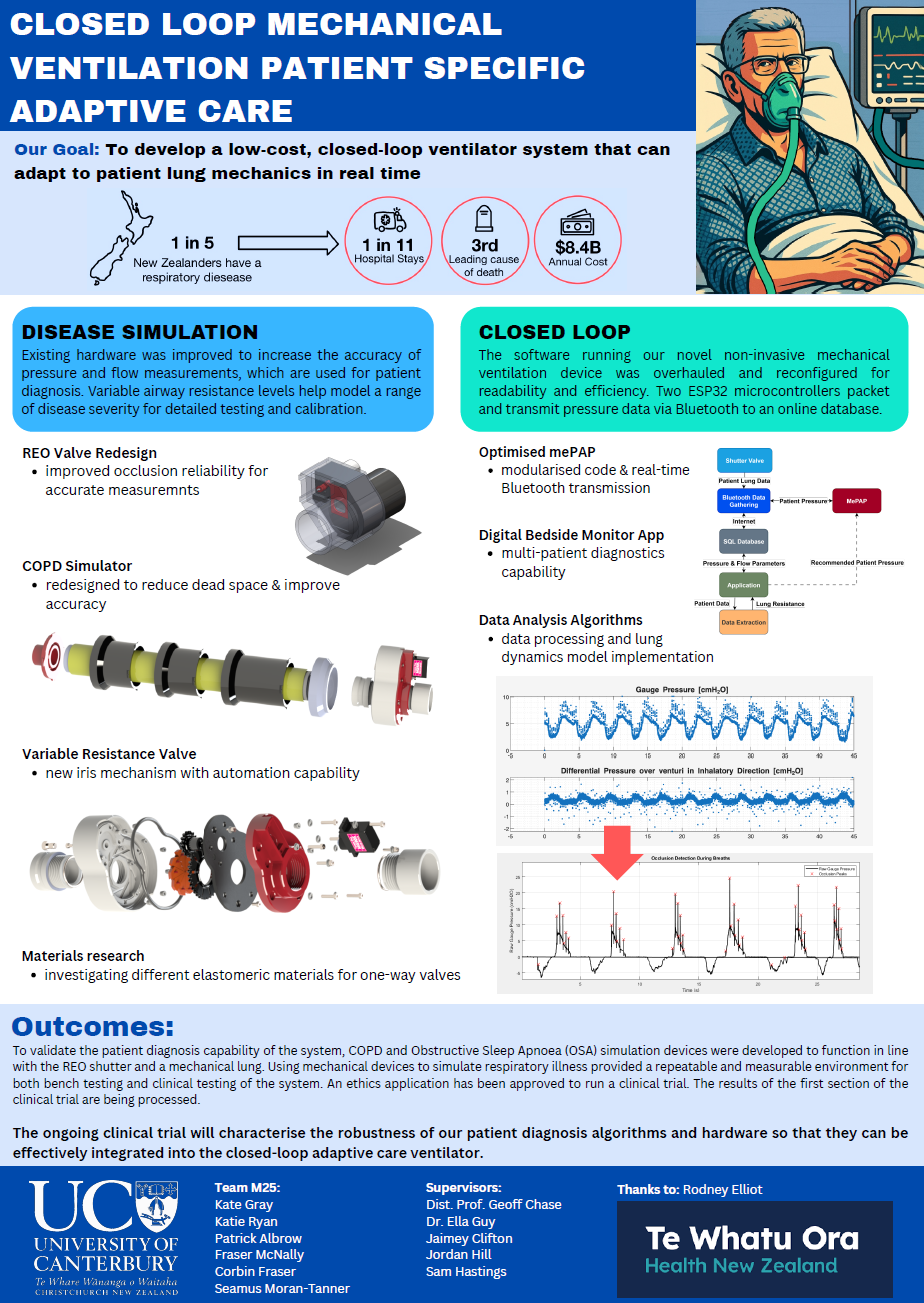
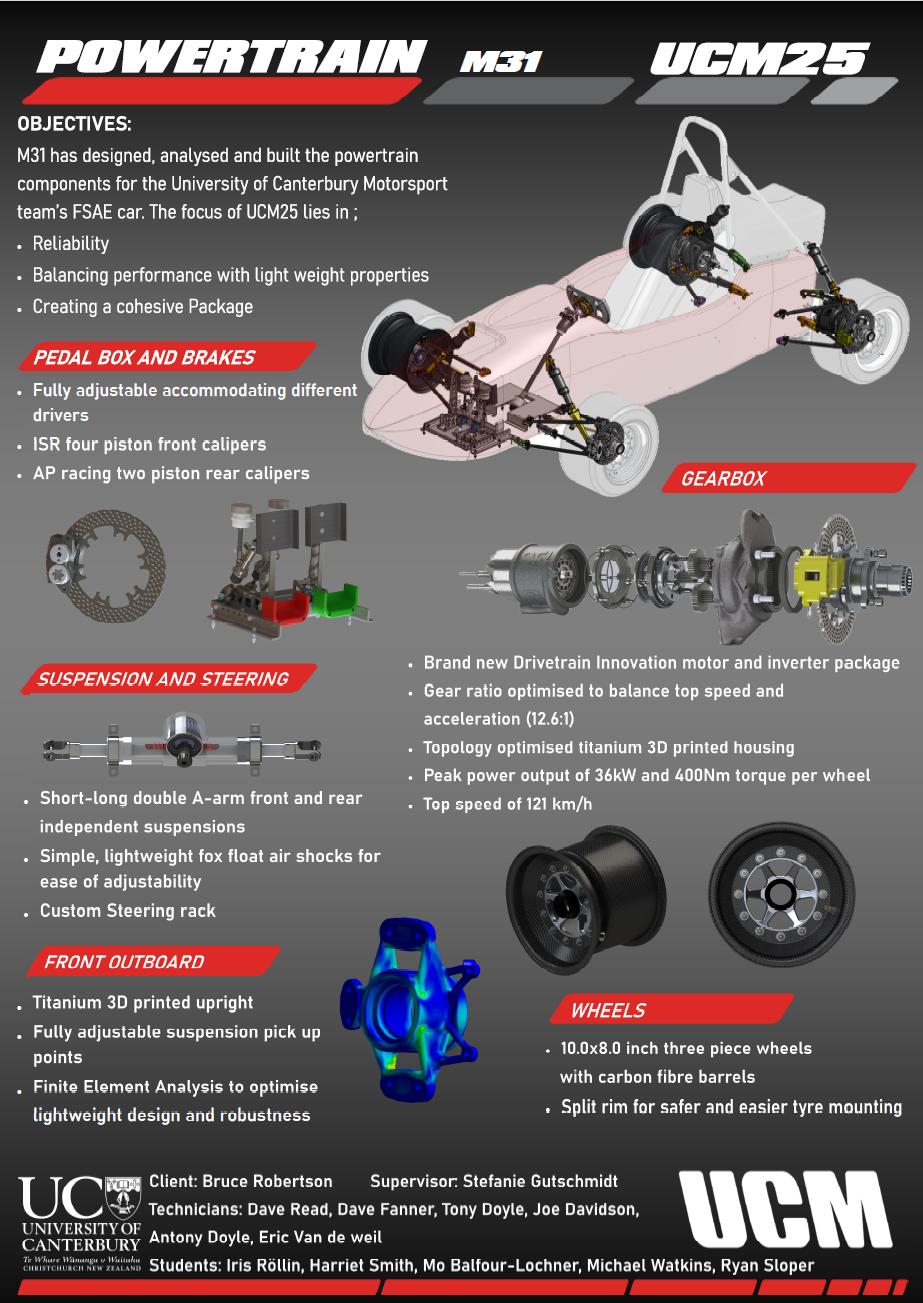
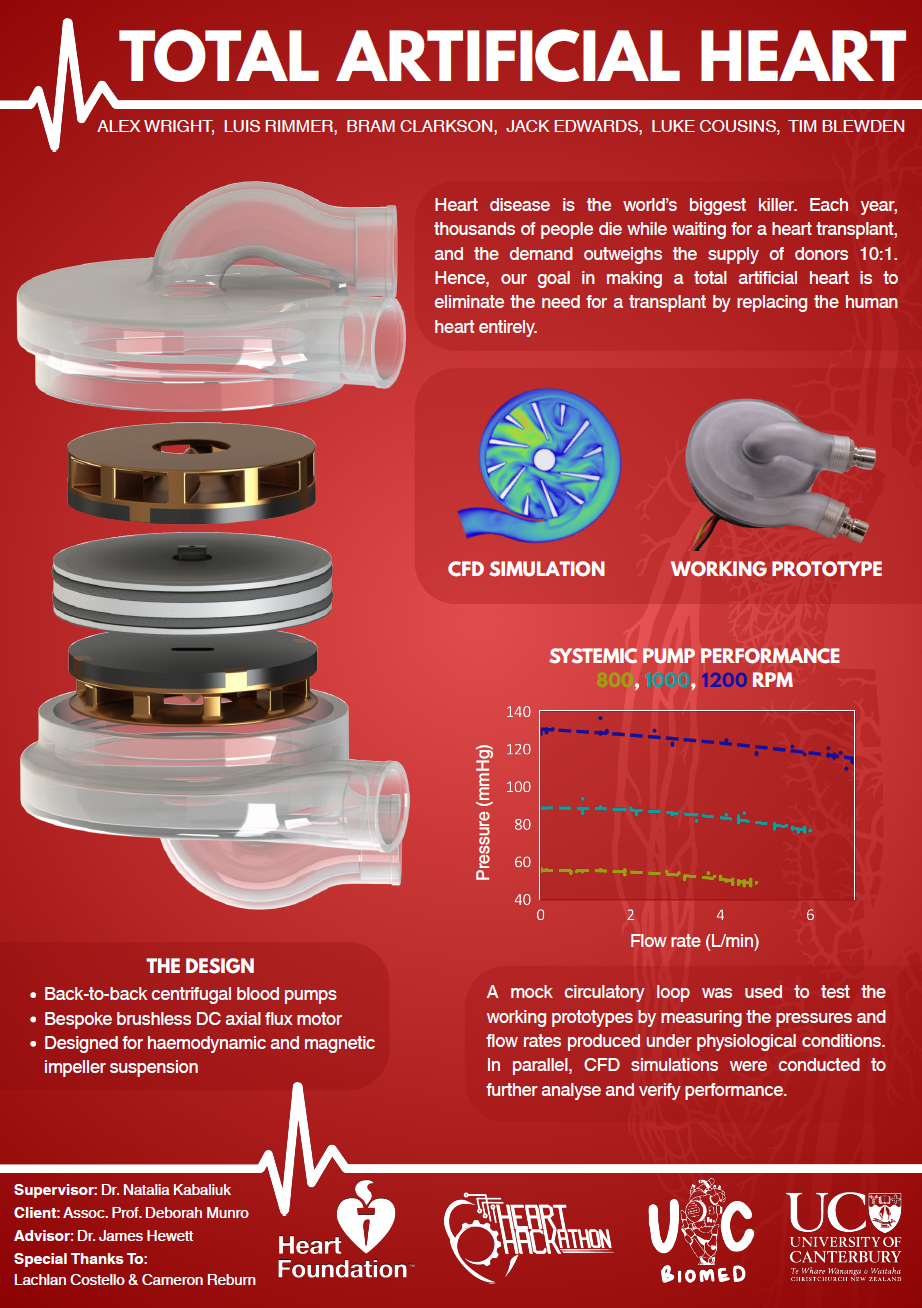
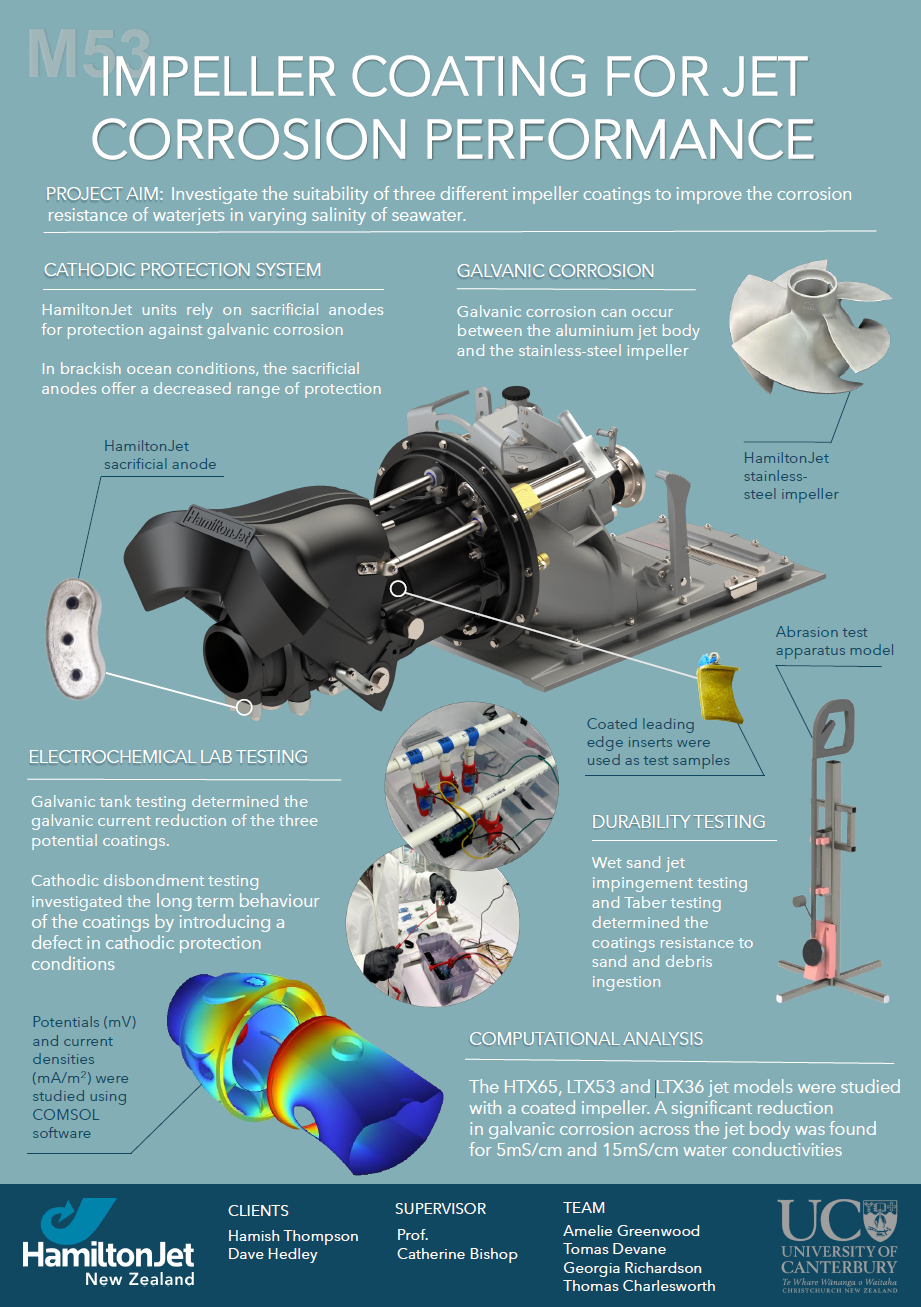
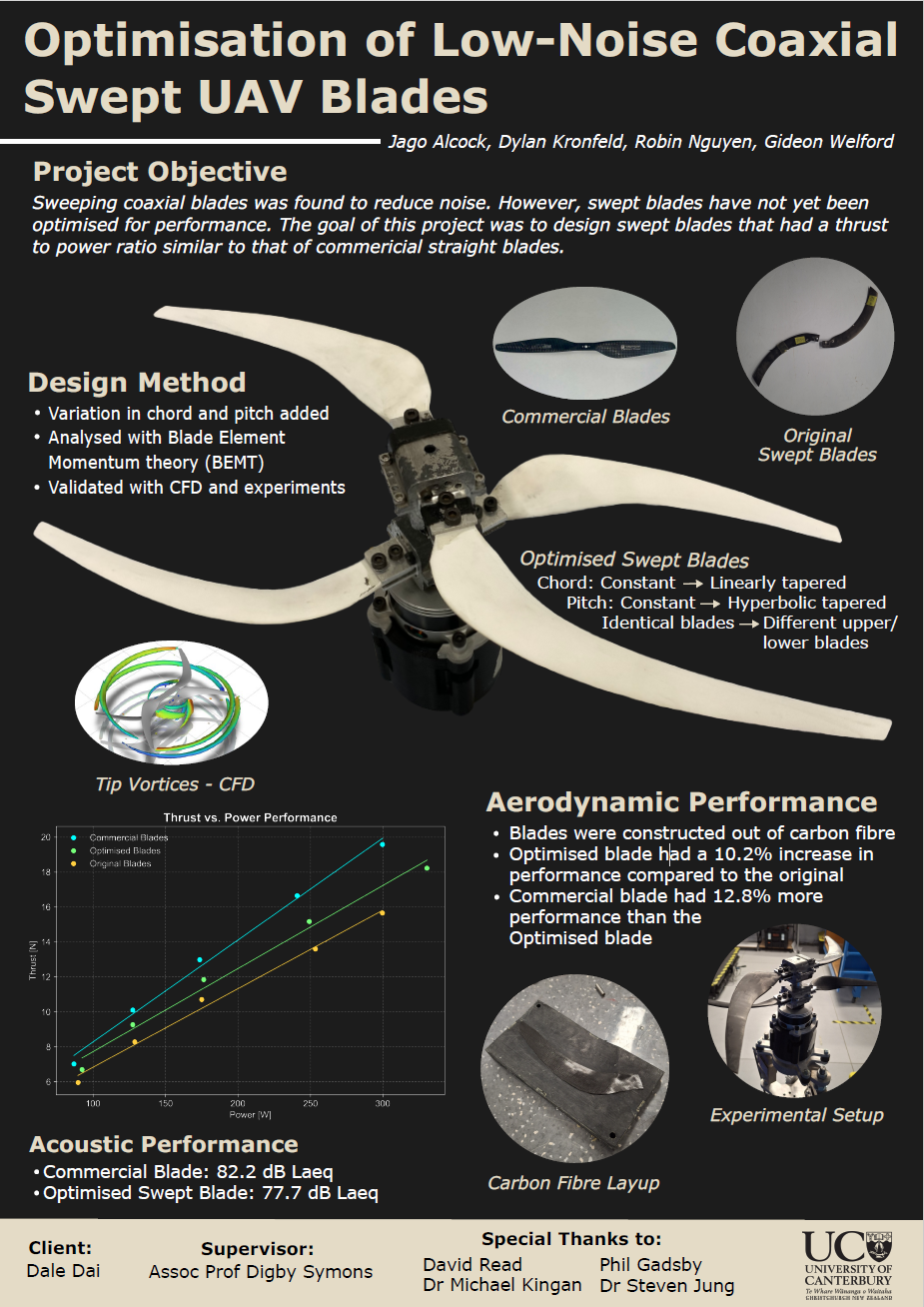
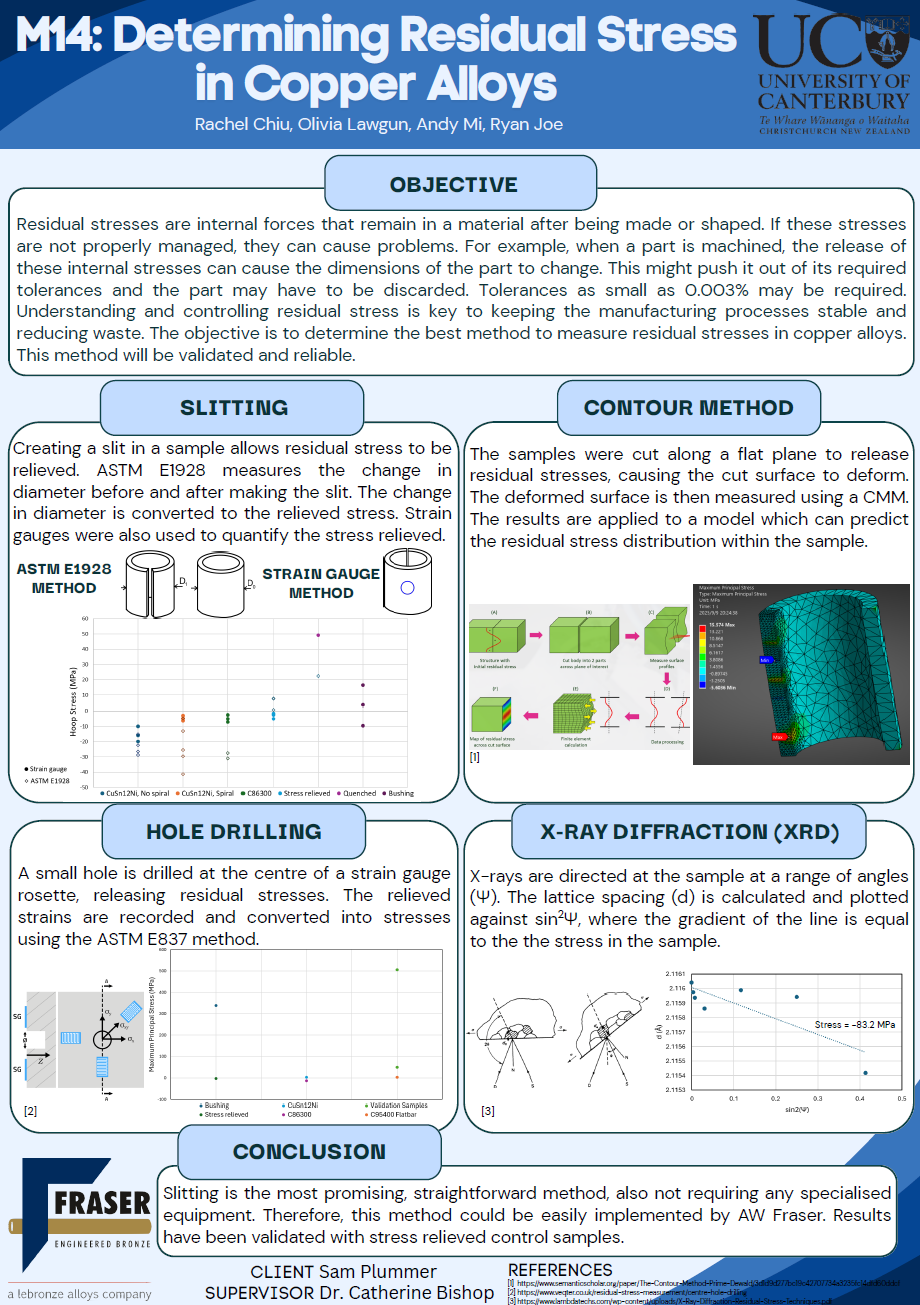
The following poster shows the types of outputs achievable by a high-functioning student team. There are problem solving, design, analysis, fabrication, and testing. Not all projects need all these elements, but a purely theoretical/CAD project would be a weak one.

For more examples of things that make good student projects see https://www.canterbury.ac.nz/study/academic-study/engineering/schools-and-departments-engineering-forestry-product-design/mechanical-engineering-department/rd-collaborations (last accessed 22/1/2026).

Project brief

To initiate a project, we need a 1-2 page brief. We are not fussy about how this is presented. It will typically include:

  • Context: Describe the background, and why this problem is important to solve. Insert some images.
  • Project description: Describe, in general terms, the problem that you need solved. Identify the type of solution approaches you are seeking, whether finite element simulation, experimental, microscopy etc.   Ideally a project would contain four sub-streams of work, one for each of the students, but if not the students will expand the scope to give themselves the necessary work.
  • Project objectives: List or describe the objectives. These could be ideal outcomes, milestones, goals, deliverables. Try to include both theoretical and validation/experimentation work streams. You don’t have to be too specific, as part of the students’ work is to determine the work packages and the project planning. A technical stretch is desirable to allow a good student team to extend the boundaries if time allows. For highly speculative projects there should at least be some achievable outcomes to give the students an accomplishment and the possibility for higher grades.
  • Fields of interest: Use this section to identify key expertise needed to solve the problem. This can help students understand the nature of the work, which can otherwise be difficult for them to infer.
  • Client: Client contact details, your logo etc.

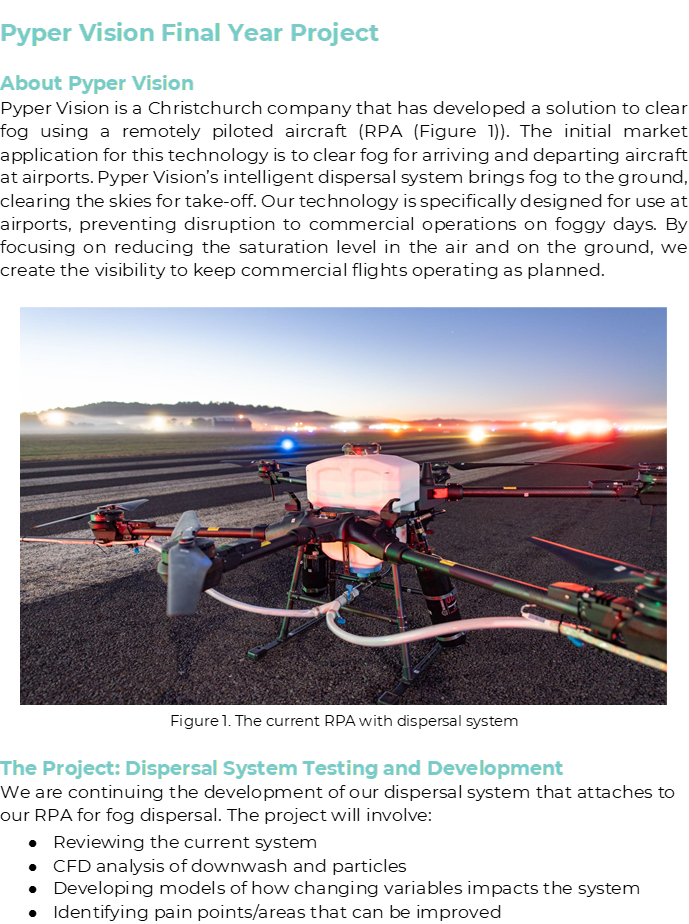
A sample project brief follows.


Next steps

Projects from external industry are particularly valuable to us from a teaching perspective, so please do consider offering a project. Doing so would be very helpful to us, and we hope would also be beneficial to you.

Our academic year starts mid-February. So we need your brief by the end of the second week in February latest, preferably earlier. Please indicate if you request a discounted project fee.

Project briefs will be put to students mid-February. Students self-select the projects of interest, so there is no guarantee that a project will go ahead until the selection process has happened (end of February).

For more information, please contact the Final Year Project Coordinator

For all other enquiries please use the alternative email:


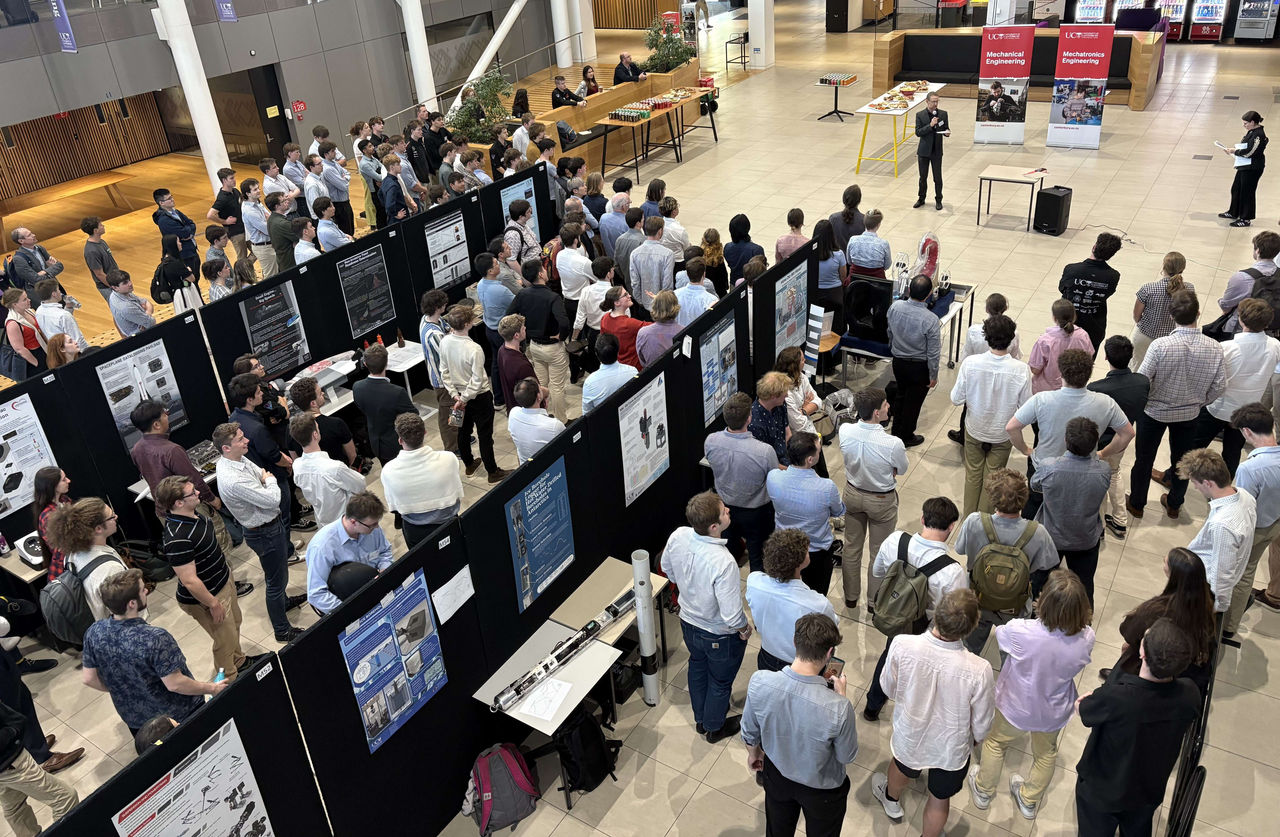
Final Year Projects Showcase

Bare Root Lifter FYP VID Mechanical Engineering

Takahē - COMS207 video 1

Merdian Energy HYDRO VID Mechanical Engineering

Takahē - COMS207 video 2


Final Year Project Posters 2025

Final Year Project Posters 2024

Final Year Project Posters 2023

Join us on social media
Privacy Preferences

By clicking "Accept All Cookies", you agree to the storing of cookies on your device to enhance site navigation, analyse site usage, and assist in our marketing efforts.