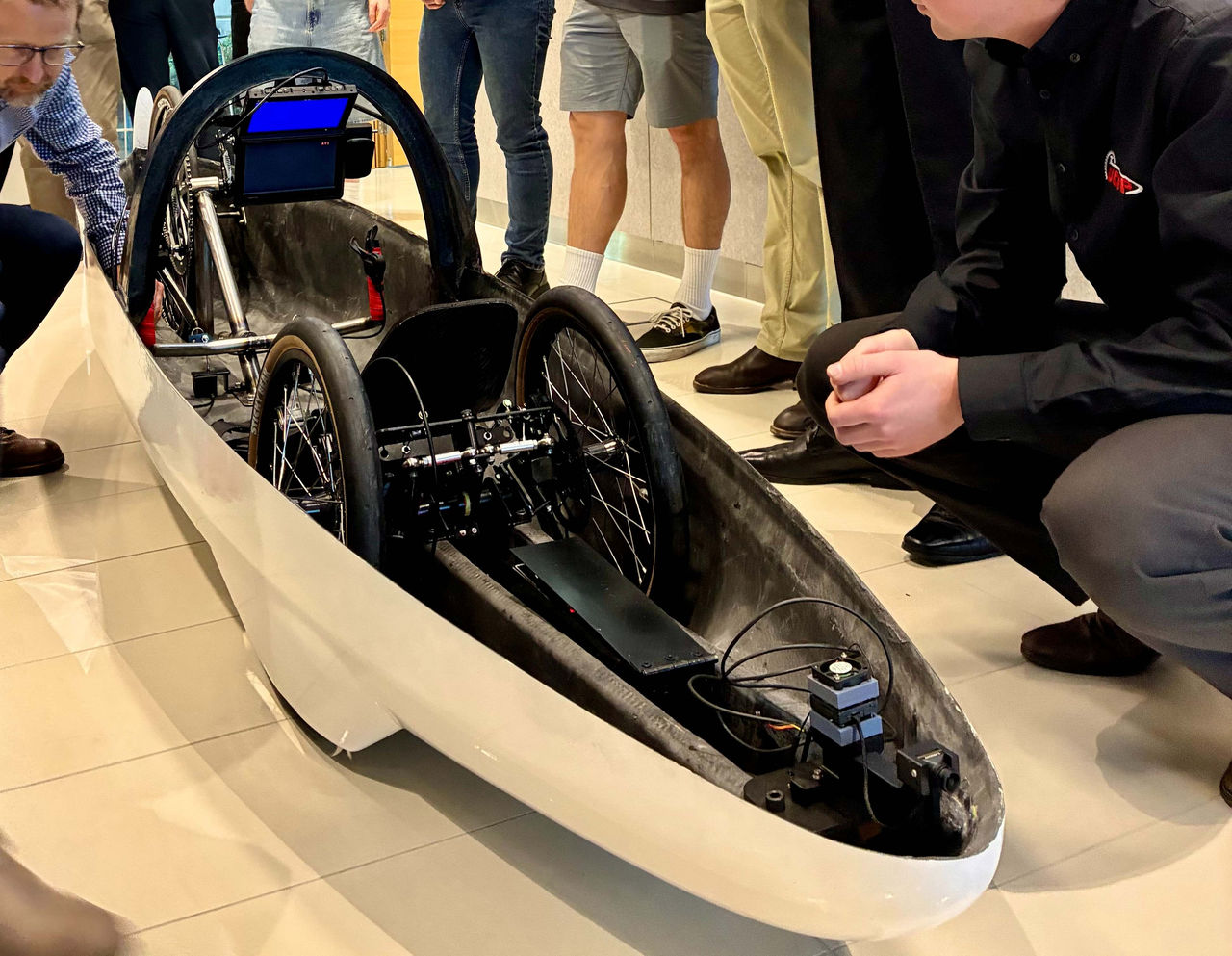


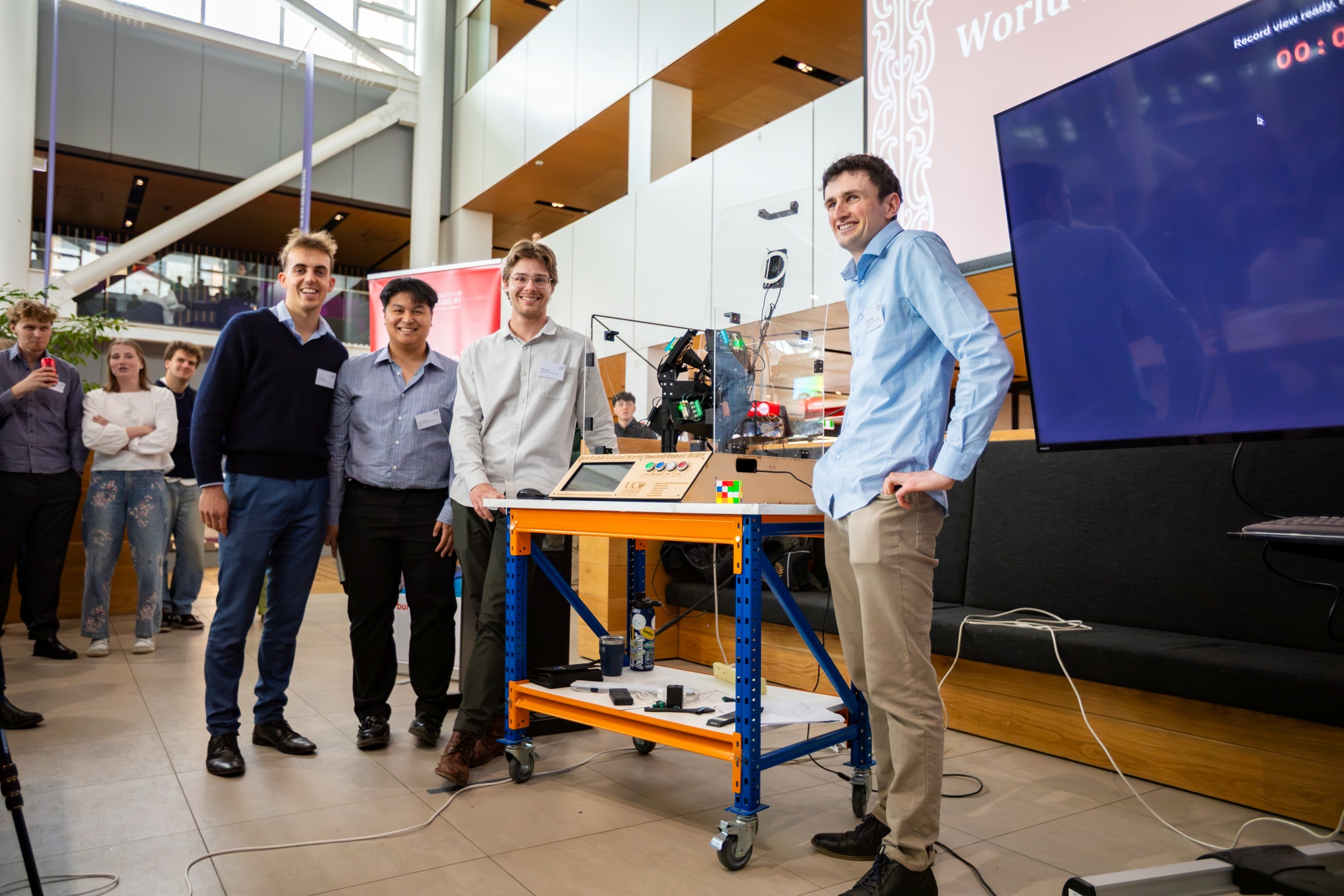
Photo caption: The UC Human Power team with Kākahi at its unveiling at the University of Canterbury
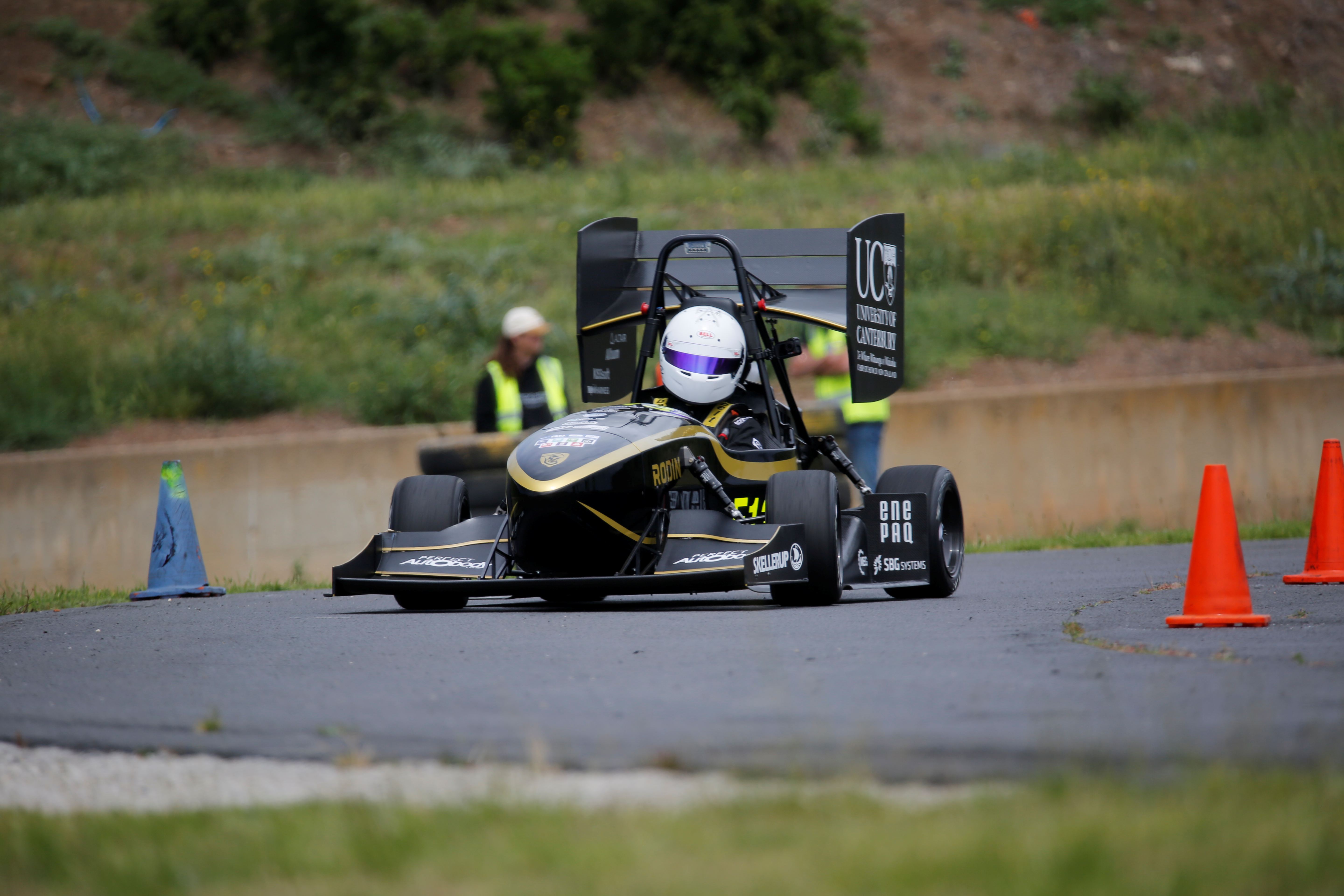
Kākahi, a low-slung, three-wheeled vehicle designed and built by Te Whare Wānanga o Waitaha | University of Canterbury (UC) students, is the third vehicle created through UC Human Power’s Project 100.
The student-led project began in 2022 with an ambitious goal of building a human-powered vehicle capable of exceeding New Zealand’s open-road speed limit of 100 km/h.
In 2025, the team’s second vehicle, Mako, reached 82.6 km/h, which the UC team believed was a new New Zealand human-powered land-speed record.
This year’s Kākahi project is being developed by an 11-student team led by fourth-year Mechanical Engineering student Harry Lancaster.
Unlike the team’s earlier vehicles, Kākahi places the rider in a head-first, lying-down position.
Lancaster says the change is designed to help the vehicle travel faster and more efficiently.
“We opted for a head-first, lying-down position, which allows us to reduce aerodynamic drag and improve drivetrain efficiency.”
The rider is fully enclosed inside the vehicle and relies on a camera system to see the road ahead. With little sense of the wind or outside environment, UC Engineering graduate Daniel Rickerby likens the experience to “riding a video game”.
For the upcoming speed attempt, the team has brought in high-performance riders, leaving the students free to focus on Kākahi’s design, testing and performance.
The team expects riders will need several kilometres to gradually build up to top speed before reaching the measured 200-metre section.
A speed attempt is now being planned near Ashburton, where Kākahi is expected to line up alongside the club’s two previous vehicles. Each vehicle will be powered entirely by its rider.
Mechanical Engineering Associate Professor Digby Symons, who has supported the project since its beginning, says the final-year projects allow students to work in teams and apply the engineering science they have learnt throughout their degrees to practical problems.
“Most topics come from industry, but a student-led initiative like this is driven by passion, and I’m really proud of what they have achieved this year.”
The next stage is speed testing and refining Kākahi’s design ahead of an official flying-start speed attempt.
.png)