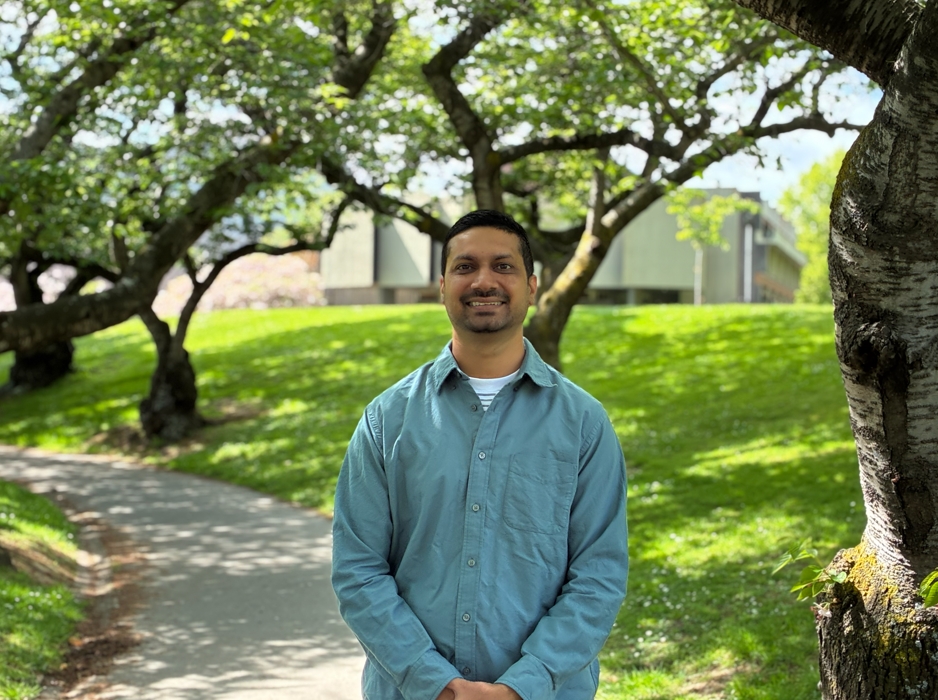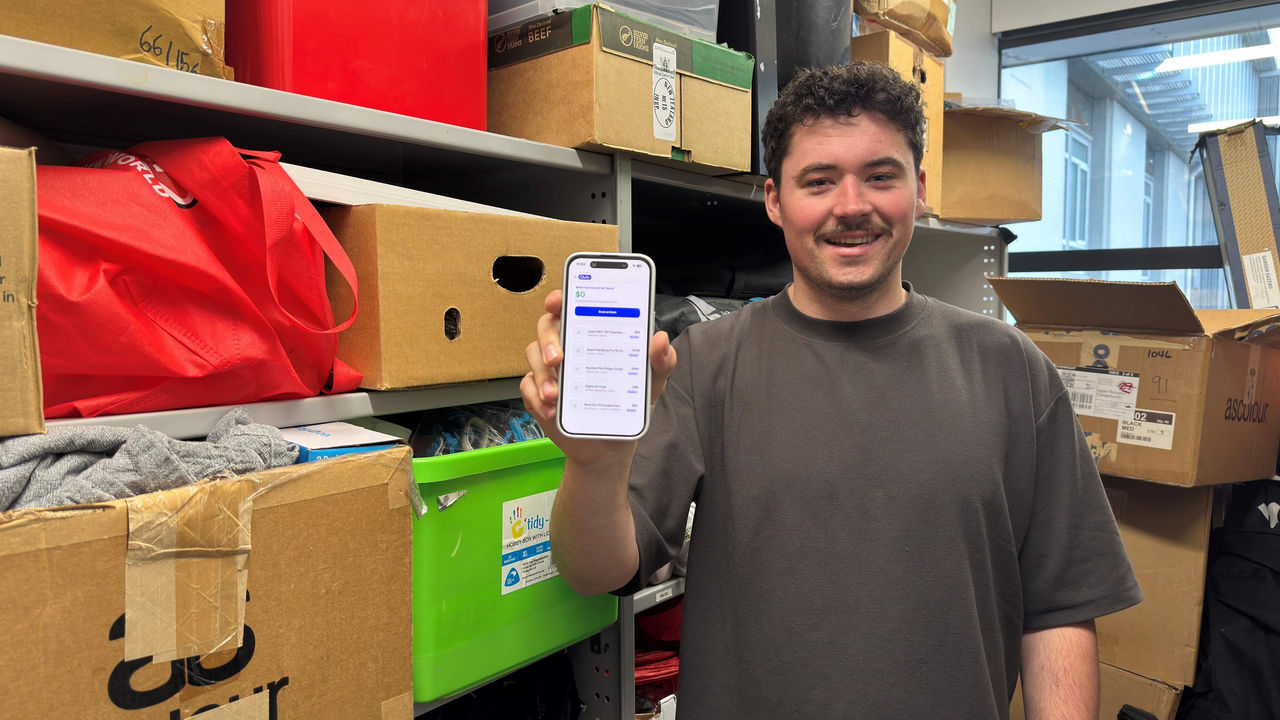


Photo caption: UC Civil Engineering student Zac Hemmings received the Momentum Student Entrepreneur Award for his start-up Cluttr.
Te Whare Wānanga o Waitaha | University of Canterbury (UC) Civil Engineering student Zac Hemmings received the Momentum Student Entrepreneur Award at the 2026 KiwiNet Research Commercialisation Awards. The KiwiNet Awards recognise New Zealand innovations being transformed into new industries, businesses, skilled jobs and global opportunities.
Hemmings’ venture Cluttr makes selling unwanted household items as easy as calling an Uber.
Thousands of dollars' worth of belongings sit unused in New Zealand homes because selling second-hand items can feel like too much work. Hemmings set out to change that with Cluttr, a platform designed to make selling unwanted items simple and convenient.
Rather than starting with funding or a large team, Hemmings became Cluttr's first reseller. For seven months, he collected items, photographed them, negotiated sales and built software alongside volunteer developers, proving the model with real customers before scaling through technology.
Customers snap photos of items they want to sell, and Cluttr handles the rest — estimating value, matching them with a student reseller, and managing the sale from start to finish.
Hemmings developed Cluttr through UC's Centre for Entrepreneurship Summer Startup and Incubator Programmes while completing his engineering degree. The start-up has since completed paid pilot collections, won Red Bull Basement New Zealand and represented the country at the Red Bull Basement World Final in San Francisco.
KiwiNet judges praised Hemmings' entrepreneurial momentum, intelligence and self-awareness, recognising his understanding of customer needs and the potential for Cluttr to grow.
UC Chemical and Process Engineering Professor Matthew Watson was also recognised at the KiwiNet awards for his entrepreneurial achievements, receiving the BNZ Researcher Entrepreneur Award for advancing solutions to global climate and materials challenges.
Professor Watson has helped bring three deep-tech companies to market – NILO, Aspiring Materials and CullBeck – and is now developing a fourth. Working across academia, industry and start-ups, he turns research into technologies designed to reduce emissions, create economic opportunities and attract investment.
Judges described Professor Watson as a "one-person innovation engine", recognising his combination of research excellence and entrepreneurial drive in turning complex science into ventures with the potential for significant impact across multiple sectors.
Two other UC finalists recognised at the awards were Mark Campbell, founder of Lensare, developing adaptive glasses for people with light-sensitive conditions, and Dr Jake Campbell, co-founder of Zuuka, developing wearable insulin delivery technology.

What to read next
UC geography graduate honoured for global science leadership
UC alumnus Distinguished Professor Emeritus Iain Hay has received a prestigious international Fellowship recognising his contributions to geography and scientific collaboration.

Are Kiwi businesses jumping blindly on the AI bandwagon?
AI doesn’t have to play an inevitably dominant role in our lives, businesses and future, argues a guest speaker for an upcoming UC public lecture.

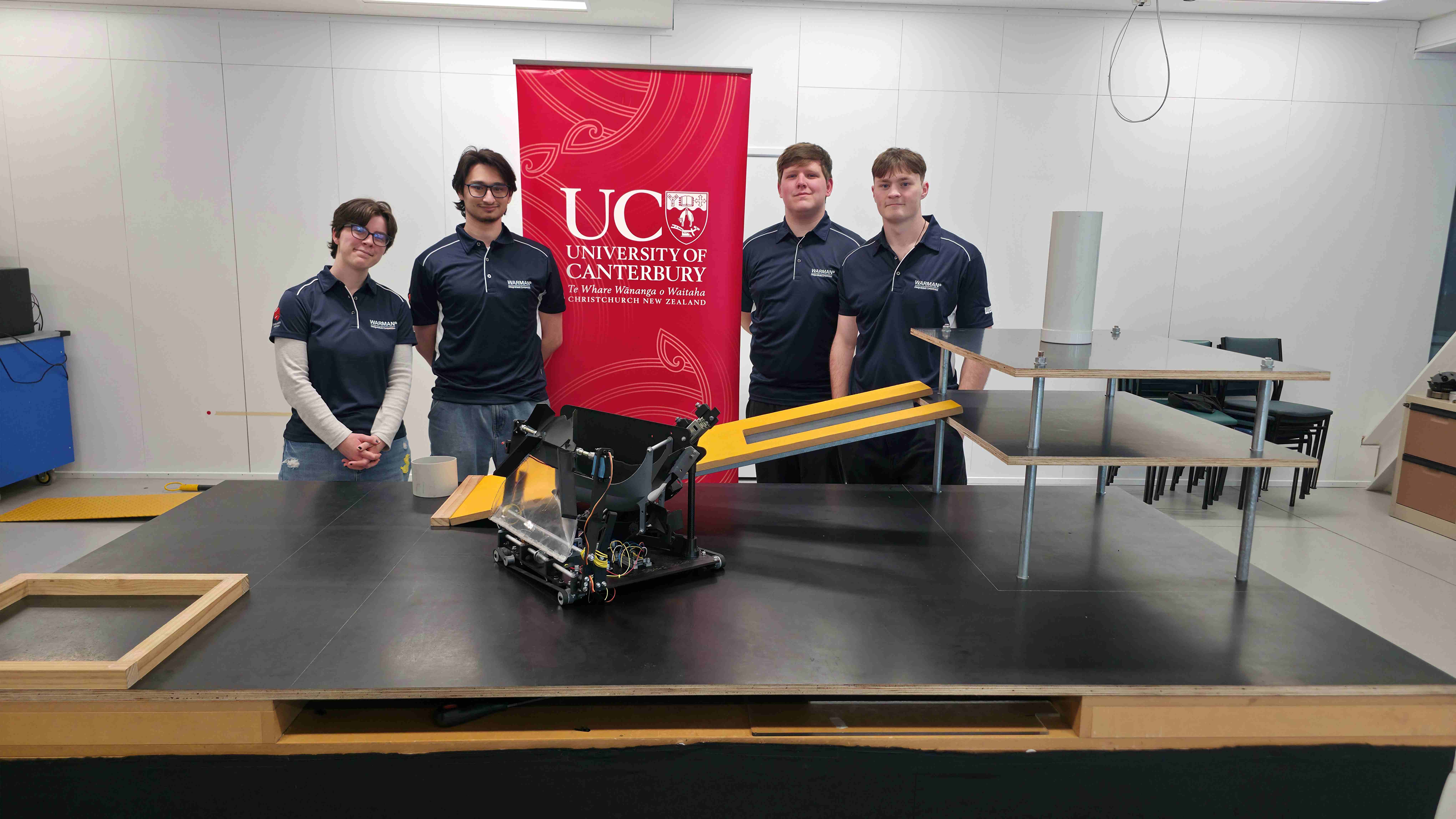
UC engineering students win international competition
A robot designed to transport rocks automatically has helped four UC engineering students claim an international title.
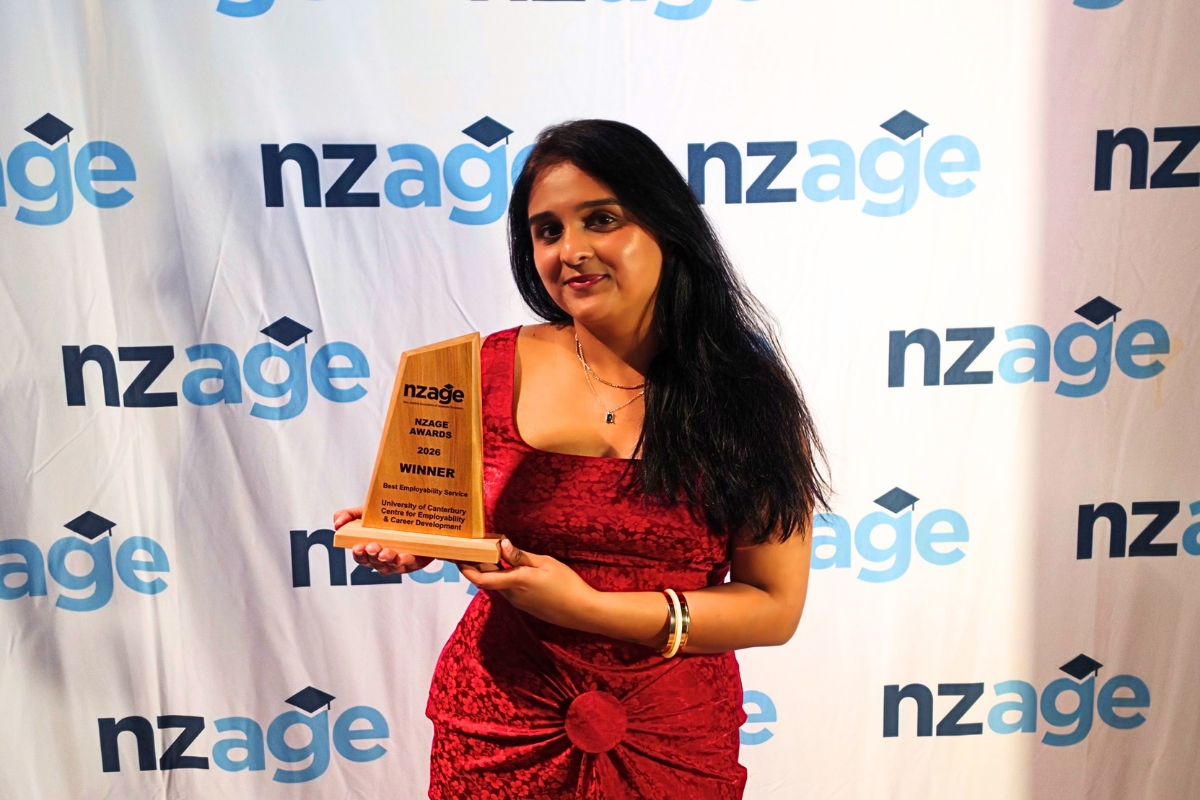
UC wins national award for employability service
UC has been recognised for excellence in helping students develop career-ready skills and connect with employers.
Fair suppliers strengthen business resilience
Businesses are better able to withstand disruption when suppliers make fair decisions and turn strong relationships into flexible action, UC research finds.
Digital models to help predict natural hazards in Kiwi capital
An innovative project using digital simulations to predict future hazards in New Zealand’s capital city takes its name from science fiction.
UC research challenges how we think autistic children learn
New UC research is challenging assumptions about how autistic children learn language.
Tiny robots, big potential: UC PhD explores new frontier
A UC researcher is pioneering laser-controlled robot swarms thinner than a human hair — work he believes could one day transform medicine and manufacturing.
UC research puts local knowledge at heart of resilience
UC research explores how Pacific Island nations can better use place-based knowledge to strengthen disaster planning and resilience.