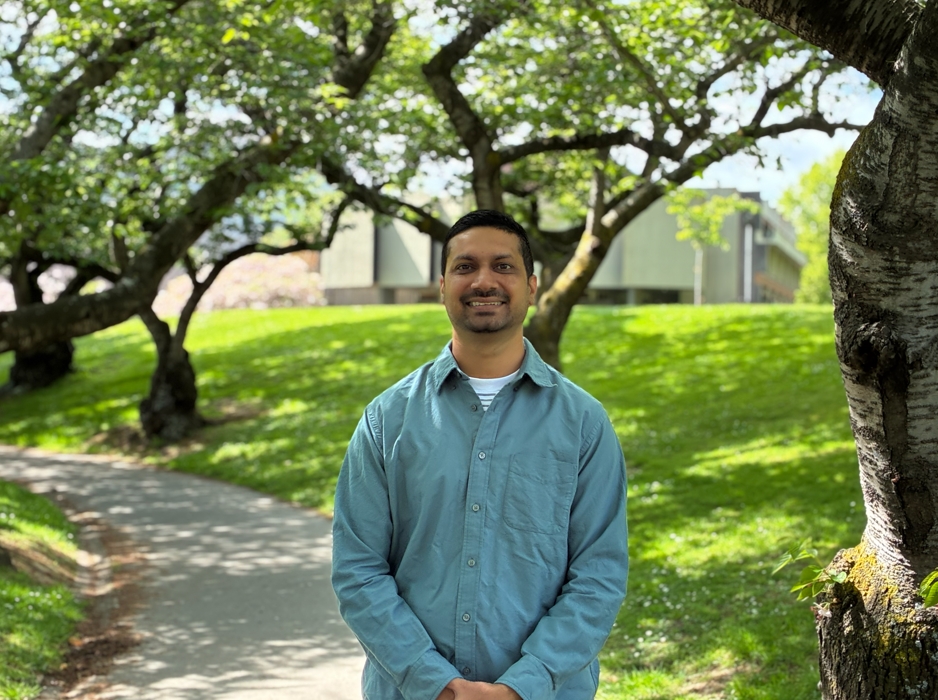


Photo Caption: OnChain Education founders Oliver Jenks and Kodi Sinclair
When Te Whare Wānanga o Waitaha | University of Canterbury (UC) students Oliver Jenks and Kodi Sinclair first joined the UC Crypto Society (a student club), they didn’t expect it to lead to a global edtech ambition. A combined 16 years of experience with blockchain (a shared, secure digital record) has culminated in their startup OnChain Education, which helps universities teach blockchain in a way that feels less like a textbook, and more like a flight simulator.
Their startup idea emerged when the pair were supporting a UC course with practical blockchain labs, and the founders saw firsthand that although blockchain appears in many university courses, it rarely moves beyond theory.
Jenks says blockchain isn’t just about speculation. “There are real applications in governance, supply chains and finance, but people need practical, grounded education so they can spot opportunities and avoid the scams. Students were learning blockchain theory in lectures, but it wasn’t until they got hands-on that the lightbulb moments happened.”
This is the literacy gap that OnChain Education aims to fill, which Jenks describes as ‘a flight simulator for blockchain’.
A flight simulator for blockchain
To use blockchain, learners need a crypto wallet, browser extensions and real cryptocurrency to pay transaction fees. For a class of 40–70 students, setting that up is slow, risky and often impossible on university lab computers.
OnChain Education’s platform removes those barriers by providing:
Instant in-browser wallets – no downloads or extensions
A real blockchain environment – but with tokens that have no real-world value
A fully web-based interface, avoiding security and IT policy issues
“Would you trust a pilot who had only read the manual?” Jenks says. “We think of OnChain Education as a flight simulator for blockchain. Students can experiment, make mistakes and learn how it really works, but there’s no financial risk, and they can’t ‘crash the plane’.”
OnChain Education has already been used in a UC Information Systems course on decentralised governance, where students made around 1,000 blockchain transactions in four weeks—all in a safe environment with zero financial risk.
In a recent UC course on IT governance and strategy, students used the platform to explore decentralised governance, cast votes and track decisions on-chain over several weeks. By the end of the labs, the cohort had collectively made about 1,000 blockchain transactions. This experience would have been impossible to replicate safely using live cryptocurrencies.
Supercharging growth through Summer Startup
Now, as part of the UC Centre for Entrepreneurship (UCE) Summer Startup Programme, the founders are refining their model and preparing to take their ‘learning lab for blockchain’ to universities in Aotearoa New Zealand and beyond.
Although OnChain Education had already built a Minimum Viable Product and generated revenue before joining UCE’s Summer Startup Programme, the founders say the 10-week accelerator has been crucial in sharpening their thinking.
“Summer Startup has forced us to really nail down the fundamentals: what problem we’re solving, what our mission is, and how we’re going to scale,” says Sinclair.
“It’s pushed us to go deeper on customer discovery and market research,” he says. “We’re getting input from mentors and speakers across different industries, then asking, ‘How does this apply to a B2B edtech company selling into universities?’ It’s helped us build a much clearer game plan for 2026.”
The Summer Startup cohort also gives the pair a network of fellow founders to learn alongside, from refining business models and pricing, to navigating global markets.
With their UC pilot complete and further courses planned for 2026, OnChain Education is now looking outward. Their immediate focus is on tertiary providers in New Zealand and Australia, followed by tech-forward markets in Asia such as Singapore, Malaysia and Vietnam, where blockchain adoption is already strong.
They also see future potential in corporate training, helping companies upskill staff in blockchain, as well as in technical high schools and polytechnics.
“We want to be the platform that universities and organisations turn to when they say, ‘We want a real blockchain experience, not just a lecture’,” Jenks says. “If, in a few years’ time, we go to a blockchain conference and people say, ‘You’re from OnChain Education, your labs helped me get into this industry’, that’s success.”
For Sinclair, the dream is simple: “I’d love to get an email from a graduate saying, ‘I used your platform at uni, and it helped me land my job.’ That’s the impact we’re aiming for.”


What to read next
UC geography graduate honoured for global science leadership
UC alumnus Distinguished Professor Emeritus Iain Hay has received a prestigious international Fellowship recognising his contributions to geography and scientific collaboration.

Are Kiwi businesses jumping blindly on the AI bandwagon?
AI doesn’t have to play an inevitably dominant role in our lives, businesses and future, argues a guest speaker for an upcoming UC public lecture.

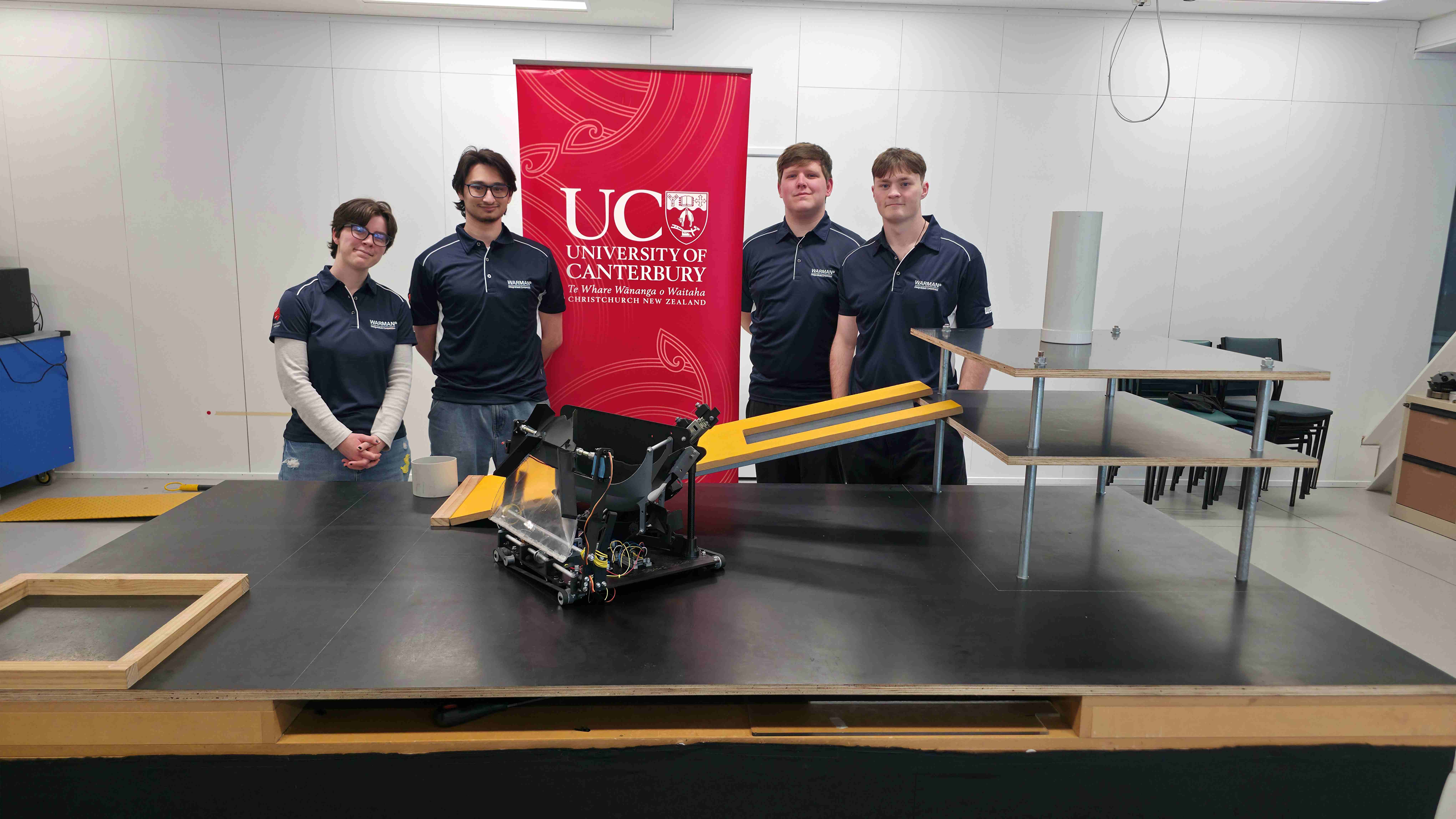
UC engineering students win international competition
A robot designed to transport rocks automatically has helped four UC engineering students claim an international title.
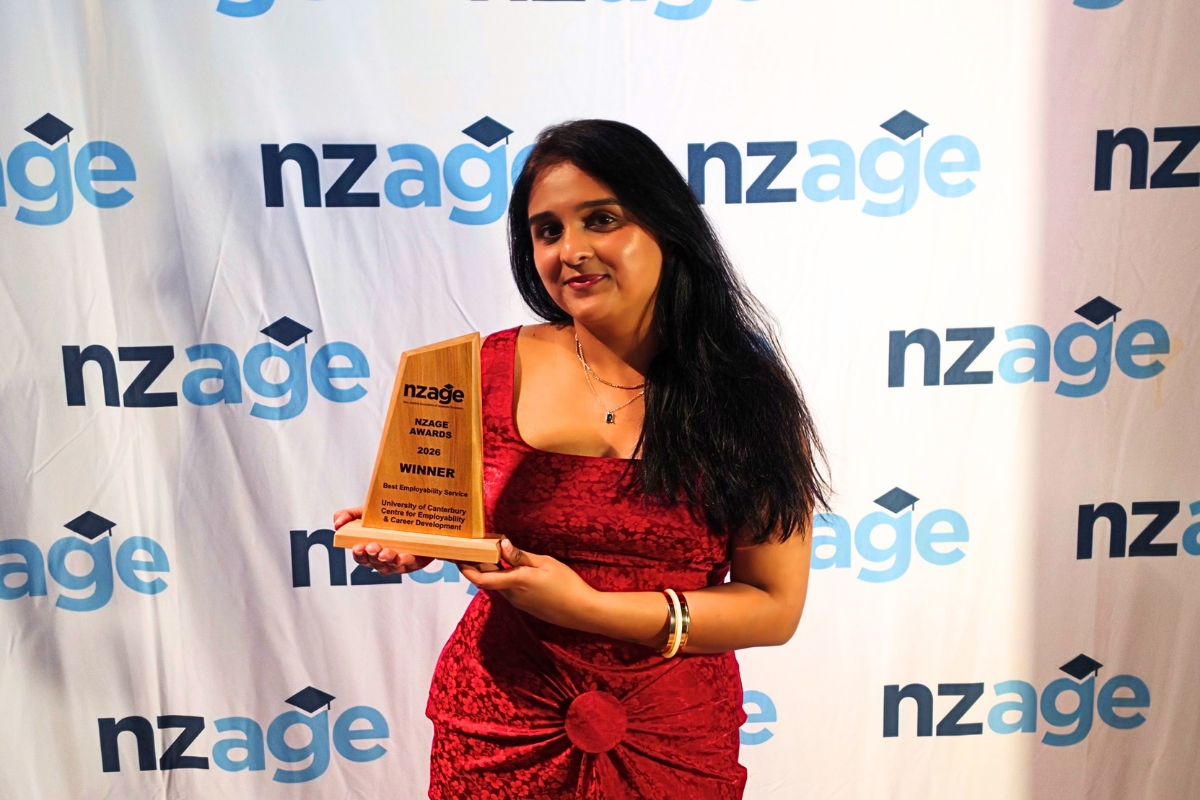
UC wins national award for employability service
UC has been recognised for excellence in helping students develop career-ready skills and connect with employers.
Fair suppliers strengthen business resilience
Businesses are better able to withstand disruption when suppliers make fair decisions and turn strong relationships into flexible action, UC research finds.
Digital models to help predict natural hazards in Kiwi capital
An innovative project using digital simulations to predict future hazards in New Zealand’s capital city takes its name from science fiction.
UC research challenges how we think autistic children learn
New UC research is challenging assumptions about how autistic children learn language.
Tiny robots, big potential: UC PhD explores new frontier
A UC researcher is pioneering laser-controlled robot swarms thinner than a human hair — work he believes could one day transform medicine and manufacturing.
UC research puts local knowledge at heart of resilience
UC research explores how Pacific Island nations can better use place-based knowledge to strengthen disaster planning and resilience.