

As debates over climate, health, technology and public policy grow more complex, researchers are facing a communications challenge that goes well beyond explaining evidence. At this year’s Science Communicators’ Association of New Zealand (SCANZ) conference, experts from Te Whare Wānanga o Waitaha | University of Canterbury (UC) will explore what it takes for research to connect in environments shaped by uncertainty, competing narratives and public scrutiny.
As Gold Sponsor of SCANZ 2026, UC is placing a spotlight on science communication at the conference, as a core part of research impact. Through keynote and conference presentations, UC speakers will examine how trust is built, how research reaches decision-makers and communities, and what support scientists need if their work is to make a difference beyond the page.
Professor Bronwyn Hayward, a keynote speaker from UC’s Political Science and International Relations department, will tackle that challenge directly in her presentation, Why saying ‘Just Trust the Science’ isn’t working: How to talk about research insights across polarised politics. Drawing on her experience in climate politics, she will examine how researchers can communicate evidence in ways that resonate with people navigating new uncertainties, AI, and political division.
“In the past decade we’ve seen the rise of climate protests and calls to ‘just trust the science,’ says Professor Hayward, “but all science is contested and how we apply research evidence can shift the focus of debate or reframe a problem, so it’s not unreasonable that the public wants to know what values drive our research and what impacts we foresee. The days when a scientist could say, I just do the research, are long gone, if they ever existed. But does that mean scientists have to be ‘activists’ now? In this talk I reflect on ways to navigate the deeply politicised context in which our research takes place with integrity and foresight.” Professor Hayward’s keynote sits within a broader UC presence at SCANZ that reflects growing attention on science communication as a core part of research design and impact, not simply something that happens after the work is done.
Dr Michael Edmonds will bring new insights from a 2025 survey of almost 1,000 New Zealand scientists and technologists, conducted with the New Zealand Association of Scientists. His presentation will focus on how scientists view science communication, misinformation, institutional support and public trust, and what those views reveal about the pressures facing science in New Zealand.
"By better understanding what scientists are thinking (and feeling) we can better support them to engage in science communication which benefits everyone," says Dr Edmonds.
Dr Tara Ross will speak about the pressures facing local newsrooms and what that means for science storytelling. Her session will explore how shrinking coverage and a reliance on non-local sources are reshaping science journalism in Aotearoa – and how science communicators can support journalists to produce stronger, locally grounded stories that build communities’ capacity to understand and respond to complex scientific issues.
National Emergency Management Agency Chief Science Advisor and UC Professor Thomas Wilson will examine how science reaches decision-makers in Science at the Top Table, exploring what it takes for scientific insight to influence leadership, policy and action.
Together, the UC speakers reflect a wider institutional focus on research that creates public value, including through better communication, stronger relationships and more effective pathways from knowledge to action.
“For research to make a difference, scientists need to be able to communicate research findings and their implications in a clear and accessible manner. That’s why science communication is central to UC’s research impact; it connects knowledge with communities, decision-makers, and real-world change,” Professor Lucy Johnston, Deputy Vice-Chancellor Research and Innovation, says.
The SCANZ conference brings together researchers, journalists, communicators and practitioners from across Aotearoa and Australia to explore the changing role of science communication in public life. SCANZ President Kati Doehring says, “we’re grateful to the University of Canterbury and our sponsors for making this year’s conference possible. This year’s programme brings together leading voices to tackle some of the most pressing issues in science communication, from misinformation and trust to meaningful engagement with communities and policy makers, and how to make a difference. We’re looking forward to two energising days and to welcoming participants to UC later this month.”
Alongside Professor Hayward, Dr Edmonds, Dr Ross and Professor Wilson, other UC speakers will contribute perspectives on knowledge exchange, citizen science, public engagement and making complex science more accessible – reinforcing the message that communication is not an optional extra, but central to the impact of research.
The SCANZ conference will be held on 25–26 June, at UC.
More information: https://www.scanz.co.nz/

What to read next
NZ study reveals gaps in women's heart healthcare
A review of 25 years of New Zealand research has revealed significant gaps in women's heart healthcare, highlighting opportunities to improve diagnosis, treatment and outcomes.

History goes hi-tech at Awaroa Godley Head
The University of Canterbury's HIT Lab is helping Awaroa Godley Head visitors enjoy a more immersive experience of the World War II heritage site.

UC geography graduate honoured for global science leadership
UC alumnus Distinguished Professor Emeritus Iain Hay has received a prestigious international Fellowship recognising his contributions to geography and scientific collaboration.
Are Kiwi businesses jumping blindly on the AI bandwagon?
AI doesn’t have to play an inevitably dominant role in our lives, businesses and future, argues a guest speaker for an upcoming UC public lecture.

UC engineering students win international competition
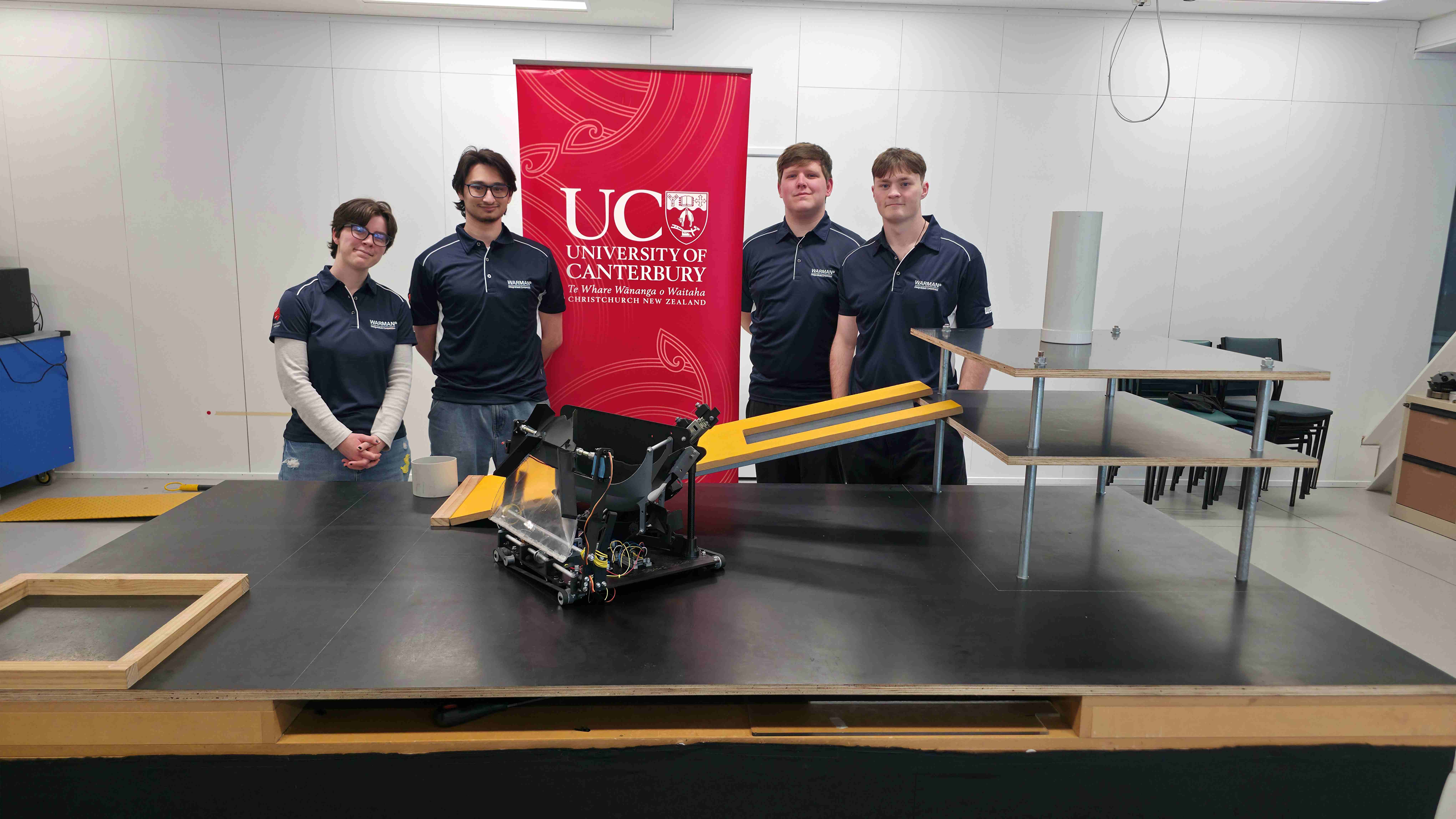
A robot designed to transport rocks automatically has helped four UC engineering students claim an international title.
UC wins national award for employability service
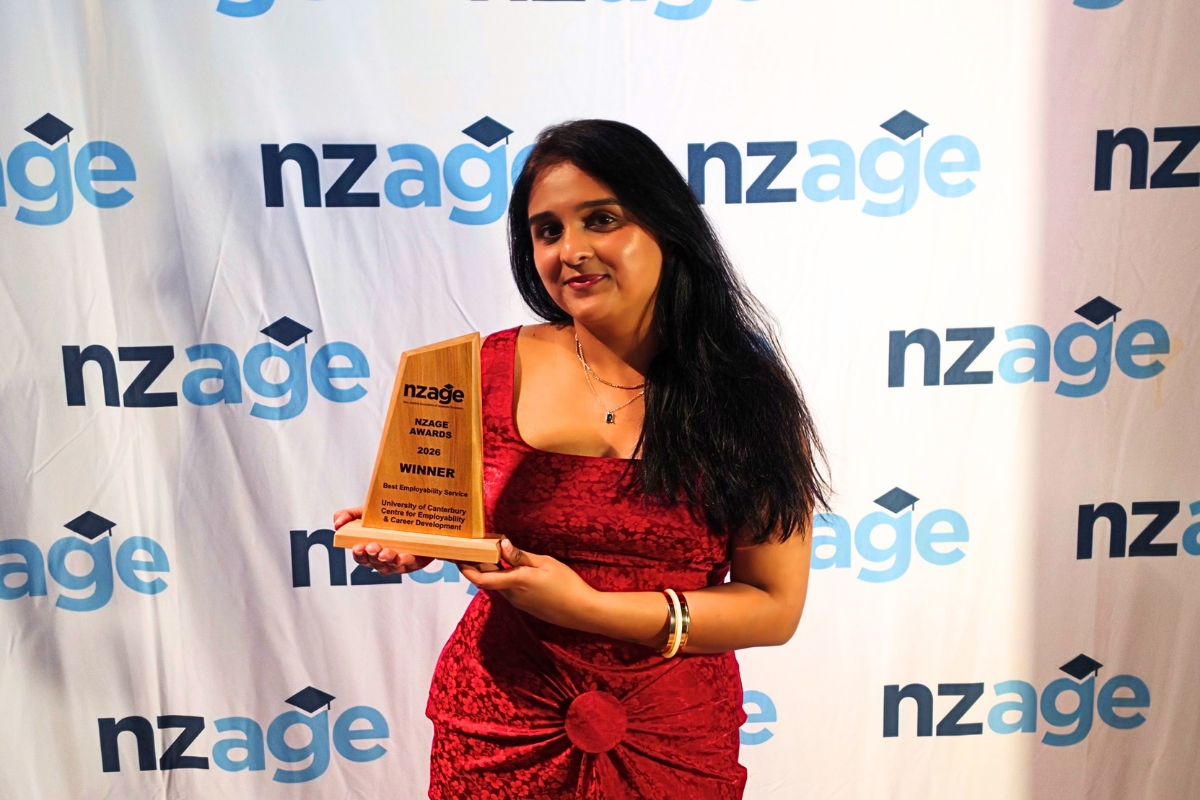
UC has been recognised for excellence in helping students develop career-ready skills and connect with employers.
Fair suppliers strengthen business resilience
Businesses are better able to withstand disruption when suppliers make fair decisions and turn strong relationships into flexible action, UC research finds.
Digital models to help predict natural hazards in Kiwi capital
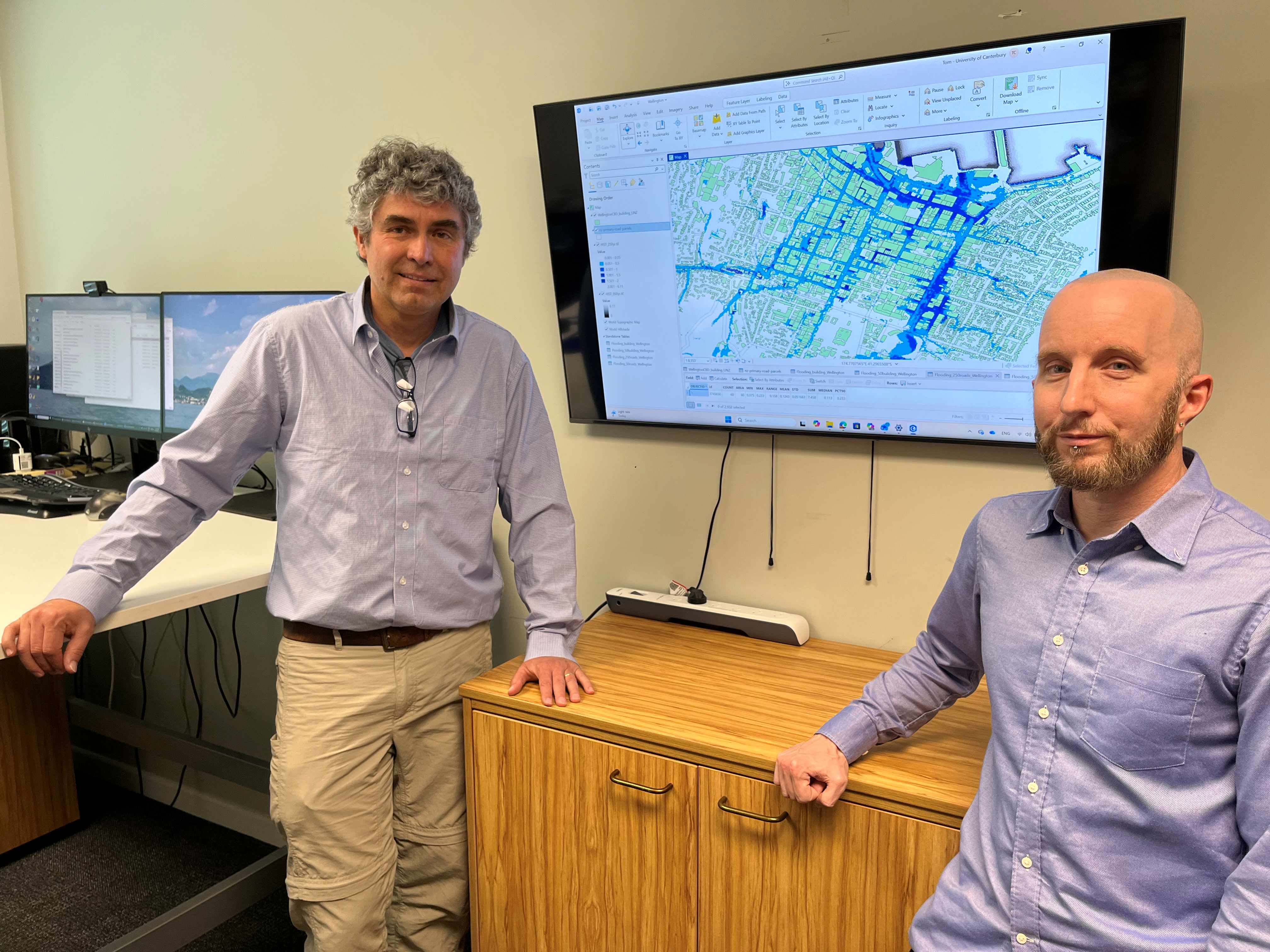
An innovative project using digital simulations to predict future hazards in New Zealand’s capital city takes its name from science fiction.
UC research challenges how we think autistic children learn
New UC research is challenging assumptions about how autistic children learn language.