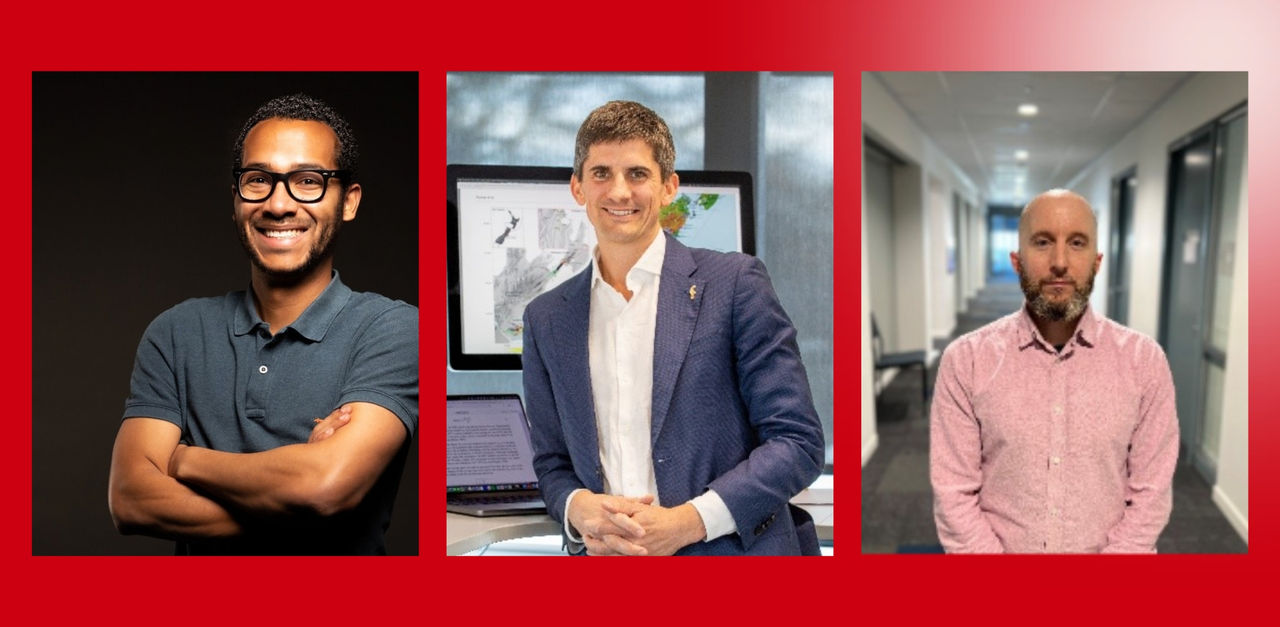


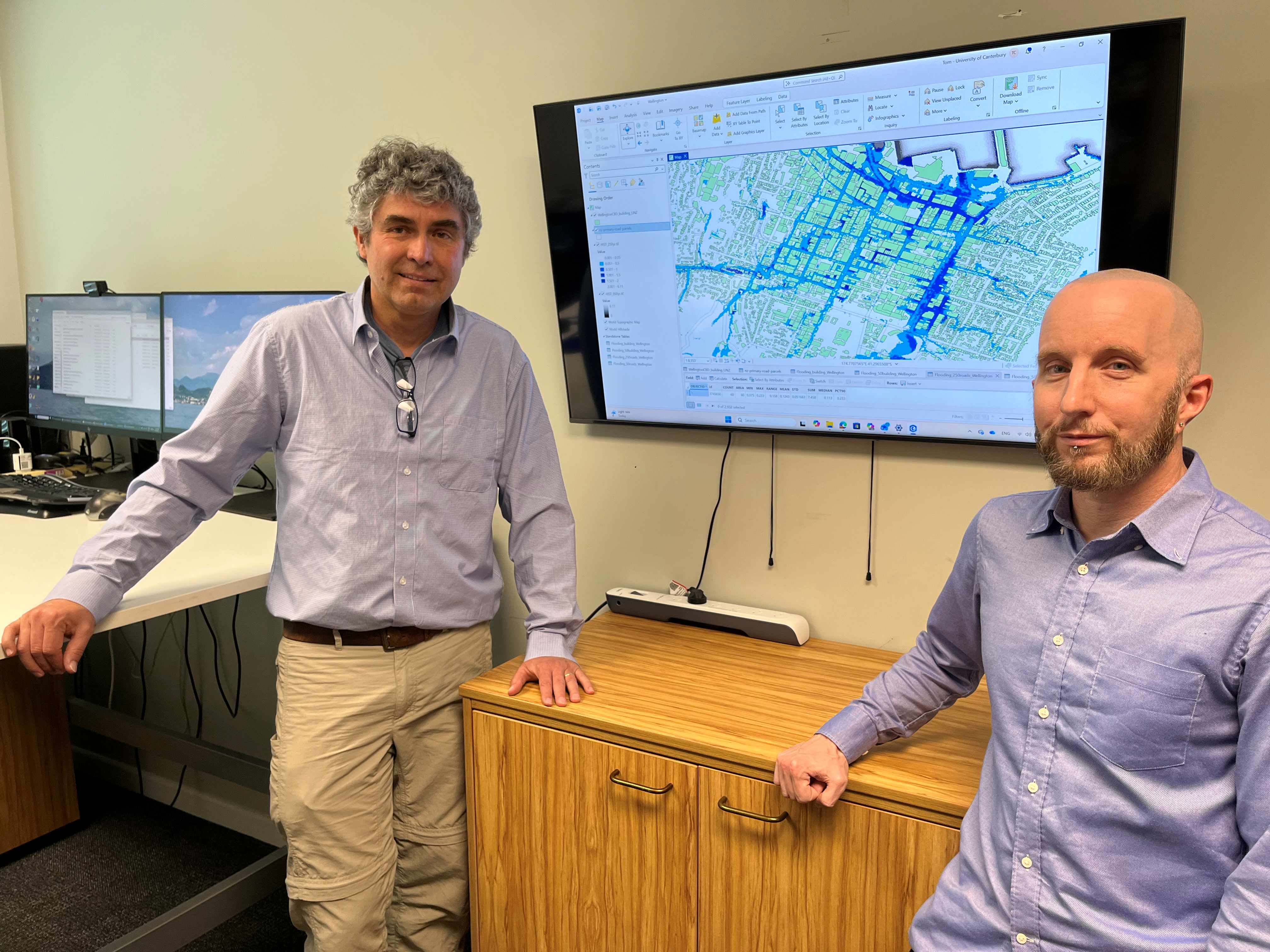
Photo caption: Dr Andres Valencia, Professor Brendon Bradley, and Dr Barry Evans.
Researchers from Te Whare Wānanga o Waitaha | University of Canterbury (UC) will lead two of eight new three-year University Research Programmes funded by the Natural Hazards Commission Toka Tū Ake (NHC) as part of a $3.6 million national investment in natural hazards research.
Principle investigator Dr Andres Valencia and lead researcher Dr Barry Evans will research exploring how fires could spread through Greater Wellington following a major earthquake. Earthquake damage to roads, water supplies and other essential services can make firefighting much more difficult, and the programme will model how fires could develop and test different response approaches.
The findings are expected to help emergency managers and communities better prepare for the complex challenges created when earthquakes and fires occur together.
Professor Brendon Bradley will lead a programme focused on improving New Zealand’s earthquake hazard modelling. Building on more than six years of previous NHC-funded research, the project will combine advanced computer modelling with detailed geological data to strengthen understanding of earthquake shaking and risk.
The research will contribute to the information used to design buildings, plan infrastructure and prepare for future earthquakes.
The UC-led projects are among eight programmes receiving NHC funding across New Zealand. Each will begin in early 2027 and run for three years, with opportunities for postgraduate students, postdoctoral researchers and early-career scientists to contribute.
NHC says the investment is designed to support practical research that helps protect homes and communities and reduce the future impacts and costs of natural hazards.
What to read next
UC geography graduate honoured for global science leadership
UC alumnus Distinguished Professor Emeritus Iain Hay has received a prestigious international Fellowship recognising his contributions to geography and scientific collaboration.

Are Kiwi businesses jumping blindly on the AI bandwagon?
AI doesn’t have to play an inevitably dominant role in our lives, businesses and future, argues a guest speaker for an upcoming UC public lecture.

UC engineering students win international competition
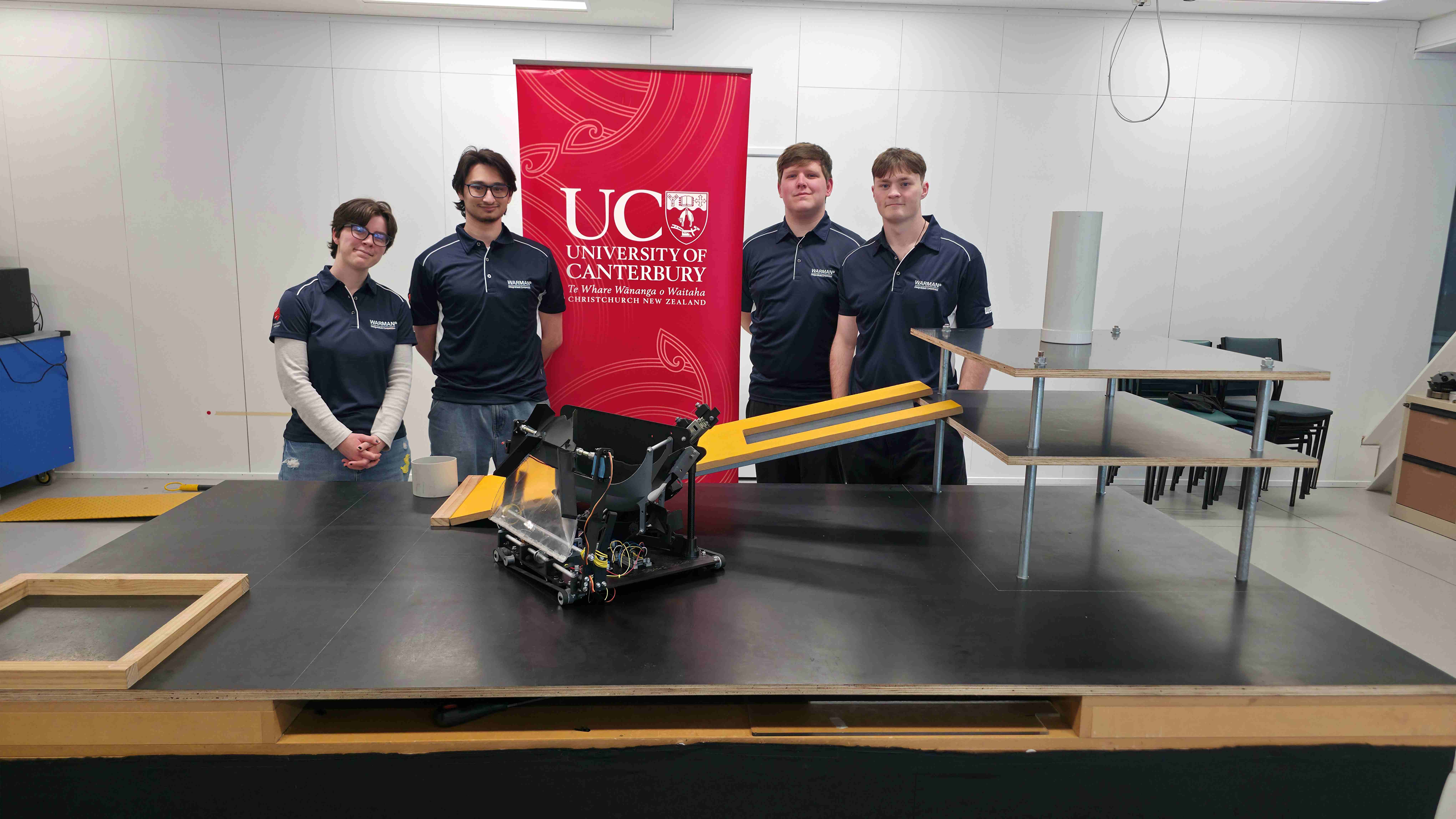
A robot designed to transport rocks automatically has helped four UC engineering students claim an international title.
UC wins national award for employability service
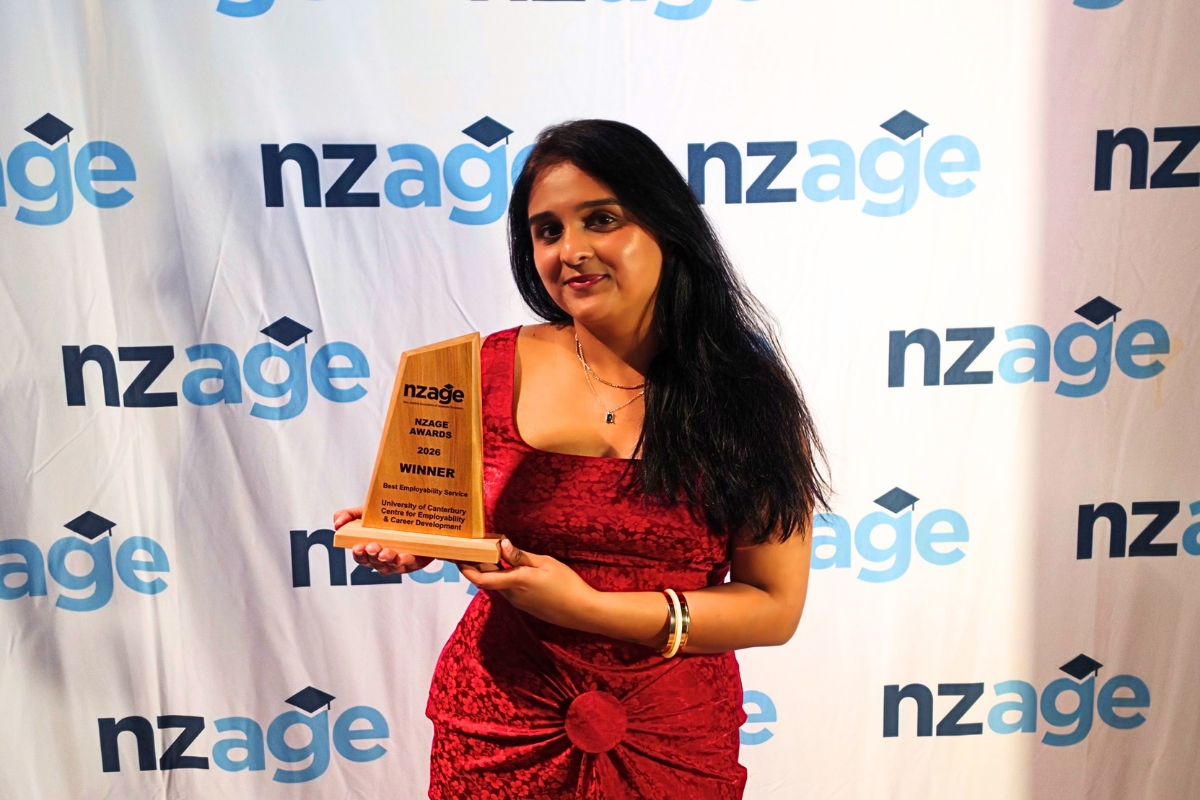
UC has been recognised for excellence in helping students develop career-ready skills and connect with employers.
Fair suppliers strengthen business resilience
Businesses are better able to withstand disruption when suppliers make fair decisions and turn strong relationships into flexible action, UC research finds.
Digital models to help predict natural hazards in Kiwi capital
An innovative project using digital simulations to predict future hazards in New Zealand’s capital city takes its name from science fiction.
UC research challenges how we think autistic children learn
New UC research is challenging assumptions about how autistic children learn language.
Tiny robots, big potential: UC PhD explores new frontier
A UC researcher is pioneering laser-controlled robot swarms thinner than a human hair — work he believes could one day transform medicine and manufacturing.
UC research puts local knowledge at heart of resilience
UC research explores how Pacific Island nations can better use place-based knowledge to strengthen disaster planning and resilience.