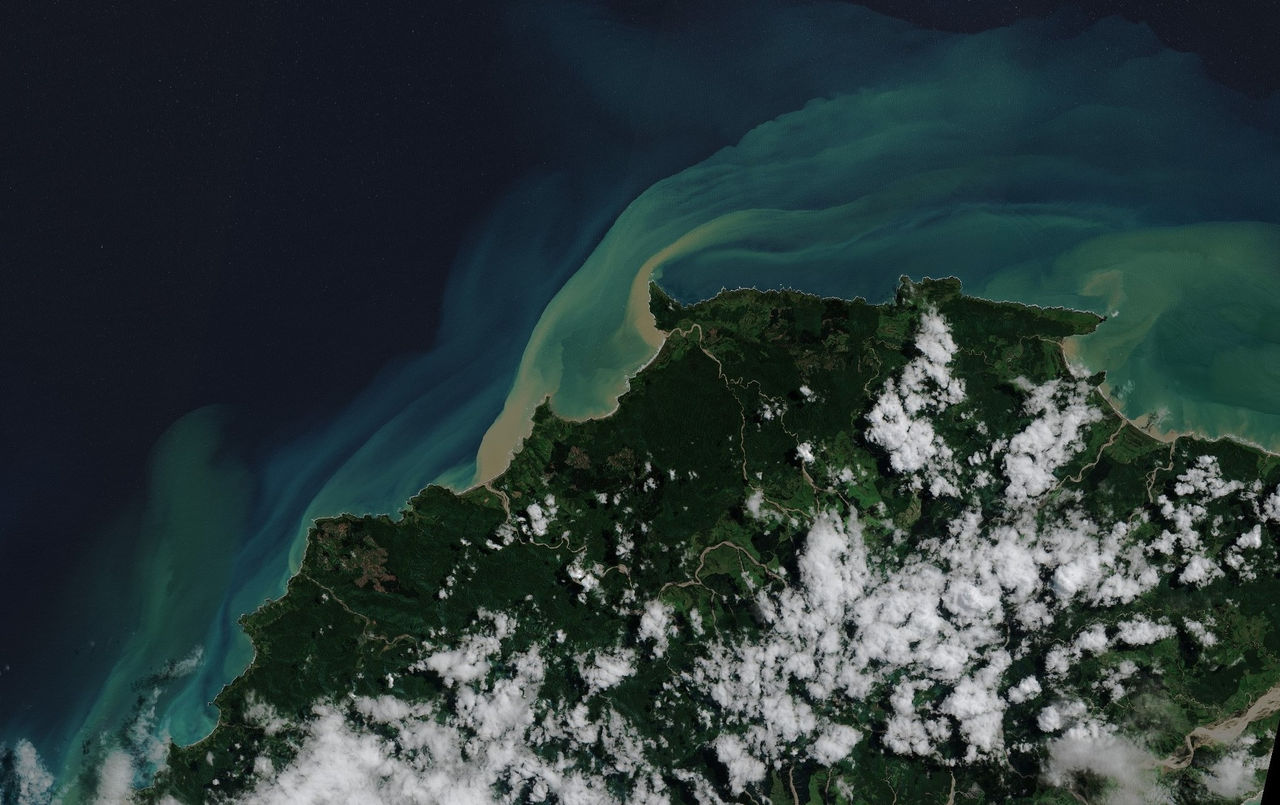


Photo caption: A satellite image from Sentinel 2 following Cyclone Gabrielle on 14 February 2023 shows a Waihau Bay Raukokore river plume and marine darkwaves.
Te Whare Wānanga o Waitaha | University of Canterbury (UC), University of Waikato and Earth Science New Zealand researchers have delivered a major scientific advancement by creating the first framework to identify short-term reductions in underwater light, described as marine darkwaves.
The study, published in Communications Earth & Environment, introduces marine darkwaves; short-term but intense episodes of underwater darkness that can severely impact kelp forests, seagrass beds, and other light-dependent marine life.
Distinguished Professor David Schiel from UC's School of Biological Sciences says the research addresses a critical gap in understanding coastal environmental change.
"Degradation of many of New Zealand's coastal kelp forests is increasingly due to sediment run-off from intensified land use, which causes a highly compromised light environment compounded by the smothering of habitats," Professor Schiel says. "The marine darkwave framework provides an international standard for categorising the underwater light environment and tracking changes over time."
The research project, led by lead author and marine scientist Dr François Thoral from Waikato and Canterbury Universities, analysed 16 years of data from California, 10 years of data from New Zealand's Hauraki Gulf, and 21 years of satellite observations from New Zealand’s East Cape.
The analysis revealed between 25 and 80 marine darkwaves along the East Cape since 2002, many linked to storms and major weather systems including Cyclone Gabrielle. Some events lasted from days to over two months, with some seabed areas receiving almost no light.
"Light is a fundamental driver of marine productivity, yet until now we have not had a consistent way to measure extreme reductions in underwater light," Dr Thoral says.
Even brief periods of reduced light can impair photosynthesis in kelp forests, seagrass and corals, while also influencing the behaviour of fish, sharks and marine mammals.
The marine darkwave framework complements existing frameworks for tracking marine heatwaves, ocean acidification and deoxygenation, providing a standardised tool for coastal managers, iwi, hapū, and conservation groups to identify when marine ecosystems face acute stress.
The darkwave work is part of a large coastal research programme in the Bay of Plenty, conducted through Ministry of Business, Innovation and Employment funding aimed at understanding and reducing the sources of light degradation in coastal kelp forests, primarily through land-sourced sedimentation. The five-year programme is led by Professors Schiel (University of canterbury) and Chris Battershill (Waikato University), and Rahera Hia (Ngati Pukenga), and will expand the monitoring networks to support future research on marine darkwaves in New Zealand waters.
The paper was published in the Nature Portfolio journal Communications Earth & Environment, on 12 January (UK time).
What to read next
UC celebrates its Manaaki New Zealand scholar
After completing their studies at the University of Canterbury, 15 Manaaki New Zealand scholars are preparing for the next chapter of their journeys.

NZ study reveals gaps in women's heart healthcare
A review of 25 years of New Zealand research has revealed significant gaps in women's heart healthcare, highlighting opportunities to improve diagnosis, treatment and outcomes.

History goes hi-tech at Awaroa Godley Head
The University of Canterbury's HIT Lab is helping Awaroa Godley Head visitors enjoy a more immersive experience of the World War II heritage site.

UC geography graduate honoured for global science leadership
UC alumnus Distinguished Professor Emeritus Iain Hay has received a prestigious international Fellowship recognising his contributions to geography and scientific collaboration.
Are Kiwi businesses jumping blindly on the AI bandwagon?
AI doesn’t have to play an inevitably dominant role in our lives, businesses and future, argues a guest speaker for an upcoming UC public lecture.

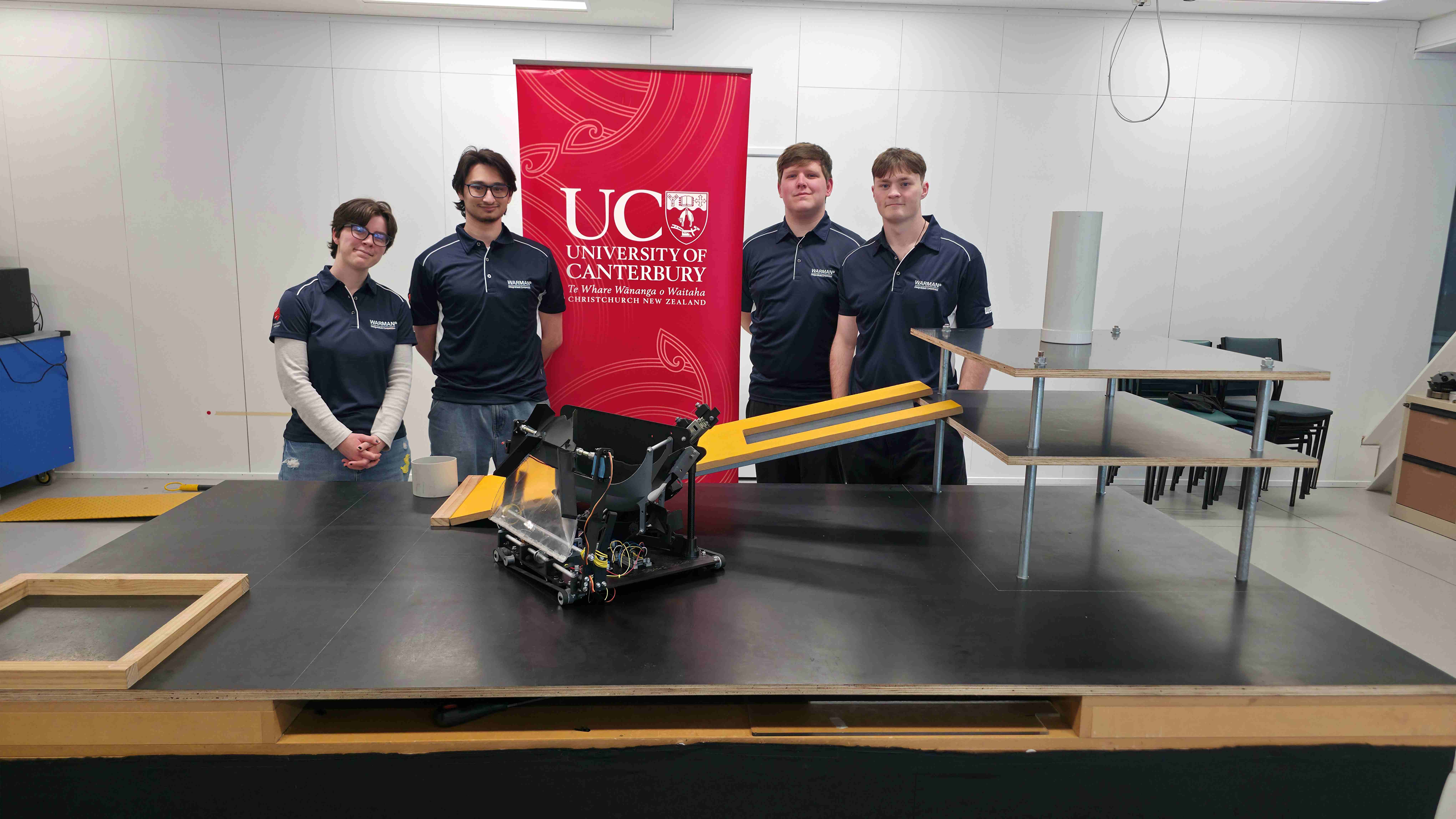
UC engineering students win international competition
A robot designed to transport rocks automatically has helped four UC engineering students claim an international title.
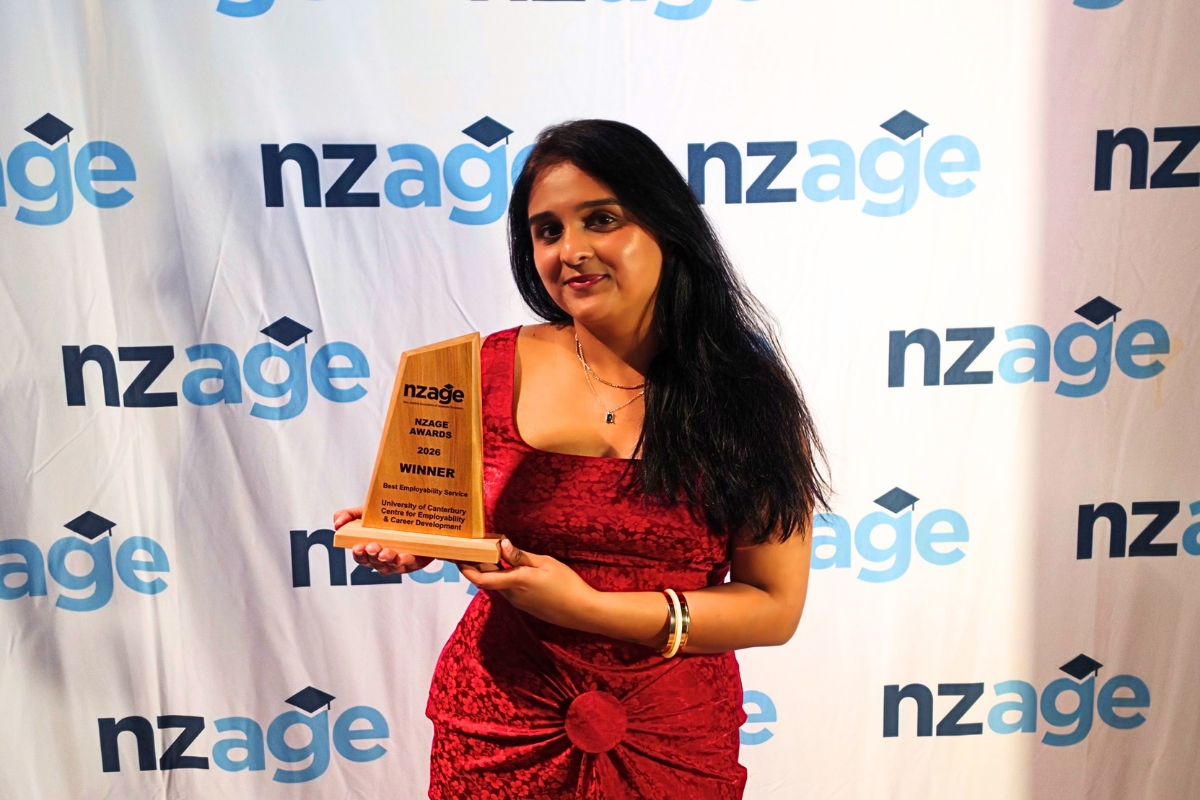
UC wins national award for employability service
UC has been recognised for excellence in helping students develop career-ready skills and connect with employers.
Fair suppliers strengthen business resilience
Businesses are better able to withstand disruption when suppliers make fair decisions and turn strong relationships into flexible action, UC research finds.
Digital models to help predict natural hazards in Kiwi capital
An innovative project using digital simulations to predict future hazards in New Zealand’s capital city takes its name from science fiction.