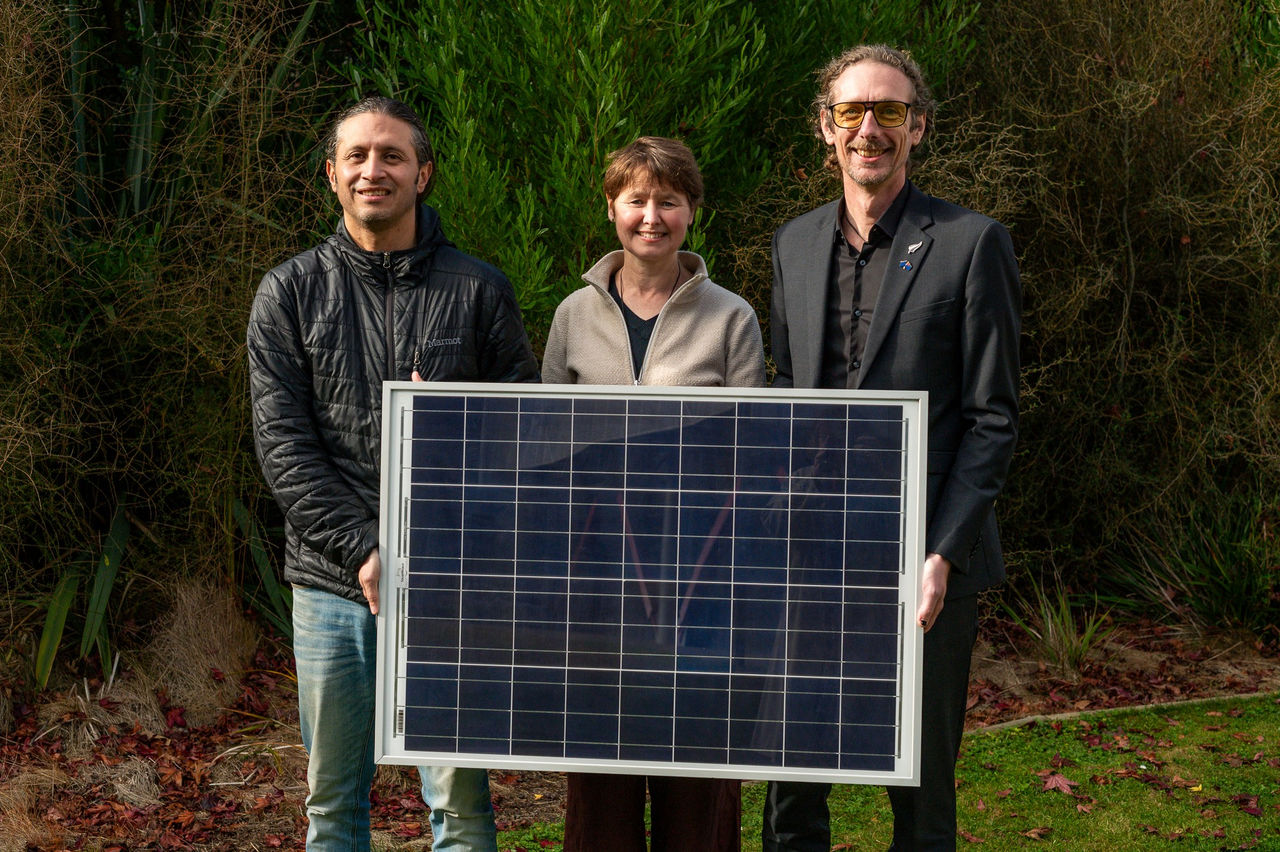


Photo caption: A University of Canterbury research team that includes Dr Patricio Gallardo Ocampo (left), Dr Sharee McNab and Dr Hamish Avery, is investigating how solar panels installed on EVs could help reduce demand on the power grid and add value for consumers.
The Electric Power Engineering Centre (EPECentre) team at Te Whare Wananga o Waitaha | University of Canterbury (UC) has received $452,000 in grants towards the new project. It is part of Horizon Europe’s SOLAR-MOVE initiative which also has support from the Ministry of Business, Innovation and Employment on behalf of the New Zealand Government.
The UC team is the only non-European Union partner in SOLAR-MOVE which involves 35 partners across 16 countries.
EPECentre Director Dr Hamish Avery says as the number of electric vehicles grows – particularly with fuel prices soaring – New Zealand’s electric power grid is experiencing additional load. His team is exploring how solar panels installed on EVs could help reduce demand on the power grid and make them an even cleaner, more affordable transport option.
“Our electricity network was never designed for every house to have an EV, so we’re excited to be part of the SOLAR-MOVE project that is looking to reduce some of this new load by incorporating solar power into EVs, along with solar power-assisted charging points,” he says.
The three challenges of the project are to extend EV driving range by five to 10 km per day; reduce grid dependence by 20 to 50%; and deliver solutions that add additional value for consumers and the power grid.
“The point of this project is to do a formal and rigorous analysis of rules and regulations and how to integrate these new initiatives into existing energy systems,” Dr Avery says.
“Finding solutions that seamlessly fit into everyday life is the easiest pathway to reducing emissions, but behind change is often a lot of work. In this case, we are challenged to investigate how solar-augmented cars and solar-augmented charging stations fit into our rules and regulations and to understand what barriers might need to be overcome.”
The EPECentre team, which includes Senior Research Engineer Dr Sharee McNab and Transition Research Engineer Dr Patricio Gallardo Ocampo, is also exploring whether solar panels on EVs could benefit consumers as well as the electricity grid.
Dr Avery says it’s possible that the charge from panels on stationary EVs could help power their owners’ homes. “Or large parking lots of charged EVs might be used to charge a newly arrived vehicle without relying on the supply grid,” he says.
Along with reducing the charging requirements of EVs, the project also aims to better understand how solar integration could extend their driving range.
EPECentre is planning a New Zealand trial of solar-assisted ‘last mile delivery’ as part of SOLAR-MOVE. Last mile refers to the final step in a supply chain, delivering goods to an end location.
The pilot will involve attaching photovoltaic (solar) panels on UC buggies which are already in use by some UC staff on campus. These electric-powered vehicles will then be monitored to see how their range is affected by using the panels.
Dr Avery says it will be a “real-world testbed for last-mile delivery scenarios”. “Getting real-world data is vital to establish a baseline of what we could expect.”
Internationally, SOLAR-MOVE is investigating vehicle-integrated photovoltaics (VIPV) across five key applications: heavy-duty trucks, passenger buses, rubbish trucks, last-mile delivery vehicles, and motorhomes.
The EPECentre was chosen to take part in the Horizon Europe project, which is coordinated by the non-profit Portuguese Research and Innovation Institute, because of its expertise in the New Zealand regulatory and environmental context.
EPECentre was established in 2002 as a joint initiative between UC and the electricity industry. It brings together industry, researchers, students and academics to foster innovation in electric power and clean energy applications.


What to read next
UC celebrates its Manaaki New Zealand scholar
After completing their studies at the University of Canterbury, 15 Manaaki New Zealand scholars are preparing for the next chapter of their journeys.

NZ study reveals gaps in women's heart healthcare
A review of 25 years of New Zealand research has revealed significant gaps in women's heart healthcare, highlighting opportunities to improve diagnosis, treatment and outcomes.

History goes hi-tech at Awaroa Godley Head
The University of Canterbury's HIT Lab is helping Awaroa Godley Head visitors enjoy a more immersive experience of the World War II heritage site.

UC geography graduate honoured for global science leadership
UC alumnus Distinguished Professor Emeritus Iain Hay has received a prestigious international Fellowship recognising his contributions to geography and scientific collaboration.

Are Kiwi businesses jumping blindly on the AI bandwagon?
AI doesn’t have to play an inevitably dominant role in our lives, businesses and future, argues a guest speaker for an upcoming UC public lecture.

UC engineering students win international competition
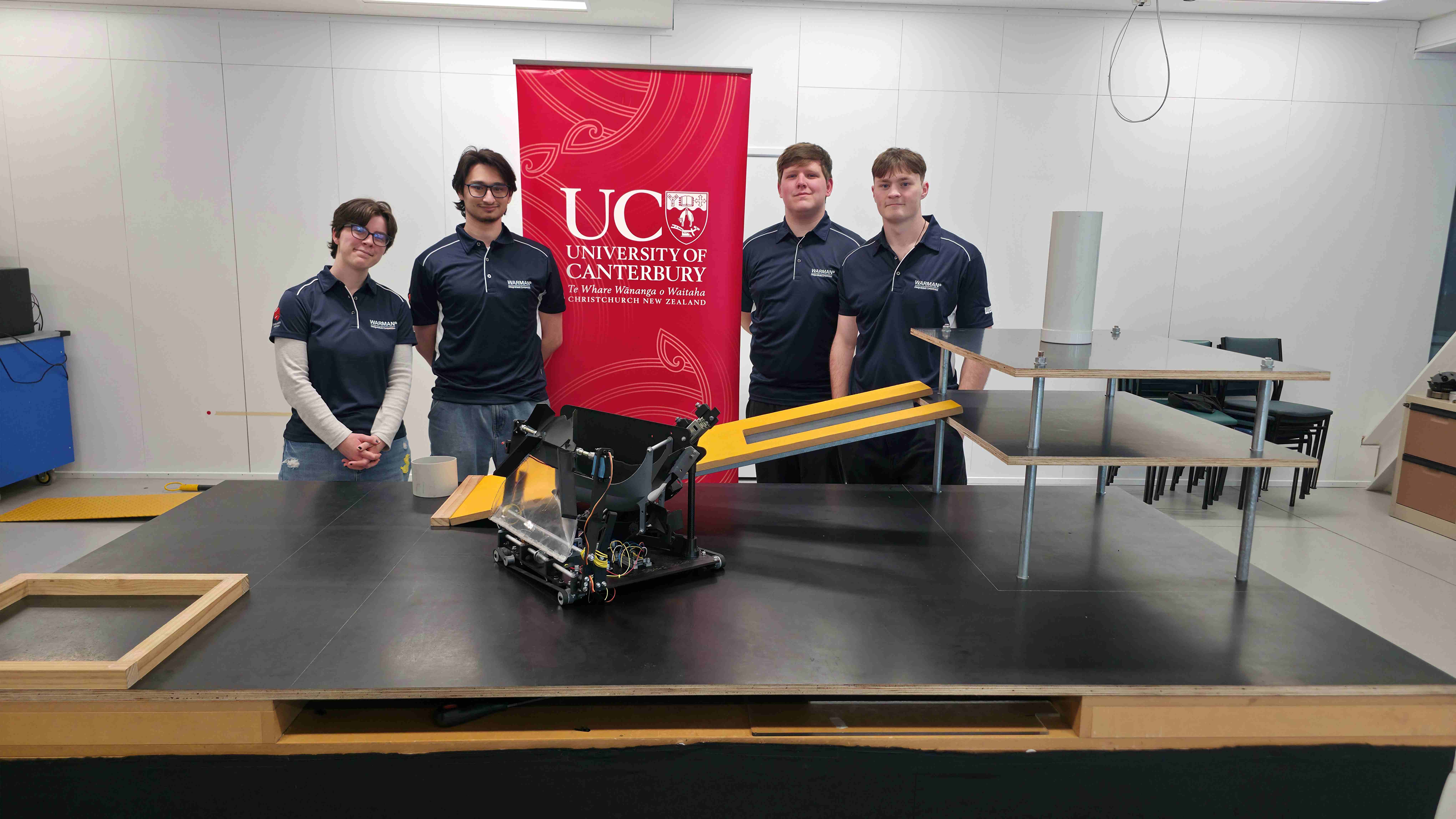
A robot designed to transport rocks automatically has helped four UC engineering students claim an international title.
UC wins national award for employability service
UC has been recognised for excellence in helping students develop career-ready skills and connect with employers.

Fair suppliers strengthen business resilience
Businesses are better able to withstand disruption when suppliers make fair decisions and turn strong relationships into flexible action, UC research finds.
Digital models to help predict natural hazards in Kiwi capital
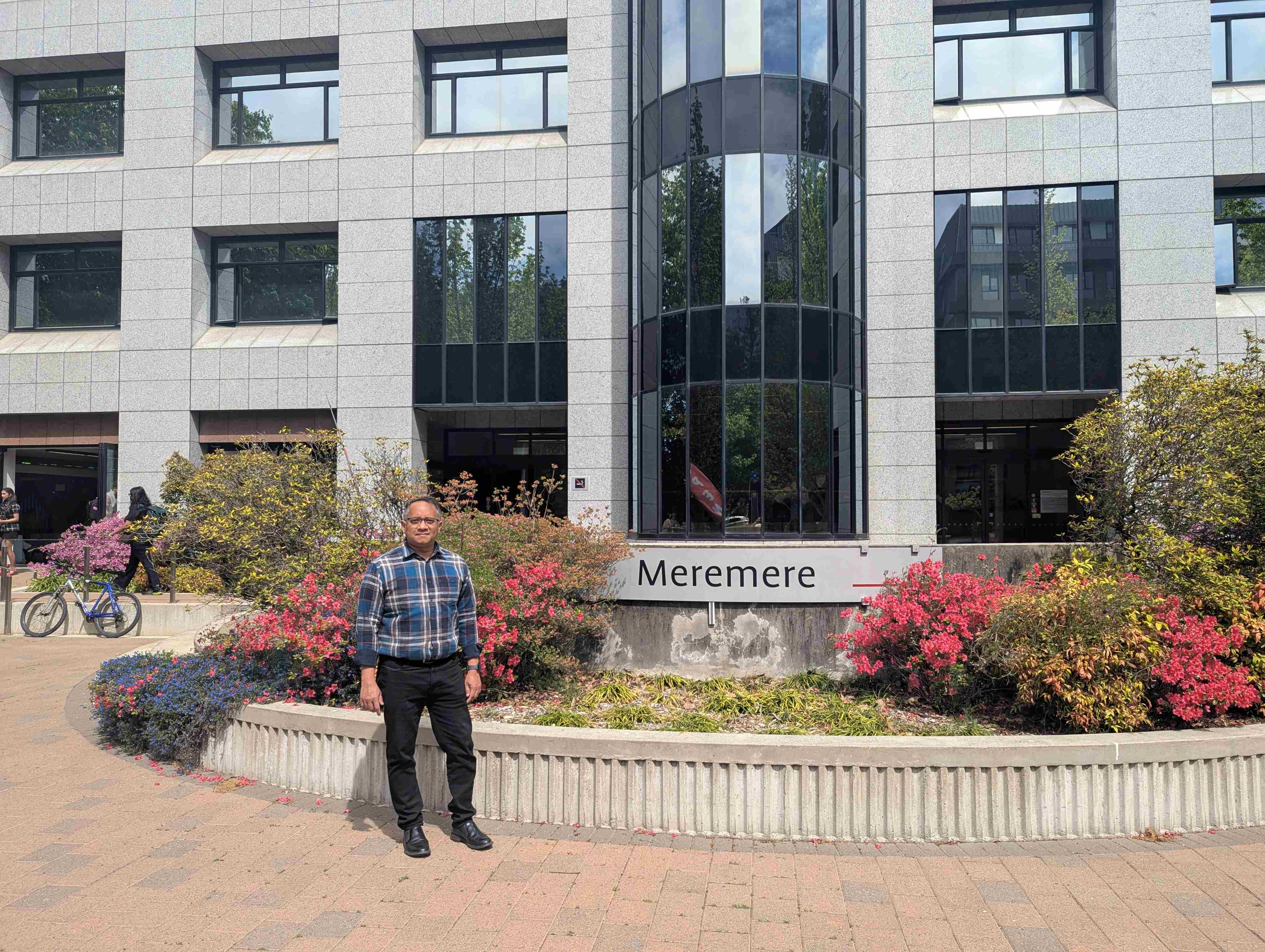
An innovative project using digital simulations to predict future hazards in New Zealand’s capital city takes its name from science fiction.