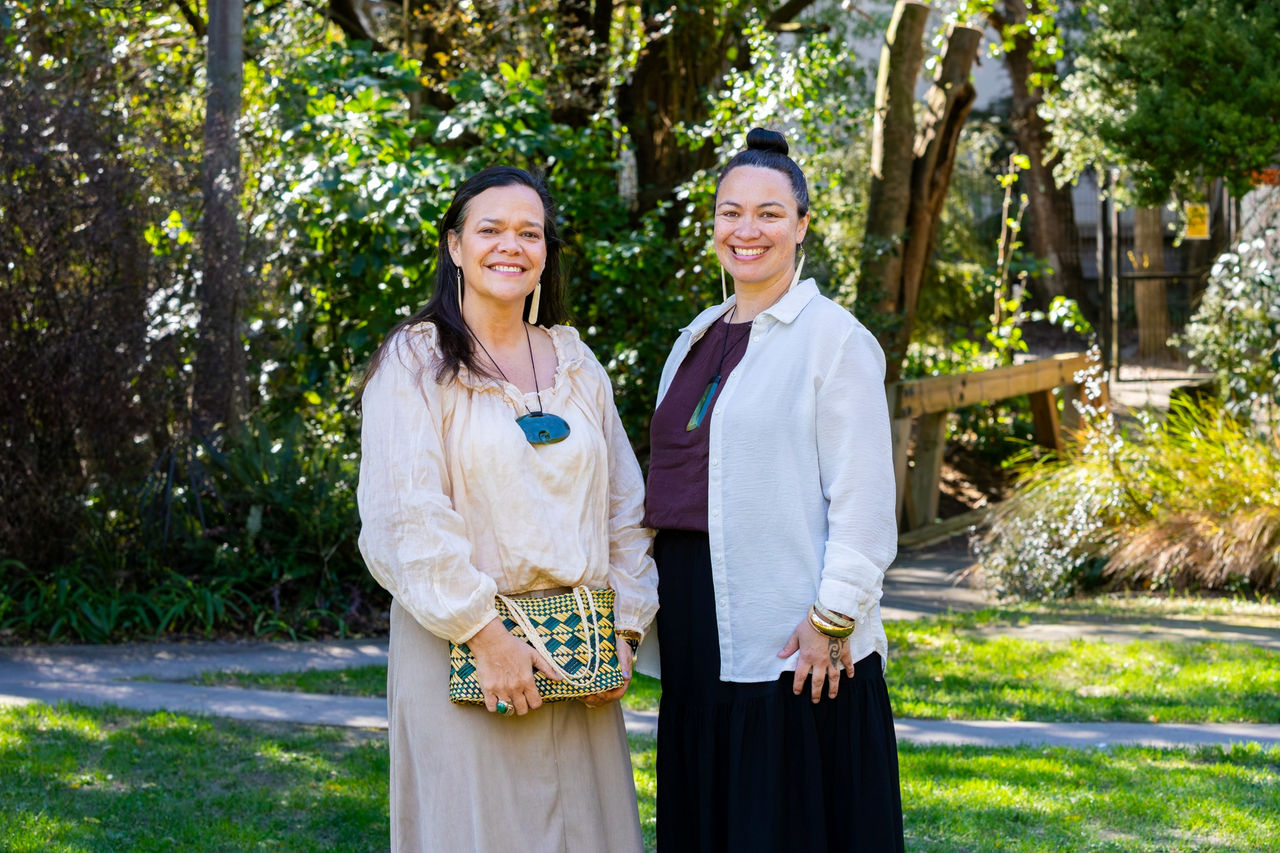

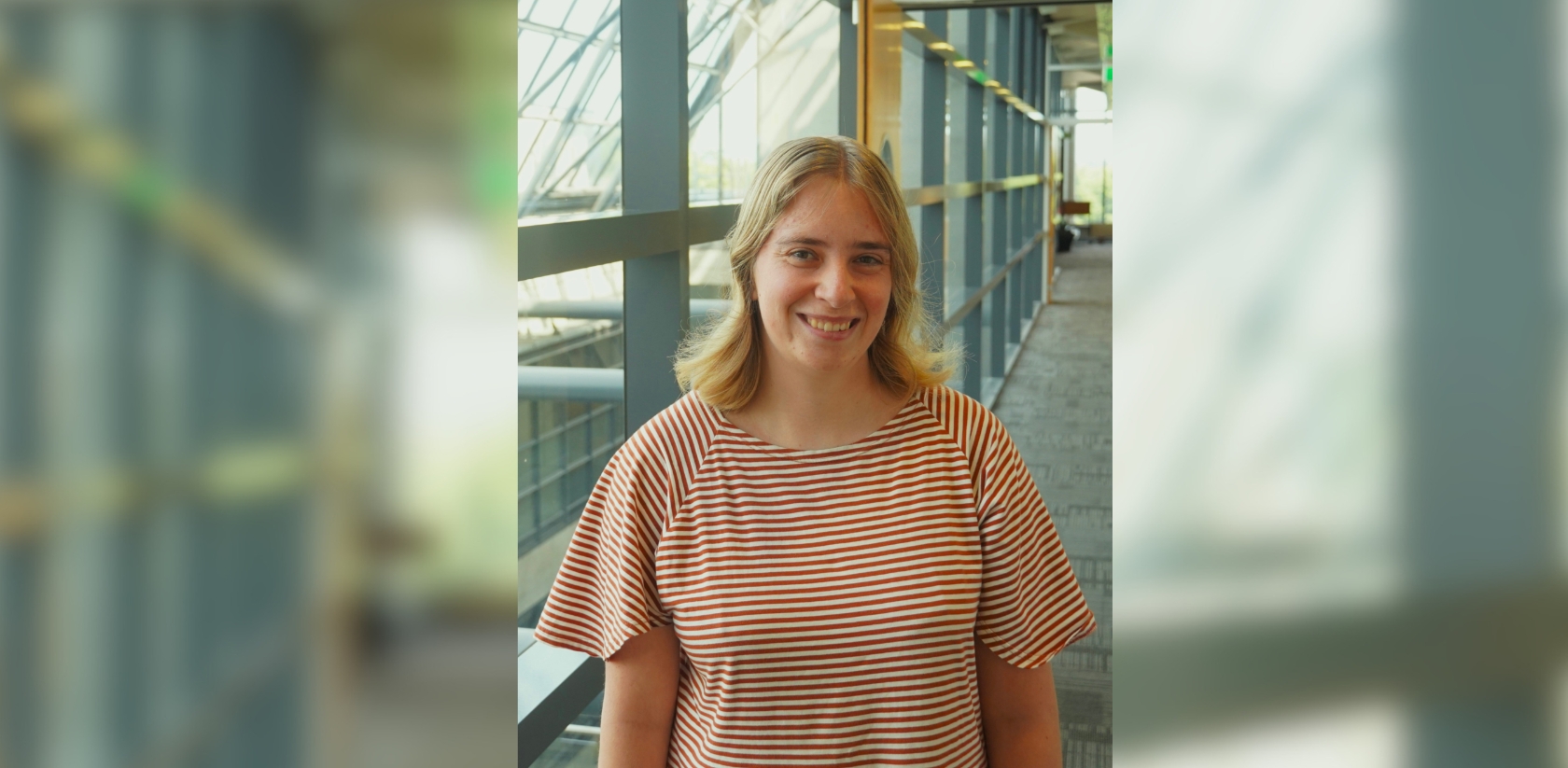
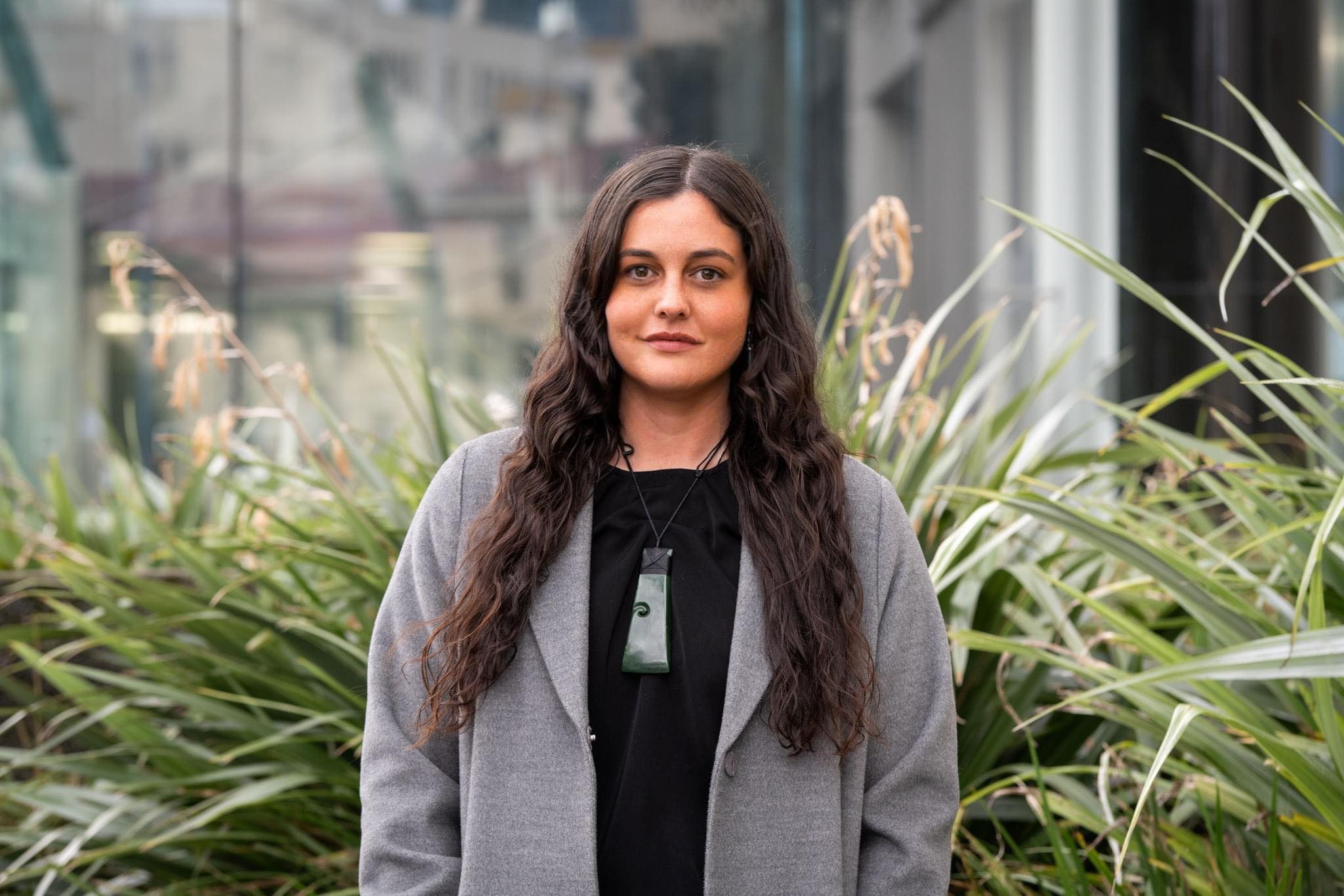
Photo caption: Rahera Cowie (Ngāi Tahu, Ngāpuhi, Ngāti Kahu) and Dr Kay-Lee Jones (Ngāti Porou, Te Whānau a Kai, Te Aitanga a Māhaki, Te Whakatōhea)
Research from Te Whare Wānanga o Waitaha | University of Canterbury (UC) explores karanga, the ceremonial call of welcome onto a marae, as a sophisticated system of communication, care, and cultural continuity.
Drawing on the lived experiences of kaikaranga, the women who perform karanga, researchers Dr Kay-Lee Jones (Ngāti Porou, Te Whānau a Kai, Te Aitanga a Māhaki, Te Whakatōhea) and Rahera Cowie (Ngāi Tahu, Ngāpuhi, Ngāti Kahu) found that the practice connects people not only with one another, but also with whakapapa (genealogy), whenua (land), te taiao (the environment), and the spiritual realm.
Dr Jones says the research reflects a wider lesson about looking to ancestral knowledge for responses to contemporary challenges.
“When we return to a lot of traditional ways of being and traditional pedagogies, those are the things that give us the answers for the future,” she says.
For people outside te ao Māori, karanga is often understood as the call that opens a pōwhiri (welcoming ceremony). The research shows this visible and audible moment is only one part of a deeply relational practice.
A kaikaranga may need to understand who is arriving, connections between tangata whenua (people of the place) and manuhiri (visitors), the occasion’s purpose and emotional tone, relevant iwi histories and the environment. She must weave her words with the karanga from the other side while remaining aware of everyone’s physical, cultural and spiritual safety.
“As a kaikaranga, there’s a lot happening in your head and potentially your heart all at once. It is a highly academic pursuit, requiring kaikaranga to bring together layers of knowledge, judgement and experience in the moment,” Dr Jones says.
Much of the role is unseen. Kaikaranga may prepare kai, check people are ready, support other wāhine, understand relationships between visitors and hosts, and ensure the gathering is grounded in manaakitanga.
“Being a kaikaranga isn’t about being at the front and being noticed. It’s more about the service that you do for the people that are arriving,” says Cowie.
The study found karanga can strengthen identity and belonging, support te reo Māori revitalisation, and help wāhine reconnect with cultural roles interrupted within their whānau by colonisation and language loss.
For some participants, taking up karanga meant becoming the first person in their whānau for generations to reclaim the practice, bringing both responsibility and hope for those who follow.
Healing was a significant theme. Participants described karanga as a source of spiritual, emotional and cultural wellbeing that could help release grief and emotional heaviness.
“A kaikaranga can perhaps release the tears that are sitting in your chest that you’re afraid to let go of,” Cowie says. “They’re able to tap into that element through the vibrations of their voices or the words that are said.”
The findings also highlight the importance of safety, preparation and support. Many participants experienced uncertainty or imposter syndrome, including wāhine highly proficient in te reo Māori or experienced in karanga.
Confidence developed through relationships, with mentors, kaumātua (elders), peers, and whānau creating safe spaces for wāhine to listen, observe, practise, receive feedback and grow. This model of shared learning was central to sustaining karanga across generations.
The study positions karanga as a living Indigenous knowledge system, showing how ancestral knowledge continues to support communication, wellbeing and connection. It presents innovation not simply as inventing something new, but as recognising knowledge that has sustained people for generations.
“There’s hope in their stories. There’s intergenerational hope that this is going to be a normalised practice, or a practice that is growing within their people,” Dr Jones says.


.png)