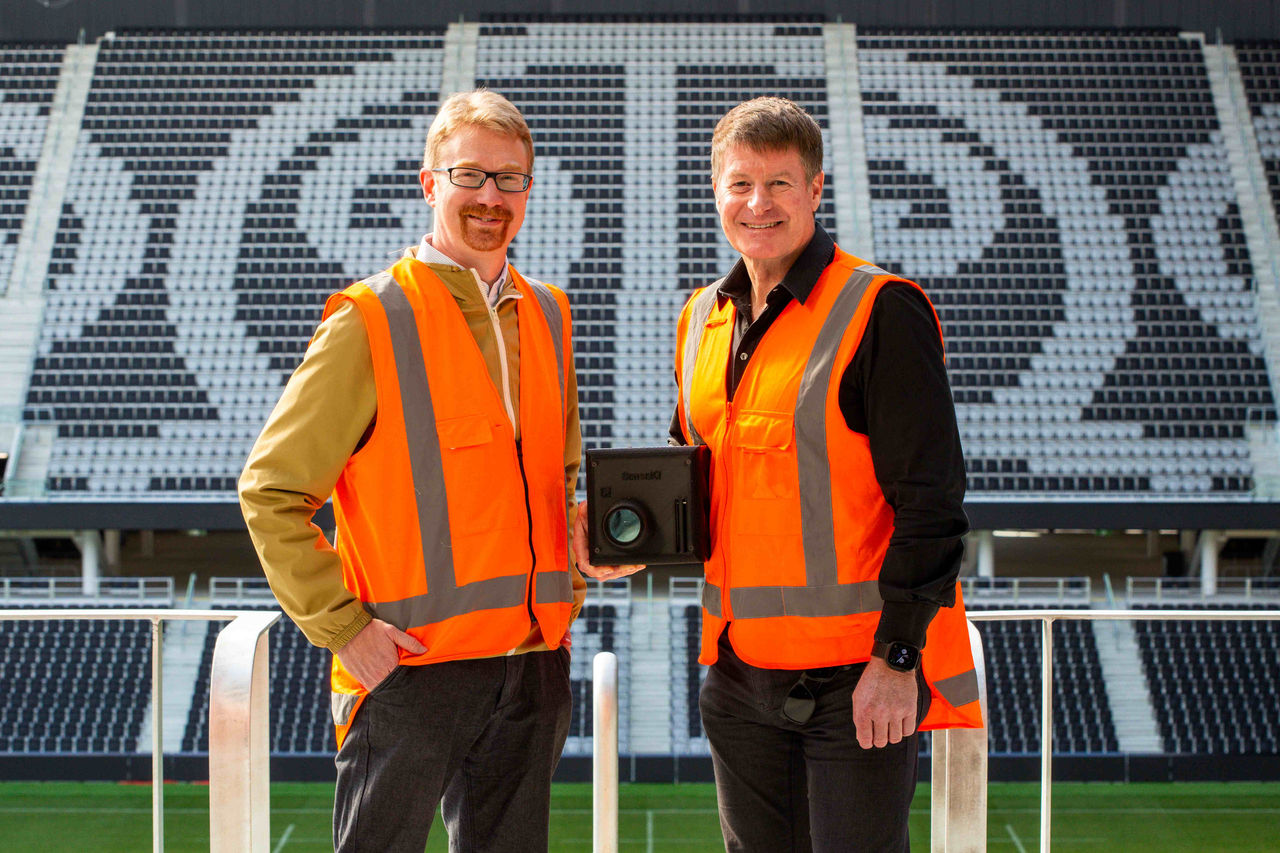


Photo caption: University of Canterbury Engineering Professor Daniel Nilsson, left, and Andrew Logie are part of the team that developed SenseiQ sensors which have been installed at Christchurch’s new stadium.
The sensor, called SenseiQ, measures inter-storey drift – the relative movement between floor and ceiling - during an earthquake. It then provides information that speeds up the process of clearing a building for safe reoccupation.
One of the sensors has been installed at One New Zealand Stadium, which will host New Zealand’s first Super Round of Super Rugby Pacific matches this weekend.
SenseiQ was developed by Te Whare Wānanga o Waitaha | University of Canterbury (UC) Civil and Environmental Engineering Professor Daniel Nilsson, Emeritus Professor Roger Nokes and Dr Gabriele Granello, a structural engineer and former UC postdoctoral researcher now based in Italy. UC alumni, lawyer and independent director Andrew Logie has also joined the Sense i Solutions Ltd team.
Professor Nilsson, Director of SenseiQ, says it’s exciting to have a landmark facility adopting the technology. “The sensor measures the damage, not just the shake, telling us straight away how much a building has moved - the ‘inter-storey drift’ - allowing the building’s condition to be assessed more quickly and accurately.
“Traditional safety inspections are slow and costly leading to prolonged downtime, unnecessary disruptions and financial costs. We’re delighted that the new stadium – a symbol of Christchurch’s post-quake recovery – is now equipped with our device.”
Professor Nilsson says unlike conventional sensors that measure only acceleration, SenseiQ captures both inter-storey drift and acceleration – two factors that directly correlate to the damage a building sustains during an earthquake. The data is available within minutes of an event. The sensor has already measured one very small earthquake on 6 April, of 2.4 magnitude, at the stadium.
SenseiQ is made up of two components, a sensor and a target. The sensor is mounted on the floor and the target is attached to the ceiling.
Professor Nilsson says by providing precise, real-time data on a building’s response to seismic activity, SenseiQ enables structural engineers to make fast and informed estimates of building damage. This helps building managers make quick decisions about reoccupation.
He predicts there will be strong demand for the device from businesses around New Zealand, particularly in Wellington.
“The majority of our shareholders are researchers and we’re all focused on getting the best outcome in terms of buildings and human safety, for New Zealand and internationally,” Professor Nilsson says. “The idea behind this technology came from what was seen in the aftermath of the Canterbury earthquakes when it took a long time for buildings to be assessed and cleared for people to come back to work.”
The research started with KiwiNet Emerging Innovator funding in 2018. Since then, the technology has evolved and a spin-out company was created in 2022, with UC as a shareholder. Sense i Solutions Ltd is now working on promoting the technology nationally and internationally.
In another UC connection to the stadium, the University has just signed an agreement with Venues Ōtautahi, which manages the stadium, to gain naming rights for the East Stand. From now until the end of 2027, it will be called the University of Canterbury Stand.


What to read next
UC geography graduate honoured for global science leadership
UC alumnus Distinguished Professor Emeritus Iain Hay has received a prestigious international Fellowship recognising his contributions to geography and scientific collaboration.

Are Kiwi businesses jumping blindly on the AI bandwagon?
AI doesn’t have to play an inevitably dominant role in our lives, businesses and future, argues a guest speaker for an upcoming UC public lecture.

UC engineering students win international competition
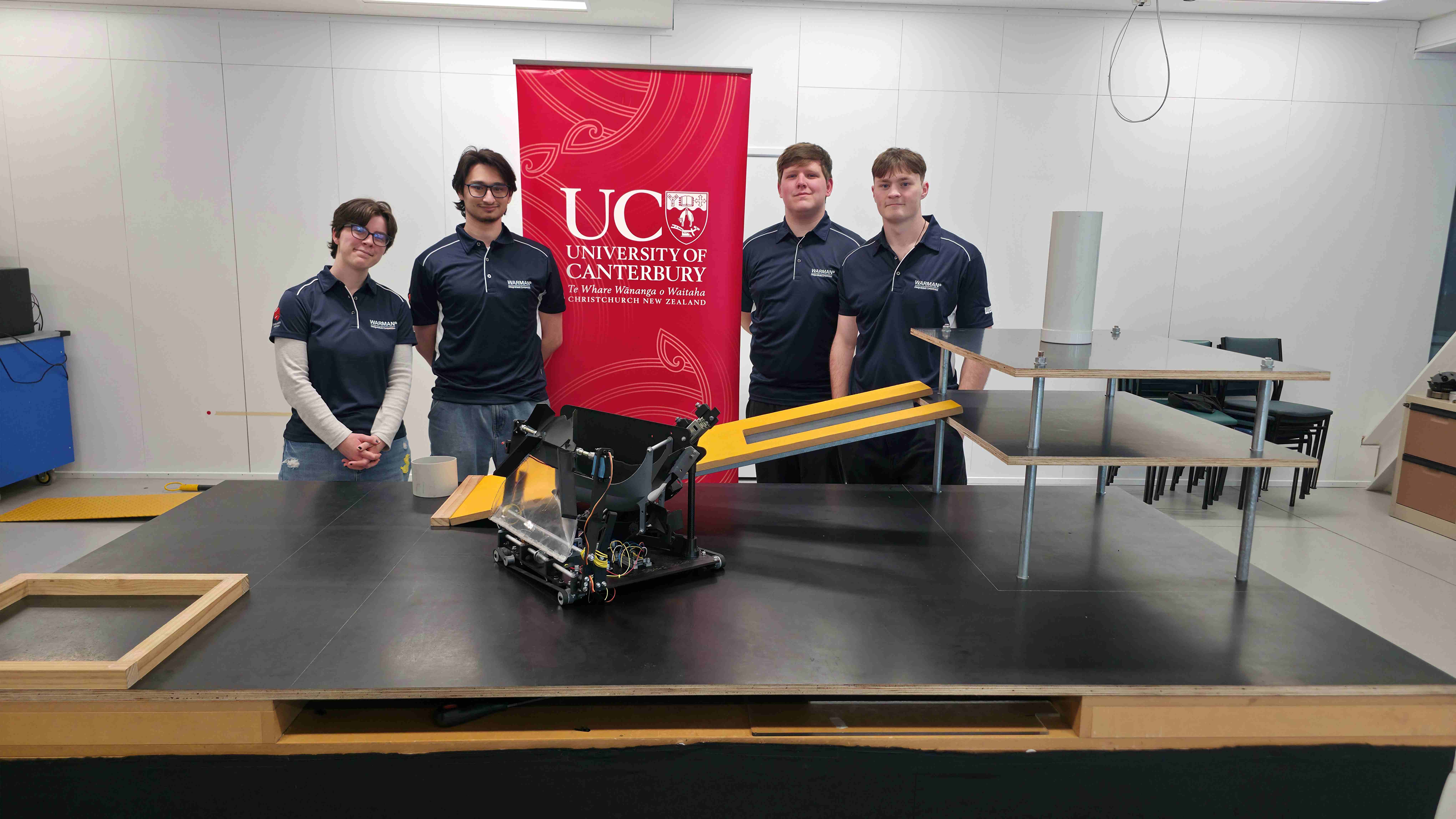
A robot designed to transport rocks automatically has helped four UC engineering students claim an international title.
UC wins national award for employability service
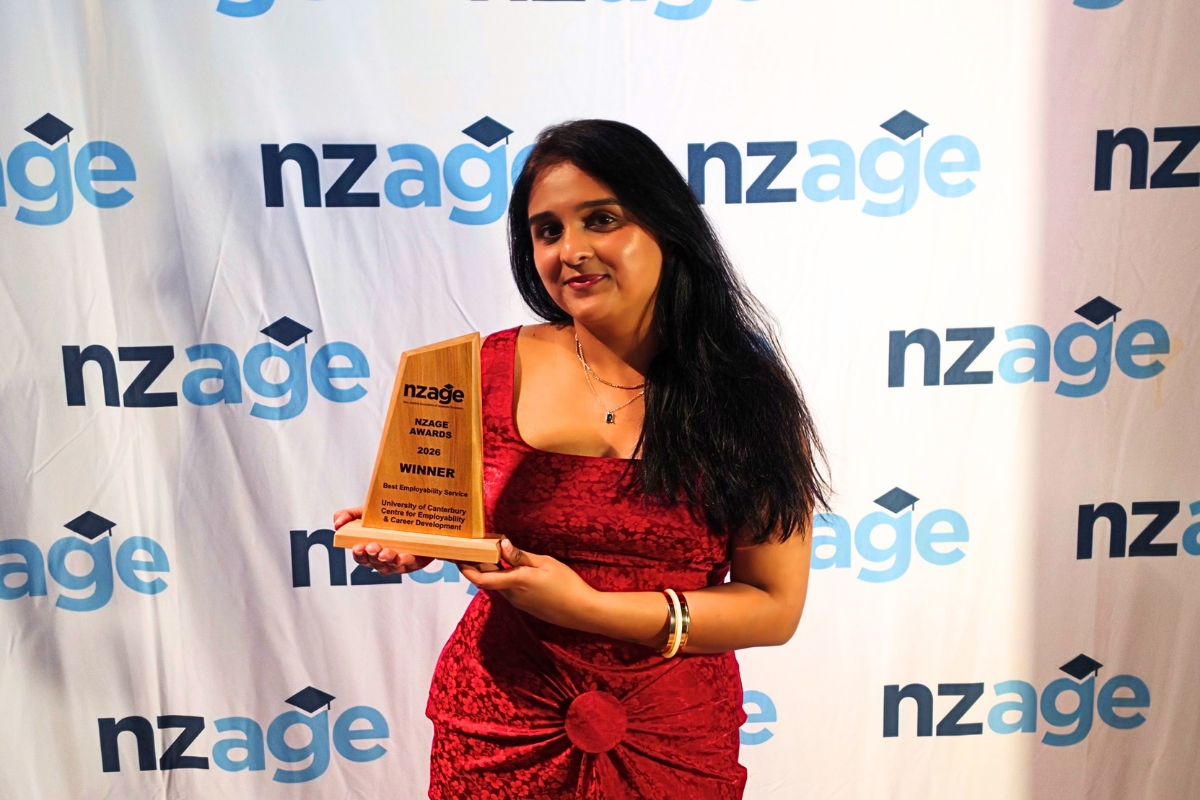
UC has been recognised for excellence in helping students develop career-ready skills and connect with employers.
Fair suppliers strengthen business resilience
Businesses are better able to withstand disruption when suppliers make fair decisions and turn strong relationships into flexible action, UC research finds.
Digital models to help predict natural hazards in Kiwi capital
An innovative project using digital simulations to predict future hazards in New Zealand’s capital city takes its name from science fiction.
UC research challenges how we think autistic children learn
New UC research is challenging assumptions about how autistic children learn language.
Tiny robots, big potential: UC PhD explores new frontier
A UC researcher is pioneering laser-controlled robot swarms thinner than a human hair — work he believes could one day transform medicine and manufacturing.
UC research puts local knowledge at heart of resilience
UC research explores how Pacific Island nations can better use place-based knowledge to strengthen disaster planning and resilience.