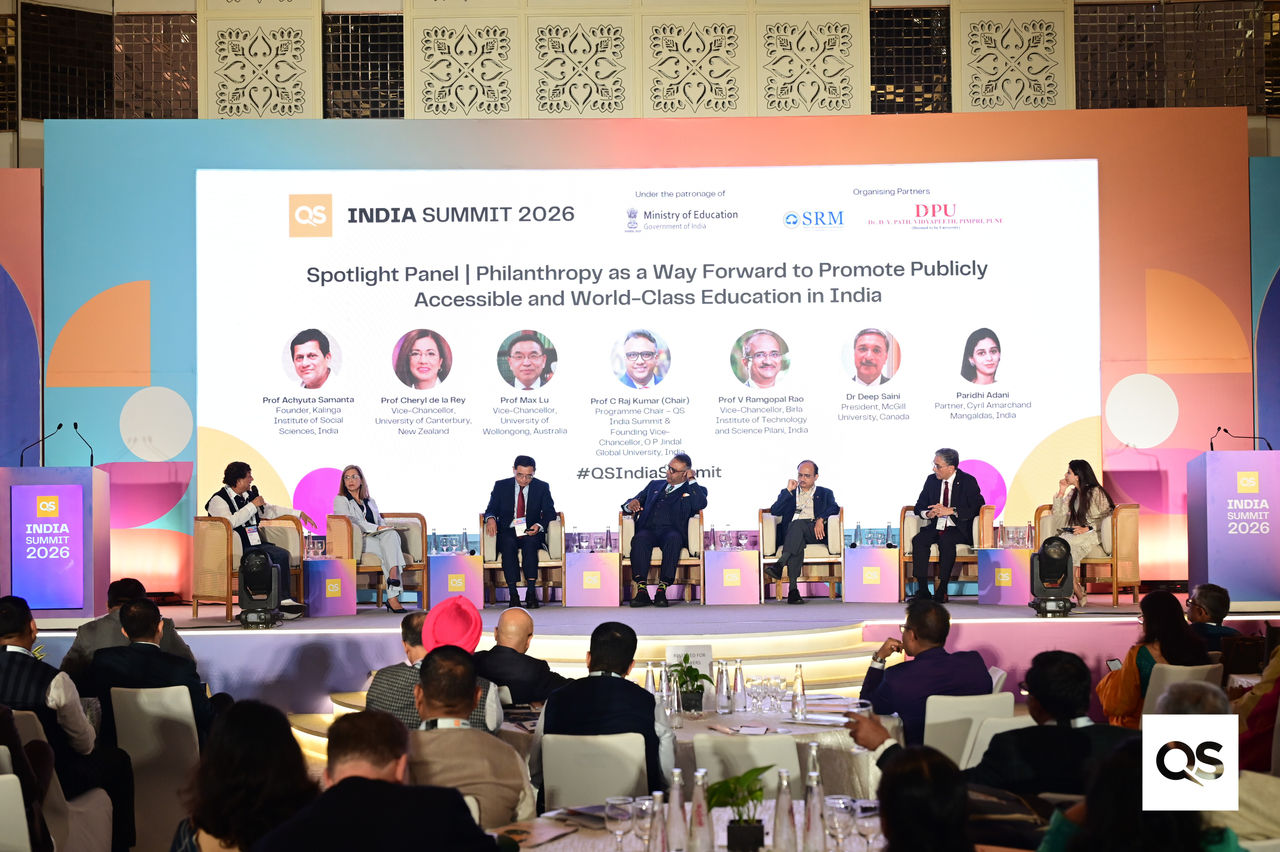

Image caption: Vice-Chancellor Professor Cheryl de la Rey (second from left) discussed how strategic philanthropy can strengthen research, innovation, and institutional excellence at the 2026 QS India Summit.
A Te Whare Wānanga o Waitaha | University of Canterbury (UC) delegation spent several days in Goa engaging with higher education leaders from around the world at the 2026 QS India Summit. The summit provided a forum to examine how universities can respond to global challenges while remaining grounded in local purpose and impact.
UC Vice-Chancellor Professor Cheryl de la Rey was an invited speaker on the spotlight panel Philanthropy as a way forward to promote publicly accessible and world-class education in India. A central theme of the discussion was the importance of institutional clarity of purpose. Participants emphasised that universities with a strong understanding of who they are, who they serve, and the values they uphold are better positioned to build trust, engage donors and create positive change for their communities.
Across the summit, high-quality teaching and research grounded in local context, were consistently identified as the foundation for a world-class education. These core activities were seen as essential to maintaining public trust and ensuring universities continue to contribute meaningfully to social, economic and environmental outcomes.
UC Deputy Vice-Chancellor Research & Innovation Professor Lucy Johnston, Executive Dean of Engineering Professor Saurabh Sinha and Executive Dean of Science Professor Stuart Parsons joined Indian Institute of Technology Delhi Dean of International Programmes Professor Anil Verma and Director of Ground Force Concrete Consultancy LLP Dr Sivakumar Kandasami to lead a masterclass on partnerships with purpose.
The highly interactive session encouraged participants to share their perspectives on the enablers and barriers to successful collaboration. Through this exchange, a shared understanding emerged of the factors that support effective partnerships, as well as the challenges that can limit progress.
Key enablers identified included trust and respect between partners, clarity of purpose, alignment of incentives, long-term commitment, and the central role of people and relationships in sustaining momentum over time. Speakers emphasised that productive partnerships are less about scale or volume and more about intent, particularly when academic strengths are aligned with industry and societal needs, and when innovation and impact are shared priorities.
The panel ‘Impactful research for nation building’, presented in partnership with UC, featured distinguished speakers from India, New Zealand and the UK, including UC Professor Johnston, and explored how research drives progress, prosperity, and long-term national transformation.
Across all sessions, one message was consistent: strong partnerships grow from existing relationships, shared intent and a recognition that institutions are better together. For UC, the summit reinforced the value of international engagement that is purposeful, values-led and focused on enduring benefits for universities, industries and communities.
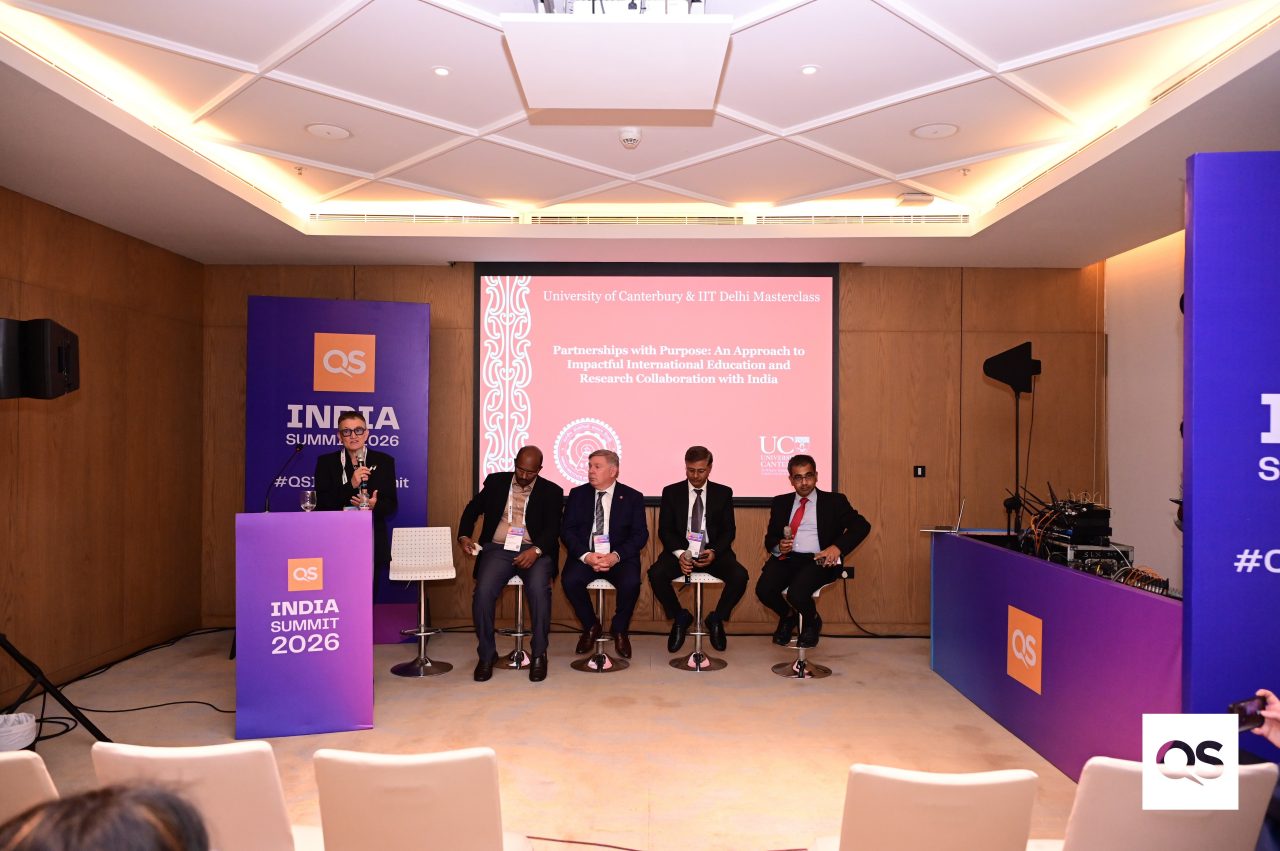
Caption: UC’s Professor Lucy Johnston, Professor Saurabh Sinha and Professor Stuart Parsons with IIT Delhi’s Professor Anil Verma and Dr Sivakumar Kandasami during a masterclass on partnerships with purpose.
.png)