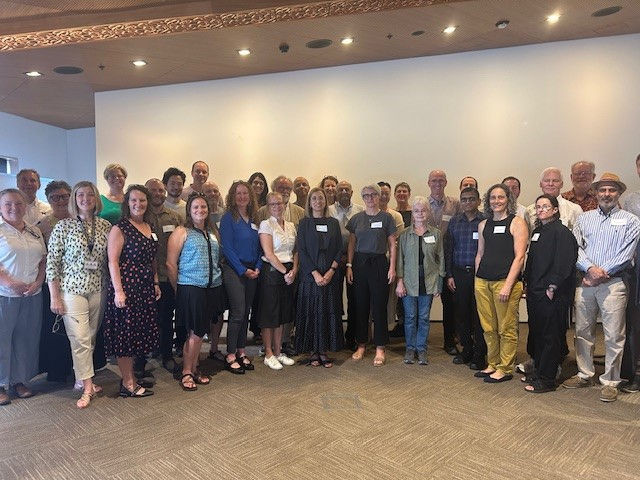


Photo caption: Deputy Vice-Chancellor Academic Professor Catherine Moran (front, third from left) and Vice-Chancellor Professor Cheryl de la Rey (centre) welcome the first cohort of 2025 visiting Erskine Fellows.
Established through the bequest of UC alumnus John Angus Erskine, a contemporary of Lord Ernest Rutherford, the Erskine programme was founded to enhance teaching in science, engineering and business. Since then, it has grown into one of Australasia’s most impactful academic mobility initiatives, strengthening teaching connections worldwide.
Each year, up to 90 distinguished Erskine Fellows join UC to share their expertise through the programme, while 25 UC academics receive Erskine Grants, enabling them to teach internationally and expand their expertise.
“The Erskine Fellowship plays a vital role in keeping us connected with leading academics and institutions worldwide,” says UC Deputy Vice-Chancellor Academic Professor Catherine Moran.
“In semester 1, we are delighted to welcome Fellows from Australia, Canada, India, Japan, the United Kingdom, the United States and beyond. These distinguished educators bring fresh perspectives and expertise to UC Science, Engineering and Business, enriching the learning experience for our students.
“The Erskine Programme continues to attract top international educators who are eager to share their knowledge with our students. It’s inspiring to see such strong global engagement and the lasting impact these Fellows have in our classrooms.”
Among the first Fellows for 2025 is Professor Arla Day, a specialist in Industrial and Organisational Psychology from Saint Mary’s University in Canada. A former Erskine Fellow, she was thrilled to return to UC’s Ilam Campus.
“Returning to the University of Canterbury as an Erskine Fellow has been an incredible opportunity,” says Professor Day.
“My first experience was amazing – connecting with new and long-term colleagues in Psychology and Business, engaging with fellow Erskine scholars across disciplines and gaining fresh perspectives from UC students on leadership, work and wellbeing. These interactions have enriched my own learning and teaching in many valuable ways.”
She emphasises the value of knowledge exchange within the programme.
"I am grateful to be part of the UC community. I love brainstorming with students and colleagues, debating challenging research questions and contributing to classroom discussions. This exchange and development of ideas is what makes the Erskine Programme so special."
Professor Day is already thinking about the insights she will take back with her with her.
“Beyond my research and classroom experiences, I’m excited to bring home valuable lessons – from my UC colleague’s approaches to learning and graduate student support to their commitment to integrating indigenous traditions and sustainability in higher education. Our conversations at UC have the potential to shape conversations around the world.”
For more information, including eligibility criteria, follow this link>
 Sustainable Development Goal (SDG) 4 - Quality Education.
What to read next
UC geography graduate honoured for global science leadership
UC alumnus Distinguished Professor Emeritus Iain Hay has received a prestigious international Fellowship recognising his contributions to geography and scientific collaboration.

Are Kiwi businesses jumping blindly on the AI bandwagon?
AI doesn’t have to play an inevitably dominant role in our lives, businesses and future, argues a guest speaker for an upcoming UC public lecture.

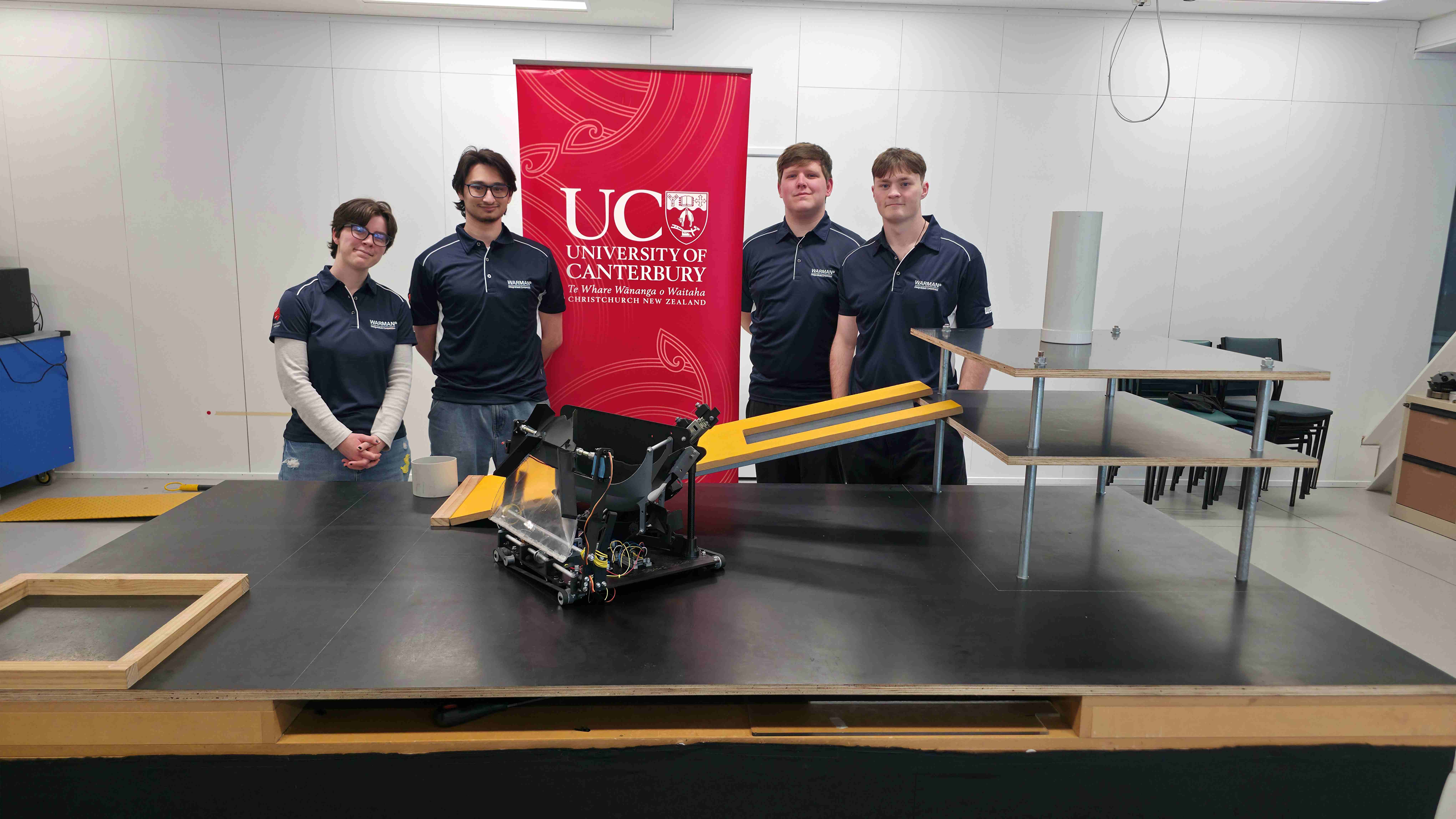
UC engineering students win international competition
A robot designed to transport rocks automatically has helped four UC engineering students claim an international title.
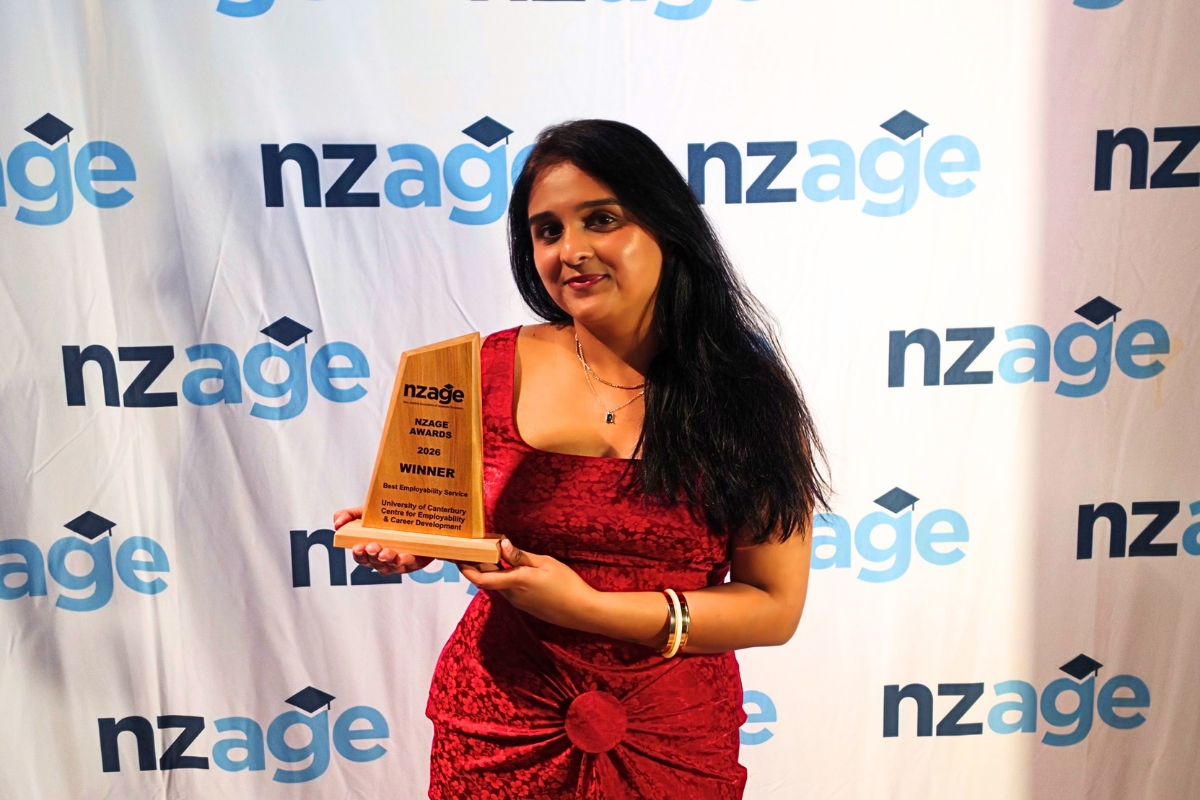
UC wins national award for employability service
UC has been recognised for excellence in helping students develop career-ready skills and connect with employers.
Fair suppliers strengthen business resilience
Businesses are better able to withstand disruption when suppliers make fair decisions and turn strong relationships into flexible action, UC research finds.
Digital models to help predict natural hazards in Kiwi capital
An innovative project using digital simulations to predict future hazards in New Zealand’s capital city takes its name from science fiction.
UC research challenges how we think autistic children learn
New UC research is challenging assumptions about how autistic children learn language.
Tiny robots, big potential: UC PhD explores new frontier
A UC researcher is pioneering laser-controlled robot swarms thinner than a human hair — work he believes could one day transform medicine and manufacturing.
UC research puts local knowledge at heart of resilience
UC research explores how Pacific Island nations can better use place-based knowledge to strengthen disaster planning and resilience.