

Professor Thomas Bennett and Dr Matthew Cowan from Te Whare Wānanga o Waitaha | University of Canterbury (UC) are members of the Pioneers in Hybrid Glass Research team, which has been awarded the Dalton Horizon Prize. Both researchers are also investigators with the MacDiarmid Institute for Advanced Materials and Nanotechnology, one of New Zealand’s Centres of Research Excellence. The prestigious award, part of the Royal Society of Chemistry’s Horizon Prize programme, celebrates cutting-edge research that pushes the boundaries of science.
The international team, comprising scientists from institutions across 10 countries and three continents and led by Professor Bennett, was recognised for the development of hybrid glasses, a completely new category of glass that differs from traditional inorganic, organic, and metallic families. Hybrid glasses contain both inorganic and organic components and could pave the way for new applications in photonics (light-based technology), energy generation, gas separation, digital displays, and memory storage.
Professor Bennett, a leading expert in materials chemistry, says the discovery represents a significant shift in the field.
“This is the first new chemical family of glasses formed since metallic glasses in the 1970s,” he says. “The combination of organic and inorganic species within the same glass material will hopefully not only enable applications of metal-organic frameworks but also open up new applications for glass science.”
“This recognition highlights the fantastic work that researchers based in Aotearoa New Zealand are doing in fundamental science through the MacDiarmid Institute,” he says. “I’m both personally and professionally delighted to be part of this effort here at UC.”
Each member of the team will receive a commemorative trophy and token of recognition from the Royal Society of Chemistry (RSC), which will also produce a video documenting the collaboration and its groundbreaking outcomes.
RSC Chief Executive Dr Helen Pain praised the team’s cross-border achievement.
“By working together across borders and disciplines, chemists are finding solutions to some of the world’s most pressing challenges,” she says. “Their passion, dedication and brilliance are an inspiration.”
The Horizon Prizes highlight contemporary scientific work with the potential to shape the future. They are part of a prize portfolio that has recognised excellence in the chemical sciences for more than 150 years, with past winners including over 60 Nobel Laureates.
Learn more about the RSC’s Horizon Prizes: rsc.li/prizes
About the Royal Society of Chemistry
The Royal Society of Chemistry is an international organisation connecting chemical scientists with each other, other scientists, and with society . Founded in 1841 and based in London, UK, they have an international membership of more than 60,000 chemical scientists. They use the surplus from their global publishing and knowledge business to give thousands of chemical scientists the support and resources required to make vital advances in chemical knowledge.
The Royal Society of Chemistry’s Prizes portfolio is one of the oldest and most prestigious in the world, recognising achievements by individuals, teams and organisations in advancing the chemical sciences. They reward those undertaking excellent work in the chemical sciences from across the world.

What to read next
Climate conference co-hosted by UC wins national award
Adaptation Futures 2025 (AF2025) has received further national recognition, taking home the Legacy Impact Award at the recent 2026 Bizzies Awards.

UC students bring horror film to life in new facility
A stubborn patch of mould inspired UC student Maddy Sweetman to create Stain, a short horror film brought to life with specialist facilities and a multidisciplinary crew.

UC celebrates its Manaaki New Zealand scholar
After completing their studies at the University of Canterbury, 15 Manaaki New Zealand scholars are preparing for the next chapter of their journeys.

NZ study reveals gaps in women's heart healthcare
A review of 25 years of New Zealand research has revealed significant gaps in women's heart healthcare, highlighting opportunities to improve diagnosis, treatment and outcomes.

History goes hi-tech at Awaroa Godley Head
The University of Canterbury's HIT Lab is helping Awaroa Godley Head visitors enjoy a more immersive experience of the World War II heritage site.

UC geography graduate honoured for global science leadership
UC alumnus Distinguished Professor Emeritus Iain Hay has received a prestigious international Fellowship recognising his contributions to geography and scientific collaboration.

Are Kiwi businesses jumping blindly on the AI bandwagon?
AI doesn’t have to play an inevitably dominant role in our lives, businesses and future, argues a guest speaker for an upcoming UC public lecture.

UC engineering students win international competition
A robot designed to transport rocks automatically has helped four UC engineering students claim an international title.
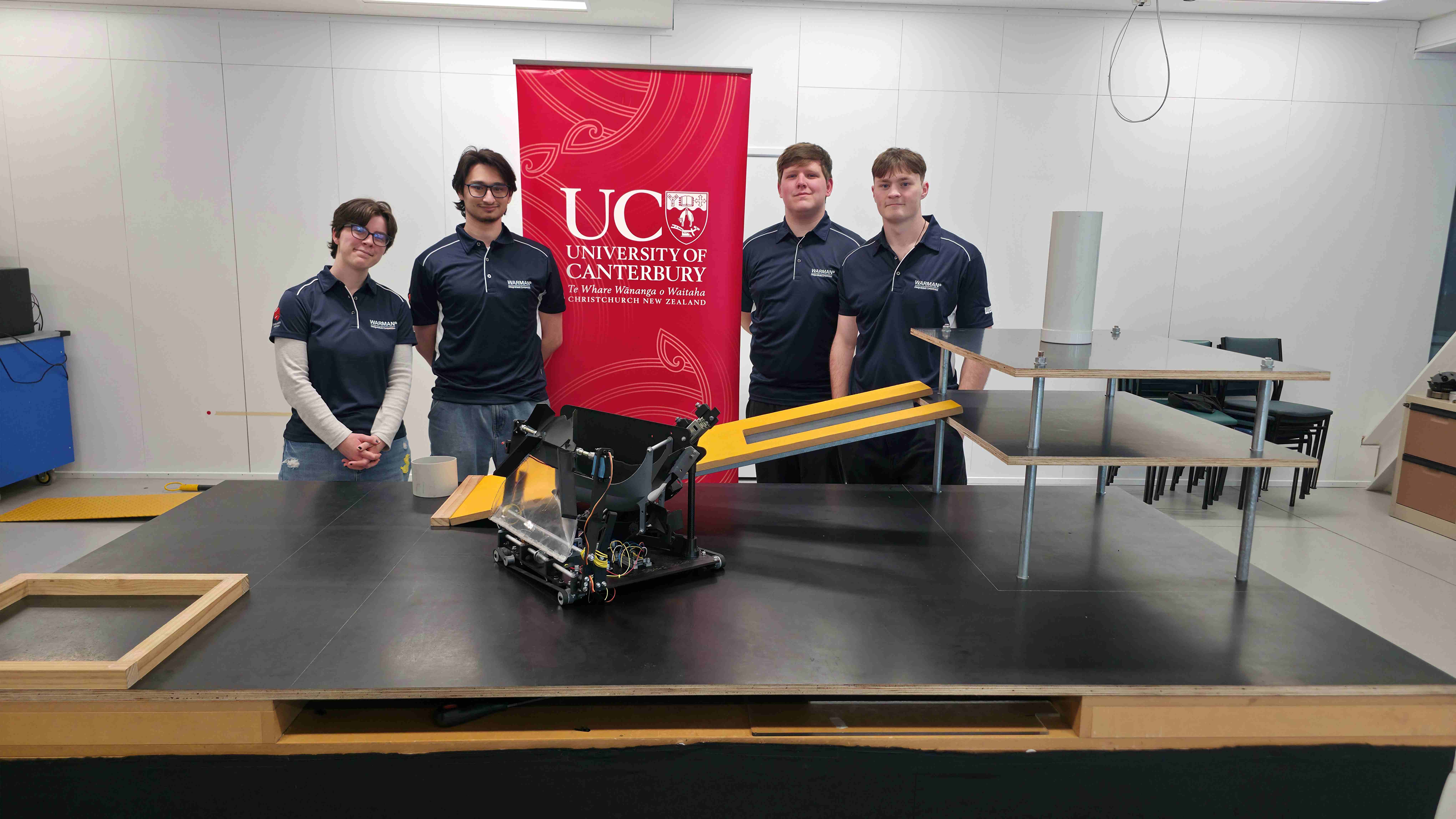
UC wins national award for employability service
UC has been recognised for excellence in helping students develop career-ready skills and connect with employers.