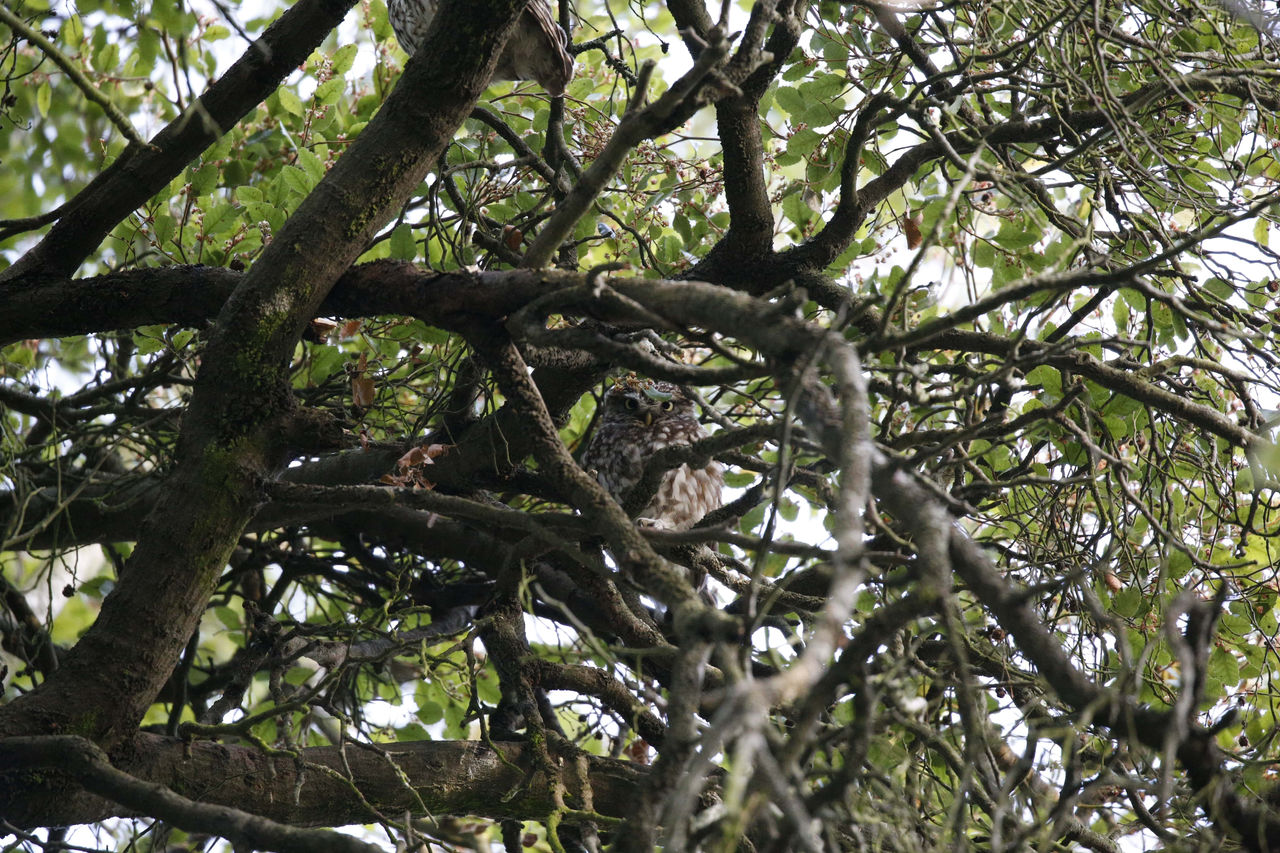


Master’s student Erin Mornin is studying the diet and occupancy of little owls (Athene noctua) in Ōtautahi Christchurch, addressing a major gap in Aotearoa New Zealand research on the country’s only intentionally introduced raptor and its role in local ecosystems.
Mornin says little owls were brought here from Europe in the early 1900s, originally aimed at reducing crop damage from introduced birds, but there has been limited New Zealand research on what role they now play in local ecosystems, with the last paper published in 1942.
Using night-time call-back surveys, Mornin tested whether little owls were present at sites by playing a sequence of calls and listening for a response.
“Little owls are quite territorial, so you play a call in an area and, if they’re there, they’ll call back. Then it’s just a matter of playing a sequence of calls and listening for their reply,” Mornin says.
In addition to call-back surveys, the study also used passive acoustic monitoring at a subset of sites, leaving microphones in parks to record and detect owl calls using an emerging call-recognition approach developed with Australia-based Ecosounds project called Open Ecoascoustics.
UC School of Biological Sciences Senior Lecturer Dr Sara Kross, who is supervising Mornin, says she has trialled a number of different methods that are new to New Zealand. “She's really had to work out the nuts and bolts of doing three different pretty complicated things for her thesis, which is very cool. Being able to develop and confirm that passive acoustic monitoring method works opens up opportunities for monitoring more birds without actually having to be out there in the dark at night.”
To understand what little owls are eating, Mornin analysed regurgitated pellets collected from nests. Owl pellets contain undigested parts such as feathers, fur, bones and insect exoskeletons.
“Owls can't digest these components, so they are coughed up in a pellet,” Dr Kross says.
Mornin examined the pellets under a microscope and trialled bone-measurement techniques to help identify prey species.
“The little owls were eating a variety of birds, mammals and insects. Mammals such as mice and birds like blackbirds and sparrows were definitely the most prominent prey in terms of body mass,” she says.
Mornin's research also found that little owls were more likely to be present in areas with increasing tree canopy cover, up to around 50 percent. Beyond that, she says it remains unclear how little owls respond to more heavily forested habitats in New Zealand, noting that overseas studies suggest they are less likely to occur in dense forests due to pressure from other predators — something that does not exist in the same way here in New Zealand.
The team says the work provides a foundation for future studies, particularly around potential interactions with native species as restoration increases native bird populations in and around the city.
“There are still pretty major questions about the role that little owls might play in our ecosystems, particularly as we hope for more and more native species to be here in Ōtautahi and in our surrounding area,” Dr Kross says. “It’s possible the little owls are preventing the native birds from coming back in.
“There are certainly more complexities to work out, and Erin’s work really has laid the groundwork for being able to do that.”
Mornin has completed her thesis and plans to publish parts of the work, with opportunities for future researchers to build on the methods and findings.
Open Ecoacoustics is supported through a co-investment partnership with the Australian Research Data Commons.







.png)