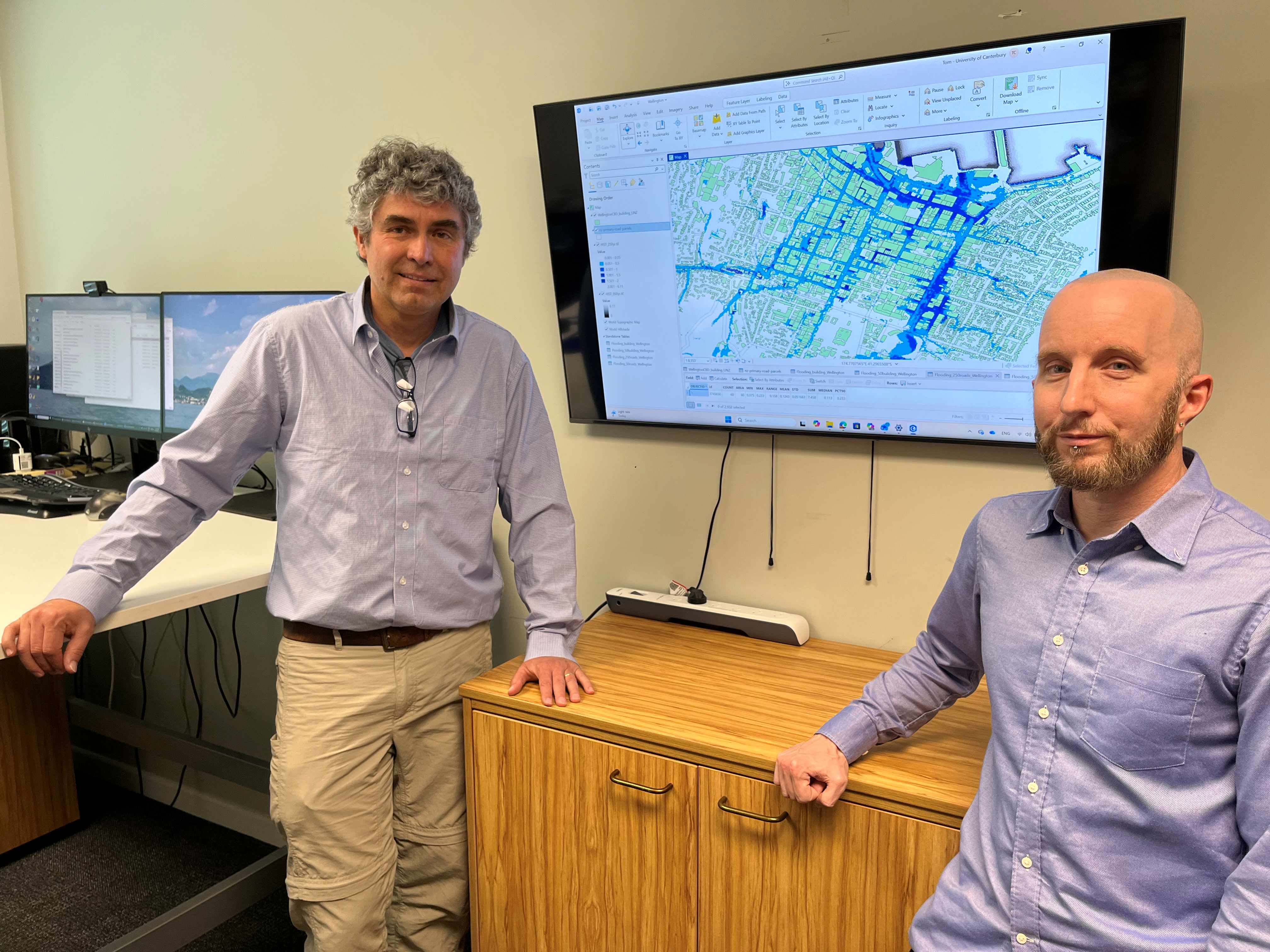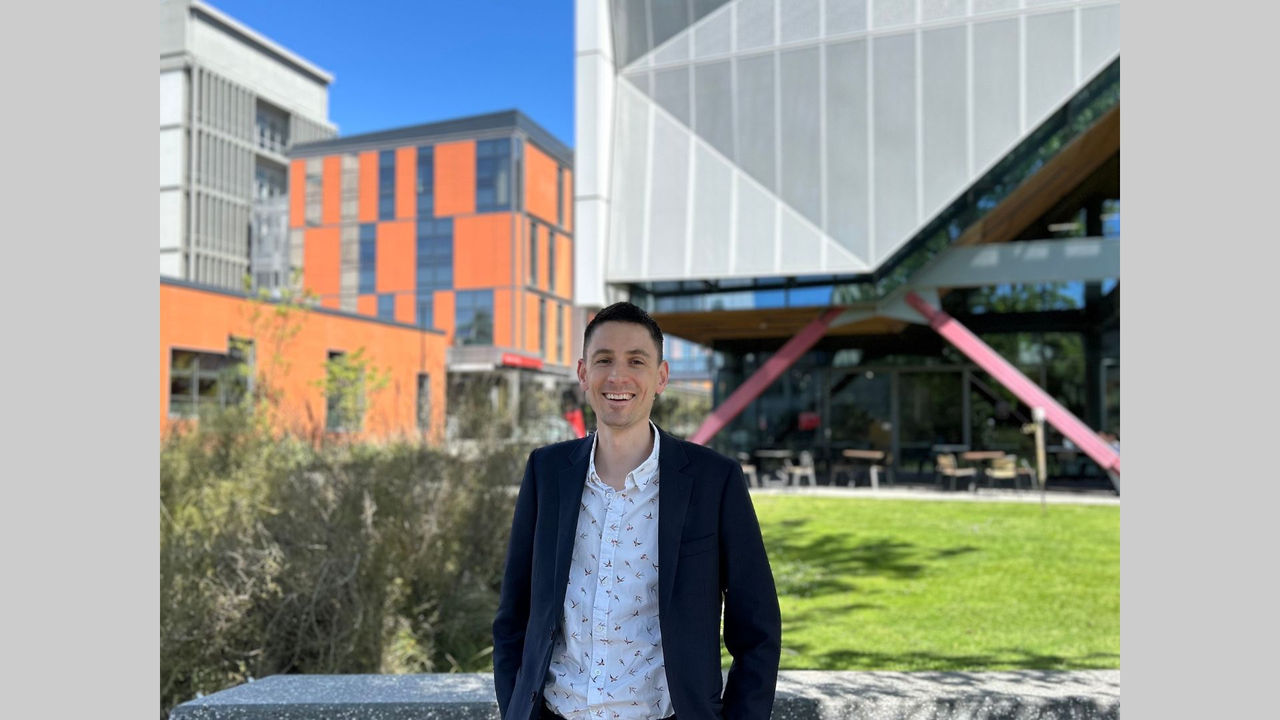


The Carbon Neutral Neighbourhoods project transforms complex transport and emissions data into easy-to-understand visualisations across six towns and cities: Auckland, Hamilton, Wellington, Christchurch, Oamaru and Queenstown. The multidisciplinary team, led by Professor Malcolm Campbell from Te Whare Wānanga o Waitaha | University of Canterbury’s (UC) School of Earth and Environment, includes UC Professor Simon Kingham, Dr Lindsey Conrow and Dr Tom Logan, with funding from the Building Research Association New Zealand.
Professor Campbell says the project’s focus is on developing a practical tool to make complex datasets accessible. “There is a lot of data available on transport and emissions, but it can be difficult to engage with it in spreadsheets, so we created an app that presents the data in a user-friendly way, with a focus on community impact.”
The platform includes two main features: an emissions scenario controller that shows how changes in vehicle types affect carbon footprints, and a mode share visualiser that tracks transport patterns from recent census data. Users can adjust variables like the proportion of electric vehicles in an area and immediately see emissions impacts. For example, in some areas, increasing hybrid vehicles to 75% of an area’s transport fleet could reduce carbon emissions by nearly 45%.
“Transport is the second most important contributor to our emissions in New Zealand, meaning that changes in how we get around can have positive impacts for our environment,” Professor Campbell says.
The project also addresses the ongoing debate about whether urban development strategies should expand upwards or outwards to accommodate growth. “The research supports densification over urban sprawl, with modelling showing that low-density housing produces nearly four times the greenhouse gas emissions of high-density alternatives, mainly due to car dependence,” Professor Campbell says.
According to the research, Ōtautahi Christchurch vehicles account for between 40-90% of commuting trips, while active transport like walking and cycling are closer to 10%.
“It’s not just about where people live, but how their location affects their daily travel patterns and associated emissions,” Professor Campbell says. “In Christchurch, for example, a commuter from the outer suburb of Halswell travelling to the CBD is likely to generate nearly six times the CO₂ emissions of someone living in the inner suburb of Sydenham. This is crucial information when it comes to planning lower-carbon communities.”
The research also identifies several successful strategies used successfully in international cities that could work in similar contexts in New Zealand, including mixed-use development, improved public transport, and infrastructure that encourages walking and cycling.
The project has attracted interest from local and regional councils and urban planning consultancies, with requests for customised versions for their specific areas. It also aligns with government policies promoting urban density, such as the National Policy Statement on Urban Development.
The Carbon Neutral Neighbourhoods dashboard is available online at https://carbon-neutral.app.geospatial.ac.nz/
Useful links:
ER99 Best practice urban form for emissions reduction. Carbon neutral neighbourhoods. | BRANZ

What to read next
UC celebrates its Manaaki New Zealand scholar
After completing their studies at the University of Canterbury, 15 Manaaki New Zealand scholars are preparing for the next chapter of their journeys.

NZ study reveals gaps in women's heart healthcare
A review of 25 years of New Zealand research has revealed significant gaps in women's heart healthcare, highlighting opportunities to improve diagnosis, treatment and outcomes.

History goes hi-tech at Awaroa Godley Head
The University of Canterbury's HIT Lab is helping Awaroa Godley Head visitors enjoy a more immersive experience of the World War II heritage site.

UC geography graduate honoured for global science leadership
UC alumnus Distinguished Professor Emeritus Iain Hay has received a prestigious international Fellowship recognising his contributions to geography and scientific collaboration.

Are Kiwi businesses jumping blindly on the AI bandwagon?
AI doesn’t have to play an inevitably dominant role in our lives, businesses and future, argues a guest speaker for an upcoming UC public lecture.
UC engineering students win international competition
A robot designed to transport rocks automatically has helped four UC engineering students claim an international title.
UC wins national award for employability service
UC has been recognised for excellence in helping students develop career-ready skills and connect with employers.

Fair suppliers strengthen business resilience
Businesses are better able to withstand disruption when suppliers make fair decisions and turn strong relationships into flexible action, UC research finds.
Digital models to help predict natural hazards in Kiwi capital
An innovative project using digital simulations to predict future hazards in New Zealand’s capital city takes its name from science fiction.