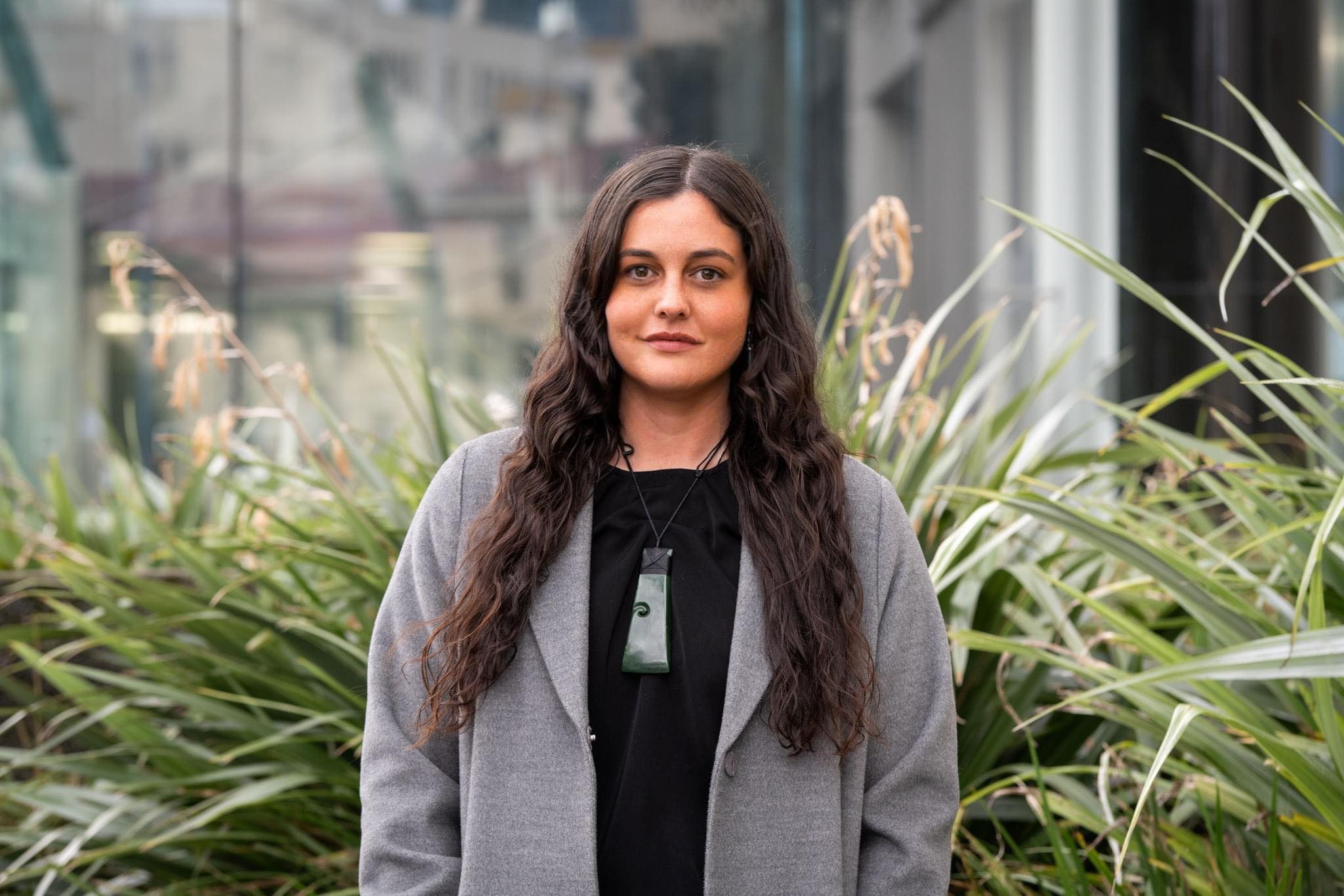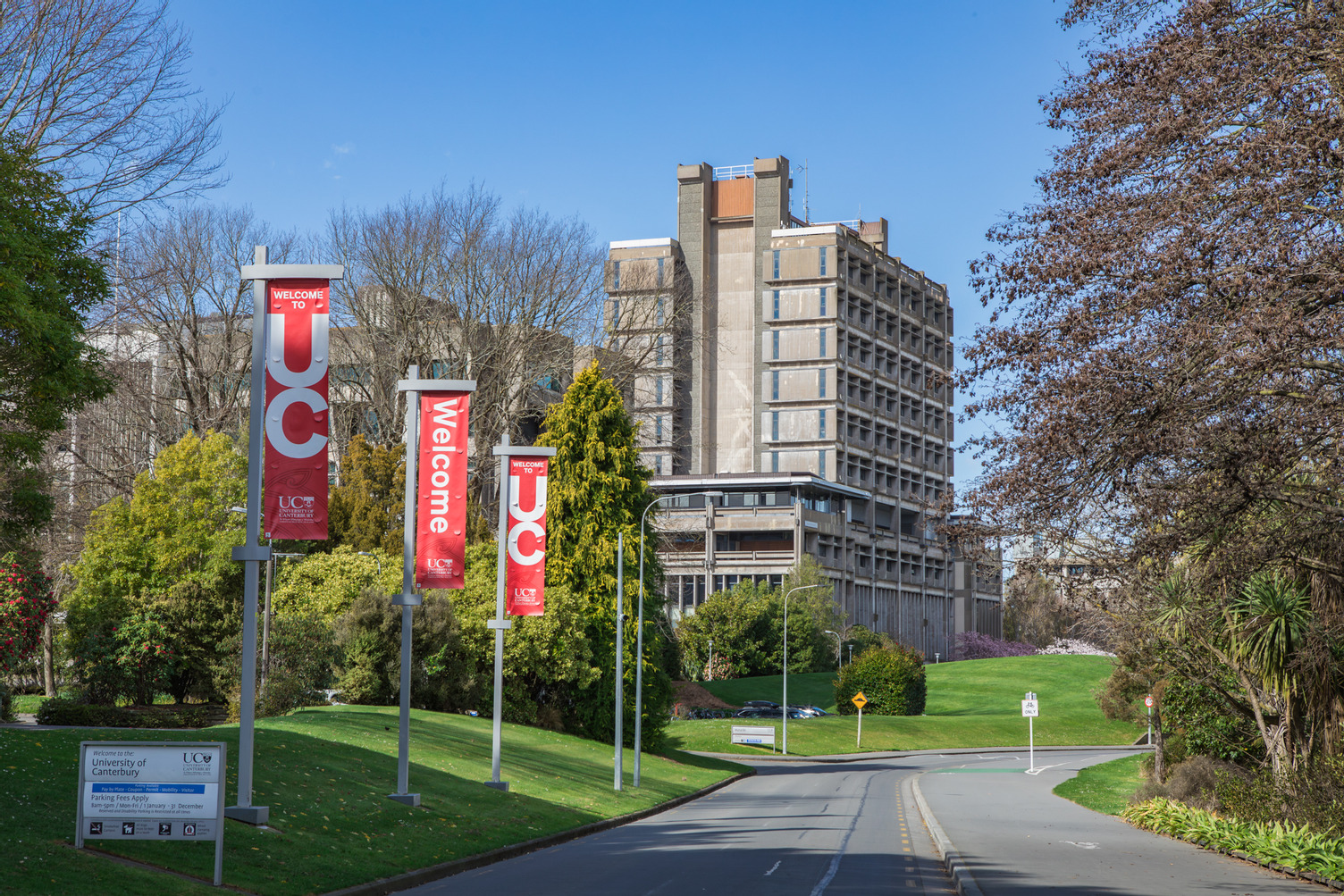


Photo caption: University of Canterbury structural engineering PhD student Samantha Krieg is a proud recipient of the 2025 Order of the White Rose scholarship.
Te Whare Wānanga o Waitaha | University of Canterbury (UC) structural engineering PhD candidate Samantha Krieg has been recognised with one of Canada’s most meaningful engineering scholarships for her research into sustainable, earthquake-resilient buildings and her determination to support more women into – and through – engineering.
Krieg is one of just 14 Canadian-nationality recipients worldwide to receive the prestigious Order of the White Rose scholarship this year. Valued at $50,000, the award honours the 14 women murdered in the 1989 École Polytechnique massacre, transforming tragedy into a commitment to support and elevate women advancing into graduate engineering study.
Krieg travelled to Montréal for the award ceremony, which included powerful reflections from a survivor of the attack, and described it as “an emotional and inspiring experience.
“Violence against women is still a global reality,” she says. “Continuing this scholarship is vital. It honours the women who lost their lives and actively supports women who are shaping engineering today.”
The award also connects recipients with a network of women leaders in engineering and includes a leadership programme that Krieg will attend later in the year.
From top restaurant kitchens to structural engineering
Krieg’s path to engineering was unconventional. Leaving high school without traditional university entrance, she began her career in hospitality, eventually becoming a chef –de partie at one of Canada’s top restaurants by age 20.
While she thrived in the high-pressure environment, working in male-dominated kitchens was challenging.
“Misogyny takes many forms,” she says. “It’s not always direct. It’s the assumptions, the jokes, who gets mentored. Those small things accumulate and hold you back.”
Concerned about sustainability in the industry, and job security if she was injured, Krieg returned to study, upgrading her maths and science, and completed a Bachelor of Applied Science in Civil Engineering at the University of British Columbia Okanagan (UBCO).
“I grew up thinking I wasn’t good at maths, even though my mum is an engineer,” she says. “I actually only learned things like trigonometry and factoring polynomials in 2020. Now those basics are part of my everyday work as an engineering student.”
She wants to see more deliberate mentoring and sponsorship of women, early encouragement in maths and science, and greater awareness of how subtle biases can shape who speaks, who is heard and who progresses.
A summer research placement in 2023 with Professor Lisa Tobber at UBCO introduced her to earthquake engineering and brought her into collaboration with the Associate Dean Research in UC's Faculty of Engineering Professor Geoff Rogers.
“Geoff is incredibly knowledgeable but also humble and patient,” she says. “He’ll sit down and work through the maths with you and he really values his students’ ideas. When the chance came up to do a PhD with him at UC, it felt like everything aligned – the supervisor, the research and a country I’d always wanted to live in.”
Designing quake-safe, low-carbon buildings
Samantha’s PhD explores how to design concrete buildings that balance seismic safety with reduced embodied carbon. Traditional approaches to improving earthquake performance often use more material, increasing emissions.
Her work analyses the full lifecycle of a building, from construction emissions to earthquake damage, repairs, and end-of-life impact, to identify designs that are safer, more sustainable and affordable.
“Sustainability isn’t just about the finished building,” she says. “It’s about how a building performs over decades, especially after earthquakes.”
“I would like this research to help inform future building codes and give engineers better tools for decision-making, as well as strengthen pathways for women to progress in engineering.”
.png)