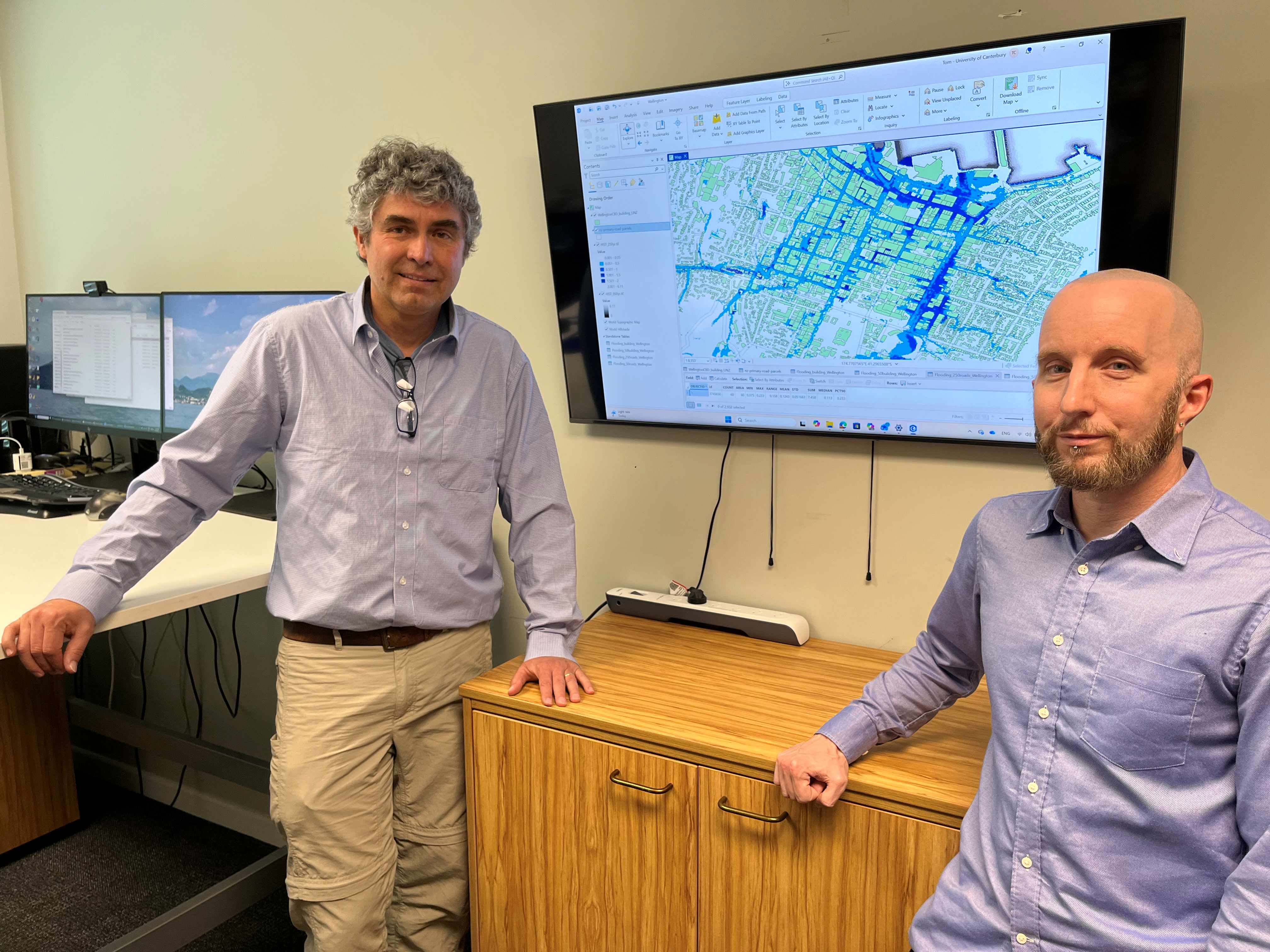


Photo caption: UC Professor Renwick Dobson leads a biosensing devices research project that has been awarded an MBIE Endeavour Fund grant.
The 9.6m Endeavour Fund grant, from the Ministry of Business, Innovation and Employment (MBIE), will allow researchers from Te Whare Wānanga o Waitaha | University of Canterbury (UC) to further develop a diagnostic platform to deliver biosensing devices that could revolutionise in-field testing, quality control and point of care diagnostics.
Lead researcher, UC School of Biological Sciences Professor Renwick Dobson, says the platform has the potential to deliver big benefits across multiple sectors. To demonstrate the platform's versatility, researchers will develop four prototype devices for three applications: one for early detection of Alzheimer’s disease, one for multi-drug detection in the workplace and roadside testing, and two that streamline quality control in winemaking.
The research is being shaped by strong industry demand, following collaboration with winemakers, forensic toxicologists, police and clinicians. Each group has highlighted the urgent need for simple, reliable devices that deliver rapid results to support timely, informed decisions.
UC Deputy Vice-Chancellor of Research and Innovation Professor Lucy Johnston says the project is world-leading research that will be a game changer for the three applications the researchers are focusing on. “My congratulations to Professor Ren Dobson on the impressive technical advancements and on responding to industry demand and finding very practical ways to apply the research to three very different fields.”
The project brings together expertise in microfluidic device engineering, synthetic chemistry, biomolecular design and biosensing platforms. Leveraging UC’s existing intellectual property in microfluidics and biosensors, the researchers are aiming to unlock new commercial opportunities across Agritech, Medtech, and drug testing—reducing costs for winemakers, improving road and workplace safety, and enhancing healthcare outcomes.
Collaboration with end users will ensure the platform is practical, effective and ready for adoption. At the same time, the programme will strengthen New Zealand’s biotech sector by training emerging scientists at the intersection of biology, engineering and commercialisation, preparing them to become the next generation of biotech entrepreneurs.


What to read next
UC celebrates its Manaaki New Zealand scholar
After completing their studies at the University of Canterbury, 15 Manaaki New Zealand scholars are preparing for the next chapter of their journeys.

NZ study reveals gaps in women's heart healthcare
A review of 25 years of New Zealand research has revealed significant gaps in women's heart healthcare, highlighting opportunities to improve diagnosis, treatment and outcomes.

History goes hi-tech at Awaroa Godley Head
The University of Canterbury's HIT Lab is helping Awaroa Godley Head visitors enjoy a more immersive experience of the World War II heritage site.

UC geography graduate honoured for global science leadership
UC alumnus Distinguished Professor Emeritus Iain Hay has received a prestigious international Fellowship recognising his contributions to geography and scientific collaboration.

Are Kiwi businesses jumping blindly on the AI bandwagon?
AI doesn’t have to play an inevitably dominant role in our lives, businesses and future, argues a guest speaker for an upcoming UC public lecture.

UC engineering students win international competition
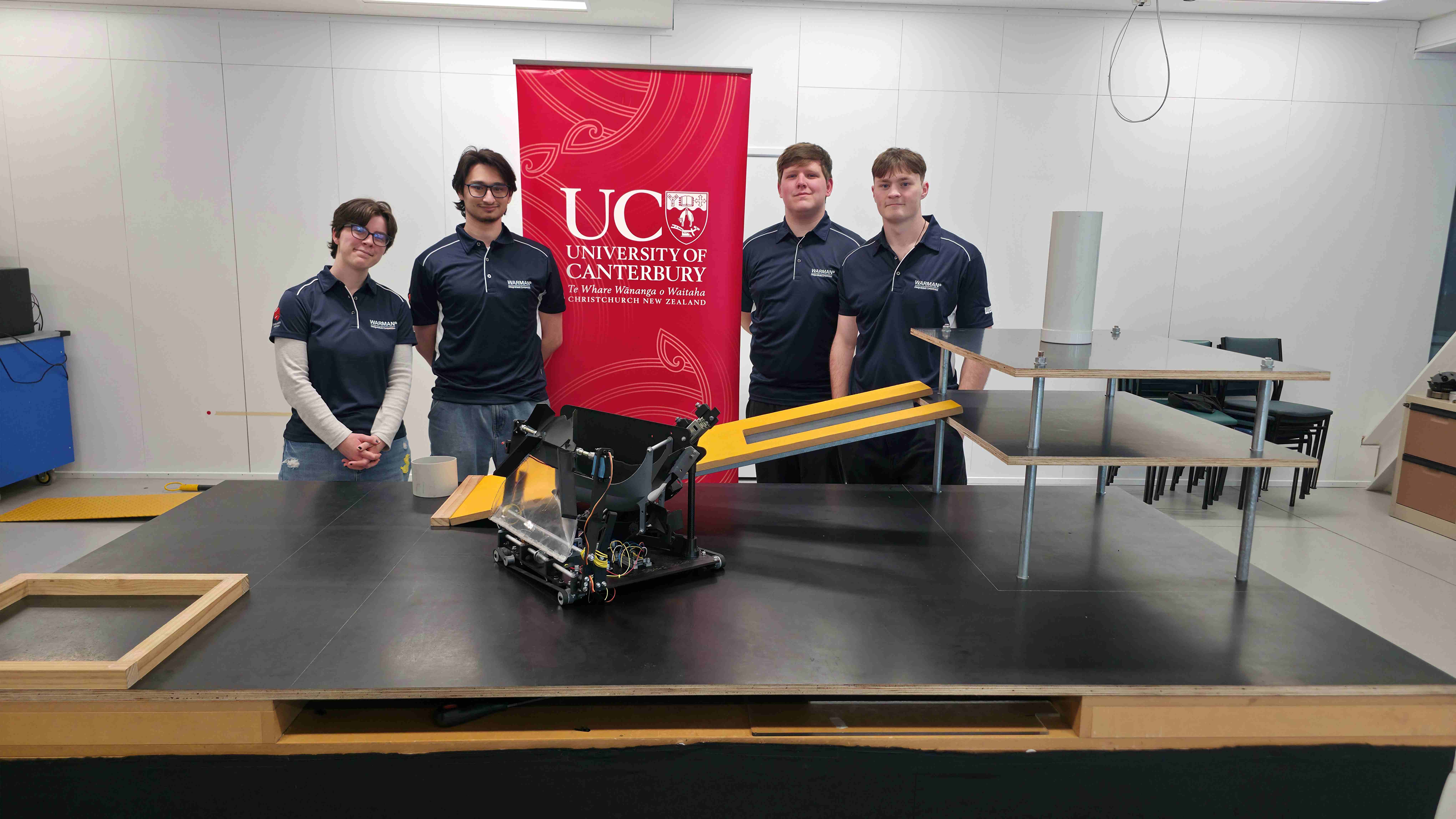
A robot designed to transport rocks automatically has helped four UC engineering students claim an international title.
UC wins national award for employability service
UC has been recognised for excellence in helping students develop career-ready skills and connect with employers.

Fair suppliers strengthen business resilience
Businesses are better able to withstand disruption when suppliers make fair decisions and turn strong relationships into flexible action, UC research finds.
Digital models to help predict natural hazards in Kiwi capital
An innovative project using digital simulations to predict future hazards in New Zealand’s capital city takes its name from science fiction.