
Te Whare Wānanga o Waitaha | University of Canterbury’s (UC) Curious Minds Team has developed two free, interactive education modules that bring science and engineering to life for Year 9 and 10 students.
The modules—Pacific H₂O and Mā te rauhiringa tātou e ora: Powerful Solutions—embed technical concepts in rich Pacific and Māori cultural contexts, connecting classroom learning to real-world challenges and community wellbeing. Pacific H₂O explores water quality testing and purification methods, while Mā te rauhiringa tātou e ora invites students to design sustainable energy solutions for Marae.
Teachers from Aotearoa New Zealand, India, the USA and China have adopted the modules, and the work has been showcased at international conferences in Tonga and India, supported by the MacDiarmid Institute.
The team’s commitment to equity, inclusion and cultural authenticity has been central to their success. They collaborated with Māori and Pacific knowledge holders, artists and the Deaf community to ensure the modules are both accessible and representative. From developing bespoke sign language glossaries for STEM terms, to commissioning original artwork from Māori and Pacific artists, every element of the modules reflects a deep respect for the communities they serve.
By bridging science, culture and community, the Curious Minds Team not only strengthens UC’s reputation for educational innovation but also empowers young people to see themselves in science and engineering, and to use those skills to make a positive difference in their communities.
“These modules are inspiring a generation of learners who might never have seen themselves reflected in science or engineering before. The Curious Minds Team have shown the power of culturally grounded education to create lasting impact—at UC, across Aotearoa and beyond,” says Dr Matthew Cowan, Leader of the Curious Minds Team at UC.
Their outreach has extended beyond classrooms, fostering genuine partnerships with schools in Tonga, where students at Tupou College have since launched a water-quality monitoring programme using the team’s resources. Discussions are now underway with the Ministry of Foreign Affairs and Trade (MFAT) about expanding the programme’s reach across the Pacific.
Funding from the MacDiarmid Institute will continue to support the team’s outreach across New Zealand and Tonga, ensuring the sustainability of their work. Graduate students are also being trained to take up leadership roles in future programme development, extending the initiative’s legacy for years to come.
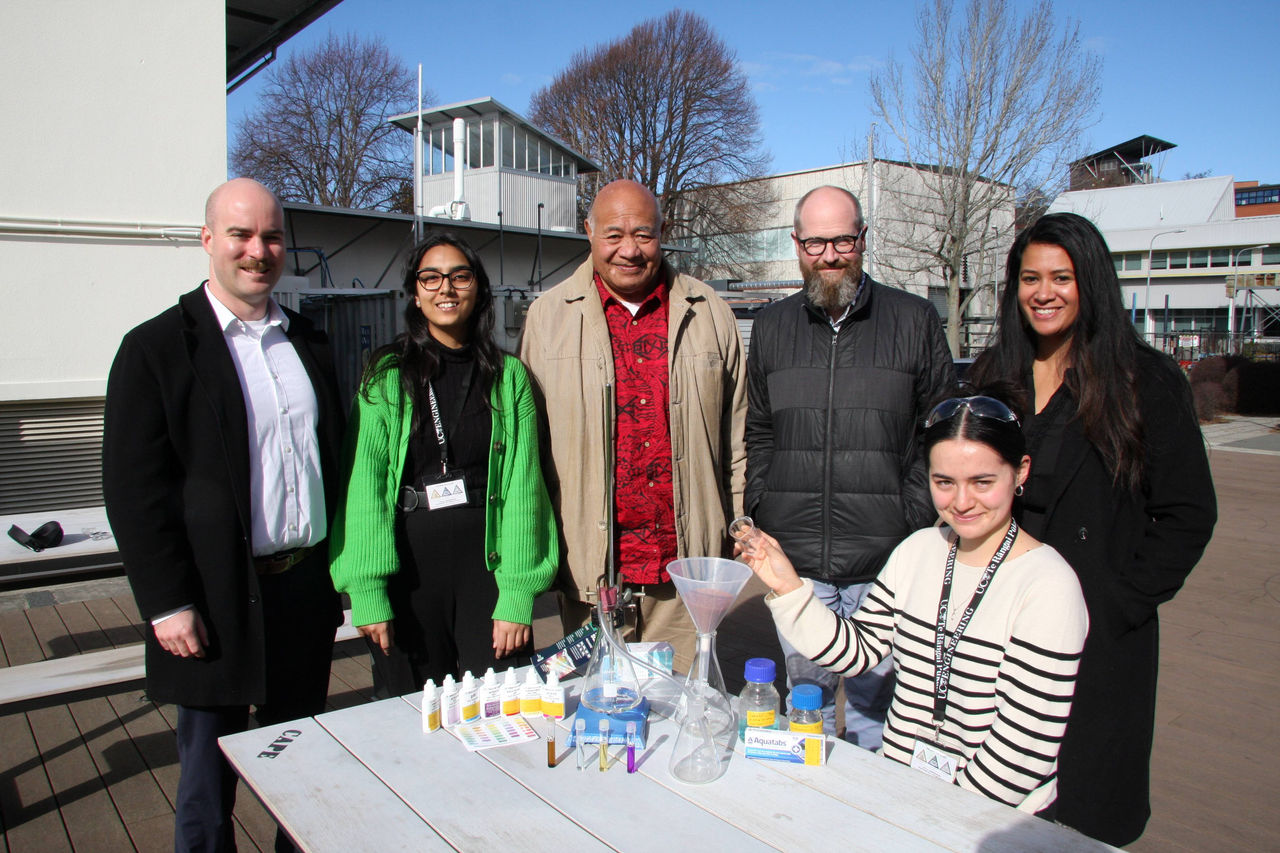
As part of UC’s annual staff celebrations, Hui Whakamānawa, the Hapori Community of Practice Award was presented to the Curious Minds Team—Christina Howat, Shallu Verma, Ashalyna Noa, Siale Faitotonu, Mel Tainui, Thomas Hamilton, Garrick Thorn, Sarah Wiki-Bennett, and Kiri Howell—for their transformative work bringing science and engineering to life for Year 9 and 10 students.
.png)